


 Author: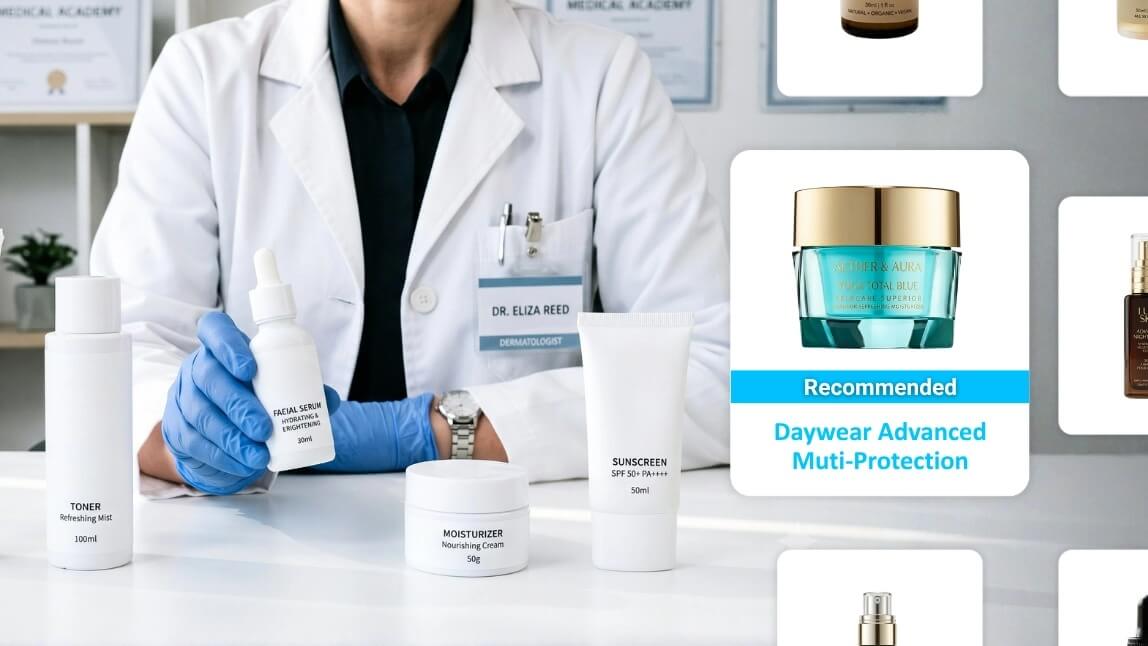
"Dermatologist developed" gets slapped on a lot of skincare bottles these days, and honestly, most of it is marketing glitter. But some brands actually build their formulas alongside board-certified dermatologists from day one, including different ingredient sourcing, different clinical testing, different level of trust.
In 2026, there's a second layer to this story: AI skin analysis tools now sit between you and the shelf, matching dermatologist-developed formulas to your actual skin data instead of your best guess at the drugstore.
Here's how both pieces fit together, why the label is more nuanced than it looks, and how brands are quietly rebuilding the entire recommendation process around AI.
What Does "Dermatologist Developed" Actually Mean?
"Dermatologist developed" means a board-certified dermatologist was involved in formulating the product and choosing active ingredients, setting concentrations, shaping the line before it ever reached a lab bench for mass production.
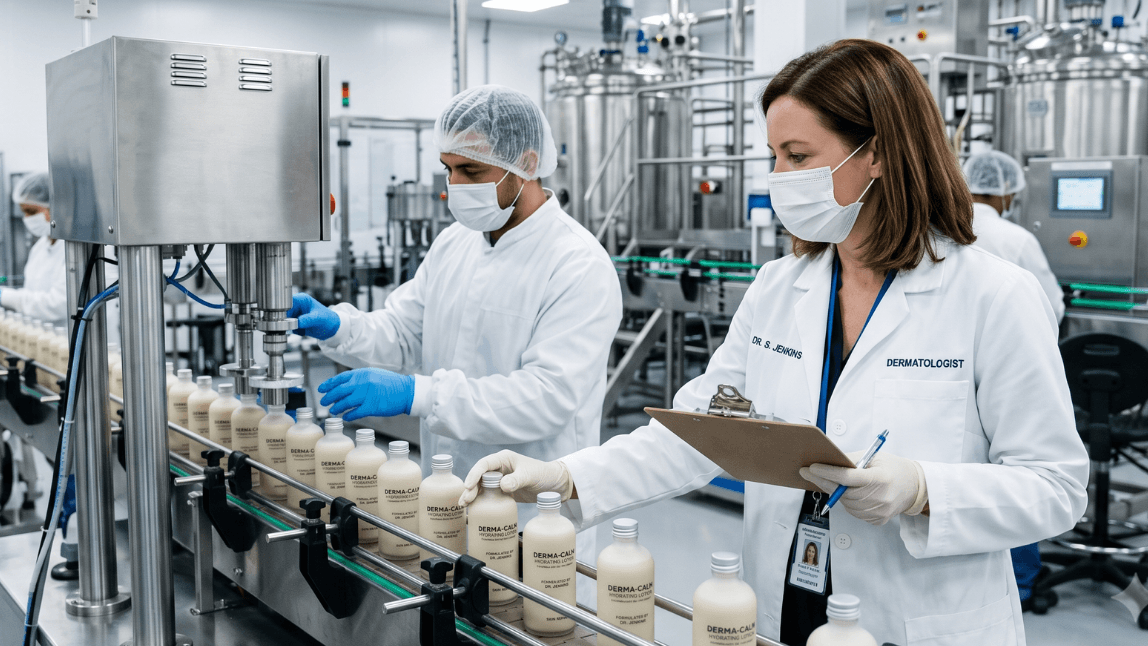
That's a meaningfully different claim from "dermatologist tested" (a derm checked it for irritation after formulation) or "dermatologist recommended" (a derm likes the finished product enough to suggest it to patients).
The distinction still matters if you're trying to gauge how much clinical thinking actually went into the formula.
| Label | What It Actually Means | Example Brands |
|---|---|---|
| Dermatologist Developed | A dermatologist helped formulate the product from the ground up | CeraVe, Riversol, Dr. Dennis Gross |
| Dermatologist Tested | A dermatologist evaluated the finished product for tolerability | Varies widely by brand |
| Dermatologist Recommended | Dermatologists suggest the product to patients, but may not have formulated it | Vanicream, many drugstore staples |
| Dermatologist Approved | An informal endorsement, often without disclosed criteria | Used loosely across the industry |
Why Dermatologist-Developed Skincare Keeps Winning Trust in 2026
Skin is personal, and people are increasingly skeptical of ads-driven routines that promise everything and explain nothing.
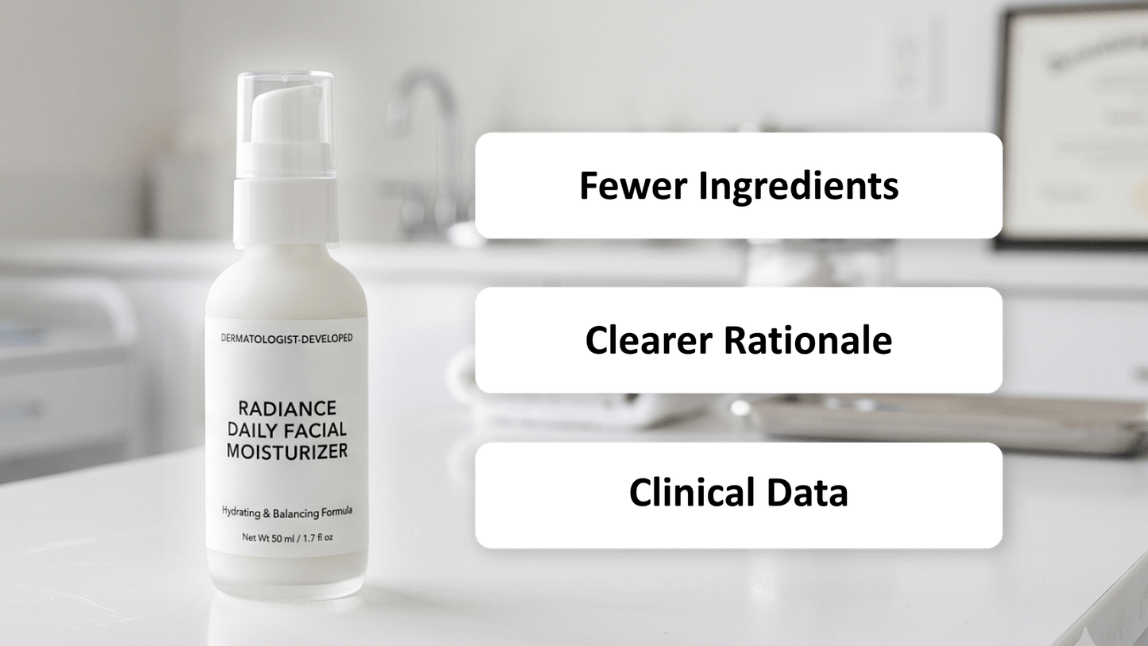
Dermatologist-developed lines lean the other way: fewer ingredients, clearer rationale, clinical data behind the claims.
That shift shows up in the numbers, too — the AI-in-skincare market is on track to grow from $5.84 billion in 2026 to $27.41 billion by 2035, an 18.74% CAGR (source), as more of that spend goes toward tools that connect consumers to clinically-backed products rather than trend-of-the-week formulas.
There's also a quieter reason this trust is growing: dermatologist-developed brands tend to publish more of their reasoning.
CeraVe explains why it uses three specific ceramides.
La Roche-Posay leans on decades of tolerability data from its own thermal spring water research.
That transparency is exactly the kind of signal both consumers and AI recommendation engines can actually use as a vague "clean beauty" label gives an algorithm nothing to match against.
Explore our AI Skin Analysis solution to see how brands are pairing dermatologist-grade formulation with real-time skin diagnostics.
10 Dermatologist-Developed Skincare Brands Worth Knowing
You don't need all of these in your cabinet. But knowing the landscape helps you spot the difference between a real dermatologist-developed formula and a bottle that just borrowed the phrase.
| Brand | Founding Dermatologist / Origin | Signature Focus |
|---|---|---|
| CeraVe | Developed with dermatologists since 2005 | Ceramide barrier repair |
| La Roche-Posay | Dermatology heritage brand | Sensitive, reactive, acne-prone skin |
| SkinCeuticals | Backed by dermatology research | Antioxidant treatment serums |
| Paula's Choice | Ingredient-transparency pioneer | Exfoliation, concern-led formulas |
| PCA Skin | Developed by a dermatologist | Peels and clinical resurfacing |
| Dr. Dennis Gross | Founded by dermatologist Dennis Gross, MD | At-home peels and retinol |
| Riversol | Developed by Dr. Jason Rivers after 30+ years in practice | Sensitive skin, rosacea |
| Specific Beauty | Developed by Dr. Woolery-Lloyd | Skin of color, hyperpigmentation |
| Prequel | Dermatologist-developed, solution-focused | Broad skin condition support |
| Vanicream | Formulated with dermatology input | Fragrance-free, allergy-conscious |
A pattern worth noticing: the brands with the strongest dermatologist-developed reputations tend to solve one problem extremely well rather than promising a full transformation.
AI Skin Scan vs. In-Person Dermatologist Visit: What Each One Actually Gives You
Neither replaces the other, but they solve different problems at different speeds.
| Factor | AI Skin Scan | In-Person Dermatologist Visit |
|---|---|---|
| Time to result | Seconds | Days to weeks (booking + visit) |
| Cost | Usually free with a brand or retailer | Consultation fee, often insurance-dependent |
| Scope | Cosmetic concern scoring and product matching | Full medical diagnosis and treatment plans |
| Best for | Routine building, product discovery, tracking change over time | Diagnosing skin conditions, prescriptions, procedures |
| Data used | Your photo or quiz answers scored against a validated model | Direct clinical exam and patient history |
The Problem: Even a Great Formula Doesn't Fit Every Face
Here's the catch nobody puts on the label: a dermatologist can design a brilliant ceramide moisturizer, and it will still do nothing for you if your actual issue is a broken barrier from over-exfoliating, not dryness.
Dermatologist-developed just means the formula is sound. It doesn't mean it's sound for you. That's the gap AI skin analysis was built to close.
How AI Recommends the Right Dermatologist-Developed Product for You
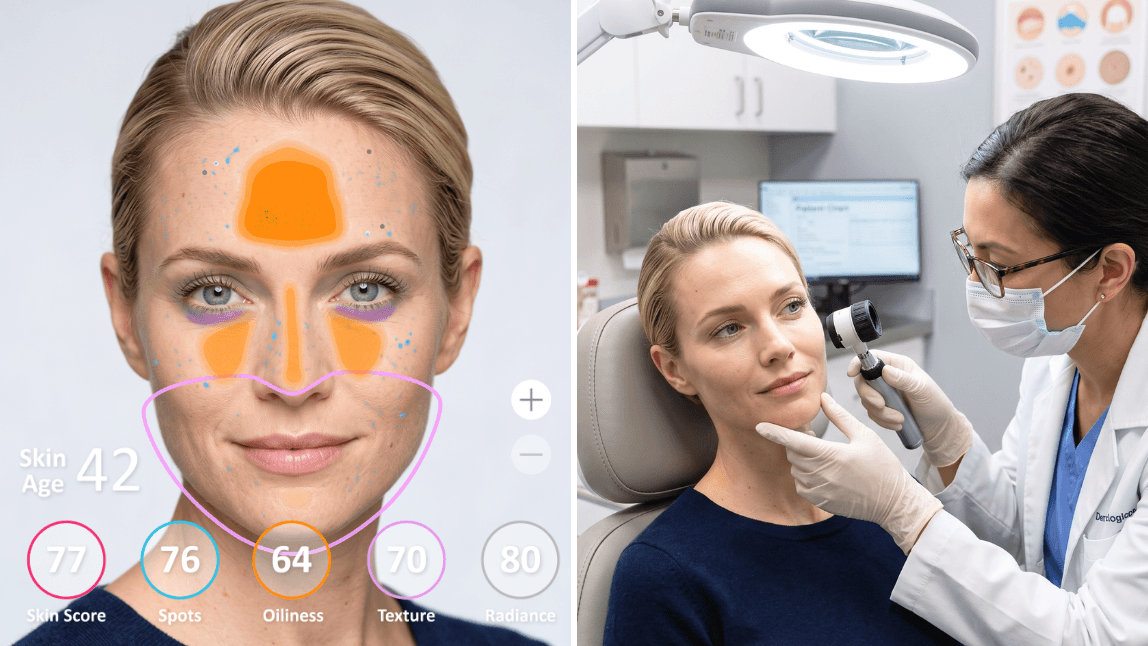
Matching a person to a product used to require an actual dermatology appointment, or a lot of trial-and-error returns. AI skin diagnostics collapse that process into seconds by combining image analysis with dermatologist-validated data sets.

Step 1: Skin Image or Guided Questionnaire
You upload a selfie or answer a short set of questions covering skin type, climate, and primary concerns.
Tools like Perfect Corp.'s AI Skin Analysis process the image against a data model trained on more than 70,000 high-definition, medical-grade images spanning diverse skin tones and textures.
Step 2: Cross-Referencing Against Dermatologist-Validated Benchmarks
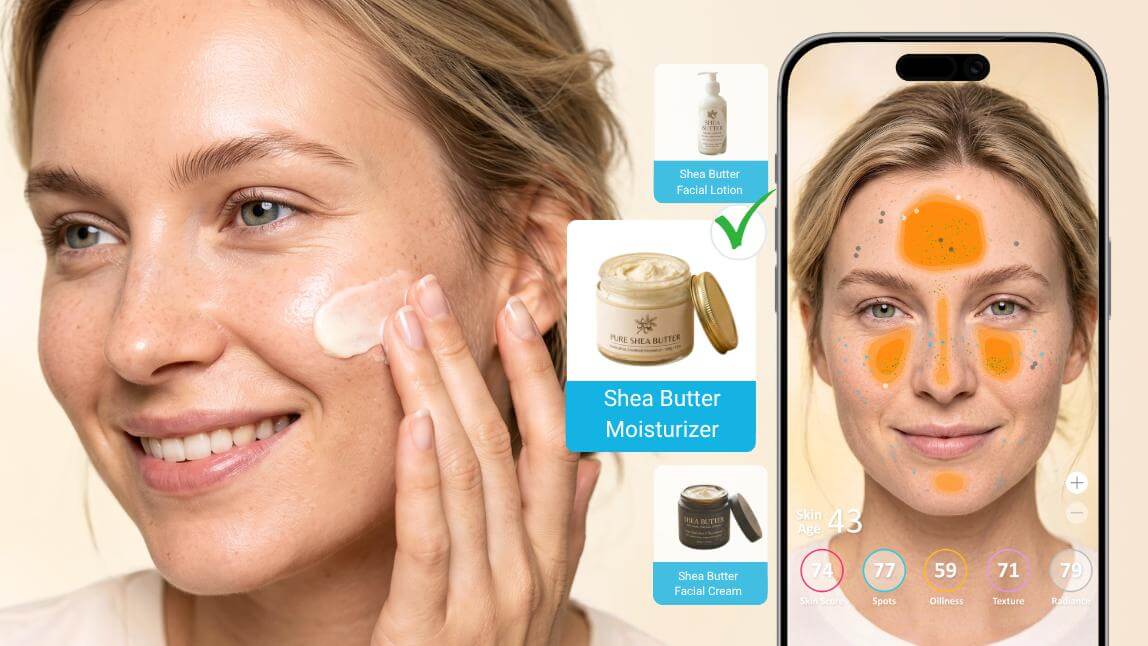
The AI scores your skin across 15+ concerns including wrinkles, texture, pores, acne, redness, hydration, dark spots, and more. and at up to 95% clinical accuracy, with the scoring model itself validated by board-certified dermatologists rather than built on guesswork.
Step 3: Personalized Product and Routine Matching
Once your skin profile exists, the system cross-references it against outcome data to suggest specific dermatologist-developed products and routine steps most likely to address your actual concerns, instead of a generic "for combination skin" label.
Step 4: Re-Analysis as Skin Changes
Skin shifts with seasons, stress, and age. The better AI tools let you re-scan periodically so your recommendations update instead of staying frozen at your first quiz result.
Can AI Actually Replace a Dermatologist Visit?
No, and any tool that claims otherwise should raise an eyebrow.
AI skin analysis is validated against dermatologist grading and can flag concerns with real consistency, but it isn't diagnosing skin disease or replacing a licensed provider.
Think of it as a highly capable pre-screening and personalization layer: it narrows thousands of dermatologist-developed products down to the handful actually relevant to your skin, and it can flag when a concern looks serious enough to warrant an in-person visit.
The clinical judgment still belongs to a human dermatologist.
How Brands Are Combining Dermatologist Formulation With AI at Scale
This is the part most consumer-facing articles skip, and it's exactly where the B2B story gets interesting.
Skincare brands and dermatology clinics are increasingly licensing AI skin diagnostic technology to put a mini-consultation in front of every website visitor, not just the ones who book an appointment.
Perfect Corp.'s AI Skin Analysis, for instance, is HIPAA-compliant and has been integrated by dermatology providers such as Dr. Kay to give patients instant, visualized skin evaluations alongside treatment and product recommendations (full story >), turning a static product catalog into something closer to a guided consultation, at a fraction of the cost of building that in-house.
Perfect Corp. works with over 800 beauty and skincare brand partners globally, and its real-time skin analysis technology won the Newsweek AI Impact Award for Best Customer Experience in the Brand & Retail category, it's a recognition tied specifically to how the diagnostic changed engagement and conversion for the brands using it, not just its technical accuracy.

How to Choose a Dermatologist-Developed Product (With or Without AI)
- Check whether the brand discloses which dermatologist was involved and what their specialty is vague claims are a yellow flag.
- Match the product to your primary concern first, not the brand's marketing angle.
- If you're unsure of your skin type, run an AI skin scan or take a dermatologist-validated skincare quiz before buying anything.
- Patch-test new actives regardless of how clinically credible the brand sounds.
- Re-evaluate every few months â your skin in January is not your skin in July.
See our case studies on how skincare brands deploy AI-powered skin diagnostics across their digital storefronts.
Frequently Asked Questions
What does "dermatologist developed" mean on a skincare label?
It means a board-certified dermatologist helped formulate the product â choosing ingredients and concentrations â rather than simply testing or endorsing it after the fact.
Is "dermatologist developed" the same as "dermatologist recommended"?
No. Developed implies involvement in formulation; recommended usually just means dermatologists suggest the finished product to patients, whether or not they helped create it.
Which skincare brands are genuinely dermatologist-developed?
Brands like CeraVe, Riversol, Dr. Dennis Gross, Specific Beauty, and PCA Skin were built with direct dermatologist involvement in the formulation process.
How accurate is AI skin analysis compared to a dermatologist?
Leading tools report up to 95% clinical accuracy against dermatologist grading across 15+ skin concerns, though results vary by platform and image quality.
Can AI replace an in-person dermatologist consultation?
No. AI skin analysis is a personalization and pre-screening tool, not a diagnostic replacement for licensed medical care.
Is my skin data safe when I use an AI skincare tool?
Reputable platforms disclose their data handling practices and some, like Perfect Corp.'s Skincare Pro, are built to HIPAA-compliant standards for clinical use â always check a tool's privacy policy before scanning.
Do dermatologist-developed products cost more?
Not necessarily. Brands like CeraVe and Vanicream are positioned as accessible, drugstore-priced options specifically so dermatologist-grade formulation isn't limited to premium price points.
How do brands add AI skin analysis to their own websites?
Most license a diagnostic engine like Perfect Corp.'s AI Skin Analysis through an SDK or API rather than building the technology in-house, which is why the same underlying diagnostic tends to show up across multiple retailer and brand sites.
What should I do if an AI skin scan flags something unusual?
Treat it as a prompt to book an actual dermatologist appointment, not a diagnosis. AI tools are built to flag patterns worth a professional look, not to confirm or rule out a medical condition.



 English


