 Author:




Scroll any feed for ten seconds and you will see it: AI-generated creators, product demos that feel like a friend's video, and ad creatives that look like they cost a fraction of a photoshoot.
AI UGC tools have turned "make 50 variations by Friday" from a nightmare into a Tuesday task.
But there is a catch. Generic AI video can make a lipstick look like any lipstick.
Beauty and fashion audiences notice. That is where AI virtual try-on for marketing earns its seat: it puts the exact shade, frame, watch, or garment on a real face or body, so your scalable content is also accurate content.
In this playbook we break down how agencies and brand teams can fold virtual try-on into short-form video, UGC, and campaign work, with formats, real results, and a workflow you can steal.
Table of Contents
- What Is AI Virtual Try-On for Marketing?
- Why Do AI UGC Tools and Virtual Try-On Work So Well Together?
- How Can Agencies Plug Virtual Try-On Into Short-Form Video and UGC?
- Which Virtual Try-On Campaign Formats Fit Each Category?
- What Results Have Brands Seen From Try-On Campaigns?
- How Do You Build an AI Try-On Content Workflow?
- How Should Agencies Measure the ROI of Try-On Content?
- What Mistakes Should You Avoid?
- FAQ
What Is AI Virtual Try-On for Marketing?

Virtual try-on (VTO) uses AI and AR to show how a real product looks on a real person, live through a camera or on an uploaded photo. In a store or on a product page, its job is to help one shopper decide. In marketing, its job is bigger: to become content.
Think of it as a content engine with three outputs:
- Interactive moments inside ads, filters, and social posts, where the viewer tries the product on themselves.
- Creator-ready assets: before and after clips, shade swaps, and "which one should I get?" videos built on accurate product renders.
- Audience signals: which shades, frames, or styles people try most, which then feed your next creative round.
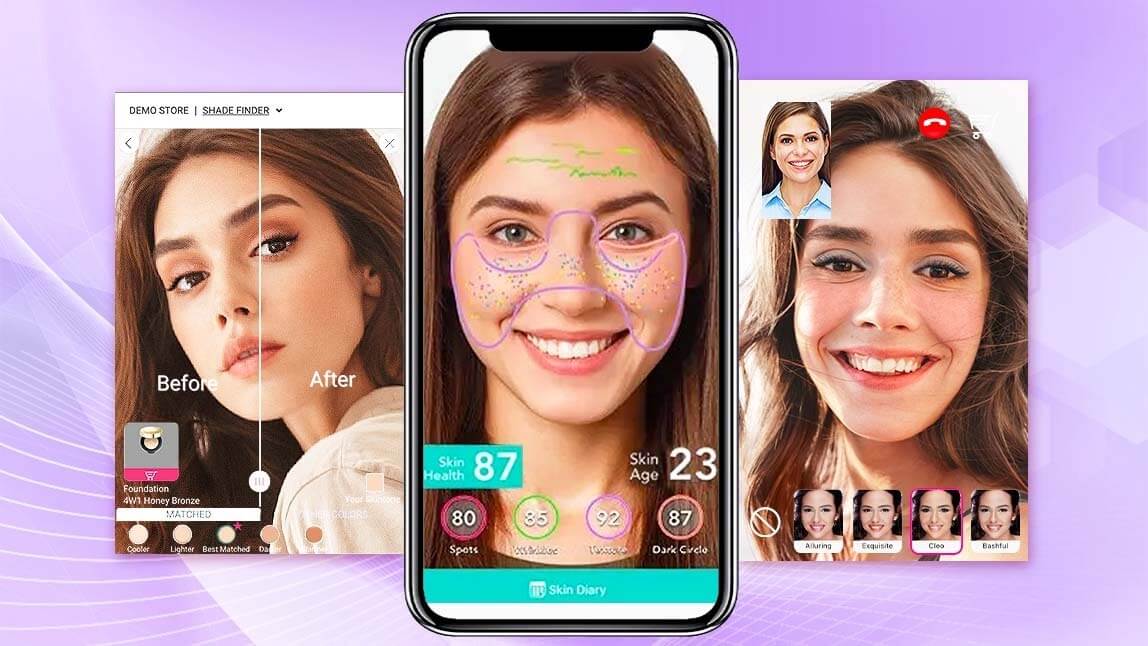
Perfect Corp.'s virtual try-on solutions cover makeup, hair, eyewear, jewelry, watches, shoes, and clothes, and the product page confirms they can plug into websites, apps, e-commerce platforms, and social media campaigns. For marketers, that last part is the headline.
Why Do AI UGC Tools and Virtual Try-On Work So Well Together?

AI UGC tools solve volume. Feed in a product URL or image and you get dozens of talking-head ads, unboxing clips, and hooks in different styles. Agencies love it because paid social burns through creative fast.
Virtual try-on solves truth. A shade of red that renders slightly orange is not a creative choice; it is a return, a bad comment thread, and an unhappy brand manager. Put the two together and you get:
| Need | AI UGC tools alone | AI UGC + virtual try-on |
|---|---|---|
| Creative volume | High | High |
| Exact product color and fit | Approximate, model dependent | Rendered from the brand's own SKU data |
| Viewer participation | Watch only | Viewer can try it on themselves |
| First-party insight | Views and clicks | Views, clicks, plus which products people tried |
| Brand safety for beauty and luxury | Needs heavy review | Easier to approve because the product is accurate |
In short: let AI UGC handle the storytelling wrapper, and let VTO handle the part shoppers actually scrutinize, the product on a face.
How Can Agencies Plug Virtual Try-On Into Short-Form Video and UGC?

Three plays show up again and again in strong beauty and fashion campaigns. Pick one per campaign; do not try to run all three in week one.
1. The try-on challenge
Give the audience a reason to play. "Find your match," "which shade is you," or "rate my five frames" all work because the viewer becomes the creator. Erborian did exactly this with a "Find Your Match" TikTok campaign powered by Perfect Corp. virtual try-on, turning shade matching into something playful instead of stressful. Every participant's video is UGC you did not have to brief.
2. The creator kit
Brief creators (human or AI-generated) with try-on as the hero. Instead of shipping 40 lipsticks to 40 influencers, creators can swap through the full range with AR makeup virtual try-on, film reactions, and post "I tried every shade so you don't have to" content. Fashion works the same way: a creator can preview outfits with AI clothes try-on from a single photo and a clothing reference, then build a styling video around the looks.
3. The interactive video ad
Here, the ad itself contains the try-on. A viewer watches a 15 second spot, taps "Try On," and sees the product on their own face without leaving the placement. It feels like sampling, minus the tiny plastic tubes. This is the format behind the strongest numbers in the next section.
Ready to turn try-on into your next content engine? Request a demo with Perfect Corp. and see which formats fit your client roster.
Which Virtual Try-On Campaign Formats Fit Each Category?

Not every category wants the same format. Use this cheat sheet when you scope a pitch:
| Category | Best format | Primary channel | KPI to watch | Perfect Corp. solution |
|---|---|---|---|---|
| Makeup | Shade challenge, "every shade" creator video | TikTok, Reels, Shorts | Try-on rate, shares | AR Makeup Virtual Try-On |
| Hair color | Before and after transformation reels | Reels, Shorts | Saves, completion rate | AI Hair Color Try-On |
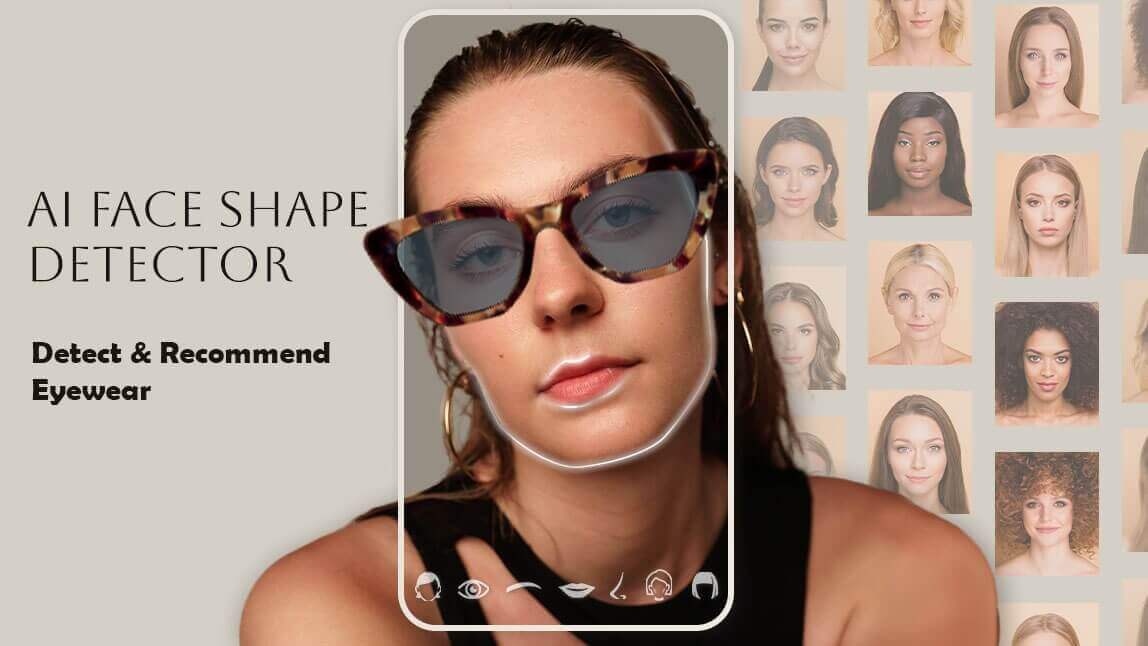
| Eyewear | "Rate my frames" creator series | TikTok, YouTube | Comments, try-on rate | AI Virtual Try-On for Glasses |
| Watches and jewelry | Interactive video ads in premium placements | Open web video, YouTube | Ad recall, purchase intent | AR Watch Virtual Try-On, earrings, rings |
| Apparel | AI styling lookbooks, outfit swap videos | Reels, Pinterest, paid social | Cost per asset, CTR | AI Clothes Try-On |
Pro tip: pair any of these with an AI virtual background changer so one try-on session can become a beach edit, a holiday edit, and an office edit without a reshoot.
What Results Have Brands Seen From Try-On Campaigns?
Talk is cheap. Here is what happened when brands put try-on inside their marketing, not just their product pages.
Teads x Gucci Beauty, Cartier, and Dior
Global media platform Teads added Perfect Corp. virtual try-on to interactive video ads across premium publisher sites. Compared with traditional video ads, Kantar Profiles studies found up to 43% higher ad recall and up to 36% higher purchase intent. Highlights from the Teads success story:
- Gucci Beauty: 6 lipstick shades to try, over 4,200,000 impressions and more than 7,000 clicks on the "Try On" button.
- Cartier: ad recall 25% higher than a classic video campaign, 21% more people rating the brand as innovative, purchase intent 9% higher.
- Christian Dior Couture: +43% ad recall, +62% brand linkage, +36% purchase intent for an earrings campaign.
Jane Iredale on YouTube
Jane Iredale ran virtual try-on inside YouTube in-stream ads. Viewers saw their own face in a picture-in-picture window while the ad played. The result: 11% of viewers clicked through to try a shade (versus a typical 1%), a 51% view rate, and a 22% lift in brand awareness.
Erborian on TikTok
The "Find Your Match" campaign showed how a try-on challenge can make a technical task (choosing a foundation or CC cream shade) feel like entertainment, which is exactly the energy short-form platforms reward.
Want numbers like these for your clients? Browse more Perfect Corp. success stories, then talk to our team about a pilot.
How Do You Build an AI Try-On Content Workflow?

The agencies getting the most out of try-on treat it like a production line, not a one-off gimmick. A simple five step flow:
- Start with the brief, not the tech. Pick one goal (awareness, engagement, or consideration) and one hero format from the table above.
- Digitize the SKUs. Makeup, clothes, and jewelry can often start from high-quality 2D product images; 3D assets are ideal for categories like shoes. Perfect Corp. already supports a large library of brand SKUs, so many products may already be ready to go.
- Generate the try-on assets. Use the YouCam AI API to batch-create looks (makeup, hair, clothes, accessories) for creatives, or let non-technical teams work in the YouCam Online Editor. Teams already running AI agents can connect through YouCam MCP and Agent Skills and request looks in plain language from tools like Claude Desktop, Cursor, or n8n.
- Layer the creator story. Hand the accurate try-on renders to human creators or your AI UGC pipeline for hooks, voiceover, and editing. The product stays true; the storytelling stays flexible.
- Close the loop. Push the best performers into interactive ads where viewers can try the product themselves, then feed try-on data back into the next brief.
Technical specs such as supported input sizes, rate limits, and SDK platforms vary by product. See the documentation in the Perfect Corp. Document Center for details.
How Should Agencies Measure the ROI of Try-On Content?

Clients will ask, "Is this worth it?" Have the scorecard ready before launch:
| Funnel stage | Metric | Why it matters |
|---|---|---|
| Attention | Ad recall, view rate, completion rate | Proves the interactive format cuts through the scroll |
| Engagement | Try-on rate (try-ons / impressions), time in experience | The clearest sign people are playing, not just watching |
| Amplification | Shares, duets, stitches, UGC volume | Measures how much free content the campaign created |
| Consideration | Purchase intent lift, brand linkage (via brand lift studies) | The numbers brand directors report upward |
| Efficiency | Cost per creative asset, sample cost avoided | Shows savings versus photoshoots and physical seeding |
Notice what is not here: on-site add-to-cart and checkout conversion. Those matter, but they belong to the e-commerce side of try-on. We cover that in a separate guide on AI virtual try-on for e-commerce.
What Mistakes Should You Avoid?
- Using generic AI renders for color-critical products. If the shade is wrong, the comments will tell you within the hour.
- Launching three formats at once. Test one play, learn, then scale.
- Hiding the try-on. Put "Try it on" in the first two seconds of the video or the hook text.
- Skipping disclosure. When content uses AI-generated people or AI try-on, follow platform labeling rules and your client's brand guidelines.
- Forgetting the data. Try-on activity is first-party insight. Use it to choose next season's hero shades and frames.
Your next campaign could be the one people play with, not scroll past. Request a Demo or explore the Perfect Corp. demo store to see try-on in action.
FAQ
How is AI virtual try-on used in marketing?
Brands and agencies use it to create interactive ads, social try-on challenges, creator content, and campaign visuals that show the exact product on real people. It also generates first-party data on which products audiences try most.
Can virtual try-on be integrated into social media campaigns?
Yes. Perfect Corp. virtual try-on can be integrated into websites, apps, e-commerce platforms, and social media campaigns, and it has powered campaigns on TikTok, YouTube, and premium open web video placements.
What is the difference between AI UGC tools and virtual try-on?
AI UGC tools generate videos and people at scale for storytelling. Virtual try-on renders a specific real product accurately on a face or body. Agencies get the best results by using try-on for product accuracy and UGC tools for volume and variation.
Does virtual try-on increase ad performance?
In Teads campaigns with Perfect Corp. try-on, Kantar Profiles studies measured up to 43% higher ad recall and up to 36% higher purchase intent versus traditional video ads. Results vary by brand, category, and placement.
Do I need 3D models for every product?
No. Categories like shoes benefit from 3D assets, but clothes, jewelry, and makeup can be supported with high-quality 2D images, which helps teams scale faster.
Does virtual try-on also help e-commerce conversion?
Yes, but that is a different use case. On product pages, try-on supports add-to-cart and conversion; Perfect Corp. reports leading makeup brands seeing up to a 200% increase in conversion rates. This article focuses on marketing and content; see our guide to AI virtual try-on for e-commerce for the on-site side.
How do agencies get started?
Pick one client, one category, and one format. Then contact Perfect Corp. to scope SKUs, channels, and measurement for a pilot.
Sources: Perfect Corp. Teads success story; Perfect Corp. blog on social commerce (Jane Iredale results); Business Wire, Perfect Corp. x Erborian (Oct 2025); Perfect Corp. Virtual Try-On product page.