


 Author: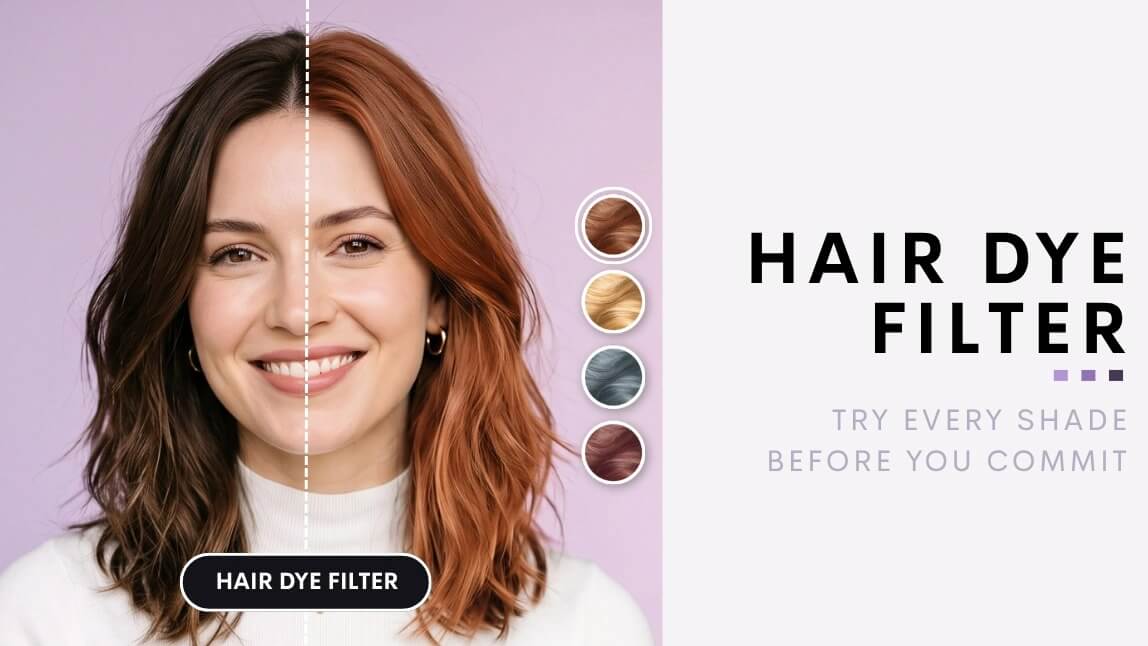
Disclaimer: Some images in this article may have been created or modified by AI
Hair color is the one beauty decision that comes with a six week undo button. That is exactly why the hair dye filter went from social media party trick to genuine pre salon consultation tool. The good ones render strand level shine, respect your natural undertone, and keep up in real time while you turn your head. The bad ones drop a flat wig on your scalp and call it copper. This guide covers how a hair dye filter actually works, how close it gets to real color, which ones survive dark hair, gray regrowth and coily texture, and how beauty brands turn the same technology into a measurable sales channel.
What you will find in this guide:
- Can you try a hair dye filter right now, for free?
- What is a hair dye filter, and how does it actually work?
- How accurate is a hair dye filter compared to real dye?
- Why do some hair dye filters look fake?
- Does a hair dye filter work on dark, gray or textured hair?
- Which type of hair dye filter should you use?
- How do you get the most realistic results?
- Which shades are worth testing in 2026?
- How do beauty brands and salons use a hair dye filter?
- Can you build a hair dye filter into your own app?
- Hair dye filter FAQ
Can You Try a Hair Dye Filter Right Now, For Free?
Yes, and you should do it before reading another word, because the rest of this guide will make a lot more sense once you have watched a shade land on your own hair.
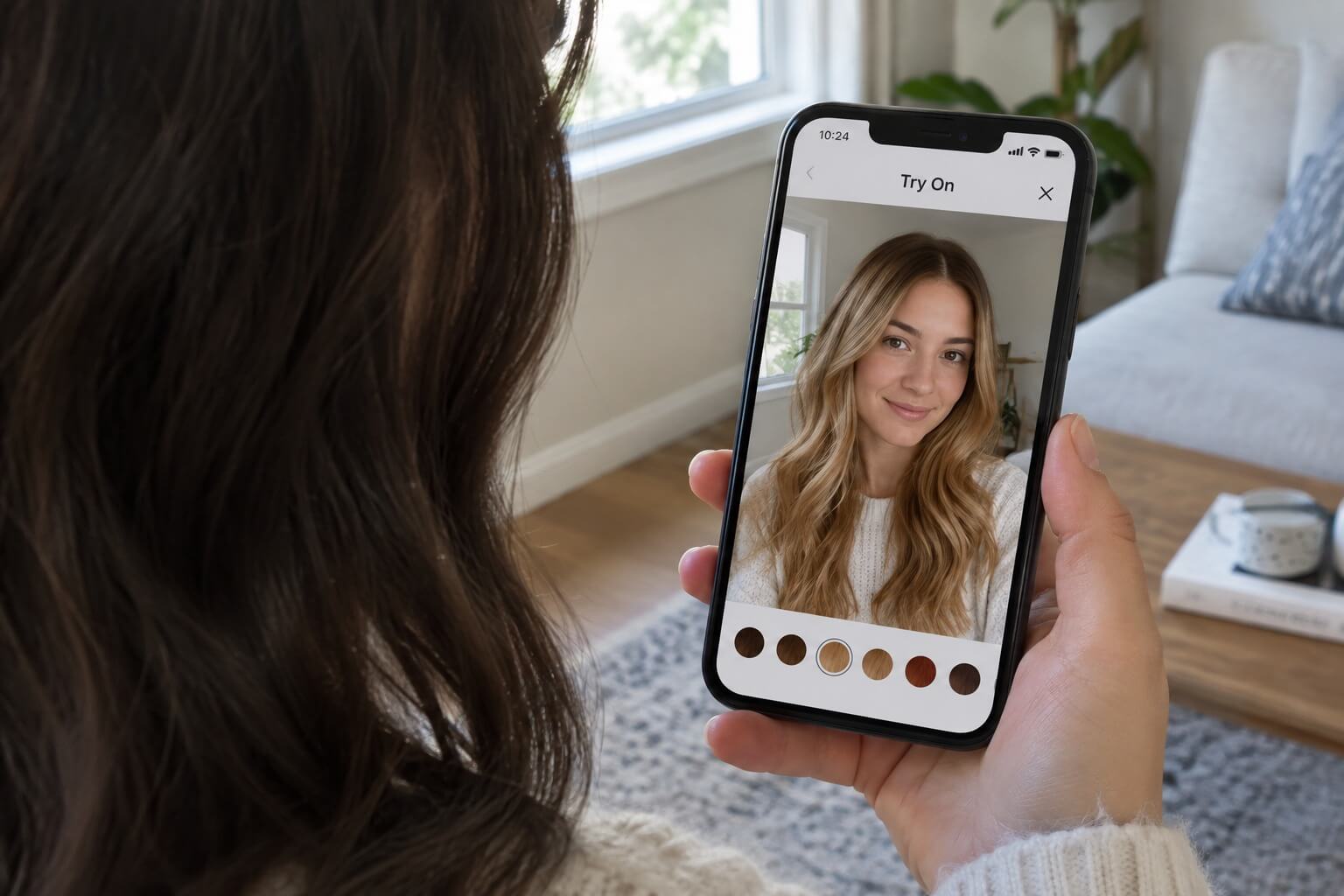
Open the free hair color demo and try your first shade in about ten seconds.
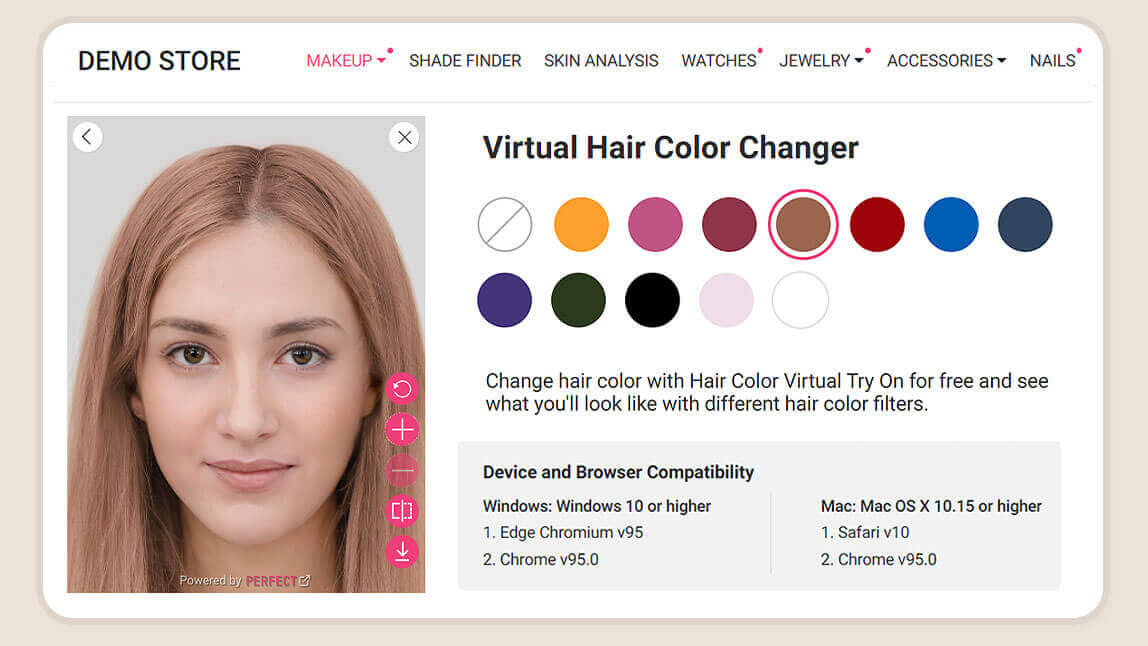
Perfect Corp's free hair color changer demo runs in the browser. No download, no signup, no app store detour. Open it, allow camera access or upload a photo, and start tapping shades. It covers the full range from soft ash blonde through caramel brown, cool black, copper, and the blue and burgundy fashion shades, and it tracks your hair as you move so you can check the color from the side and the back instead of one flattering front facing angle.
Three ways in:
- Live camera. Best for judging how a shade behaves in motion and under your actual room lighting.
- Upload a photo. Best for a careful side by side comparison you can screenshot and send to your colorist.
- Model photo. Best if you just want to browse shades before you commit your own face to the experiment.

Try five shades you would normally pick, then five you would never pick. The second group is where people find their color.
What Is a Hair Dye Filter, and How Does It Actually Work?
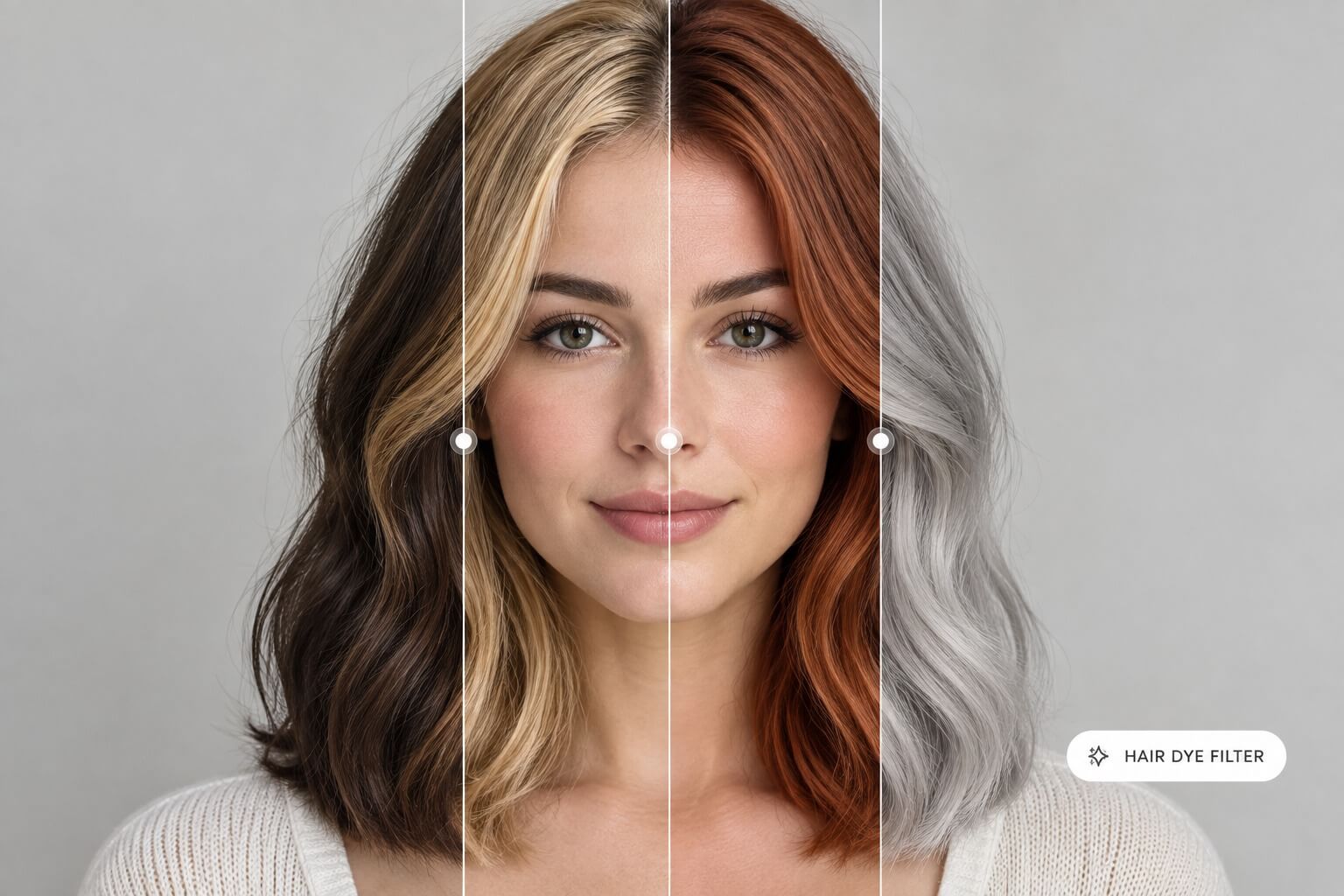
A hair dye filter is a camera or photo tool that digitally recolors your hair so you can preview a shade before dyeing it. It uses AI to separate hair from background, skin and clothing, then applies a new color while preserving the original shine, shadow and texture of each strand, in real time or on a still image.
That definition hides a fair amount of engineering. Here is the pipeline in plain language.
Step 1: Segmentation, or teaching software where your hair ends
The model has to draw a boundary around your hair, which sounds trivial until you consider flyaways, curls that let the background show through, dark hair against a dark wall, and a hoodie that is the same shade as your roots. Modern hair segmentation works at the pixel level and produces a soft mask rather than a hard outline, which is why wispy edges look natural instead of cut out with scissors.
Step 2: Structure analysis, or reading the light before changing the color
Your hair is not one color. It is a gradient of highlights, mid tones, shadow at the roots and a bright band where light hits the crown. A good hair dye filter measures that luminance map first, then repaints the hue while keeping the existing light structure intact. This is the single biggest difference between a convincing result and a sticker.
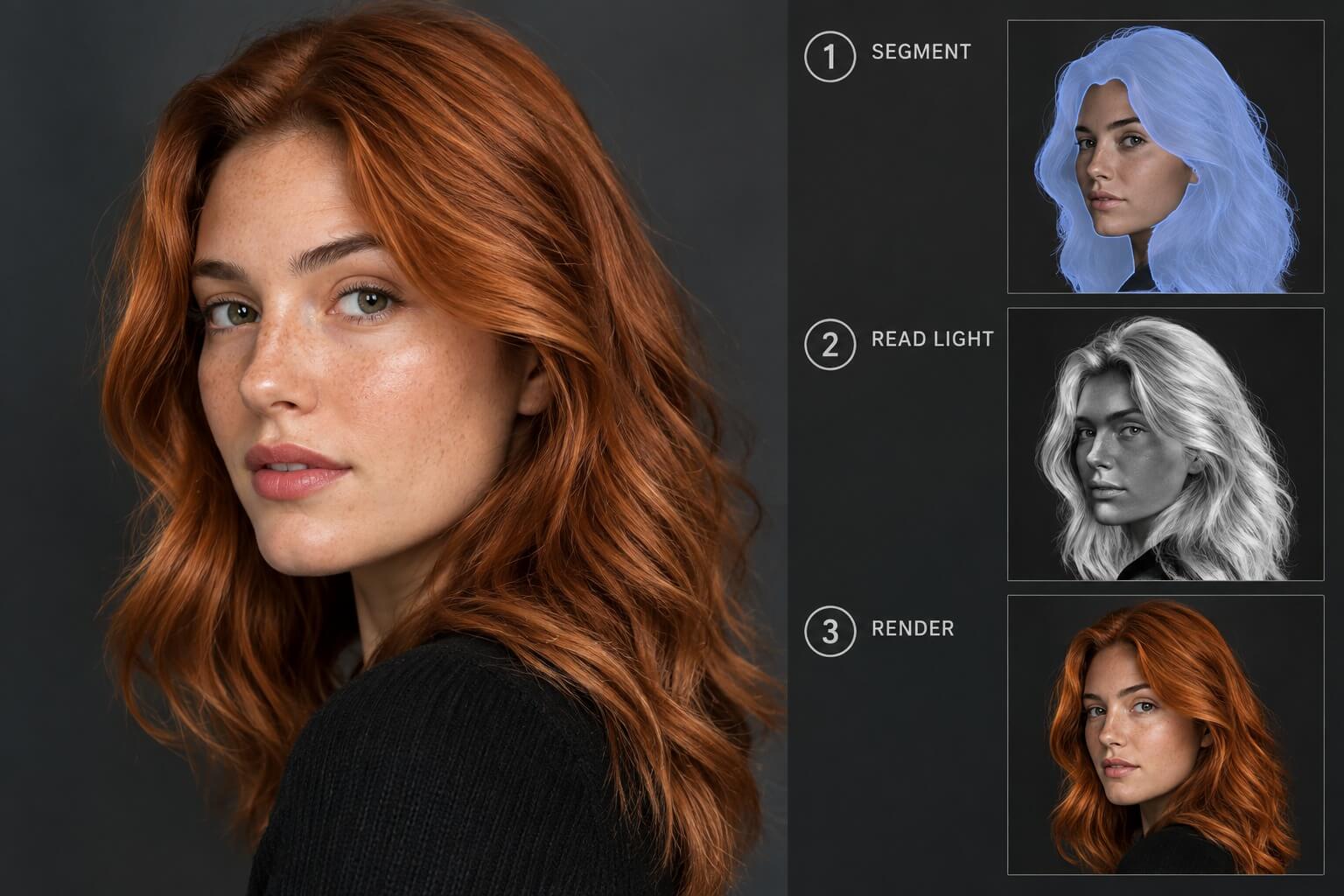
Step 3: Rendering, or making dye behave like dye
Real color deposits differently on different hair. Porous ends grab pigment harder. Coarse hair reflects less. A red over a dark base reads as a warm shimmer, not a fire engine. Advanced rendering simulates that deposit behavior instead of applying one flat overlay, which is why the same shade looks different on two people, exactly as it does in a salon.
See the rendering quality for yourself in the live demo.
What about AI hair color generators?
There are two families of tools and people mix them up constantly. An AR hair dye filter recolors your real hair live, keeping your face, your cut and your length. A generative AI hair color tool creates a new image of you, and it may quietly change your hairline, add volume, or hand you a cut you never asked for. For deciding whether to buy a box of dye, the AR filter is the honest one. For dreaming up a full transformation, generative tools are the more fun option. Perfect Corp's guide to the hairdressing color workflow goes deeper on where each fits in a salon consultation.
How Accurate Is a Hair Dye Filter Compared to Real Dye?
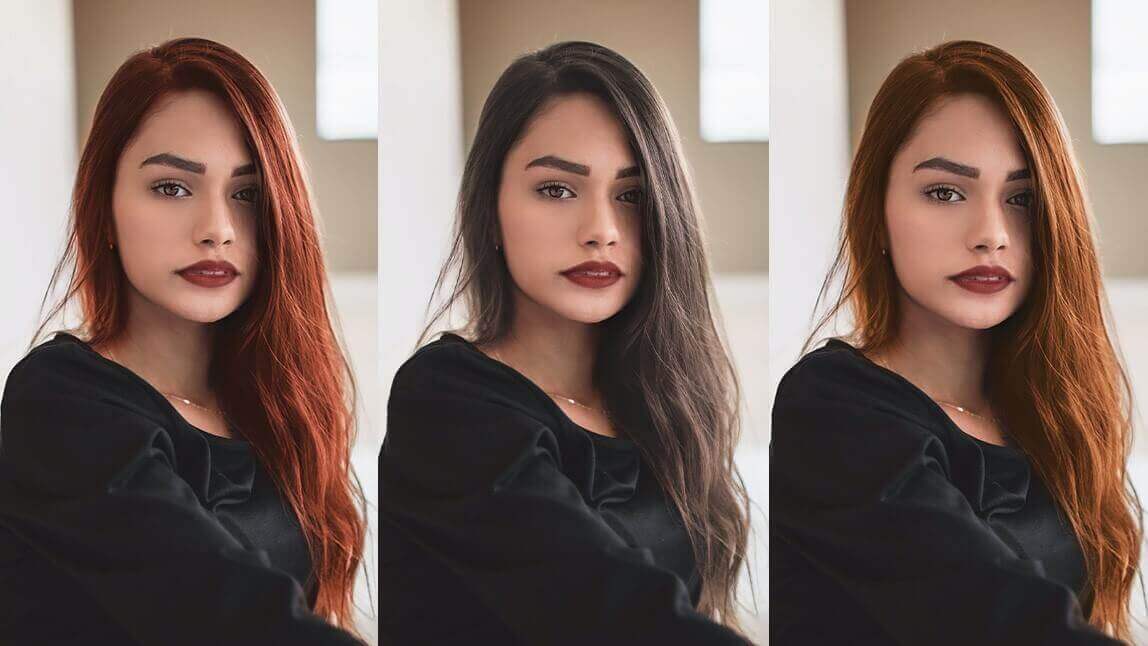
Accurate enough to rule shades out with confidence, and close enough to rule shades in with a colorist's help. It will not promise you a chemistry result.
The honest split looks like this.
| What a hair dye filter predicts well | What it cannot promise |
|---|---|
| Whether a hue flatters your skin undertone | How many sessions of lift your base needs |
| How light or dark a shade reads on you | Whether your ends will pull brassy or muddy |
| Warm versus cool versus neutral direction | How the color fades over six weeks |
| How a shade behaves against your eye color | Chemical compatibility with previous color or keratin treatment |
| Placement ideas such as money piece, ombre or full coverage | The exact developer volume and formula your colorist will mix |
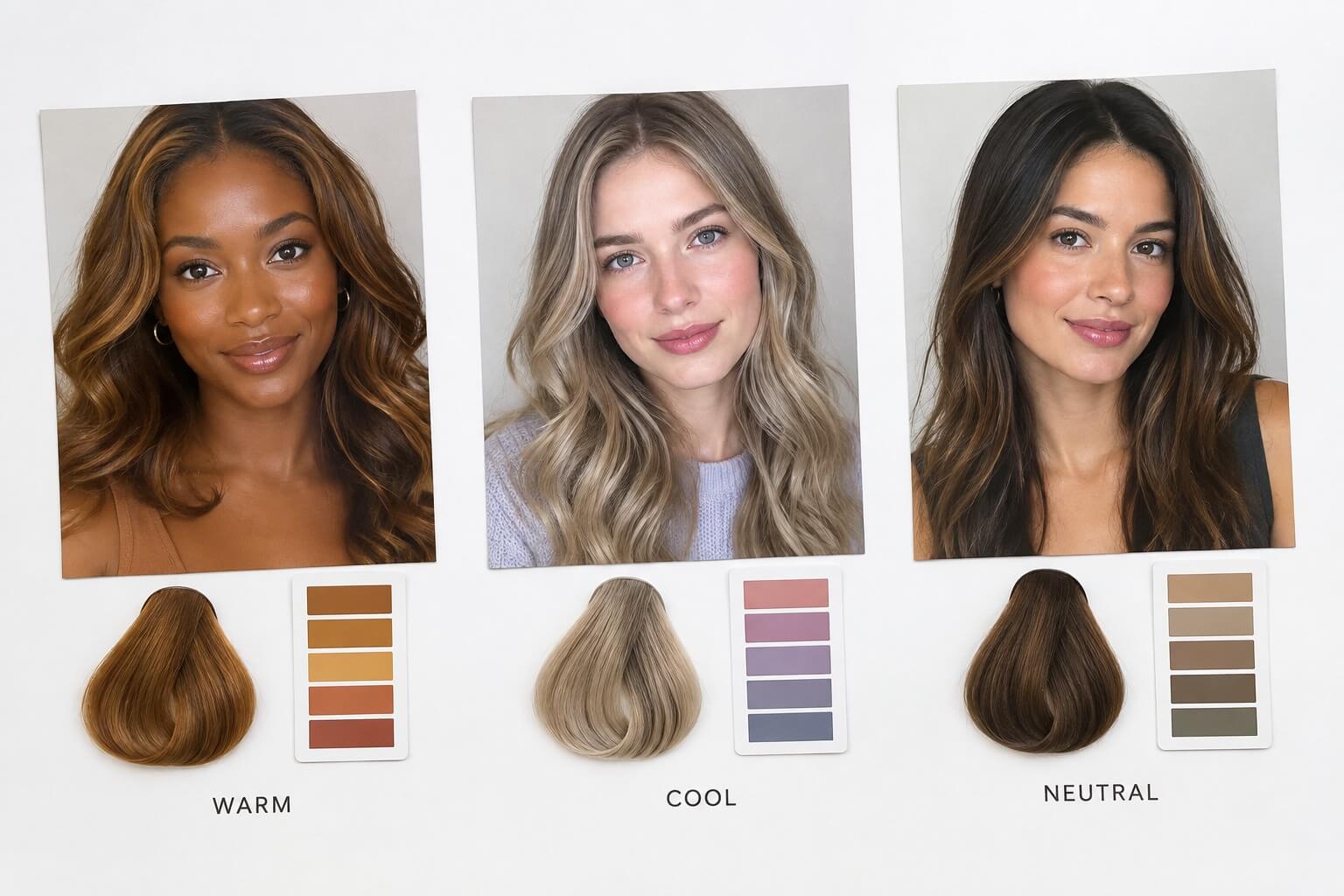
Which shades suit warm, cool and neutral undertones?
Undertone is the variable a filter reads best, because it is purely visual. Check the veins on your inner wrist in daylight, then use the preview to confirm rather than to guess.
| Undertone | Usually flattering | Test carefully |
|---|---|---|
| Warm (golden, olive, veins look green) | Caramel, honey blonde, golden brown, warm copper | Ash tones, which can read gray against warm skin |
| Cool (pink, blue, veins look blue or purple) | Ash brown, cool blonde, blue black, mahogany | Orange based coppers, which can compete with pink in the skin |
| Neutral (a mix, veins are hard to read) | Almost everything, so decide by depth instead of hue | Extreme contrast, which flattens a naturally balanced complexion |
The rule people forget: a shade that looks wrong in the preview is genuinely wrong, but a shade that looks only slightly off is often just one level too light or too dark. Adjust depth before you abandon the color family.
Think of it as a fitting room, not a receipt. A fitting room tells you the cut suits you. It does not tell you how the fabric survives the wash. Used that way, a hair dye filter is remarkably reliable, and it removes the most expensive mistake in hair color, which is committing to a hue that fights your complexion.
Why Do Some Hair Dye Filters Look Fake?
Because they are painting, not rendering. If a filter feels off but you cannot say why, it is almost always one of these five tells.
- Flat color with no shine map. Real hair has a bright band where light hits it. If the color is uniform from root to tip, the filter skipped the luminance step.
- Bleeding at the edges. Color creeping onto the forehead, ears or shoulders means the segmentation mask is too loose, and it gets worse the moment you move.
- Dead flyaways. Fine strands at the outline stay original color while the mass changes, which reads as a wig line even at small sizes.
- Impossible lightness. Platinum applied straight over black hair with zero warmth is the most common fantasy. Real lift passes through orange and yellow first.
- Lag or jitter in live mode. If the color slides half a second behind your head turn, the tracking is running too slowly to be trusted for a side profile check.
A quick field test: turn your head slowly to a three quarter angle, then tilt your chin down so light changes across the crown. Anything built on a flat overlay falls apart in that two second movement.
Does a Hair Dye Filter Work on Dark, Gray or Textured Hair?
This is the question most articles skip, and it is the one that decides whether the tool is useful to you or just useful to someone with straight light brown hair in good lighting.
On dark and black hair
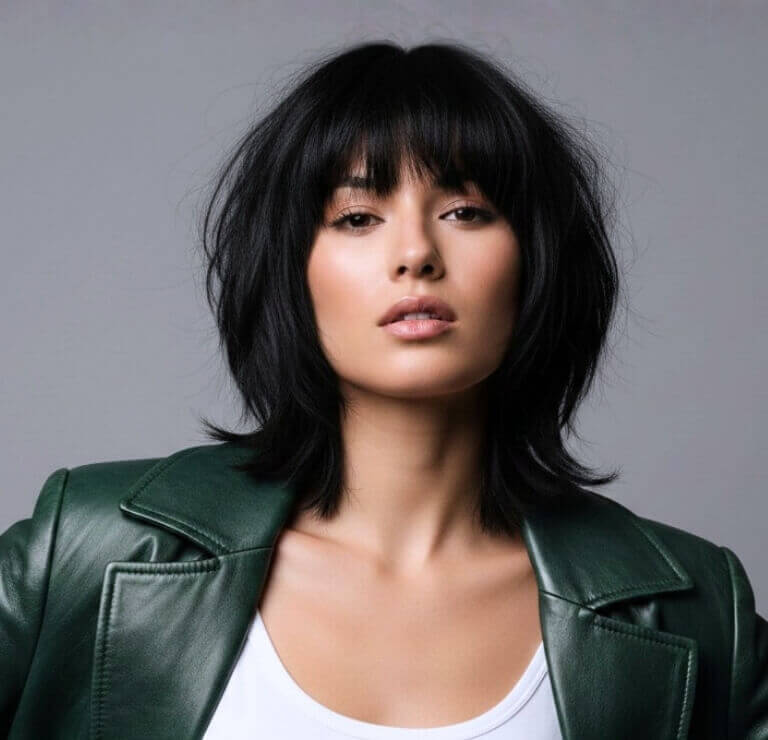
Dark base? Check how a bright shade really lands before you buy lift.
Dark hair absorbs light, so there is less highlight information for a filter to preserve, and low quality tools respond by flooding the whole mass with pigment. Better engines handle this by simulating deposit over a dark base, which means a copper reads as a warm glow through the mid lengths rather than a solid orange helmet. That is also the physically honest answer, because going bright over a level 2 base requires lift in real life too. If a filter shows you icy blonde over jet black with no warmth at all, it is selling a fantasy your colorist will spend three appointments negotiating with.
On gray and silver hair
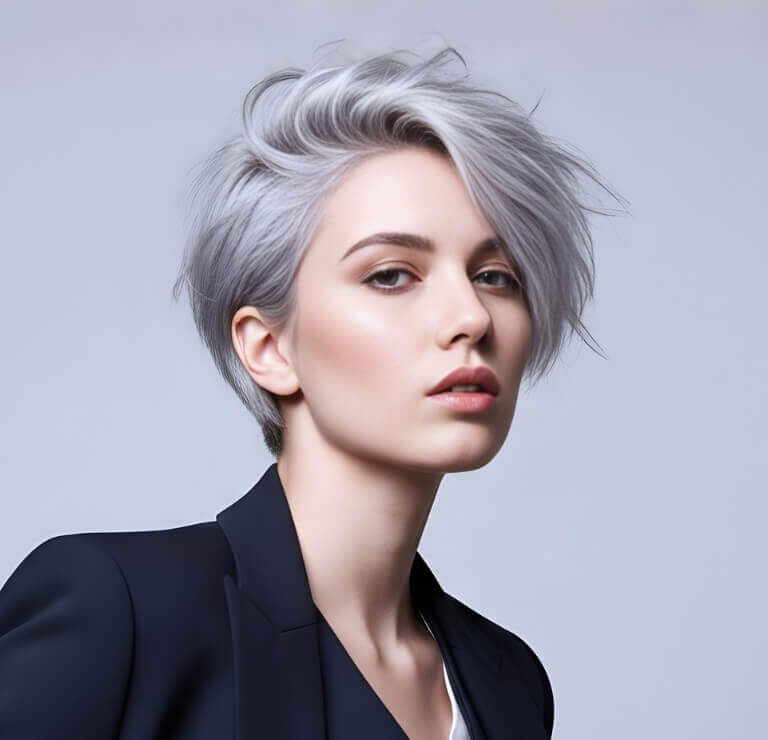
Test a gray blend and a full silver on your own hair, side by side.
Gray hair is the opposite problem. It is highly reflective, often coarse, and it takes color unevenly in reality. Filters that measure luminance properly are excellent here, because gray gives them a bright, clean canvas to work with. Two things worth previewing specifically: full coverage shades that neutralize yellow tones, and deliberate silver or ombre gray looks that lean into the color rather than hiding it. Gray blending previews are also the single most requested consultation feature among salon clients over 40, which is why professional grade tools treat it as its own category rather than one more swatch.
On curly, coily and textured hair
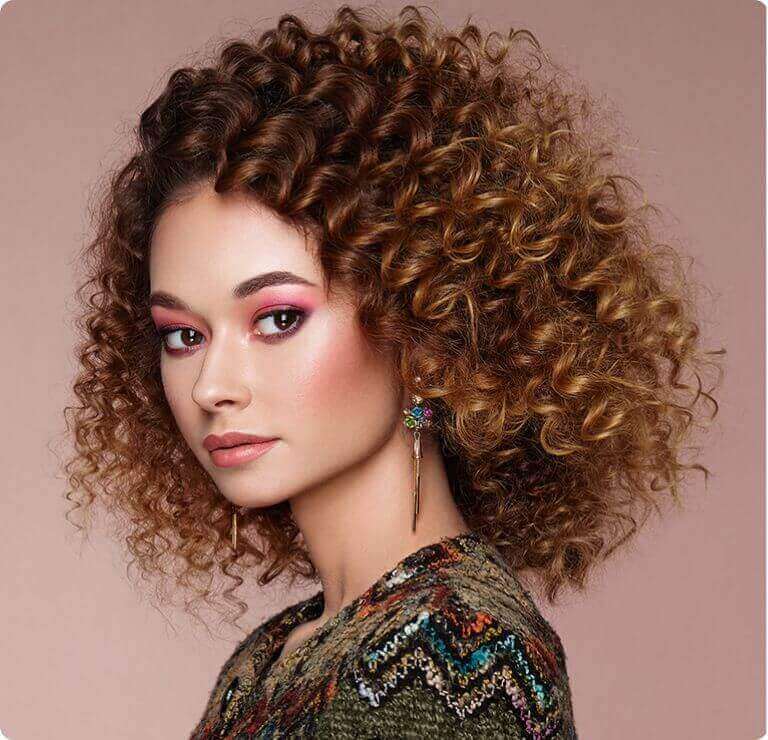
Put your own curl pattern through the demo and watch the edges.
Texture is the hardest case in the entire category. Curls create thousands of tiny background gaps, and a mask that is even slightly too generous will color the room behind your head. Watch for two things when you test a filter on textured hair: whether the background shows through the curl pattern correctly, and whether the color follows the depth of each coil, going darker inside the curl and brighter on the outer arc. If both hold up, the underlying segmentation is genuinely good. If your curls turn into a solid colored cloud, move on.
On very short cuts and buzz cuts
Short hair leaves little surface area and puts the scalp in play, so filters that ignore skin boundaries will tint your head. It is a fast quality check, and one worth running before you trust a tool with a bigger decision.
Which Type of Hair Dye Filter Should You Use?
Not all of them are trying to do the same job. Match the tool to the decision you are actually making.
| Type | Best for | Realism | Watch out for |
|---|---|---|---|
| Social media AR filter | Fun, sharing, quick inspiration | Low to medium | Beauty smoothing changes your face too, so the color read is skewed |
| Photo editing app | Careful still image comparison | Medium | Manual brushing, results depend on your patience |
| Brand virtual try on | Matching a specific product shade you can buy | High | Limited to that brand's shade range |
| Professional consultation tool | Pre salon planning and gray blending | High | Usually accessed through a salon or brand site |
| Developer API | Building the feature into your own app or site | High | Requires integration work, though a hosted playground removes most of it |
If your goal is to decide on a real shade, skip straight to a brand grade try on. If your goal is to build the experience for other people, jump to the API section below.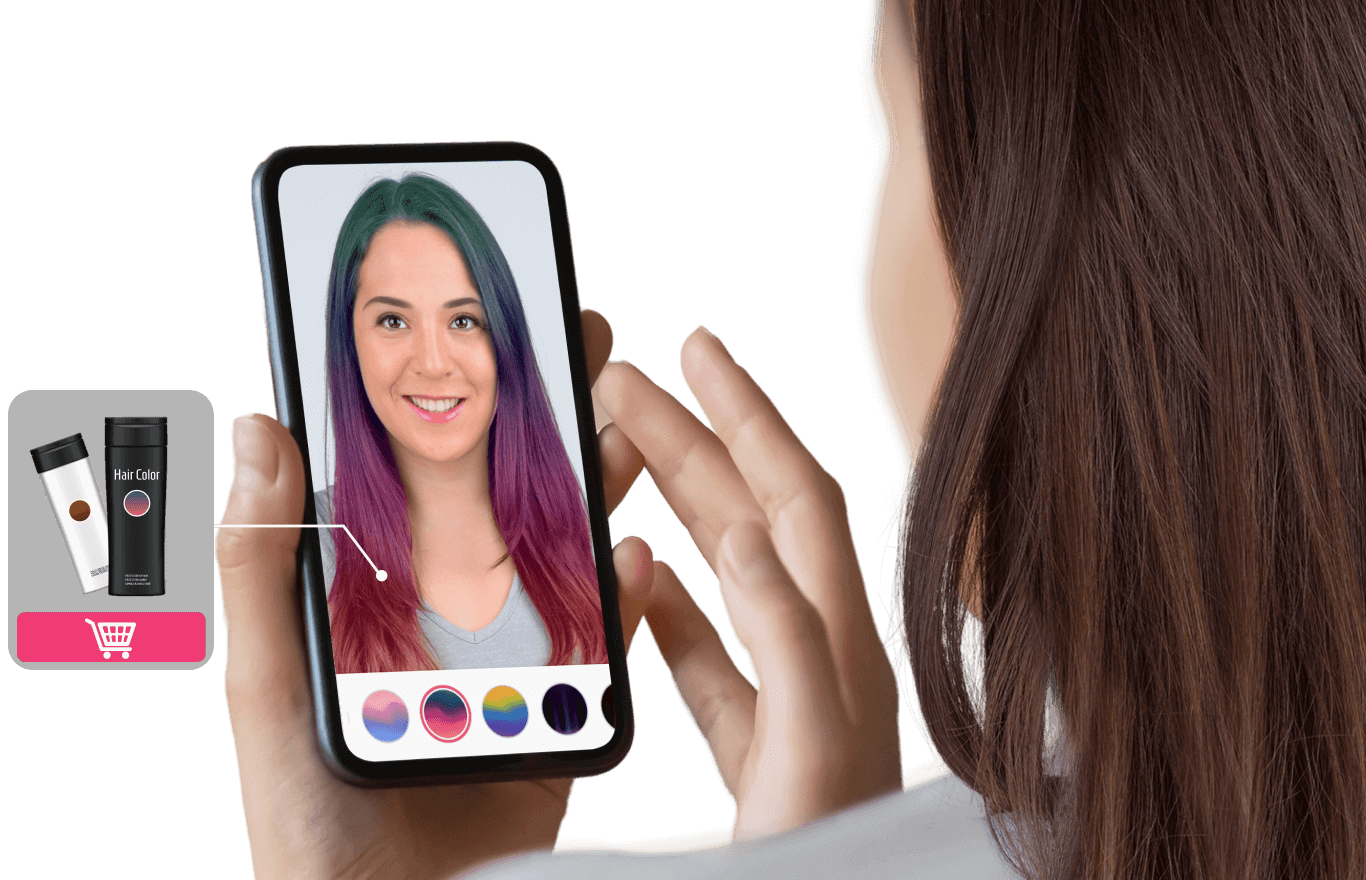
How Do You Get the Most Realistic Results?
The engine matters, but so does what you feed it. Five habits separate a useful preview from a misleading one.
- Use diffuse daylight. Face a window, avoid overhead spotlights, and never test a shade under warm bathroom bulbs, which push every color amber.
- Get your hair off your face and shoulders. Overlapping hair and clothing in the same tone is what makes masks bleed.
- Test three angles. Front, three quarter and back. Color that reads gorgeous head on can look ashy from behind.
- Screenshot everything and compare later. Shades look different in sequence than they do side by side. Your favorite in the moment is rarely your favorite in a grid.
- Test against your real wardrobe. Wear the neutral you actually own, not a photo studio white, so the color is judged in context.
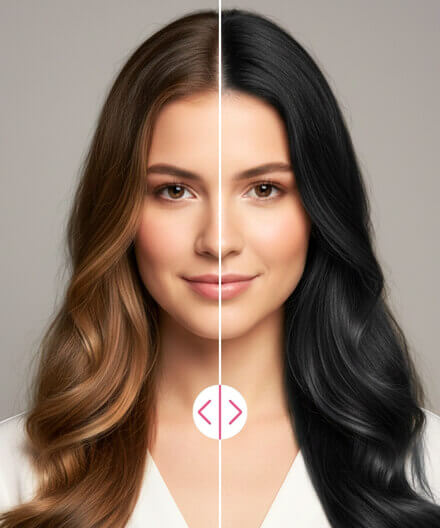
Run the three angle test in the demo before you book anything.
One more that people resist: try the shade two steps away from your current color before the shade five steps away. Most disappointing dye jobs are not the wrong hue, they are the right hue at the wrong depth.
Which Shades Are Worth Testing in 2026?
Search behavior and salon demand have converged on a handful of directions this year. These are the ones worth putting through a filter before you book.
Expensive brunette and glazed espresso
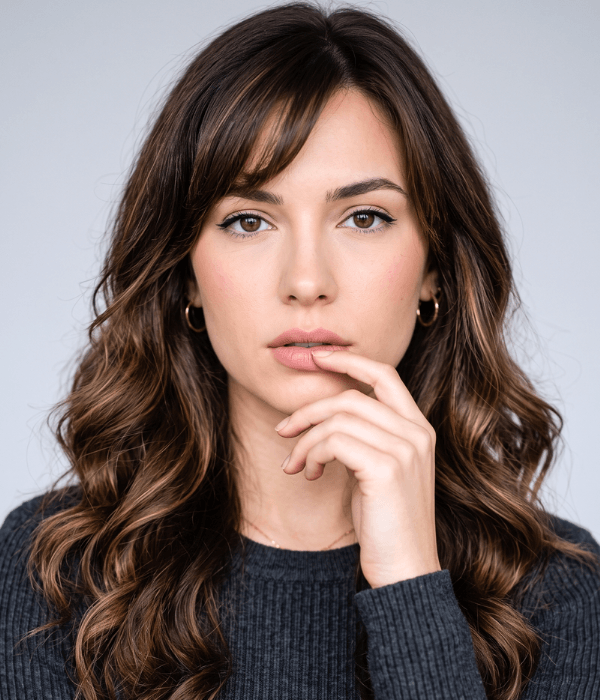
Rich, low maintenance, and heavily dependent on shine rather than lift. This is the category where a filter with proper luminance rendering earns its keep, because the difference between flat brown and glazed brown lives entirely in the highlights.
Honey and caramel blonde
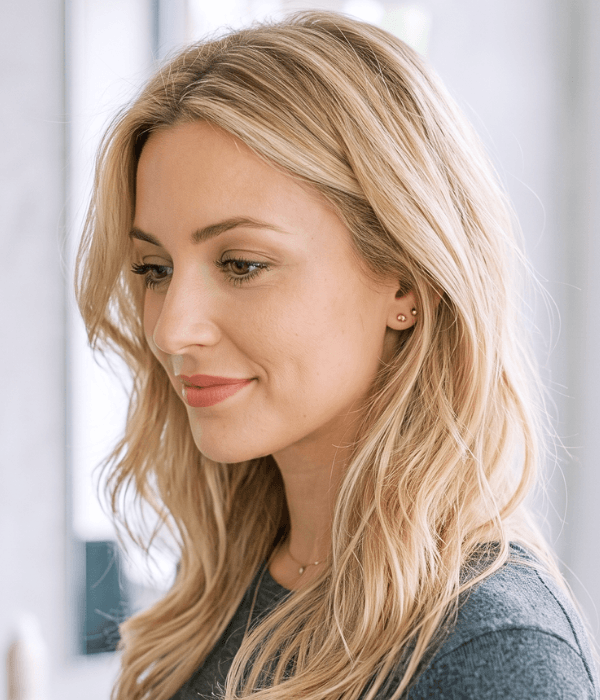
Warm blondes flatter a wider range of undertones than platinum, and they grow out more gracefully. Preview these against your bare skin, no makeup, since warmth interacts with your complexion more than any other family.
Copper, ginger and warm red
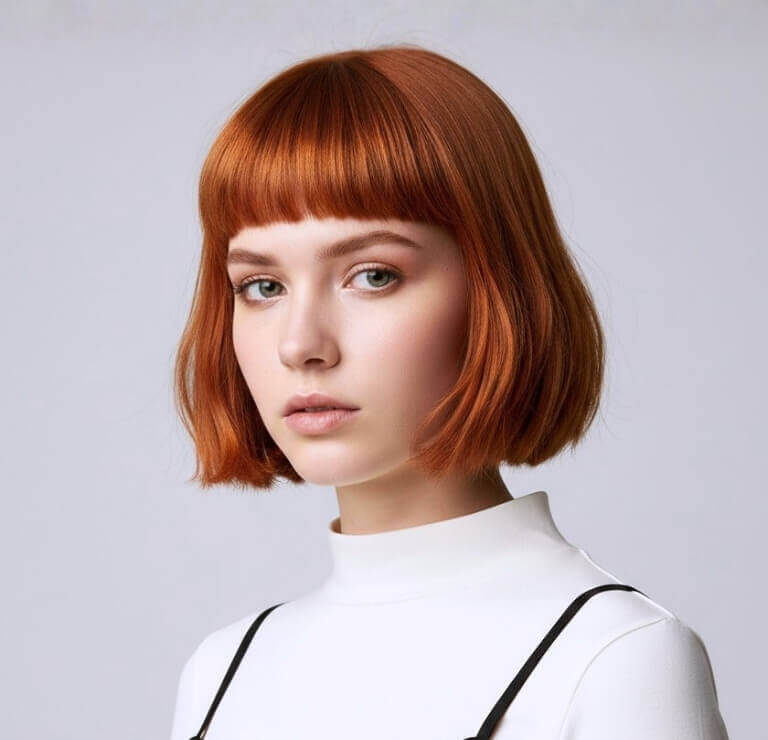
Copper is the shade people misjudge most, so preview it before you buy the box.
The loudest category of the last two years and still climbing. Reds are also where filters get exposed fastest, because red over a dark base behaves very differently from red over a lifted base. If a tool shows you the same red on everyone, do not trust it.
Cool black and blue black
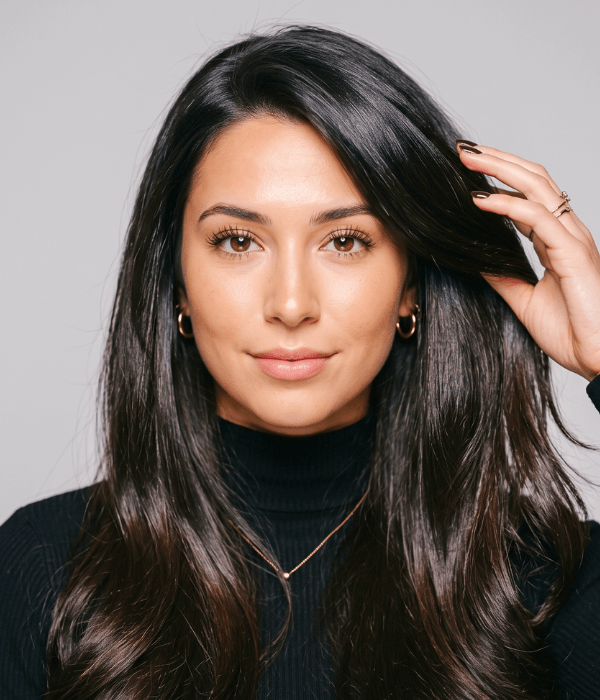
The high contrast, high shine look that photographs beautifully and demands a genuinely good shine map to preview. Worth testing if you already have dark hair and want depth rather than change.
Money piece, ombre and balayage placement
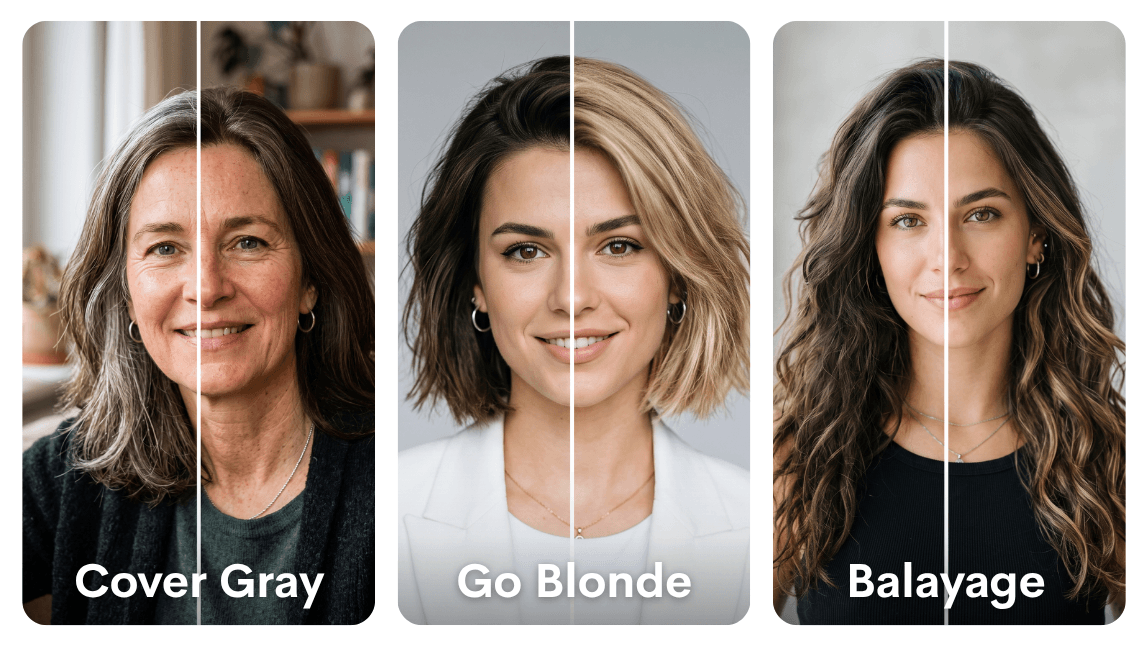
Placement is a separate decision from shade, and it is the one most people get wrong. Preview a face framing money piece before you commit to a full head of color, because it often delivers the change people are actually after at a fraction of the damage.
Fashion shades and pops of color
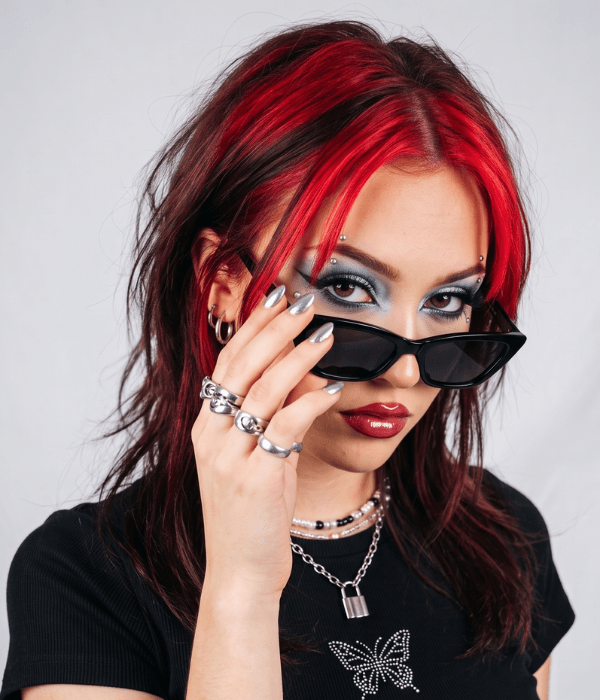
Blue, burgundy and purple keep showing up as accent placements rather than full head commitments. They are also the easiest shades to test digitally, since the difference between fun and unflattering is obvious within about three seconds of preview.
Silver, ash gray and deliberate gray
Growing fast across every age group, either as a full transition or as a blended grow out. Test both the neutralized version and the fully embraced version. They read as completely different personalities.
How Do Beauty Brands and Salons Use a Hair Dye Filter?
Here is the part consumers rarely see. The same technology behind a fun shade preview is now a serious commerce and consultation layer for the hair category, and the reason is simple: hair color has the highest hesitation rate in beauty. It is semi permanent, it is visible from across a room, and the cost of getting it wrong is measured in weeks.
Perfect Corp works with more than 800 brand partners across beauty and fashion, and hair color try on shows up in four recurring deployments.
Ecommerce shade selection
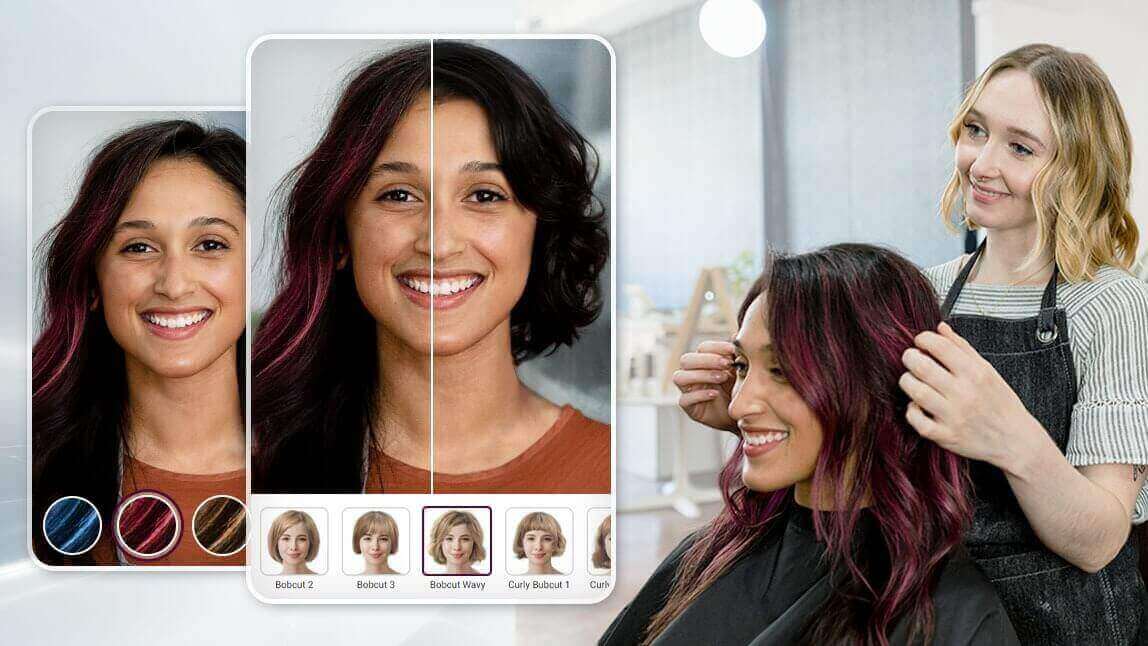
See the shopper side of the experience in the live demo store.
A hair color product page with a live try on turns an abstract swatch into a personal preview. Shoppers who engage with try on tend to browse more shades, spend longer on the page, and return fewer products, because the shade they receive is the shade they already saw on themselves.
In salon consultation
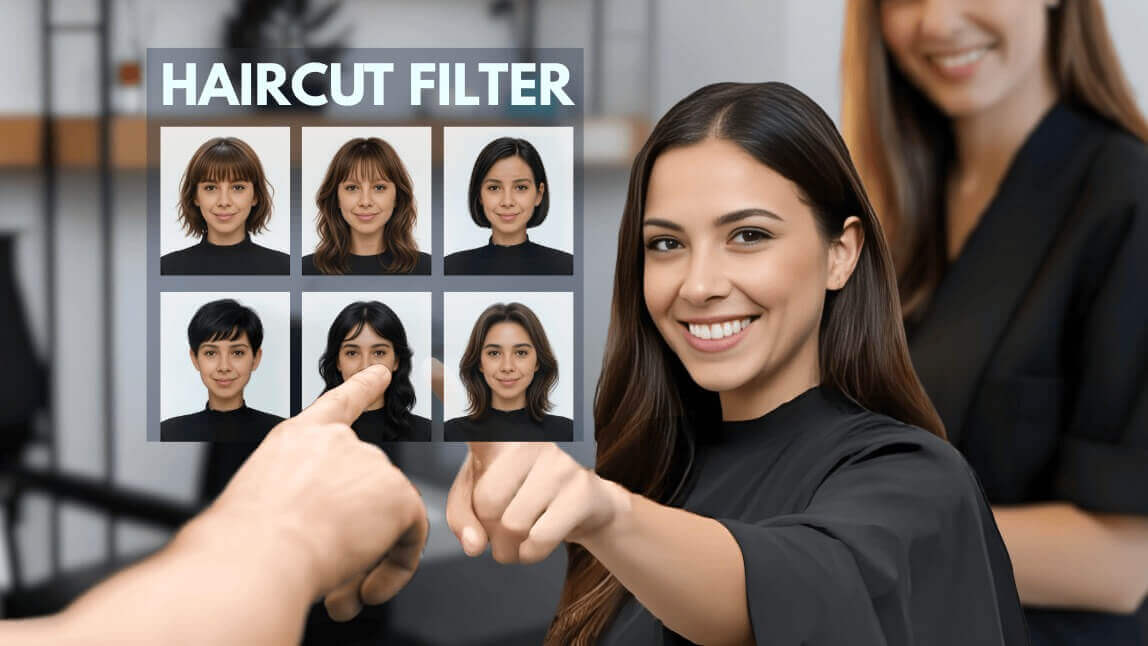
See how the AI hair color simulator fits into a salon consultation.
Colorists use try on to close the gap between what a client says and what a client means. "Ash blonde" covers about nine different outcomes. Showing three of them on the client's own hair, in the chair, before mixing anything, saves the appointment and the relationship. The AI hair color simulator is built for exactly this consultation moment, with real time tracking so the client can move naturally instead of holding a pose.
Retail and in store displays
Smart mirrors and tablet stations in the hair aisle answer the question a shelf full of boxes cannot: what does level 7 golden brown look like on me, not on the model printed on the box.
Social and campaign activations
Shade launches travel further when people can wear the color rather than look at it. Campaign try on links carry the shade name into the share, which does the product education for free.
What should a brand actually measure?
Try on is easy to launch and easy to leave unmeasured. Four numbers tell you whether it is working:
- Shades per session. A healthy try on experience sees people test several shades, because exploration is the behavior that builds confidence.
- Try on to add to cart rate compared with the same page for users who never opened the experience.
- Return and exchange rate on color for try on users versus everyone else, which is where the strongest case for the investment usually lives.
- Consultation length in salon, since a shorter, clearer consultation raises both chair turnover and satisfaction.
Set the baseline before launch. Retrofitting a comparison after the feature is live is how good results end up unprovable.
If you want to see the range of hair experiences side by side, the virtual hairstyle showcase covers cut, length and bangs alongside color.
Can You Build a Hair Dye Filter Into Your Own App?
Yes, and it is a great deal easier than the segmentation discussion above suggests, because the hard parts are already solved and delivered as an endpoint.
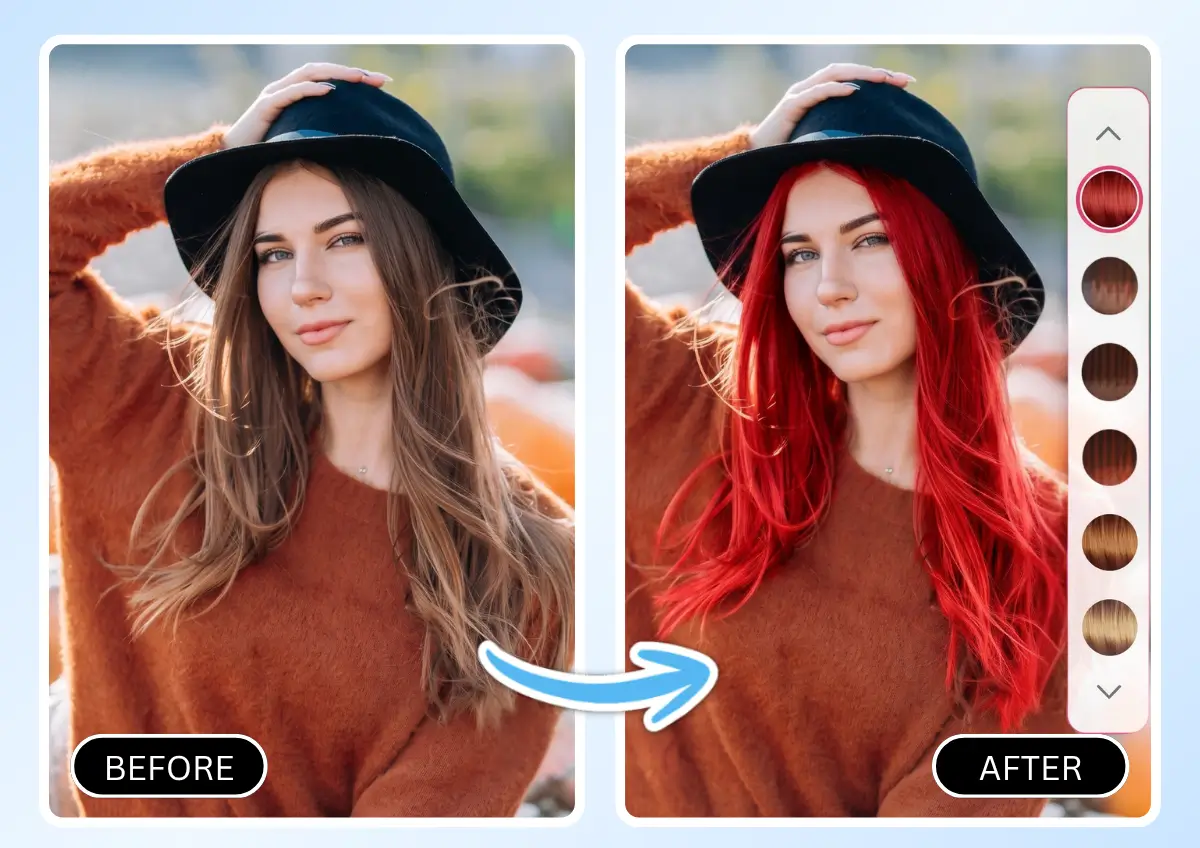
Test the hair color API with your own images in the playground.
A hair color API typically handles hair detection, luminance mapping, color deposit simulation and rendering, then returns either a processed image or a live rendering layer for your app. What you supply is a photo or camera stream and a shade definition. What you skip is a research team.
Practical notes for anyone scoping this:
- Decide between photo and live first. A still image API is dramatically simpler to ship and covers most ecommerce use cases. Live AR is worth it for consultation and in store.
- Map your real shade catalog early. The value comes from previewing shades customers can actually buy, so the color definitions should come from your formulation team, not from a generic palette.
- Test on the hardest cases in week one. Dark bases, coily texture, gray coverage and short cuts. If it holds up there, everything else is easy.
- Plan for the share. A preview that cannot leave the page loses most of its marketing value.
You can test hair color and the wider beauty AI stack directly in the YouCam AI API playground, upload your own images, see the output, and read the request format before writing any integration code.
Hair Dye Filter FAQ
Is there a filter that shows what you would look like with a different hair color?
Yes. Browser based hair color try on tools recolor your hair live through your camera or on an uploaded photo, with no app install required. They preview hue, depth and placement on your own hair rather than on a model.
Can I try hair colors on my own photo for free?
Yes. Free web try on tools let you upload a photo and cycle through shades without an account. Uploading a photo generally gives you a more careful comparison than live camera, since lighting stays constant across every shade you test.
How accurate are hair dye filters compared to real dye?
Very reliable for hue direction, depth and whether a shade suits your complexion. Not reliable for chemistry, meaning the number of lift sessions, how your ends will pull, or how the color fades. Treat the result as a styling decision, not a formula.
Does a hair dye filter work on dark hair?
Good ones do. They simulate how pigment deposits over a dark base, so bright shades read as warm tone shifts rather than impossible platinum. If a tool shows icy blonde over black hair with zero warmth, its preview is not physically honest.
Do hair color filters work on curly or textured hair?
The best ones do, and it is the fastest quality test available. Check whether the background is still visible through your curl pattern and whether color follows the depth of each coil. If your curls become a solid colored shape, the segmentation is not good enough.
Can I see balayage, ombre or a money piece with a filter?
Yes, placement previews are widely supported alongside full coverage shades. Placement is worth testing separately from color, since a face framing money piece often delivers the visual change people want with far less commitment.
Is there a hair dye filter that works without downloading an app?
Yes. Web based try on runs in your phone or desktop browser, which is also why it is the format brands prefer, since there is no install step between curiosity and preview.
What is the best hair dye filter for gray coverage?
Look for tools that treat gray blending as its own preview mode rather than one shade among many. Gray hair is reflective and takes color unevenly, so previews that simulate coverage percentage are far more useful than a flat swatch.
How do I test red or copper shades properly?
Test them in daylight, against your bare skin, and from at least two angles. Red is the family most affected by your natural base and undertone, so a red that looks incredible in one photo can read completely differently in motion.
Should I trust a hair dye filter before going to the salon?
Trust it to narrow the conversation, not to replace it. Walking in with three saved previews and a placement idea gives your colorist a far better brief than a saved photo of someone else's hair, and it removes most of the guesswork from the consultation.
Can businesses add a hair dye filter to their own website?
Yes, through a hair color API or SDK that handles detection, rendering and shade mapping. Most teams start with a still image implementation on product pages, then add live AR for consultation and in store use.
Try Your Next Shade Before You Commit
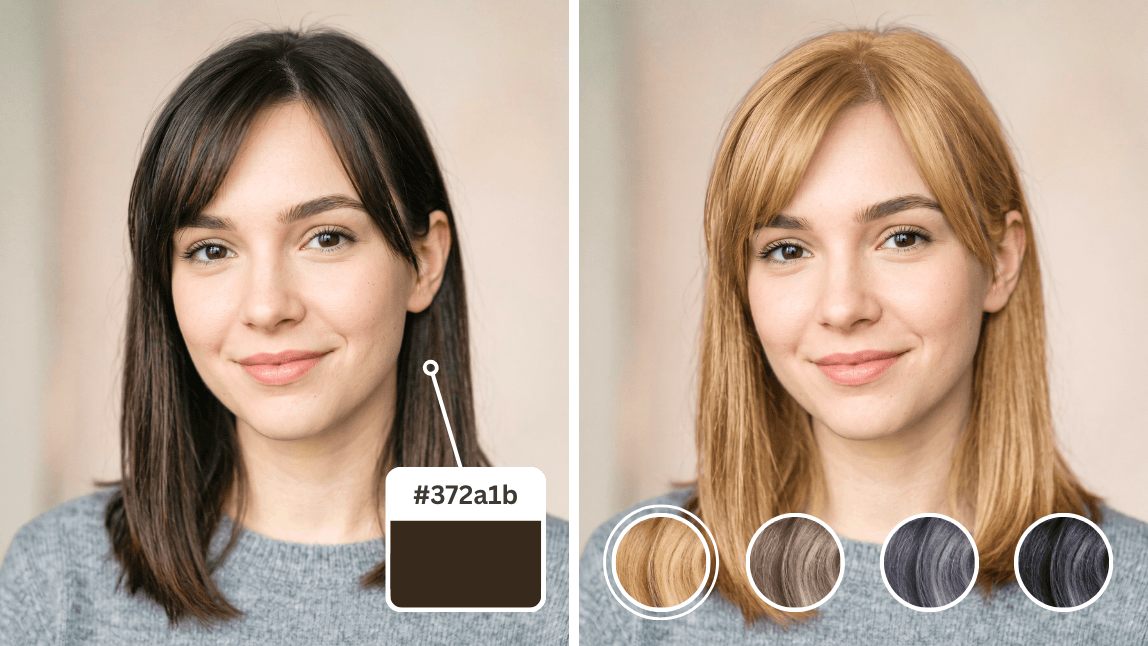
Start with three shades in the free demo, then bring the screenshots to your colorist.
The best reason to use a hair dye filter is not that it predicts the future. It is that it kills the bad ideas early and gives you the language to describe the good one. Ten minutes of tapping shades will teach you more about what suits you than a year of saving other people's hair on your phone.
Start with the free hair color try on demo, test the shades you would never normally pick, then bring your three favorites to your colorist. If you are on the business side and want this experience on your own product pages or in your salons, explore how beauty brands are deploying AI try on or contact Perfect Corp for a demo.



 English


