


 Author: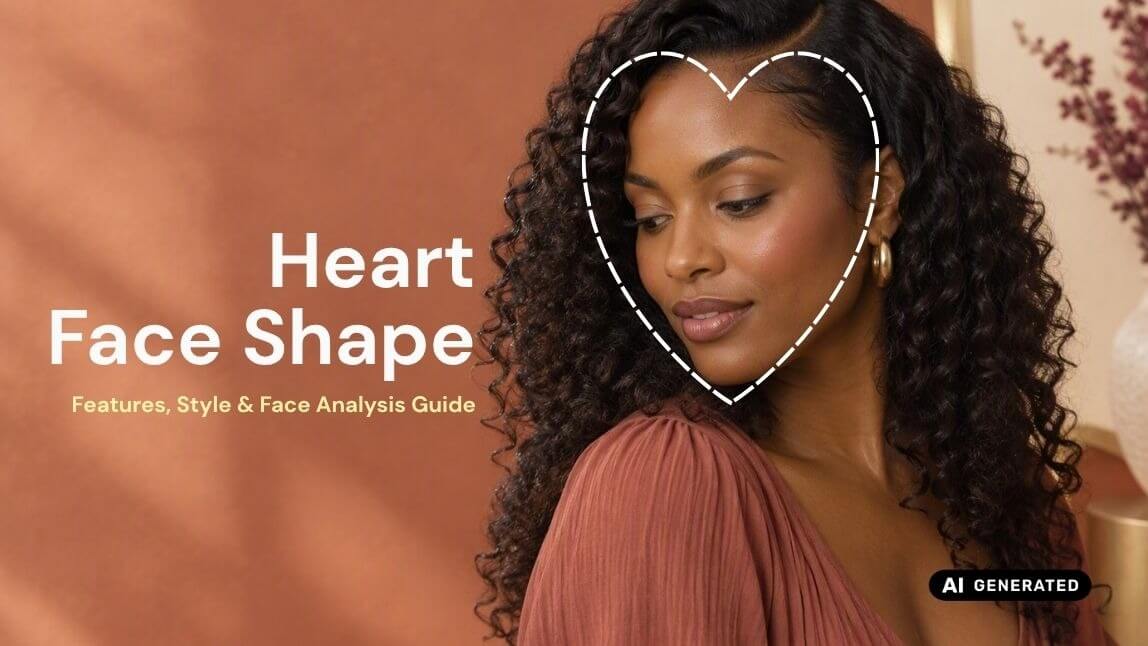
A heart face shape is typically widest across the forehead or upper cheekbone area, then narrows through the jawline toward a smaller, more pointed chin. This creates a distinctive upper-to-lower-face contrast that can look softly curved, clearly defined, or somewhere in between.
Face-shape categories are style references, not fixed rules. Many people have a mix of heart, oval, diamond, or triangle traits, and the most useful styling choices are the ones that match their preferences, hair texture, frame fit, and everyday routine.
If you are unsure whether heart is the closest match, start with our face shape test and AI analyzer guide to compare visible proportions across common face-shape categories.
Face-shape information is intended for personal style exploration. It does not define attractiveness or prescribe a single “best” hairstyle, makeup look, or frame shape.
What Is a Heart Face Shape?
A heart-shaped face commonly has a wider forehead, prominent upper cheekbones, and a jawline that becomes narrower toward the chin. The chin may look softly pointed or more clearly defined, depending on the person’s natural facial structure.
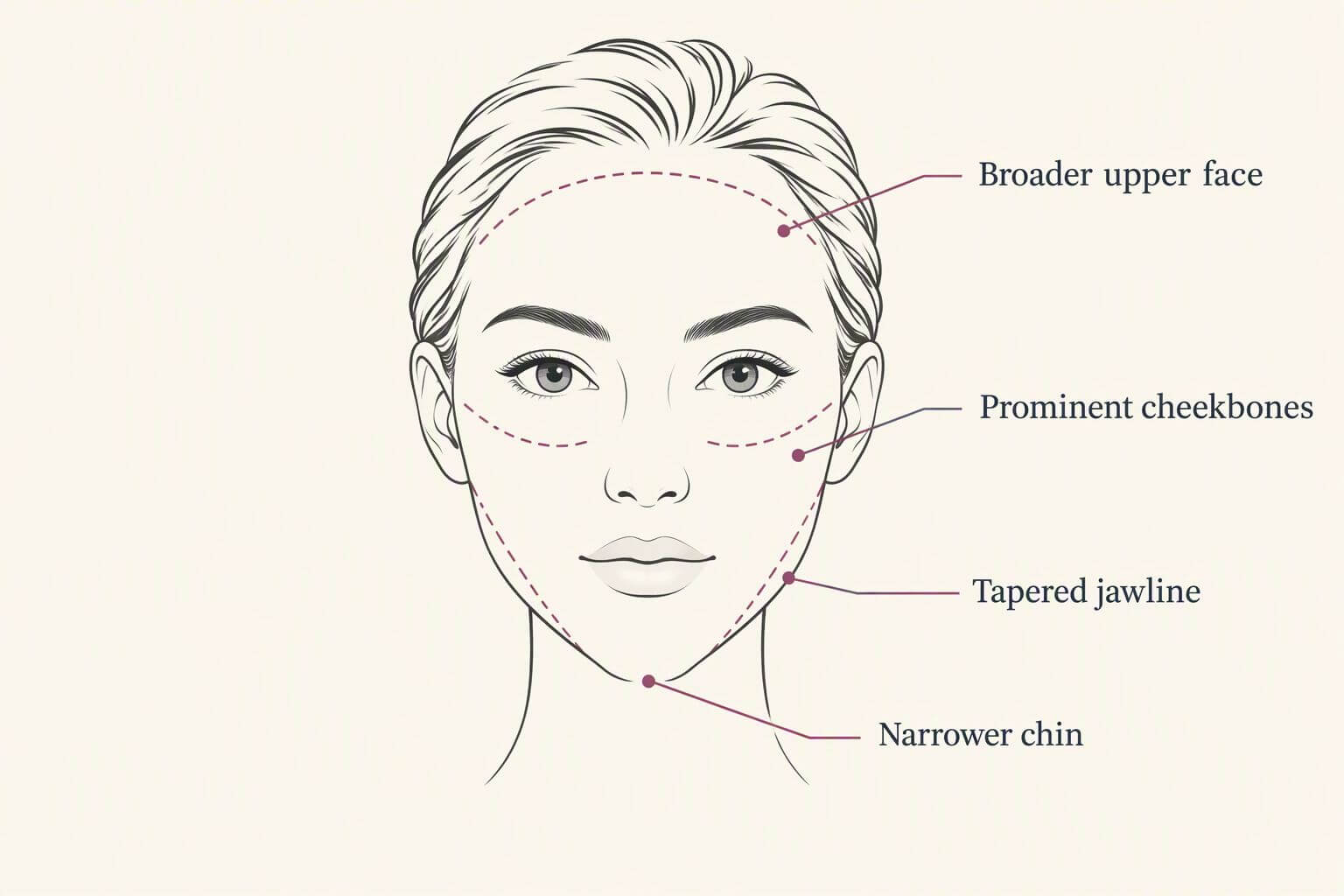
The name refers to the overall outline, not a literal heart. A person can have a broad forehead and tapered jaw without having a sharply pointed chin, while others may share traits with oval or diamond face shapes.
Common Heart Face Shape Features
- A forehead that appears broader than the jawline
- Cheekbones that are prominent in the upper or middle face
- A lower face that narrows from the cheeks toward the chin
- A chin that is rounded-pointed, softly tapered, or visibly narrow
- A jawline that does not appear as wide or angular as the upper face
How to Tell if You Have a Heart Face Shape
Start with a front-facing photo or mirror view in even lighting, with your hair pulled away from the forehead, cheekbones, and jawline. Focus on the overall width pattern from top to bottom.
- Compare your forehead and jawline: does the upper face appear wider?
- Notice whether your cheekbones look prominent relative to the lower face.
- Follow the jawline toward the chin: does it gradually narrow?
- Check whether the chin looks smaller, tapered, or gently pointed.
- Consider nearby categories if your traits overlap; mixed features are common.
If you want a photo-based reference, try Perfect Corp.’s AI Face Analyzer demo . It compares visible facial proportions with common face-shape categories. Treat the result as a style reference because lighting, camera angle, hair, expression, and natural trait overlap can affect how a face appears.
Photo tip: Use a front-facing photo at eye level with even light and a relaxed expression. Hair across the forehead or jaw, a close wide-angle selfie, and head tilt can make the upper or lower face appear wider than it is.
Heart Face vs. Similar Face Shapes
| Face shape | Where the face appears widest | Lower-face outline |
|---|---|---|
| Heart | Forehead or upper cheekbone area | Tapers toward a narrower, often pointed chin |
| Diamond | Cheekbones, with a narrower forehead | Narrows toward a smaller chin |
| Oval | Usually around the cheekbones, with gradual tapering | Softly tapered with a rounded chin |
| Triangle | Jawline and lower face | Broader toward the jaw rather than the forehead |
Heart and diamond shapes are especially easy to confuse. Both can have prominent cheekbones and a narrower chin, but a heart face is generally broader across the forehead, while a diamond face is narrower at the forehead and widest at the cheekbones.
Framing, Volume, and Hair Ideas

A heart face shape creates a natural contrast between the upper and lower face. Hairstyle choices can either emphasize that contrast or create a different framing effect through movement, fringe, layers, or volume around the jaw and chin.
| Style intention | Ideas to explore |
|---|---|
| Add movement near the lower face | Chin-length bobs, lobs, waves, layers beginning near the cheekbones or jaw |
| Frame the forehead | Curtain fringe, side-swept bangs, textured fringe, side parts |
| Emphasize natural structure | Sleek updos, short cuts, polished center parts, styles that reveal the cheekbones |
| Create a bold editorial look | Graphic fringe, sculptural volume, high-contrast color, strong texture, statement accessories |
Hair texture, density, maintenance needs, and personal style should guide the final choice. Virtual hairstyle try-on can help compare several directions before committing to a salon appointment or product purchase.
Glasses and Makeup Ideas
Frame selection can play with the upper-to-lower-face contrast in different ways. Frames with subtle width or visual detail around the lower rim may add emphasis below the cheekbones, while light, rimless, rounded, or upswept styles create different moods around the eyes and temples. Fit, bridge comfort, lens height, and individual style should guide the final decision.

Makeup can also be a creative way to choose a focal point. A softly blended blush, a defined brow, a bright lip, or eye-focused makeup can each change the visual mood of a look. Use placement and color to express the effect you prefer rather than trying to “correct” facial proportions.
How Businesses Can Use Heart Face Shape Analysis

Face-shape analysis can help beauty, hair, eyewear, and accessory brands create a more relevant discovery experience. A customer can choose to upload a photo, explore visible face-shape information, and move into virtual try-on, hairstyle content, product discovery, or an advisor-supported conversation.
- Hair brands and salons: Help customers compare fringe, layers, cuts, and color inspiration.
- Color cosmetics: Connect optional face-shape insights to makeup tutorials and virtual try-on.
- Eyewear retailers: Help shoppers compare frame styles as part of a virtual fitting journey.
- Beauty platforms: Organize educational content and product discovery around customer-selected style goals.
Perfect Corp.’s AI Face Analyzer supports face-shape and facial-attribute analysis for web, mobile, and consultation experiences. The most useful implementations present results as optional visual context and connect them to a clear, customer-led next action.
Frequently Asked Questions
What are the main features of a heart face shape?

Heart face shapes are commonly broader across the forehead or upper cheekbone area and taper toward a narrower jaw and a softly pointed or tapered chin.
How can I tell if I have a heart face shape?
Compare the upper and lower portions of your face in a front-facing photo or mirror. If your forehead or upper face appears wider than your jawline and your face narrows toward the chin, you may have heart-face traits. Use our face shape test guide to compare all common categories.
What hairstyles work with a heart face shape?
Many people explore chin-length cuts, lobs, waves, layers, curtain fringe, side-swept bangs, sleek updos, and short cuts. The best direction depends on hair texture, density, maintenance, and the visual effect you want to create.
What glasses work with a heart face shape?
Rounded, oval, rimless, upswept, and subtly wider-lower-rim frames can create different visual effects. Comfort, lens size, bridge fit, prescription needs, and personal style should guide the final choice.
Can AI identify a heart face shape?
A photo-based AI tool can compare visible facial proportions with common face-shape categories. Results can be affected by lighting, image angle, hair, expression, and the natural overlap between categories, so use them as a style reference. Try the AI Face Analyzer demo for a photo-based assessment.



 English


