


 Author:
AI face analysis gives a medspa a structured, visual starting point for every consultation. From one guided scan, it maps facial features, proportions and skin tone, so providers spend less time describing what they see and more time discussing options. The value for a clinic comes from three places: more consultations that start online, clearer conversations that help patients decide, and a record that supports follow-up visits. This guide explains where that value shows up and how to estimate return on investment (ROI) with your own numbers.
At a glance
- Medspa face analysis turns a selfie or in-clinic photo into descriptive data about features, proportions and color.
- Its business value shows up in consultation volume, consultation-to-treatment conversion and repeat visits.
- ROI is best estimated with a simple model built from your own booking and revenue data.
- Responsible use means consent, privacy safeguards and descriptive, non-judgmental language.
What Is Medspa Face Analysis?
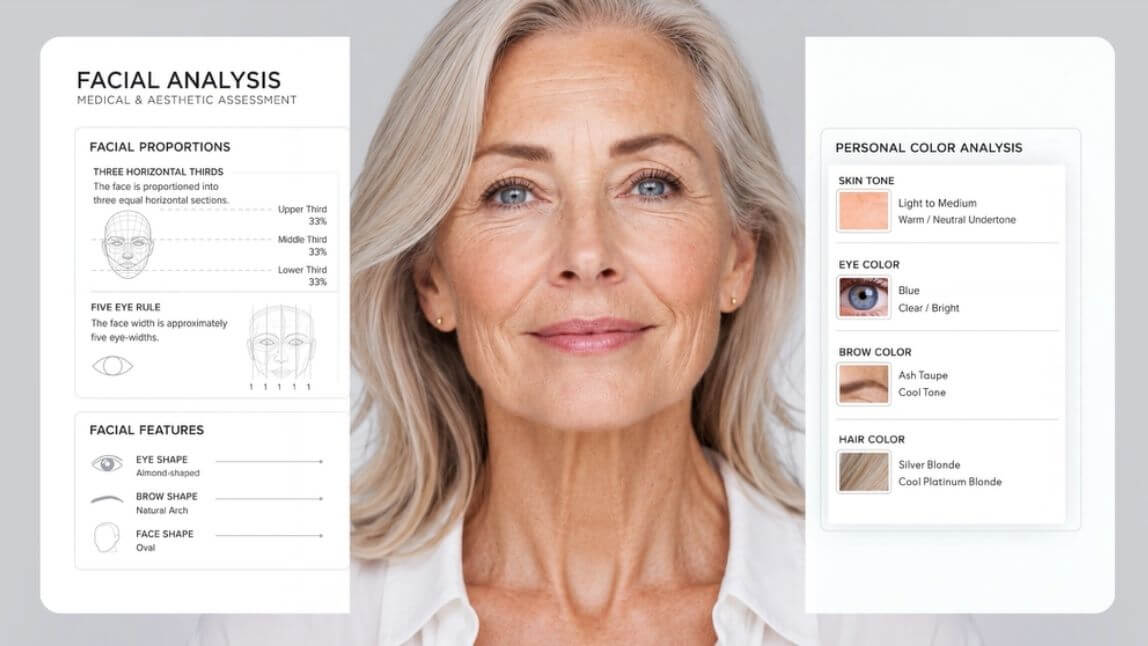
Medspa face analysis uses computer vision to detect facial landmarks from an image and describe what it finds: face shape, the shape of brows, eyes, lips and nose, facial proportions such as thirds and fifths, symmetry, and skin tone. In an aesthetic setting, those outputs become a shared visual reference that a provider and patient can look at together.
It differs from skin analysis, which focuses on surface concerns such as spots, texture or wrinkles. Many clinics use both: structure and proportion for injectables and contouring conversations, skin data for skincare and resurfacing plans.
Why the Consultation Is Where Medspa Revenue Is Won
Demand is steady. The American Society of Plastic Surgeons reports more than 28.5 million minimally invasive procedures in the U.S. in 2024, including about 9.9 million neuromodulator injections and 5.3 million hyaluronic acid filler procedures (ASPS 2024 statistics).
Competition is rising too. The American Med Spa Association counted 10,488 U.S. med spa locations in its 2024 report, with average spend of $527 per visit and 73% of patients being repeat patients (AmSpa 2024 State of the Industry recap). When most revenue comes from returning patients, the first consultation sets the relationship. A clear, personalized first visit is the moment a prospect either books or keeps shopping.
Where Clients Get Value From AI Face Analysis
More consultations that start online
A face scan on your website or booking page gives prospects a low-pressure first step. They see a personalized overview before they call, and your team receives an inquiry with context instead of a cold form fill.
Clearer conversations in the treatment room
Patients often struggle to describe what they want. A visual map of proportions and features lets providers explain options in descriptive terms, such as balance between facial thirds, rather than vague impressions. That clarity can help patients feel more confident about a plan.
A baseline for follow-up and retention
Saved scans give providers a consistent reference for later visits. With repeat patients making up most of a typical med spa's base, a documented starting point supports maintenance conversations and progress reviews.
How to Estimate the ROI of AI Face Analysis
No vendor can promise a specific return, because results depend on your traffic, pricing, staff and follow-through. A practical approach is to model the impact with your own numbers before you buy, then measure after launch.
| ROI driver | What to measure | Where to find it |
|---|---|---|
| Consultation volume | Consult bookings per month from web and social | Booking system, web analytics |
| Conversion | Share of consultations that become a booked treatment | Practice management software |
| Treatment value | Average revenue per first treatment plan | Point-of-sale reports |
| Retention | Return visits within 6–12 months | Patient records, CRM |
| Cost | License, integration, staff training time | Vendor quote, internal estimate |
A simple formula: (added treatments per month × average treatment value × gross margin) − monthly tool cost = monthly return. For example, using a hypothetical clinic: if face analysis contributed two extra booked treatments a month at $527 each, that is $1,054 in added monthly revenue before margin and costs. Swap in your own figures, and run a 60–90 day pilot comparing consultations with and without the scan to see whether the lift is real.
Responsible Use: Consent, Privacy and Language
Face images are sensitive data. The U.S. Federal Trade Commission has warned businesses about unsubstantiated accuracy claims and about failing to assess risks before collecting biometric information (FTC biometric policy statement). Before launch:
- Get clear consent and explain how images are stored and used.
- Review the vendor's security and compliance documentation with your legal or compliance advisor.
- Use descriptive language about proportions and features. Avoid scores that imply attractiveness or "flaws."
- Position results as a conversation starter, with the provider making the clinical judgment.
How Perfect Corp's AI Face Analyzer Supports Medspa Consultations
Perfect Corp's AI Face Analyzer detects face shape and more than 70 facial features, analyzes skin tone and personal color, and evaluates 11 key facial proportions, including facial thirds, fifths and symmetry. It can be deployed as a web module, API, mobile app SDK or in-store consultation tool, and Perfect Corp offers a 180° mapping option using front and side images. The product page describes it as running on a HIPAA-compliant SaaS platform.
Clinics that also offer skincare plans can pair it with AI Skin Analysis, which detects 15 skin concerns, and the AI Face Reshape Simulator, built for online and in-person aesthetic consultations. For background on proportion-based analysis, see our guide to enhancing facial harmony with AI face analysis.
Bring AI Face Analysis Into Your Medspa Consultations
Perfect Corp can help your clinic add a guided face analysis step to online and in-person consultations, giving patients a clearer picture of their options. Talk with our team about deployment options, data handling and how to set up a pilot that measures results against your own goals.
FAQ
Does AI face analysis replace a provider's assessment?

No. It provides a descriptive visual reference. A licensed provider still evaluates the patient, discusses risks and decides on treatment.
Can patients use face analysis before they visit?
Yes, if you deploy it on your website or booking flow. A pre-visit scan gives patients a personalized starting point and gives your team context before the consultation.
How long does it take to see ROI?
It depends on your traffic, pricing and how consistently staff use the tool. A 60–90 day pilot with before-and-after tracking of consultation bookings and conversion gives you real data to judge.
What should we ask a vendor about data privacy?
Ask where images are stored, how long they are kept, who can access them, whether the platform supports HIPAA requirements and whether a business associate agreement is available.



 English


