


 Author: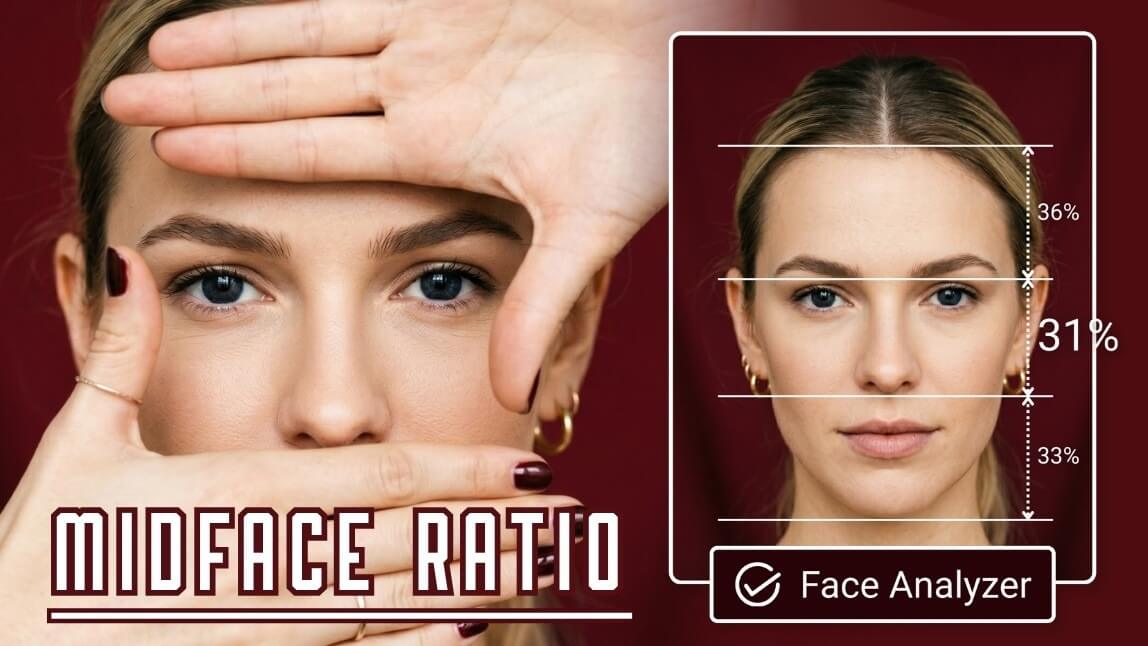
You've heard of the rule of thirds. You may have encountered the golden ratio. But there's a more specific facial proportion that's quietly become one of the most discussed metrics in modern aesthetic analysis: the midface ratio.
From online forums to cosmetic surgery consultations to AI facial scoring tools, the midface ratio shows up everywhere, often without much explanation of what it actually measures, what the numbers mean, or why it matters for facial harmony.
This guide provides a clear, scientifically grounded breakdown of the midface ratio: what it is, how to measure it, what the ideal range looks like, and how AI technology is making precision facial proportion analysis accessible at scale.
What Is the Midface Ratio?
The midface ratio is a measurement that quantifies the vertical proportions of the middle third of the face, the region spanning from roughly the level of the eyes down to the upper lip, encompassing the nose, cheekbones, and maxilla (upper jaw).
In practice, there are two commonly used formulations:
The Facial Thirds Formula
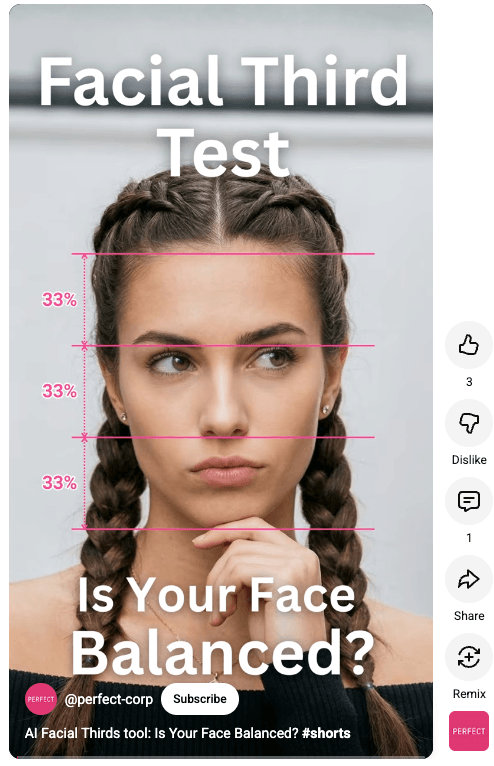
The classical approach divides the face into three roughly equal horizontal thirds: upper (hairline to brow), middle (brow to base of nose), and lower (base of nose to chin). The midface ratio in this formulation compares the middle third to the lower third, with a roughly 1:1 proportion considered ideal in traditional aesthetic canons.
The Interpupillary Distance (IPD) Formula
The most widely used calculation in aesthetics communities compares midface length to facial width at the eye level:
Midface Ratio = Midface Length ÷ Interpupillary Distance (IPD)
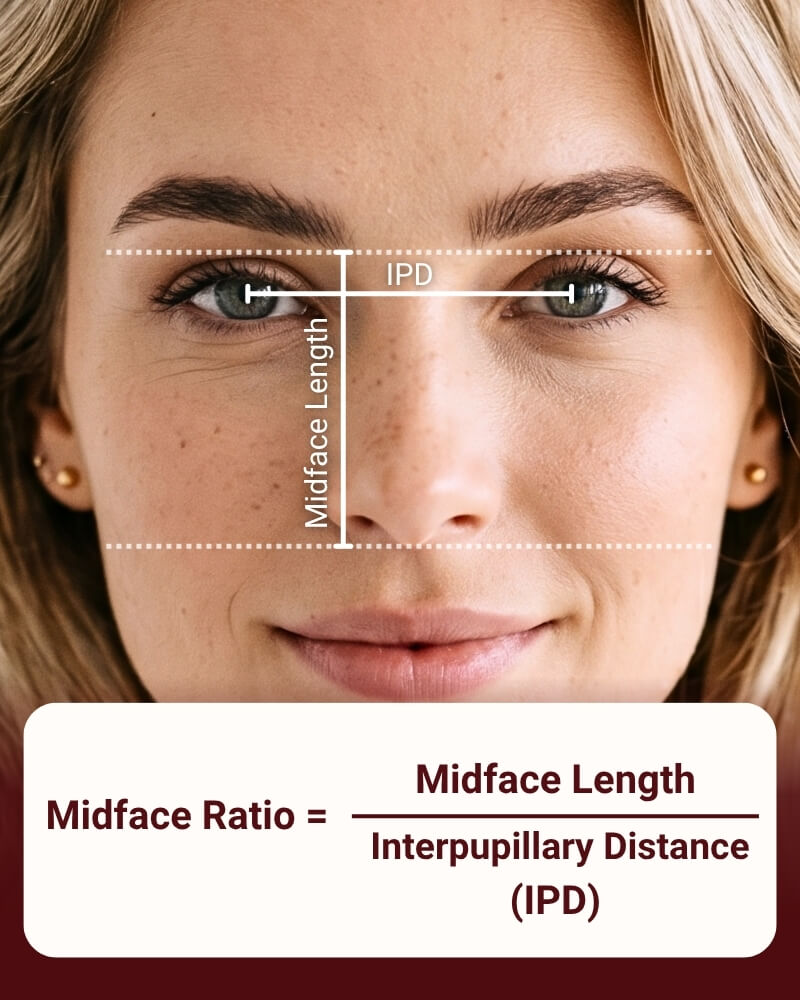
Where midface length is measured from the center of the pupil vertically down to the top of the upper lip. A lower ratio indicates a more compact midface relative to facial width — generally considered more aesthetically favorable.

How to Measure Your Midface Ratio
Figuring out your mid face ratio does not require a ruler or complex math. Here is the simplest way to do it:
- Go to Perfect Corp.'s AI Face Analyzer.
- Upload a photo or use your live camera to scan your face.
- Let the AI detect your facial landmarks instantly.
- Check your results under Face Horizontal Ratio to see how your mid face compares against the golden ratio three-equal-thirds proportion, or refer to Nose Aspect Ratio to understand the length and width balance of your mid-face zone.
No sign-up needed. The analyzer measures 70+ facial features in one scan, giving you a complete picture of your facial proportions in seconds.
What's the Ideal Midface Ratio?
There are two key measurements that reveal whether your mid face is in proportion.
Face Horizontal Ratio
The face is divided into three horizontal sections:
- Hairline to the bottom of the eyebrows
- Bottom of the eyebrows to the bottom of the nose (your mid face zone)
- Bottom of the nose to the tip of the chin
The golden ratio for all three sections is 1:1:1, meaning each zone should be roughly equal in height. If your mid face zone is noticeably longer or shorter than the other two, it shifts the overall balance of your facial proportions.
Nose Aspect Ratio
Since the nose anchors the mid face, its own proportions matter just as much. The ideal relationship between nose width and nose height follows the golden ratio of 1:1.618, where the height is longer than the width. A nose that aligns with this ratio contributes to a naturally balanced and harmonious mid face.
Why the Midface Ratio Matters in Facial Aesthetics
The midface is often called the "foundation" of facial expression and structure. It houses the cheekbones, the nasal complex, and the maxilla — and its proportions significantly influence how other facial features are perceived.
Youthfulness and Facial Aging
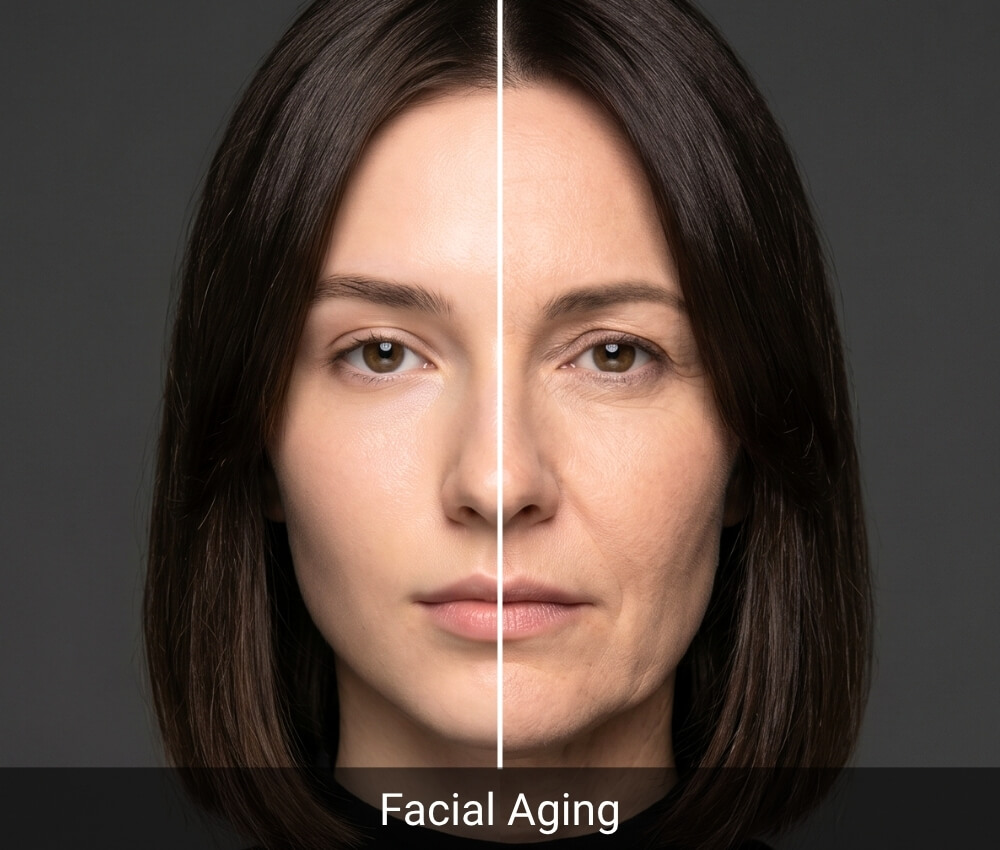
One of the most clinically relevant aspects of the midface ratio is its relationship to facial aging. As we age, volume loss in the midface, particularly in the malar fat pads over the cheekbones, causes the midface to descend, effectively lengthening the perceived midface and increasing the ratio. Midface-focused filler treatments (malar augmentation, midface volumization) specifically restore the compact midface proportions associated with a younger face.
Projection and Cheekbone Prominence
A compact midface with strong forward projection at the cheekbones reads as more defined, three-dimensional, and harmonious from both front and profile views. This is why high cheekbones have remained a consistent marker of facial attractiveness across cultural contexts, they're associated with a favorable midface ratio and strong underlying bone structure.
Interaction with other facial proportions
The midface ratio doesn't function in isolation. It interacts significantly with facial width-to-height ratio (FWHR), lower face length, and nasal dimensions. This interdependency is why comprehensive AI facial proportion systems, measuring dozens of ratios simultaneously, produce more meaningful outputs than any single measurement alone.
How AI Facial Analysis Calculates Midface Ratio
AI-powered facial analysis has transformed what was previously a manual, time-intensive measurement process into something that happens automatically from a single photo in under a second.
Facial Detection
Modern facial analysis systems analyzes the face, the eyes, eyebrows, and more. Once analyzed, including the midface ratio, is computed mathematically from their positions.
Why AI Consistency Matters
Manual measurement of facial proportions is notoriously inconsistent. Different practitioners identify faces slightly differently; lighting and photo quality introduce variability.
AI detection, when properly calibrated, produces reproducible results across sessions and users, which is what makes it useful as a clinical, commercial, and research tool.
Beyond the Ratio: Comprehensive Proportion Analysis
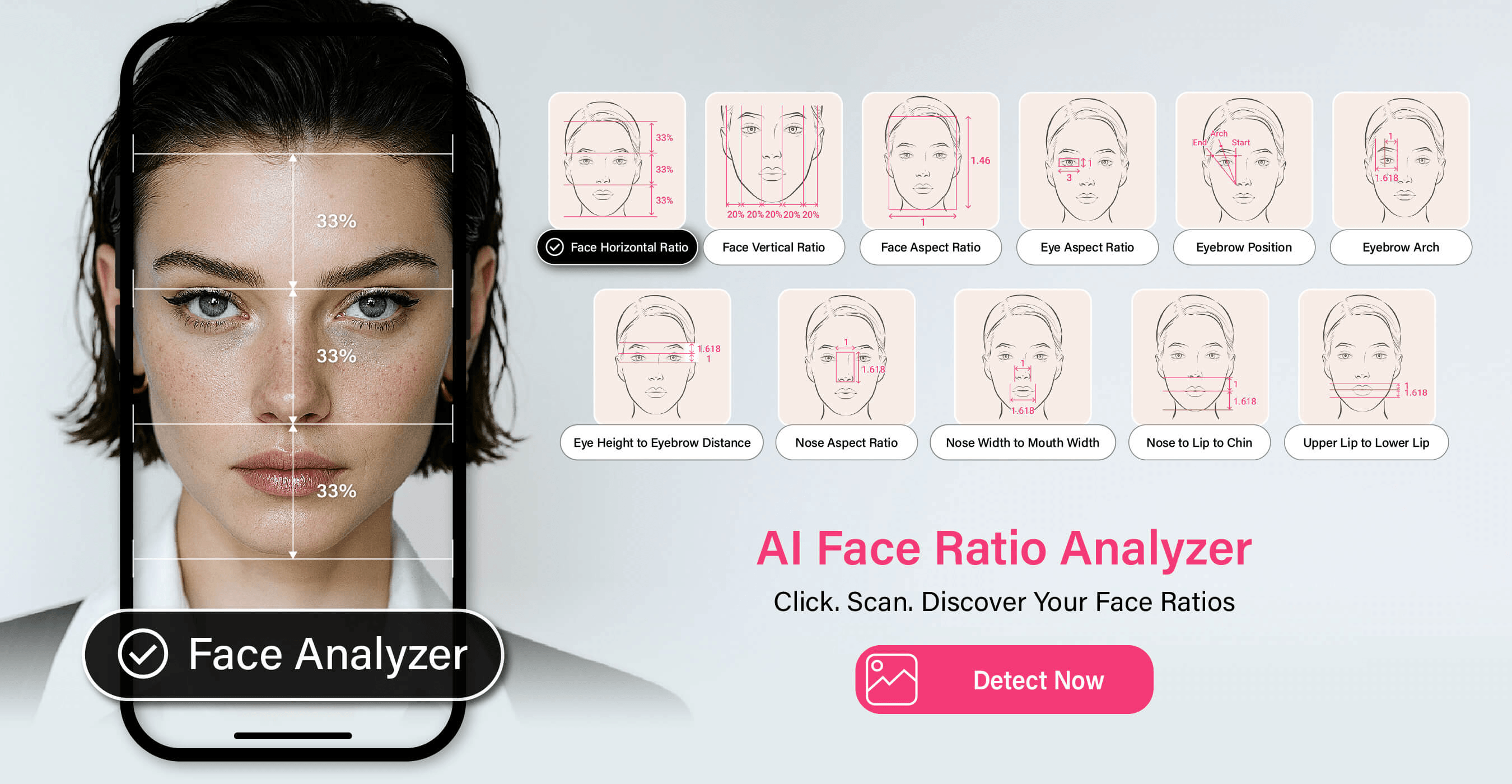
Platforms like Perfect Corp's AI Face Analyzer compute a full suite of facial proportions simultaneously, including the golden ratio, facial thirds distribution, eye-area geometry, jawline angles, and more, giving a holistic picture of facial harmony rather than a single decontextualized number.
Midface Ratio in Beauty, Aesthetics, and Brand Applications
The midface ratio is transitioning from an academic and community metric into a practical tool for beauty brands, aesthetic medicine practices, and digital experience designers.
Contouring and Highlight Personalization
Contouring technique is fundamentally about creating the visual illusion of different facial proportions, including midface compactness.
A longer midface benefits from different contour placement than a compact one.
Skincare Product Recommendation
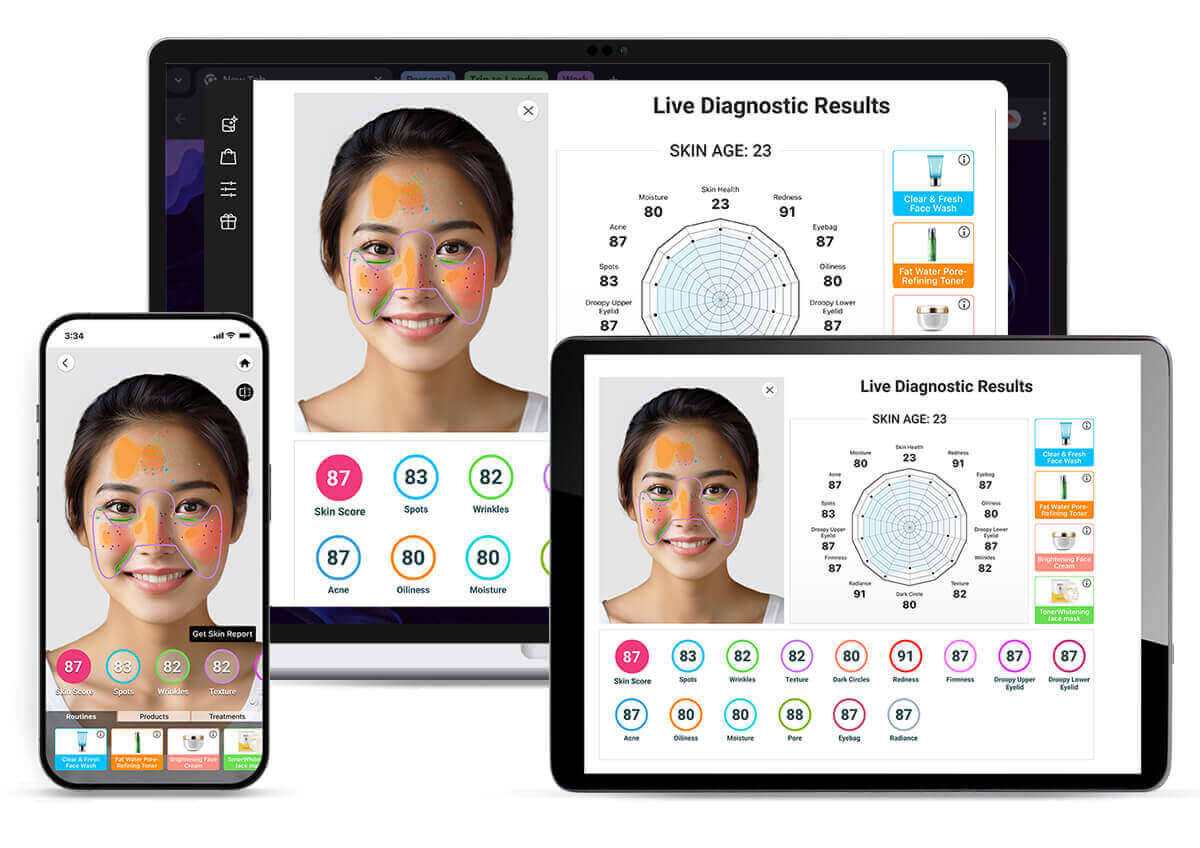
Midface analysis identifies where volume loss, skin laxity, and structural change are occurring.
For skincare brands, this creates a pathway to recommending not just skin-type appropriate products, but concern-appropriate treatments matched to where the user's face actually needs them, firming serums for malar volume loss, specific peptide formulations for structural skin support.
Aesthetic Medicine Consultation Support
In the medical aesthetics space, midface ratio analysis is part of pre-treatment assessment for filler placement, fat grafting, and surgical planning.
AI-powered proportion analysis is increasingly used in consultation tools that help practitioners communicate proportions to patients, and help patients understand what specific changes would mean for their overall facial harmony before any treatment begins.
Personalized Beauty Tools at Scale
For brands operating across thousands or millions of users, manual proportion analysis is impossible.
AI facial analysis APIs turn what was once a clinical measurement into a scalable feature, powering recommendation engines, virtual consultation tools, and personalization systems without requiring a human analyst in the loop.
Frequently Asked Questions About Midface Ratio
What is midface ratio?
Midface ratio is a measurement of the proportions of the middle third of the face.
How do I measure my midface ratio?
Manual measurement requires a front-facing photo in neutral expression. Measure the distance between your pupil centers (IPD) and the vertical distance from one pupil down to the top of your upper lip. Divide the second by the first.
AI facial analysis tools automate this process with detection that is significantly more consistent than manual measurement.
What is a good midface ratio?
The most commonly cited ideal range is 1:1:1 or 1:1.618. A lower ratio generally indicates a more compact midface, associated with strong cheekbone prominence, a youthful appearance, and positive aesthetic assessment. Context matters: other facial proportions significantly influence how the midface ratio is perceived overall.
Can you change your midface ratio?
The underlying bone structure of the midface is largely determined by genetics and development. However, soft-tissue interventions can significantly alter the appearance of midface proportions.
Filler adds forward projection and creates the visual effect of a more compact, elevated midface. Fat grafting and surgical implants produce more structural changes.
Makeup contouring creates temporary optical adjustments.
Why does a longer midface look less attractive?
A longer midface (higher ratio) can create the perception of facial elongation, reduced harmony, and an aged appearance, partly because midface elongation is associated with volume loss and structural descent that occur naturally with aging.
The effect is contextual and varies with overall face shape, lower face length, and personal features.
How do beauty brands use midface ratio analysis?
Beauty brands use AI midface ratio analysis, alongside other facial proportion measurements, to personalize makeup recommendations (particularly contouring and blush placement), support skincare product selection based on facial anatomy, power aesthetic consultation tools in medspa and clinic settings, and deliver individualized guidance at scale through digital beauty experiences.
How accurate are AI facial ratio measurements?
Accuracy varies significantly by platform. Consumer apps using general-purpose vision models can produce inconsistent results.
Purpose-built facial analysis APIs with clinically calibrated detection are significantly more accurate and reproducible, identifying anatomical reference points with the consistency needed for meaningful measurement rather than rough estimation.



 English


