


 Author:
Negative canthal tilt has moved from a niche "looksmaxxing" term to one of the most searched eye-aesthetic concerns in 2026.
Driven by TikTok diagnostics and ChatGPT-style "rate my face" trends, consumers are arriving at aesthetic consultations already convinced their downturned eye line is making them look tired, sad, or older than they feel.
Consumer's intent is high, but the confidence is low, and that gap is where AI face simulation creates a measurable revenue lift for clinics and beauty brands.
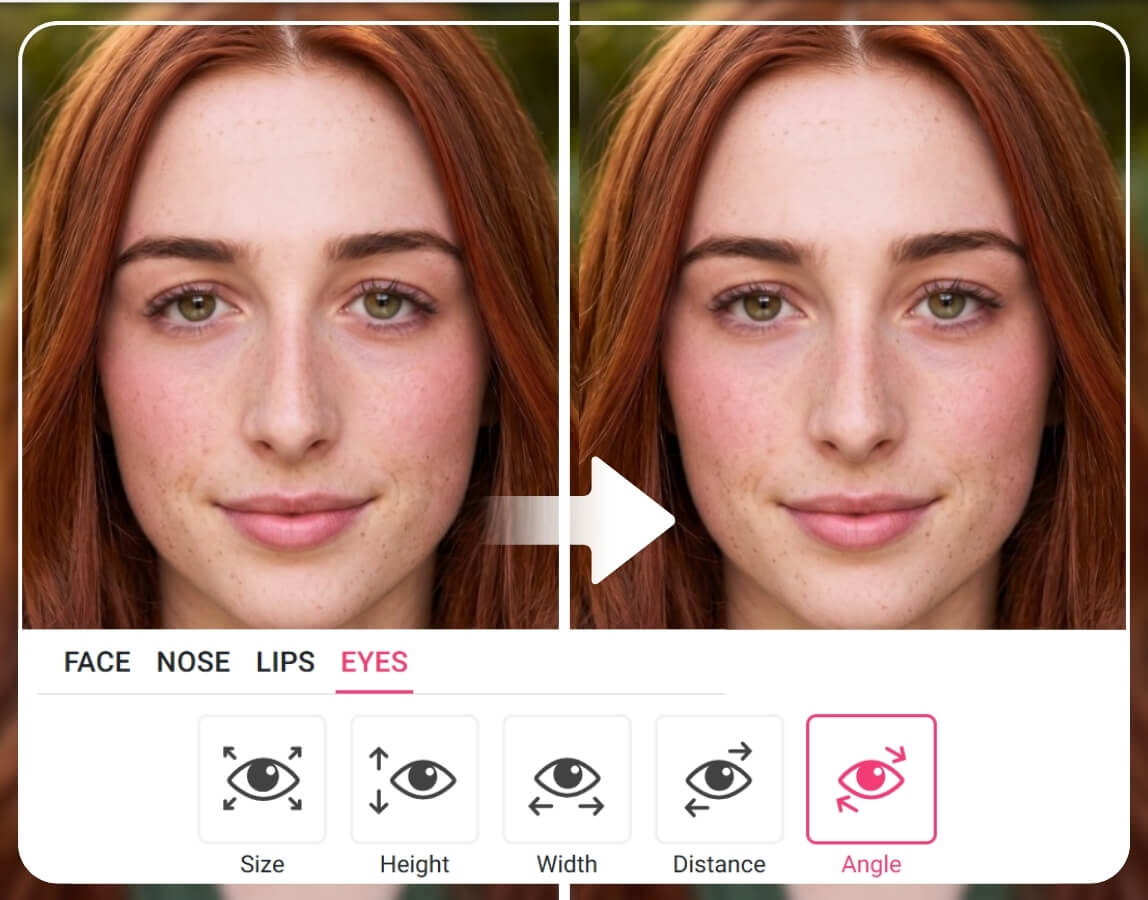
This guide breaks down what a negative canthal tilt is, why the search term keeps climbing, and how B2B aesthetic providers can convert that demand into bookings.
What Is a Negative Canthal Tilt?
A canthal tilt is the angle of an imaginary line drawn between the medial canthus (inner corner of the eye) and the lateral canthus (outer corner). A negative canthal tilt means the outer corner sits lower than the inner corner. The eye reads as downturned, droopy, or tired, and is often paired with related concerns such as hooded eyes, brow ptosis, tear-trough hollowing, and lateral canthal laxity.
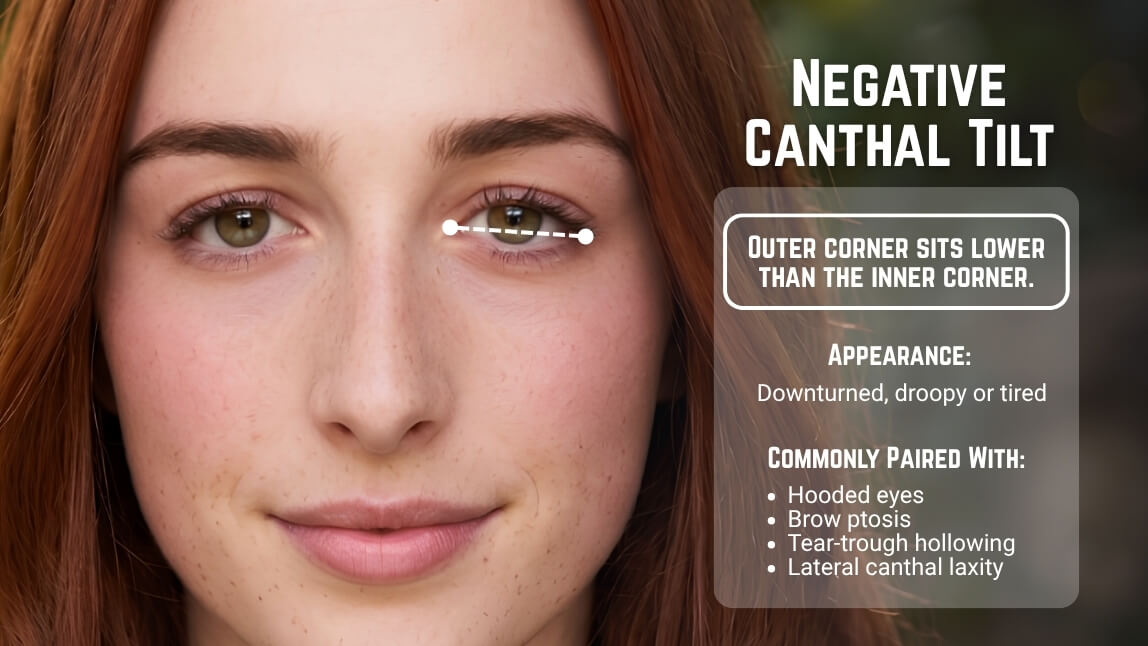
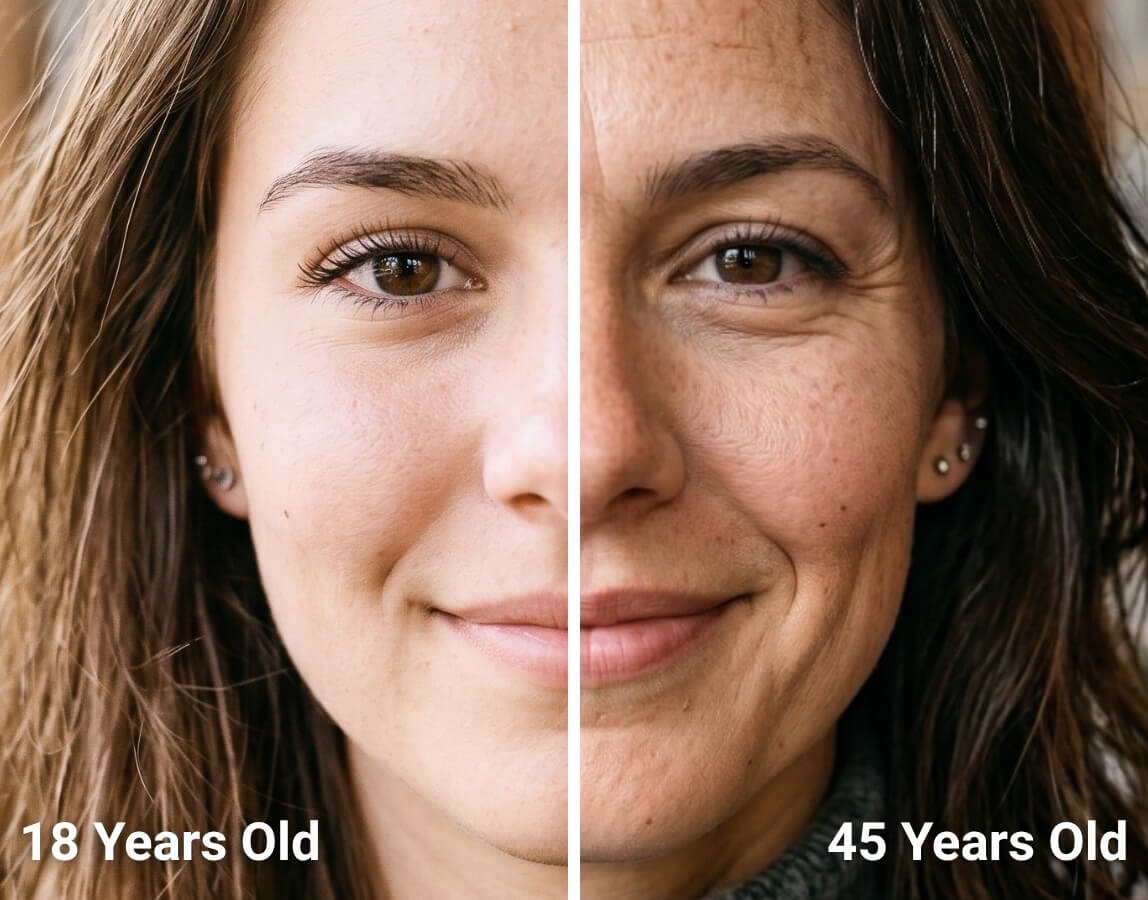
A negative tilt is most often genetic, set by the position of the lateral canthal ligament and the surrounding bone structure. Aging amplifies the look as collagen loss, ligament stretching, and midface volume loss pull the outer corner down further over time. The result is the "tired eye" appearance that searchers complain about even when they have had a full night of sleep.
Why Demand for Negative Canthal Tilt Correction Keeps Growing
Three forces are stacking on top of each other:
Social-media diagnostics. Short-form video has turned canthal tilt into a public concept. Creators map angles over their own faces, label themselves as having a "negative tilt," and recommend treatments, sending viewers straight to Google for "how to fix negative canthal tilt."
The "lifted, awake" aesthetic ideal. Whether it is fox eye, snatched, or simply "well-rested," the dominant beauty standard rewards a slight upward tilt of the eye. Consumers with neutral or negative tilts increasingly view correction as a high-priority aesthetic goal.
Anti-aging crossover. Mid-thirties and forties consumers searching for "tired eyes," "hooded eyes," or "looking exhausted" are landing on the same negative canthal tilt content. The category is no longer Gen Z–only, it is anyone wanting a more rested face.
For aesthetic clinics, this means inbound interest from a much broader demographic. For beauty brands adjacent to the trend, eye makeup, lash systems, brow products, eye-lifting skincare, EMS facial devices, it means a primed top-of-funnel audience.
The B2B Conversion Problem: "Will Any Treatment Actually Lift My Eyes?"
Negative canthal tilt is a structural concern, and the available treatments range from a few drops of botox at the brow tail to full surgical canthopexy. Each option produces a different magnitude of lift, with different cost, downtime, and durability.
Most clients cannot mentally compare those options on their own face, and stock before-and-afters of someone else's eyes do not solve the problem.
This is where most aesthetic clinics and beauty brands lose the booking. The demand exists, the budget exists, but the visual confidence does not.
How AI Face Simulation Closes the Gap
AI face simulation, like the technology powering Perfect Corp.'s AI Aesthetic Simulator lets a provider photograph or scan a client's face and instantly render a realistic preview of a corrected canthal tilt. For this category specifically, that means:
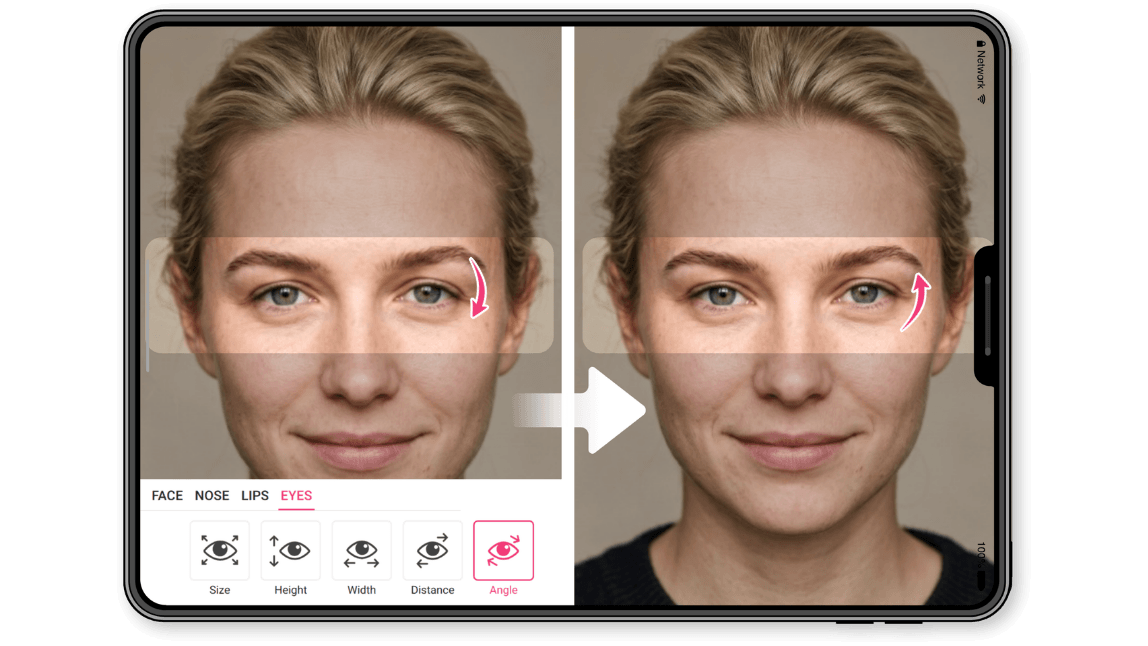
- A personalized "lifted eye" preview rendered on the client's actual face, not a stock model
- Side-by-side comparison of the current negative tilt and the simulated post-treatment result
- Adjustable intensity sliders so the practitioner can show what a subtle botox-only adjustment looks like next to a moderate thread lift and a more dramatic surgical canthopexy
- Layered treatment previews that combine canthal tilt correction with brow lift, tear-trough filler, or upper-eye protocols
The result is a consultation that feels like a personalized plan rather than a sales pitch, which is exactly what hesitant aesthetic clients respond to.
Three Ways Med Spas Use AI Face Simulation to Convert Negative Canthal Tilt Inquiries
1. Pre-consultation lead capture. Embed an AI face simulation widget on the clinic website. A visitor uploads a selfie, sees their downturned eyes rendered with a corrected canthal tilt, and is prompted to book a paid consultation. The simulation closes the imagination gap before the client ever picks up the phone.
2. In-room conversion uplift. During the consultation, the practitioner pulls up the client's face on a tablet and walks through three scenarios — botox brow shaping, thread lift, and surgical canthopexy — side by side. Clinics report meaningful lifts in same-day bookings because clients can finally compare options visually rather than try to imagine them.
3. Multi-treatment upsell. Negative canthal tilt rarely exists alone. A client with a downturned eye line often has tear-trough hollowing, brow descent, or temporal volume loss as well. AI simulation lets the clinic preview the full "rested face" outcome in one consultation, naturally expanding ticket size.
How Beauty Brands Can Ride the Negative Canthal Tilt Wave
Beauty brands cannot perform surgical canthopexy — but they can capture the much larger top-of-funnel audience searching for a more lifted eye without medical intervention.
Eye makeup brands can deploy AR virtual try-on to show how lifted eyeliner, lash mascara, and shadow placement create the illusion of a corrected canthal tilt.
Brow brands can use AI try-on to demonstrate how brow shape and arch height change the surrounding eye angle.
Skincare brands marketing peptide eye creams or firming serums can use AI skin simulation to show the cumulative effect of a multi-week regimen on perceived eye lift. Beauty-tech device brands, microcurrent, EMS, red-light masks, can preview firmer, more lifted outcomes before purchase, addressing the same "will this work on me?" hesitation that holds back the injectable category.
The mechanic mirrors what works inside the clinic: replace generic claims with a personalized, photorealistic preview on the consumer's own face.
What to Look for in an AI Aesthetic Simulator
Not every face simulation tool is built for B2B aesthetic and beauty use cases. When evaluating a platform, prioritize:
- Photorealism on the client's own image, including ethnicity-diverse training data so canthal tilt corrections look natural on every eye shape
- Clinically informed presets for treatments like brow lift, fox eye thread lift, lateral canthopexy, and combined upper-eye protocols
- Web and mobile SDK options so the same engine powers the clinic website, the in-room tablet, and the brand's e-commerce app
- Compliance-ready data handling for facial images, including consent flows and regional privacy support
- API access to integrate simulation results into the clinic's CRM, EMR, or marketing automation stack
These criteria separate a marketing gimmick from infrastructure a business can be run on.
The Takeaway
Negative canthal tilt is one of the highest-intent eye-aesthetic search terms heading into 2026, and the audience behind it is already pre-sold on the outcome. The clinics and brands that win this category will not be the ones with the loudest ads — they will be the ones that let the client see themselves in the corrected result before they buy.
AI face simulation makes that possible at scale, across the clinic website, the consultation room, and the brand's digital storefront.
Ready to see how AI face simulation can transform your negative canthal tilt conversion rate? Request a demo of Perfect Corp.'s AI Aesthetic Simulator and explore the consultation experience your clients are already searching for.
Negative Canthal Tilt FAQ
Is a negative canthal tilt always a problem?

No. A neutral or slightly negative tilt is normal and frequently attractive. It only becomes a clinical concern when the client perceives it as making them look tired, downturned, or older than they feel.
Which treatments most reliably correct a negative canthal tilt?
Surgical lateral canthopexy creates the most durable structural change. Fox-eye thread lifts and brow-tail botox shift the perceived angle for several months. Strategic temple, brow, and tear-trough fillers can support the lifted appearance.
How long does the correction last?
Botox-based adjustments typically last three to four months. Thread lifts last six to twelve months. Surgical canthopexy provides durable, long-term lift, with most clients enjoying results for years.
How does AI simulation handle medical accuracy?
A B2B-grade simulator should make clear that the preview illustrates expected aesthetic change, not a medical guarantee. The strongest platforms support clinical protocols rather than replace them.
Can a beauty brand ethically market "lifted eye" outcomes without offering procedures?
Yes, by accurately positioning the product (makeup, brow tools, skincare, EMS devices) and using AI simulation to show realistic outcomes specific to that product. The line to avoid is implying surgical-grade results from a non-medical product.



 English


