


 Author:
The parts of glasses number about a dozen distinct pieces, and most people can only name two of them on the spot: "the lens thing" and "the arm thing." Fair enough. Eyewear vocabulary is oddly specific for something a few billion people wear every single day.
Here is the 45 second answer. The parts of glasses break down into a frame front (lenses, rims, and bridge), a pair of temples (the arms reaching back to your ears), and small connective hardware, nose pads, hinges, screws, and end pieces, that hold the whole thing together. Below is the full breakdown of every one of the parts of glasses, piece by piece, plus the printed code inside your temples that most people never notice, and how AI fitting tools now read this exact anatomy to tell you whether a frame will actually fit before you buy it.
What Are the Main Parts of Glasses?
Every standard pair of glasses, prescription or sunglasses, breaks down into three main sections: the front (holding the lenses), the bridge (connecting the two lens openings), and the temples (the arms resting over your ears). Inside those three sections live about ten smaller parts of glasses, each with a specific job and, somewhat unnecessarily, its own name.
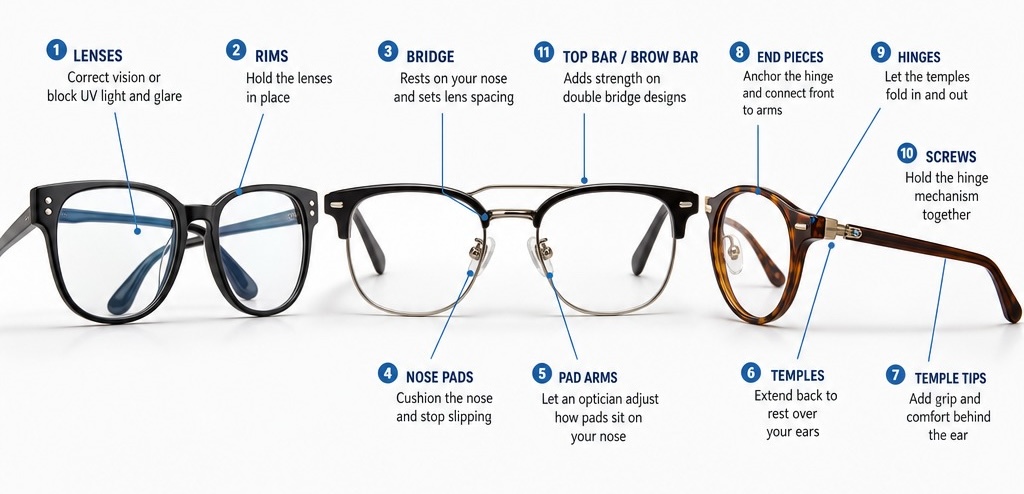
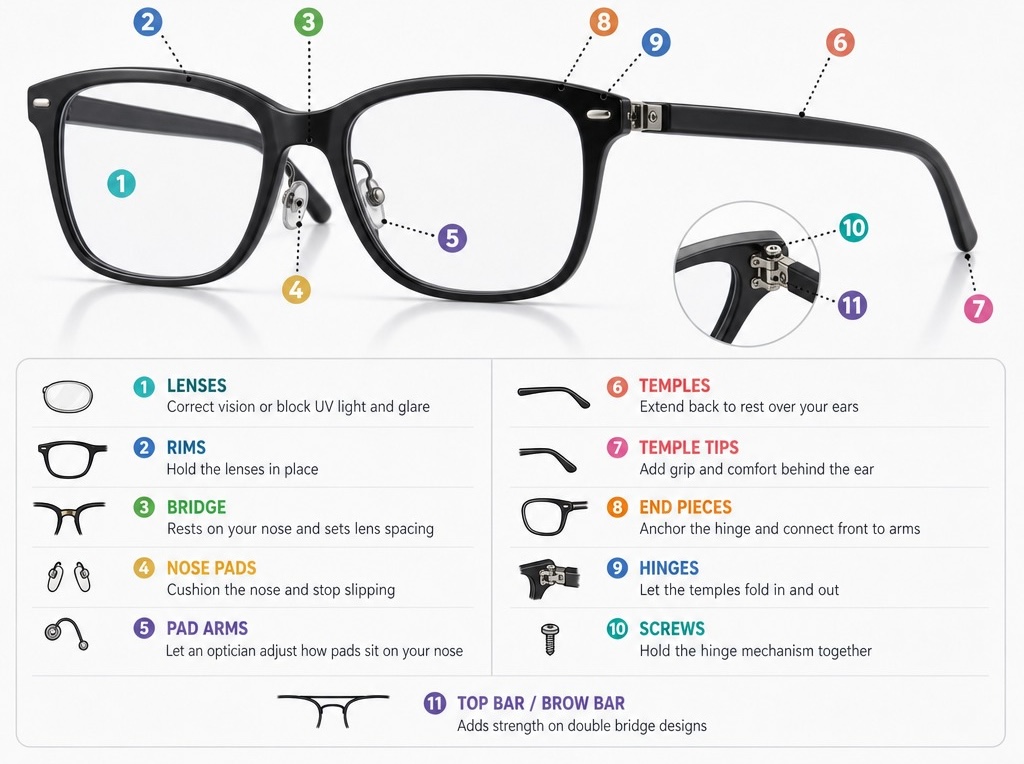
Quick-Reference Table: Parts of Glasses and What They Do
| Part | What It Does | |
|---|---|---|
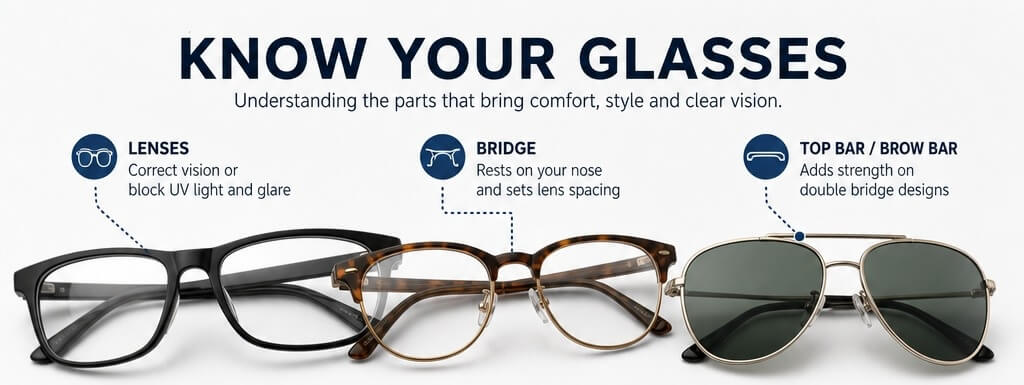
| Lenses | Correct vision or block UV light and glare | |
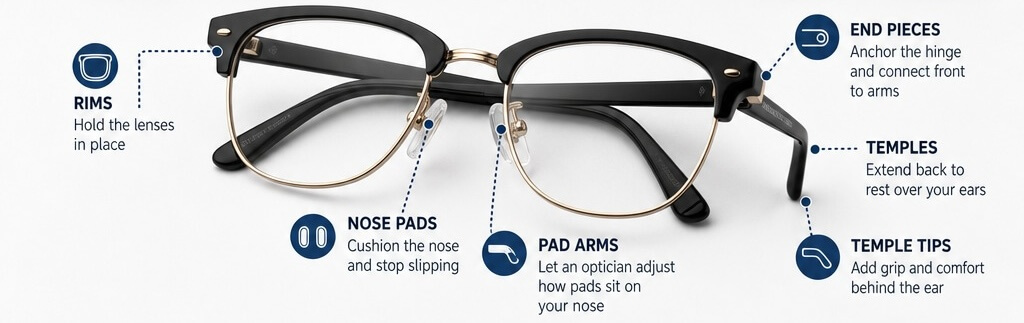
| Rims | Hold the lenses in place | |
| Bridge | Rests on your nose and sets lens spacing | |
| Nose pads | Cushion the nose and stop slipping | |
| Pad arms | Let an optician adjust how pads sit on your nose | |
| Temples | Extend back to rest over your ears | |
| Temple tips | Add grip and comfort behind the ear | |
| End pieces | Anchor the hinge and connect front to arms | |
| Hinges | Let the temples fold in and out | |
| Screws | Hold the hinge mechanism together | |
| Top bar / brow bar | Adds strength on double bridge designs |
The Frame Front: Lenses, Rims, and Bridge
The frame front covers three of the most important parts of glasses: two lenses, two rims, and the bridge connecting them, everything above your cheekbones and below your eyebrows.
Lenses and lens coatings
The clear (or tinted) discs of glass or plastic sitting inside the rims. In prescription eyewear they correct refractive error. In sunglasses they cut glare and block UV rays. What most guides skip is the coating layer, which affects daily comfort more than the lens material itself:
- Anti-reflective (AR) coating: Cuts glare from screens and headlights, standard on most prescription lenses today.
- Blue light filtering: Reduces high-energy visible light from digital screens.
- Photochromic: Lenses that darken automatically in sunlight and clear back up indoors.
- Polarized: Found on sunglasses, blocks horizontal glare bouncing off water, snow, or pavement.
Rims (eye wires)
The rim, sometimes called the eye wire, is the ring of frame material wrapping around each lens. Full-rim frames wrap the entire lens. Semi-rimless frames only wrap the top half, usually with a thin wire or fishing line holding the bottom edge. Rimless frames skip the rim entirely and attach the lens directly to the bridge and temples with small screws.
Bridge (the middle piece)
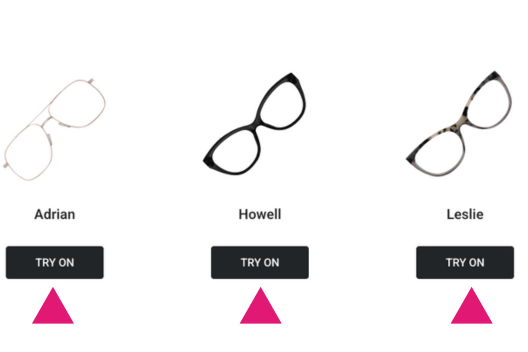
The bridge is the part connecting the two lenses, often described simply as "the middle piece," and it is the single biggest factor in how comfortably glasses sit on your face. A bridge that is too narrow pinches. One that is too wide lets the glasses slide down constantly. Some frames use a keyhole or double bridge, also called a top bar, brow bar, or sweat bar, for extra strength and a distinct look.
What Connects the Frame to Your Face? Nose Pads and Pad Arms
Nose pads and pad arms are the parts of glasses that connect the frame to your face. Nose pads are the small cushioned pieces, usually silicone or acetate, resting on either side of your nose. They are the "plastic things" people often point at without knowing the name. On adjustable metal frames, pad arms let an optician bend the pads inward or outward to fix slipping or pinching. Plastic acetate frames typically skip separate nose pads altogether. Instead, the frame material itself is molded to rest directly on the nose, which is why acetate frames need more precise sizing up front.
What Are the Arms of Glasses Called? Temples, Hinges, and Screws
Temples, hinges, and screws are the parts of glasses that do the most physical work, folding, flexing, and staying put through a full day of wear.
Temples, also called arms
"Temples" and "arms" refer to the exact same part, the two long pieces extending from the frame front, over your ears, to hold the glasses on your head. There is no real difference between the terms; opticians tend to say temples, everyone else tends to say arms. Temple length matters: too short and the glasses grip too tight behind the ear, too long and they slide forward throughout the day.
Temple tips (earpieces)
The rubber, acetate, or silicone piece at the very end of each temple. Temple tips add grip and cushioning where the arm meets the back of your ear, which is why sport and children's frames often use extra grippy silicone tips.

Cable temples
A less common temple style worth knowing: cable temples curl around the entire ear instead of resting straight above it. You will see these mostly on kids' glasses, sports goggles, and safety eyewear, since the curled shape keeps the frame locked in place during movement in a way a straight temple simply cannot.
End pieces (lugs) and hinges
The end piece, also called a lug, is the small block where the rim meets the temple. Tucked inside it is the hinge, the mechanism letting the temples fold flat for storage. Standard hinges are riveted; spring hinges add a small coil that flexes outward, giving the frame extra durability if it gets pulled or sat on.
Screws and rivets
Tiny screws hold the hinge mechanism together, and they are, statistically, the first thing to work loose on any pair of glasses. Yes, you can typically replace or re-tighten them yourself with a jeweler's screwdriver, and most opticians will do it for free in under a minute. Full temple replacement (if a hinge snaps) is also possible on most frames and is far cheaper than buying new glasses. Rivets serve a similar structural purpose on frames using permanent fasteners instead of screws, and some brands add decorative rivets purely for style.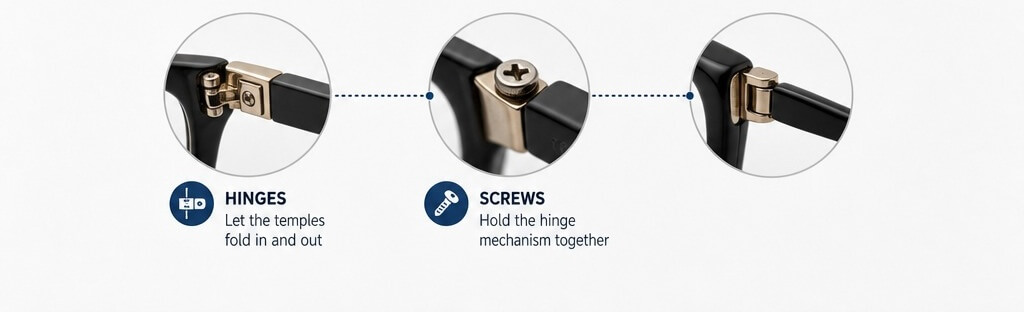
Decoding the Numbers Stamped Inside Your Temples
Flip your glasses over and look at the inside of one temple. There is almost always a tiny printed code, something like 52-18-140. That is not a serial number. It is your exact frame measurement, in millimeters, using three of the parts of glasses covered above:
- First number (lens width): The horizontal width of one lens, measured edge to edge.
- Second number (bridge width): The distance across the bridge, connecting the two lenses.
- Third number (temple length): How long the arm runs from end piece to temple tip.
Standard adult frames typically fall between 40 to 62mm for lens width, 14 to 24mm for bridge width, and 120 to 150mm for temple length. If a pair of glasses you love keeps sliding, check this code first; it usually points straight to a bridge or temple mismatch rather than a "wrong frame" problem entirely.

What Are Glasses Frames Made Of?
Frame material changes the weight, flexibility, and price of every part of glasses attached to it, which is worth knowing before comparing parts side by side.
- Acetate: A plant-based plastic, thick, colorful, and the most common material for fashion frames.
- Metal (titanium, stainless steel, monel): Thin, lightweight, and typically paired with adjustable nose pads.
- TR-90 or nylon blends: Flexible, lightweight plastics common in sport and budget frames.
- Mixed material: Acetate fronts with metal temples, combining the look of acetate with the light weight of metal.
Full-Rim, Semi-Rimless, or Rimless: How Frame Type Changes the Parts of Glasses You See
The rim style you choose adds or removes parts of glasses from the anatomy above:
- Full-rim frames: Every part listed above is present. Most durable, widest style range, easiest to repair.
- Semi-rimless frames: The rim only wraps the top half of the lens; the bottom is held by a thin nylon wire under light tension. Lighter look, but the wire can loosen over time.
- Rimless frames: No rim at all. The lens attaches straight to the bridge and temples via small screws drilled through the lens itself. Lightest option, but the most fragile at the drill points.

Caring for Each Part of Glasses: A Quick Maintenance Guide
Most "my glasses feel wrong" complaints trace back to one specific part rather than the whole frame. A maintenance routine covering each of the parts of glasses keeps everything working the way it should:
- Lenses: Rinse with water before wiping, dry debris under a cloth is what actually causes micro-scratches, not the cloth itself.
- Nose pads: Wipe with a damp cloth weekly; oily skin breaks down silicone pads faster than most people expect, and discolored pads are a sign it is time to swap them.
- Hinges and screws: A drop of screwdriver attention every few months prevents the wobble that eventually snaps a temple off entirely.
- Temple tips: Replace once they feel slick instead of grippy; this is the cheapest fix available for glasses that constantly slide.
- Frame front: Always set glasses down lens-side up; setting them face-down is the single most common cause of scratched lenses and bent bridges.
Parts of Glasses vs. Parts of Sunglasses: What's Different?
The parts of glasses and the parts of sunglasses are identical: lenses, rims, bridge, nose pads, temples, hinges, and screws all serve the same function on both. The differences come down to the lenses themselves. Sunglass lenses are tinted and rated for UV protection, sometimes with polarization to cut glare off water or pavement, while standard eyeglass lenses are clear and ground to your prescription. Some frames, like clip-on styles, are designed to switch between the two by attaching a tinted lens layer over prescription lenses.

How the Parts of Glasses Affect Fit, Comfort, and Style
Once you know the parts of glasses, fit stops being a guessing game. A quick self-check:
- Bridge width: Glasses should rest on your nose without sliding or pinching within the first ten seconds of wearing them.
- Temple length: The arm should reach your ear without gripping the sides of your head.
- Lens height and width: Lenses sitting too low expose the top of the frame to your eyebrows; too high and the bottom rim crowds your cheeks.
- Frame width vs. face width: A frame roughly matching the widest part of your face avoids the "swallowed by the frame" look.
No ruler on hand? A rough at-home trick: a standard credit card is about 85.6mm wide, close to the width of most adult frame fronts, so holding one against your current glasses gives a quick visual reference before ordering a new pair online.
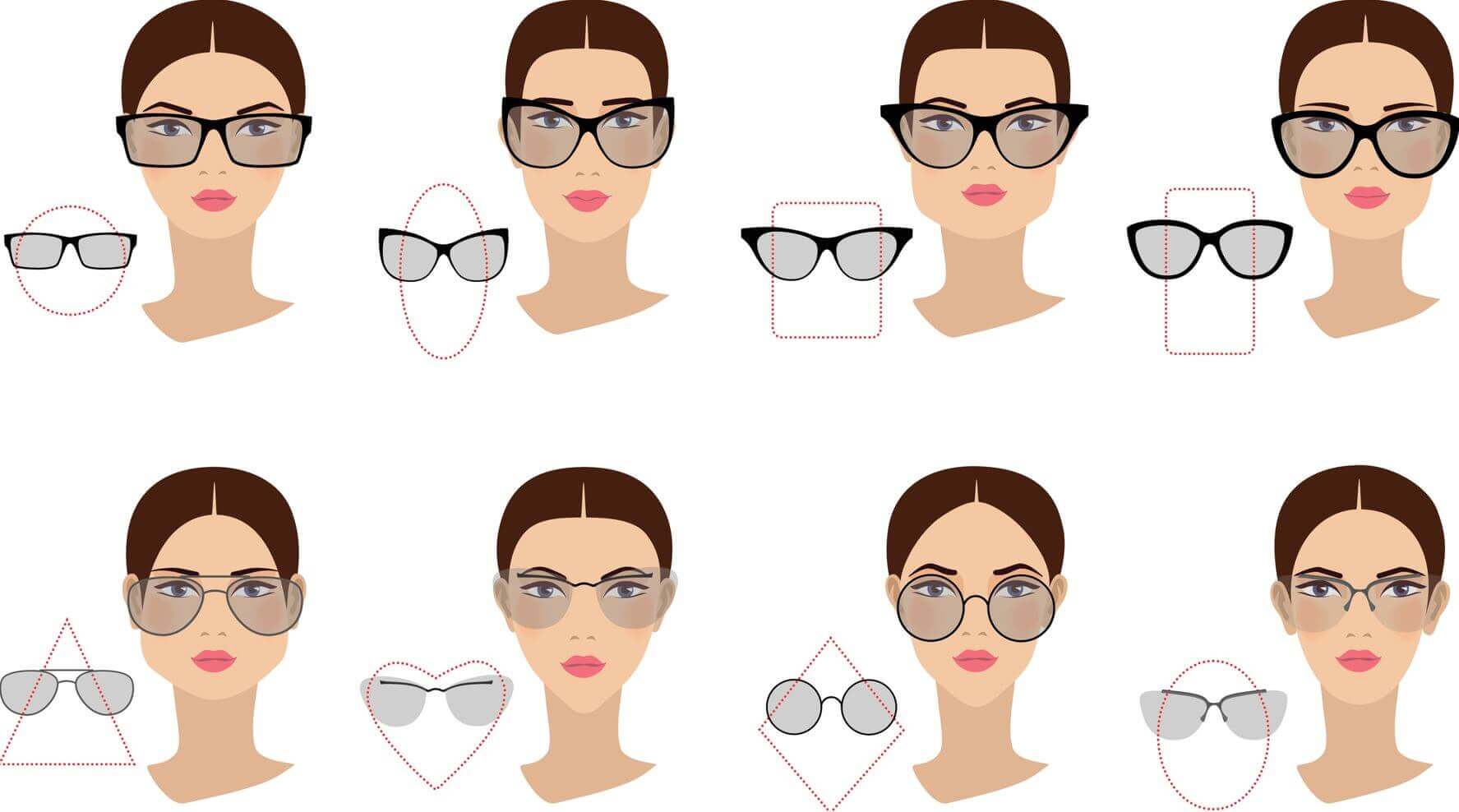
These same measurements are exactly what a good face shape detector checks for automatically before recommending a frame, matching bridge width and frame width to your specific face shape instead of a generic size chart.

How AI Virtual Try-On Reads the Parts of Glasses to Get Your Fit Right
This is where knowing the parts of glasses actually pays off for online shoppers. Modern AI-powered virtual try-on for glasses works by mapping a shopper's face, including nose bridge width, ear position, and face width, and comparing it against the exact frame measurements printed inside the temple: bridge size, temple length, and lens width. Perfect Corp's eyewear AI, trained across a catalog spanning 800+ brand partners, renders the frame front, bridge, and temples onto a live camera feed in real time, so a shopper can see how the bridge sits on their nose or whether the temple length looks right before checkout, not after the box arrives and doesn't fit.
For retailers, that translates directly into fewer returns caused by fit issues rather than style regret, since a large share of eyewear returns trace back to bridge or temple sizing rather than the design itself. Brands running this kind of virtual glasses try-on showcase experience typically see shoppers try on more styles per visit, simply because the fit question gets answered up front instead of after delivery.
Try the API in our AI Playground to see how this fitting logic works under the hood, or keep reading for quick answers to the most common questions about the parts of glasses below.


Frequently Asked Questions About the Parts of Glasses
What are the parts of glasses called?
The parts of glasses are called the lenses, rims, bridge, nose pads, pad arms, temples (arms), temple tips, end pieces, hinges, and screws. Some frames also include a top bar or brow bar above the bridge.
What is the arm of glasses called?
The arm is officially called the temple. It runs from the end piece, over the ear, and typically ends in a temple tip for grip and comfort.
What is the difference between "arms" and "temples"?
None. They are two names for the exact same part. "Temple" is the more formal, optical-industry term, while "arm" is the everyday term most shoppers use.
What is the middle part of glasses called?
The bridge. It connects the two lenses, rests on your nose, and largely determines whether a frame feels comfortable or constantly slides down.
What are the plastic things on glasses called?
Usually this refers to the nose pads (the small cushions resting on your nose) or, on rimless and semi-rimless styles, the thin nylon wire or plastic edge holding the lens in place.
What is the wire around the lens called?
The rim, also called the eye wire. Full-rim frames wrap the entire lens, semi-rimless frames cover roughly half, and rimless designs skip the rim and attach the lens directly to the bridge and temples.
What is the difference between eyeglass parts and sunglass parts?
Structurally, none. The frame, bridge, temples, and hinges are identical. The difference is entirely in the lenses: sunglasses use tinted, UV-rated (and sometimes polarized) lenses, while eyeglasses use clear, prescription-ground lenses.
Can you replace the arms (temples) of glasses?
Yes. Temples attach at the hinge and can usually be swapped by an optician, and on many frames the screws can be re-tightened or replaced at home with a small jeweler's screwdriver.
How do I know if my glasses fit correctly?
Check the same parts of glasses every time: bridge width (no pinching or sliding), temple length (snug but not gripping), and lens height (top rim clear of your eyebrows, bottom rim clear of your cheeks). AI-based virtual try-on tools now check most of these automatically before you buy.
What is a cable temple?
A temple that curls around the ear instead of resting straight above it, commonly used on kids' glasses, sports eyewear, and safety goggles to keep the frame from shifting during movement.
Why do my glasses keep sliding down my nose?
Almost always a bridge or nose pad issue: the bridge is too wide for your nose, the nose pads have worn smooth, or the pad arms have loosened over time. Checking the size code inside your temple against the standard ranges above is the fastest way to confirm it.



 English


