


 Author: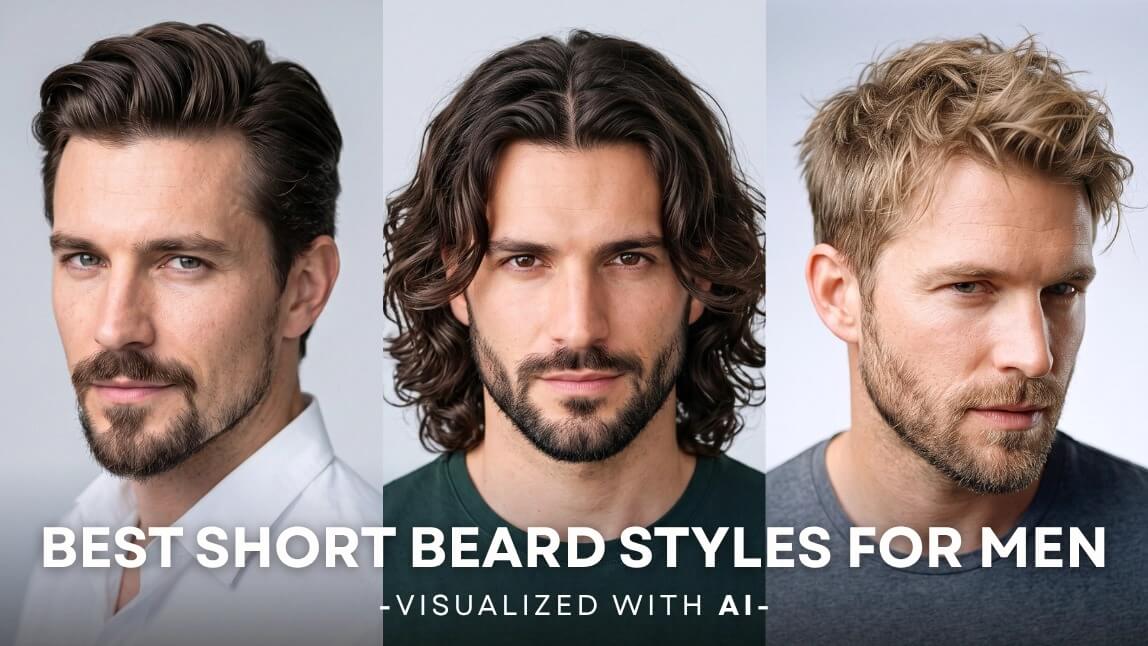
A short beard is any beard kept under roughly two inches (about 50 mm), from a one day shadow to a tightly boxed jawline. It is the most worn facial hair category in the world for one simple reason: it reads as deliberate rather than neglected, and it survives a Monday morning without a barber. This guide covers 20 short beard styles, the exact trimmer guard and growth time each one needs, which face shape it flatters, and how to preview all of them on your own face before a single hair gets cut.
Most beard guides ask you to imagine the result. That is the part everyone gets wrong. AI beard simulation has quietly become the fastest way to shortlist a style, and it is now the same technology powering men's grooming brands, barbershop apps, and razor retailers. We will cover that too, because knowing what your face actually looks like in a Van Dyke beats scrolling another gallery of someone else's jaw.
What you will find in this guide:
- What counts as a short beard, exactly?
- How do you pick a short beard style without guessing?
- Which stubble and scruff styles work best?
- Which short full beards look sharpest?
- Which chin focused short beards are worth trying?
- Which mustache led and edge styles still hold up?
- What short beard style suits your face shape?
- What trimmer guard length do you need for each style?
- How long does it take to grow each short beard style?
- Which short beard styles hide a patchy beard?
- How do you trim and maintain a short beard at home?
- What are short beard trends telling brands and barbers in 2026?
- Frequently asked questions
What Counts as a Short Beard, Exactly?
Barbers do not agree on a single number, but the working definition is simple. Anything you can maintain with a trimmer guard instead of scissors is short. In practice that means under 2 inches, or roughly 50 mm, measured at the longest point on the chin.
The category splits into four practical tiers, and knowing which tier you are in tells you how often you will be trimming.
| Tier | Length | Growth time | Trim frequency |
|---|---|---|---|
| Light stubble | 0.5 to 2 mm | 1 to 3 days | Every 2 to 3 days |
| Heavy stubble | 3 to 5 mm | 5 to 10 days | Every 3 to 4 days |
| Short beard | 6 to 20 mm | 2 to 6 weeks | Weekly |
| Short full beard | 20 to 50 mm | 6 to 12 weeks | Every 10 to 14 days |
Facial hair grows at approximately half an inch, around 12 mm, per month. That number is an average, not a promise. Genetics, age, and testosterone levels all move it, which is why two men starting on the same Monday can end up in different tiers by week four.

How Do You Pick a Short Beard Style Without Guessing?
Here is the honest problem with every beard listicle, including the ones ranking above this one. You are looking at a model with a jawline that is not yours, hair density that is not yours, and a colorist on payroll. Then you commit six weeks of growth to find out.
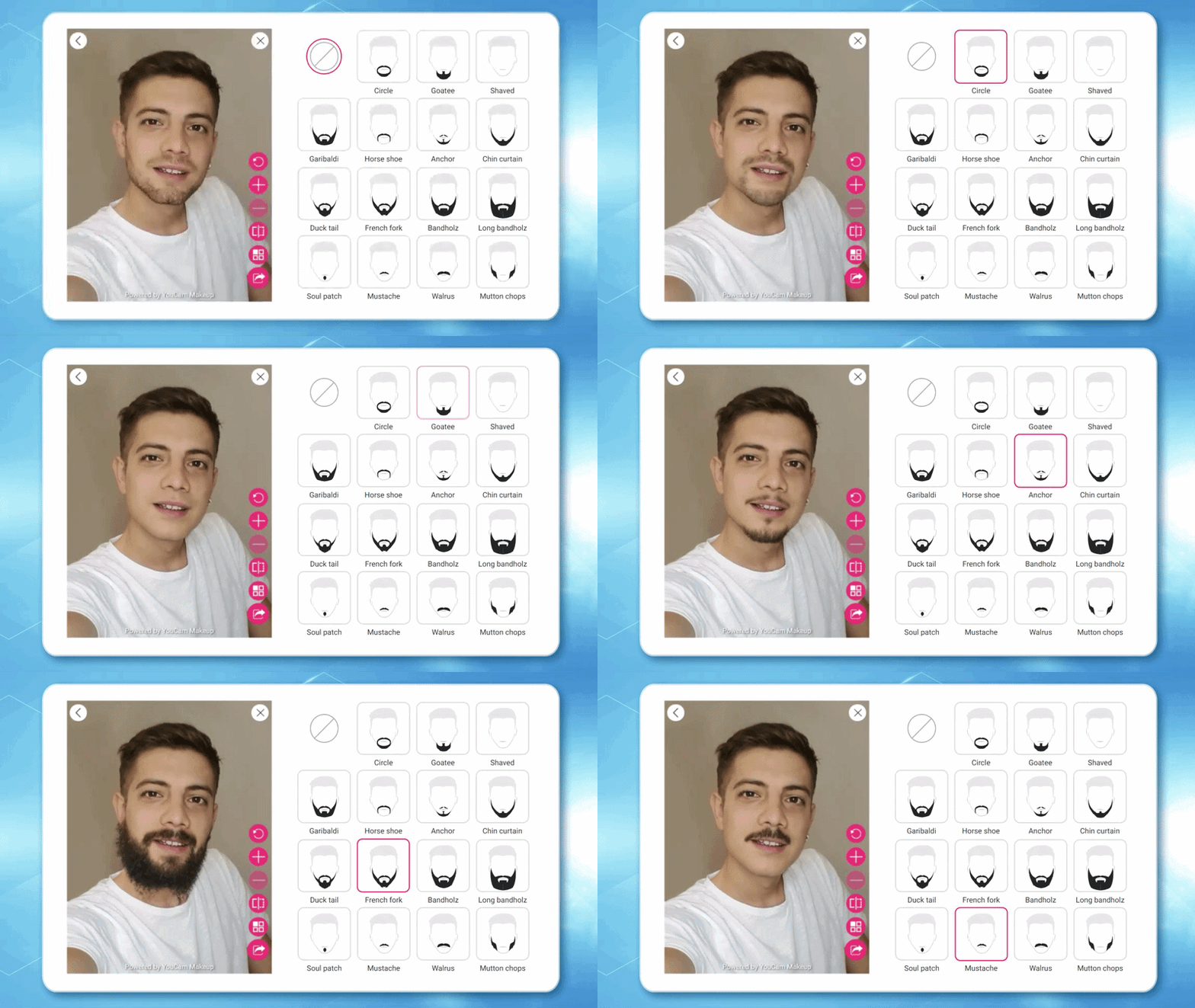
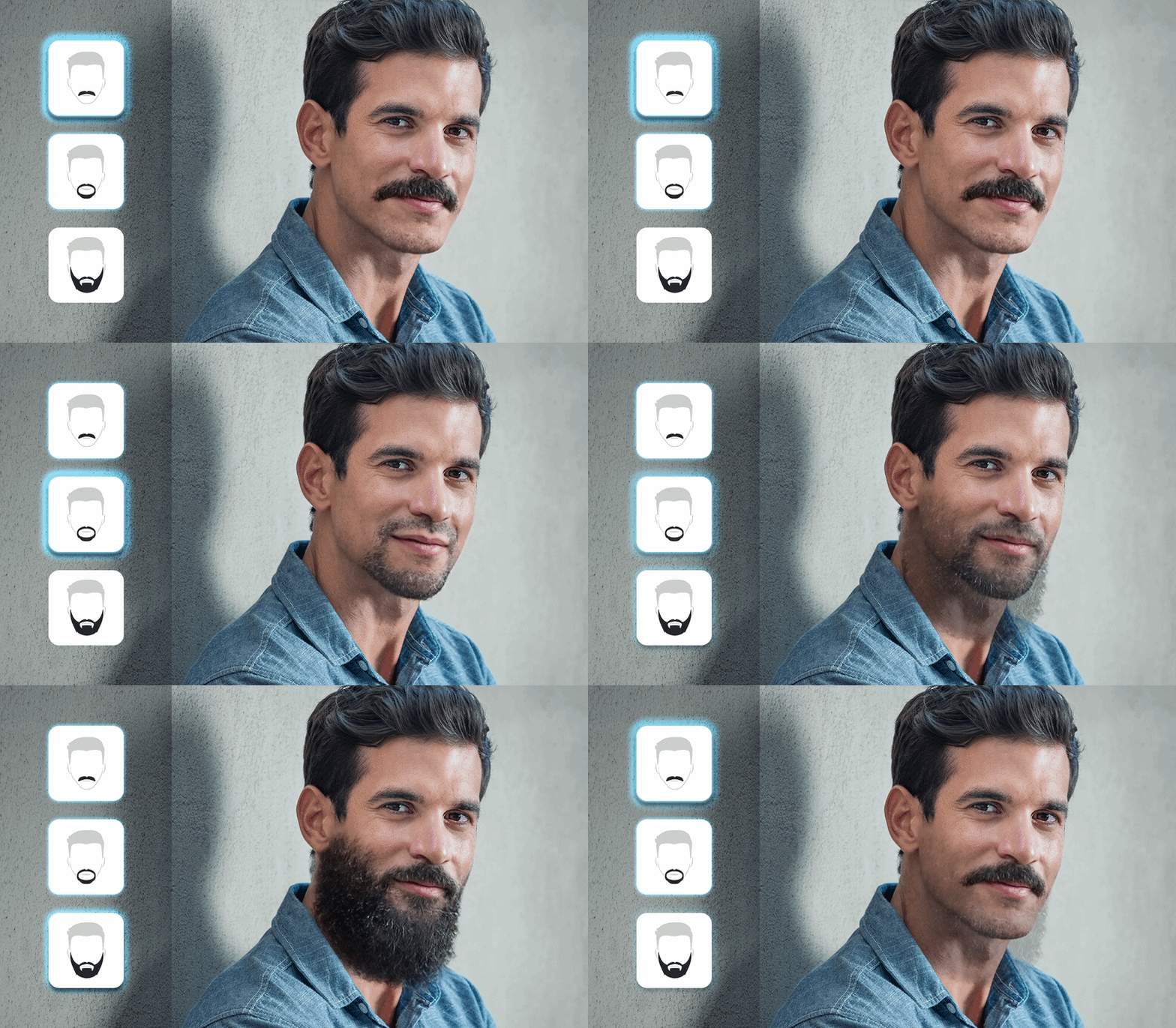
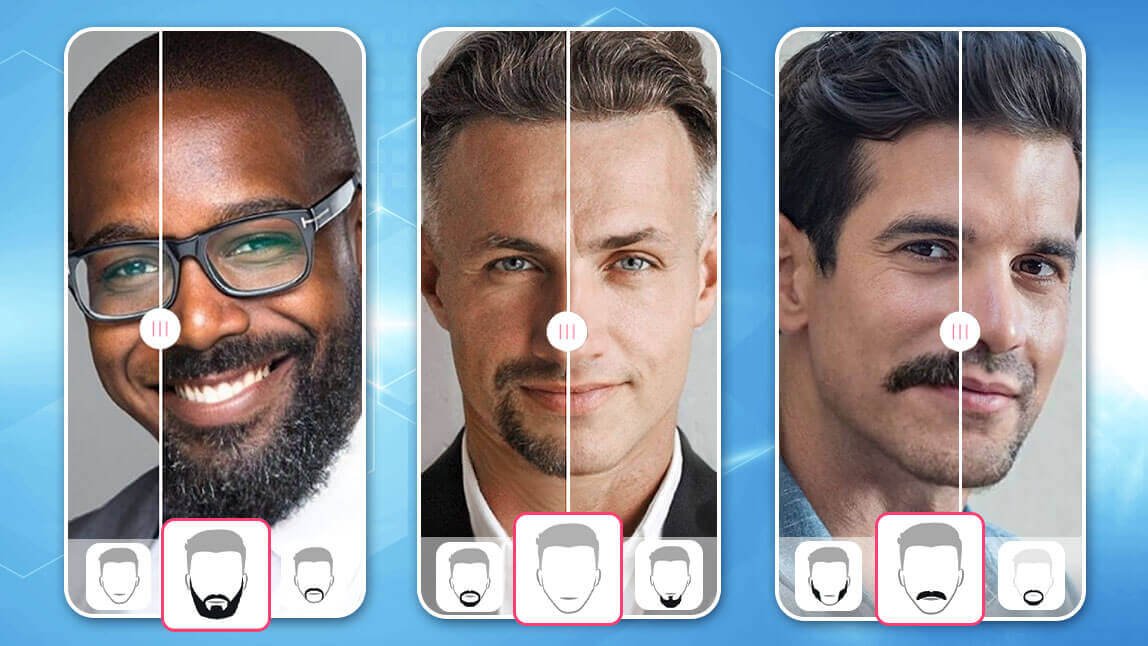
AI beard simulation removes the six weeks. Upload one clear front facing photo, and facial analysis maps the shape of your jaw, chin, and cheek line, then renders a beard onto it with realistic density and shadow. You get a shortlist in about ninety seconds instead of a season.
Three things make this genuinely useful rather than a novelty:
- Side by side comparison. Seeing a goatee and a circle beard on the same photo settles arguments that a mirror cannot.
- Color testing. If your beard grows in noticeably redder or greyer than your hair, you can preview a dye shade before buying one.
- Density realism. A good simulation shows you what a style looks like at your growth pattern, not at maximum theoretical coverage.
Perfect Corp's AI Beard Style Generator was used by over a million people in 2025 and covers styles from heavy stubble through Balbo and Van Dyke. If your beard already grows in patchy or off color, the AI Beard Dye simulator handles the shade question separately.
Try the AI Beard Style Generator and shortlist three looks before you touch a trimmer.
Which Stubble and Scruff Styles Work Best?
Stubble is the lowest commitment tier in men's grooming and, according to repeated attractiveness studies, one of the highest rated. It also happens to be the hardest to keep looking intentional, because the line between designed and overslept is about two days wide.
1. Light Stubble (The Five O'Clock Shadow)
One to two days of growth, kept at 1 mm with a trimmer and a defined neckline. It adds jaw definition without adding visual weight, which makes it the safest option for men with rounder faces or softer chins.
The trap: skipping the neckline. Untrimmed light stubble creeping down the throat is the single fastest way to look tired rather than sharp.
2. Heavy Stubble
Roughly 3 to 5 mm, the sweet spot most men mean when they say "designer stubble." It reads as full coverage while staying under a week of growth, and it hides mild acne scarring and uneven skin tone better than any other short style.
Works with almost every face shape. If your cheek growth is thin, keep the length at the lower end so the contrast between patches is less visible.
3. The Scruffy Short Beard
Two to three weeks of growth with minimal shaping. The cheek line stays natural, the neckline gets cleaned, and that is roughly the entire maintenance routine. It suits creative and casual environments and forgives irregular growth patterns.
Expect itch around week two. A conditioning balm solves it faster than willpower does.
4. The Faded Beard
Not a length so much as a technique. The beard tapers from very short at the sideburn to fuller at the chin, erasing the hard line where hair meets hair. It is the most barber dependent style on this list and the most flattering on square and rectangular faces, because the gradient softens the corners of the jaw.
Ask for a "beard fade" or "taper" specifically. Attempting your first one at home rarely ends well.
Try the AI Beard Virtual Try-On now and see every style and shade on your own face.
Which Short Full Beards Look Sharpest?
These cover the full face but stay inside the short category. They carry the most authority signal, which is why they dominate boardrooms and, increasingly, LinkedIn photos.
5. The Short Boxed Beard
Full coverage at 6 to 12 mm with deliberately straight, defined edges on the cheek and neck. It is the most versatile short beard there is: professional enough for a client meeting, structured enough to add jaw definition to a round face.
The defining feature is the line, not the length. If you only sharpen one thing weekly, sharpen the cheek line.
6. The Corporate Beard
A slightly longer cousin of the boxed beard at 10 to 20 mm, kept perfectly even and paired with a trimmed mustache. No fades, no flourishes, no soul patch. The look is competence, and it works on nearly every face shape because there is nothing dramatic to clash with.
7. The Short Rounded Beard
Same length as a boxed beard, but the corners are rounded off instead of squared. It reads as approachable rather than severe, and it is the better pick if your jaw is already strongly angular and you do not want to double down.
8. The Hollywoodian
A mustache connected to a chin beard along the jawline, with the sideburns removed entirely. Cutting the connection to the hairline is what gives it that mid century film look. It lengthens the lower face, which makes it a strong choice for round and square shapes and a poor one for long faces.
9. The Short Ducktail
Cheeks kept tight at around 6 mm while the chin is left longer, around 20 to 25 mm, and tapered to a soft point. At short length it stays office appropriate while adding visible length to the face. This is the most effective short style for men with wide or round faces.
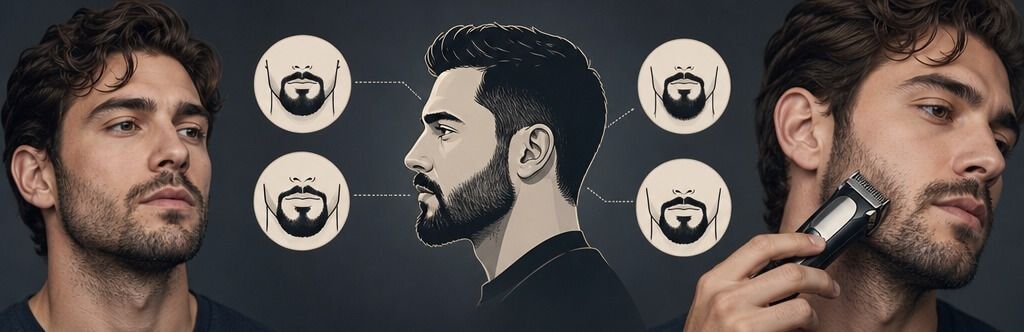
Which Chin Focused Short Beards Are Worth Trying?
If your cheek growth is thin, this is your section. Every style here concentrates hair where most men grow it densest, which is the chin and upper lip.
10. The Classic Goatee
Chin hair only, no mustache, cheeks clean. It is the oldest trick for adding length to a round or heart shaped face, and it takes about two weeks to grow. Keep the width narrow. A goatee that spreads too wide across the chin starts to widen the face it was meant to lengthen.
11. The Extended Goatee (Circle Beard's Cousin)
A goatee that stretches a little way along the jawline before stopping, usually with a mustache attached. It gives more jaw definition than a classic goatee while still leaving the cheeks bare, which is useful when cheek coverage is patchy.
12. The Circle Beard
Mustache and chin beard joined into a closed ring around the mouth. It is the most forgiving of the chin styles because the circle shape hides small gaps at the corners of the mouth where growth is often thinnest. Round and oval faces wear it best.
13. The Van Dyke
A pointed chin beard and a mustache that deliberately do not connect. The gap is the whole point, and it is what separates a Van Dyke from a circle beard. It is the most stylized option here, which makes it a genuinely good use case for previewing with AI first.
14. The Balbo
A wider chin beard that flares slightly along the jaw, with a detached mustache above and no sideburn connection. Think of it as a Van Dyke with more jaw presence. It suits narrow chins and oval faces particularly well because it builds width exactly where those faces lack it.
15. The Anchor Beard
A pointed chin beard plus a soul patch, topped with a thin mustache, together forming the outline of a ship's anchor. It is precise, it demands weekly attention, and it looks intentional in a way almost nothing else on this list does. Best on square, diamond, and heart shaped faces.
16. The Royale Beard
A narrow strip running from the lower lip down the chin, connected to a mustache, with everything else shaved. Minimal, slightly theatrical, and one of the fastest to grow at around ten days. It needs a strong jaw underneath it to work.
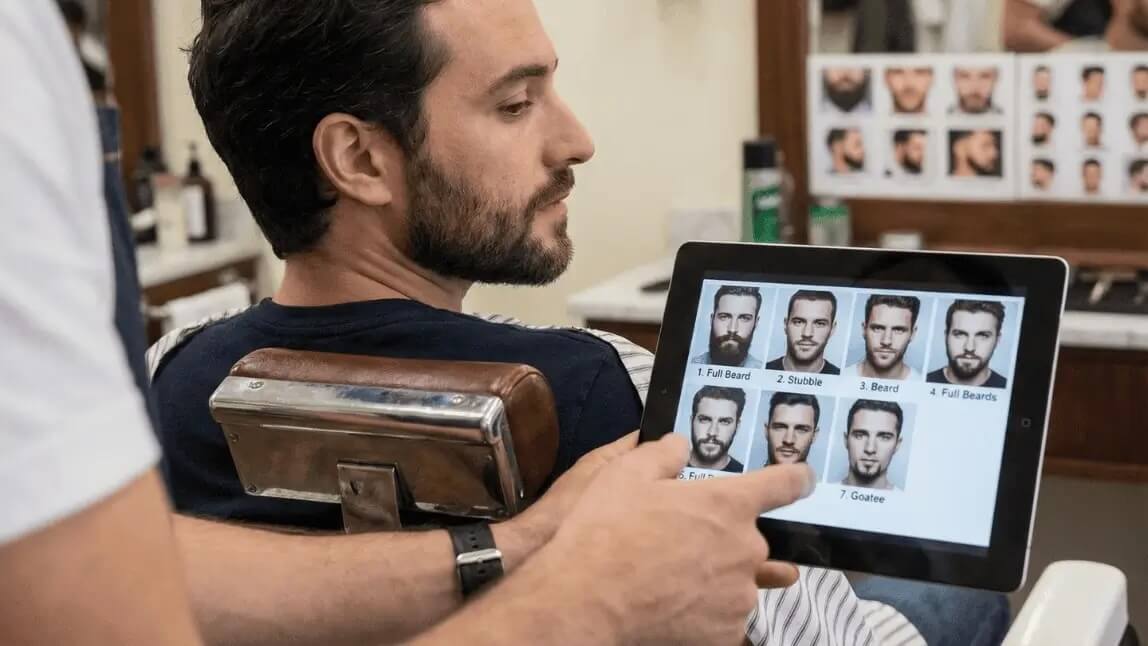
Try the AI Beard Virtual Try-On now and see every style and shade on your own face.
Which Mustache Led and Edge Styles Still Hold Up?
These four are the specialists. They will not suit everyone, but when they land, nothing else looks like them.
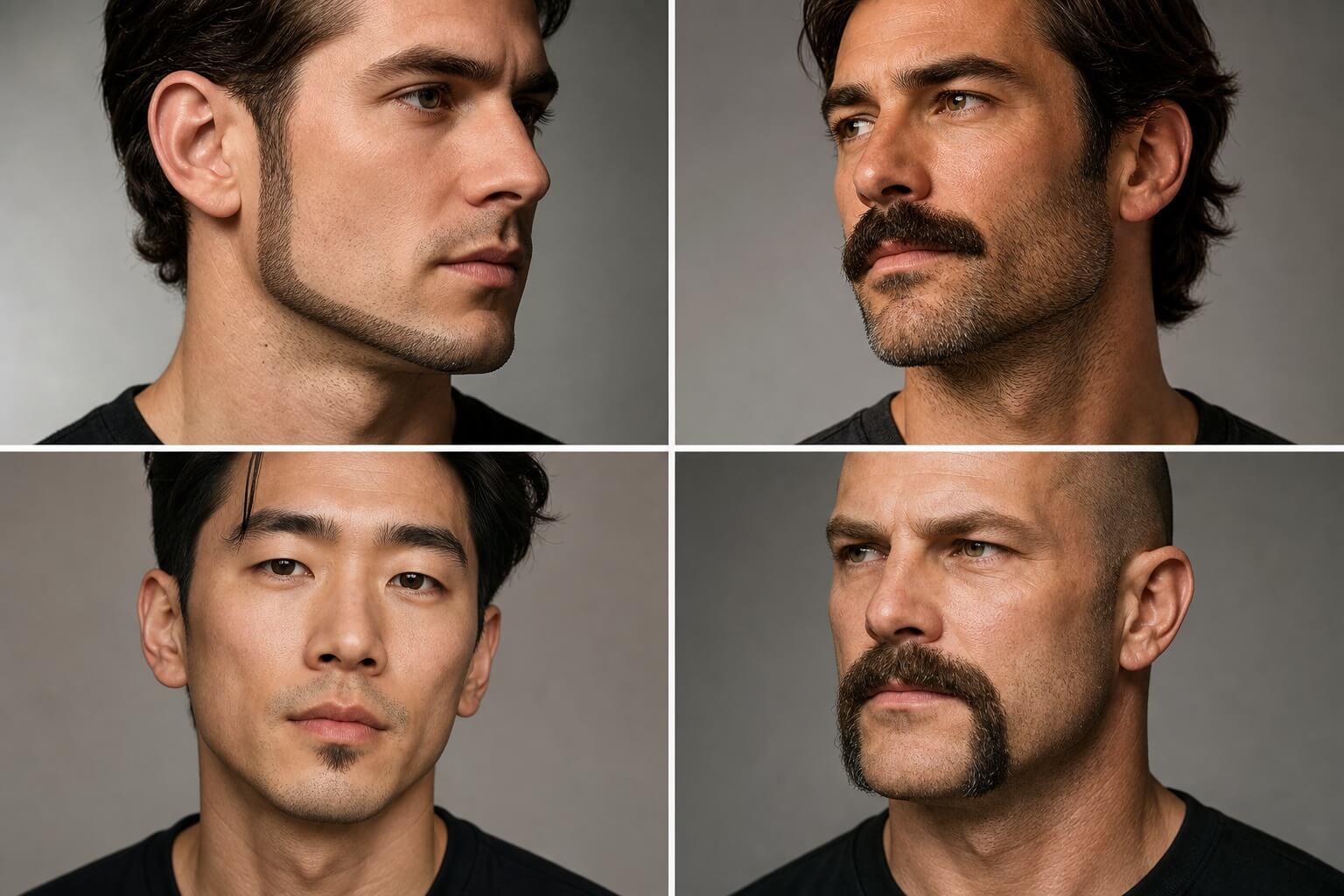
17. The Chin Strap
A thin band of hair tracing the jawline from sideburn to sideburn, usually 3 to 6 mm, with the chin and cheeks otherwise clean. It draws a literal outline around the jaw, which is either an asset or a liability depending on the jaw. Square and heart shaped faces benefit most.
Precision is everything. An uneven chin strap is more noticeable than an uneven anything else, because the eye reads it as a line.
18. The Beardstache
A full, deliberately prominent mustache paired with short stubble everywhere else. It has been the loudest facial hair trend of the past few years and it is still climbing, largely because it gives a mustache somewhere to sit without looking isolated. Grow the mustache to 10 mm or more and keep the rest at 2 mm.
19. The Soul Patch
A small tuft directly under the lower lip, alone. It takes under a week, it demands almost nothing, and it works as a subtle accent on nearly any face shape. It also pairs with most other styles on this list rather than competing with them.
20. The Horseshoe Mustache
A thick mustache with two vertical arms running down past the mouth corners to the jaw, with the chin left bare. Bold, unmistakable, and heavily associated with a certain kind of confidence. It widens the lower face, so square and rectangular shapes carry it best.
What Short Beard Style Suits Your Face Shape?
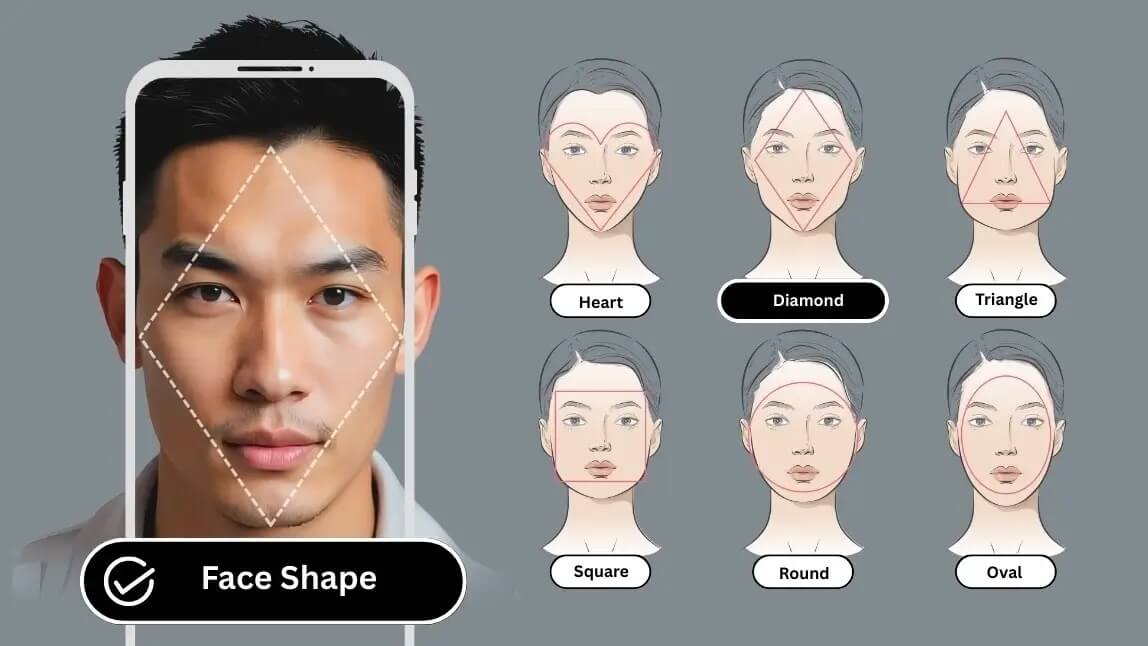
The principle behind all beard and face shape advice is one sentence long: add length where the face is wide, add width where the face is narrow. Everything below is that rule applied.
| Face shape | Goal | Best short styles | Avoid |
|---|---|---|---|
| Oval | Maintain balance | Almost anything: short boxed, heavy stubble, Balbo, circle beard | Extremes in either direction |
| Round | Add vertical length | Short ducktail, classic goatee, Van Dyke, Hollywoodian | Wide chin straps, mutton chops, horseshoe |
| Square | Soften the corners | Short rounded beard, faded beard, circle beard, anchor | Hard squared boxed beards |
| Rectangle / Oblong | Add width, avoid length | Heavy stubble, chin strap, horseshoe, faded beard | Goatee, ducktail, anything pointed |
| Heart | Build up the chin | Balbo, anchor, extended goatee, chin strap | Styles heavy on the cheeks and sideburns |
| Diamond | Fill the jaw, calm the cheekbones | Short boxed beard, corporate beard, anchor, Balbo | Narrow pointed goatees |
| Triangle | Add volume at the cheeks | Full short beard, heavy stubble, corporate beard | Chin heavy styles that widen an already wide jaw |
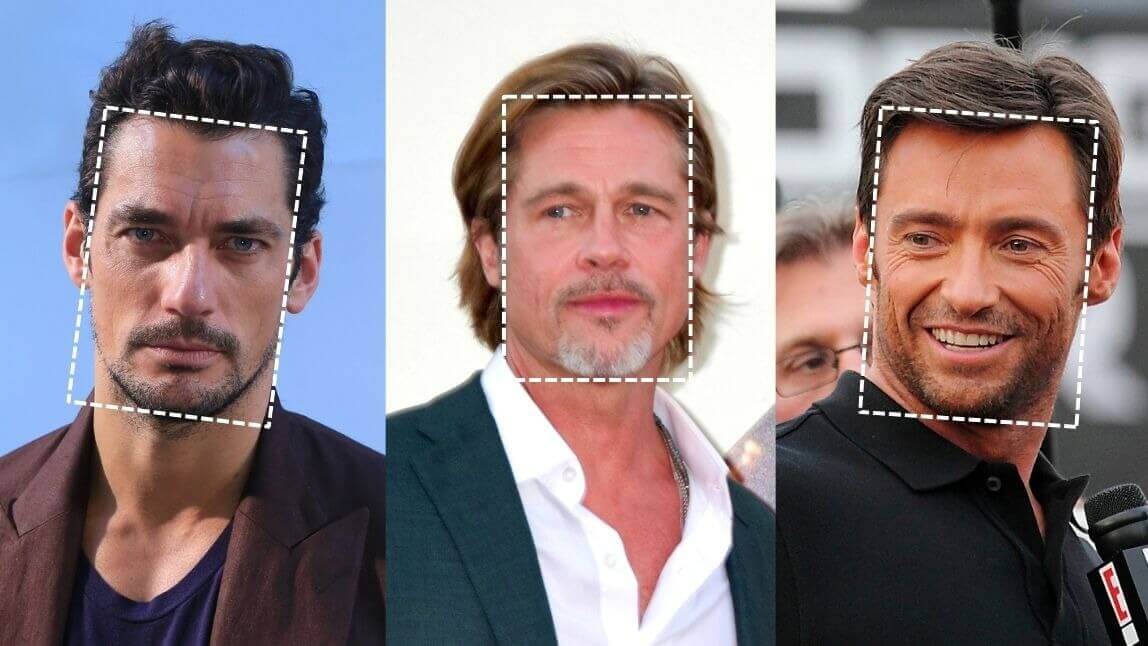
One caveat worth stating plainly: most men misidentify their own face shape. Measuring your forehead, cheekbone, and jaw widths against your face length is more reliable than eyeballing it in a mirror, and automated facial analysis does it in a second. If you want to check yours before committing to the table above, beauty tech tools now handle face shape detection alongside style simulation.
What Trimmer Guard Length Do You Need for Each Style?
This is the table nobody publishes and everybody needs at 7am. Guard numbers vary slightly between brands, but the millimeter values are standard.
| Style | Cheeks | Chin | Typical guard |
|---|---|---|---|
| Light stubble | 1 mm | 1 mm | #0.5 |
| Heavy stubble | 4 mm | 4 mm | #1.5 |
| Scruffy short beard | 8 mm | 8 mm | #3 |
| Short boxed beard | 8 mm | 10 mm | #3 to #4 |
| Corporate beard | 13 mm | 15 mm | #5 to #6 |
| Faded beard | 3 mm to 10 mm | 10 mm | #1 through #4 |
| Short ducktail | 6 mm | 22 mm | #2 cheeks, scissors on chin |
| Beardstache | 2 mm | 2 mm | #1, mustache untouched |
| Goatee / circle / Van Dyke | Shaved | 8 to 12 mm | #3 to #4 on chin only |
| Chin strap | Shaved | 4 mm band | #1.5 with a detail trimmer |
A practical rule: always start one guard longer than you think you need. Hair grows back at roughly 0.4 mm a day, so an over aggressive Sunday costs you most of a week.
How Long Does It Take to Grow Each Short Beard Style?
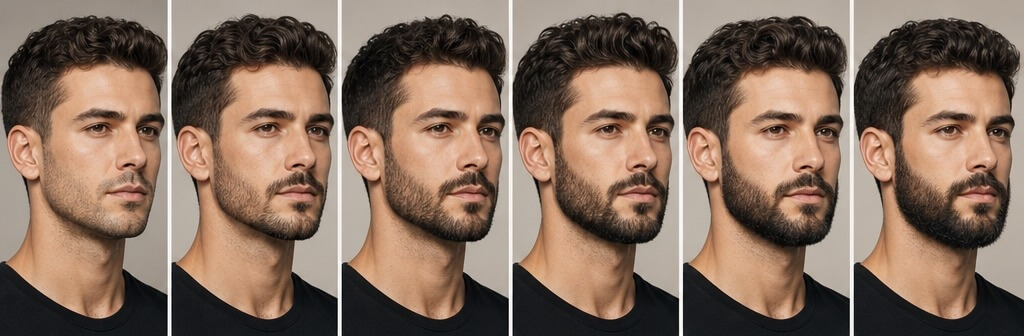
Growth time is the variable most beard guides skip, and it is the one that decides whether you actually follow through. At an average of 12 mm per month, here is the realistic calendar.
| Style | Time to grow | First trim at |
|---|---|---|
| Light stubble, soul patch | 2 to 5 days | Day 3 |
| Heavy stubble, beardstache base | 1 week | Day 7 |
| Chin strap, royale | 10 to 14 days | Day 10 |
| Goatee, circle beard, anchor | 2 to 3 weeks | Week 2 |
| Scruffy short beard, Van Dyke, Balbo | 3 to 4 weeks | Week 3 |
| Short boxed beard, Hollywoodian | 4 to 6 weeks | Week 4 |
| Corporate beard, faded beard | 6 to 8 weeks | Week 5 |
| Short ducktail | 8 to 12 weeks | Week 6 |
Weeks two and three are where most attempts die. The growth looks uneven, the itch peaks, and nothing resembles the photo yet. Knowing in advance that week three is supposed to look bad is, unglamorously, the most useful grooming tip in this article.
Which Short Beard Styles Hide a Patchy Beard?
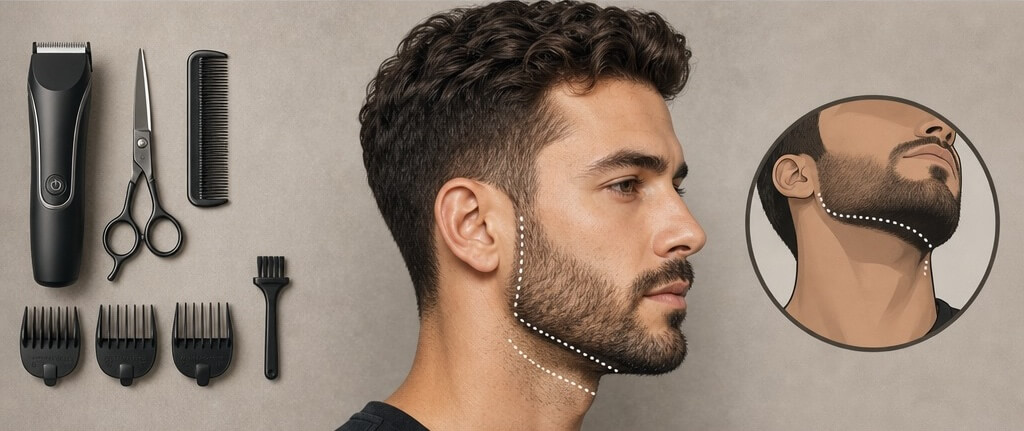
Patchiness is genetic, extremely common, and not a problem that willpower fixes. It is a problem that style selection fixes. The strategy is to put hair where you have it and shave where you do not, rather than waiting for cheeks that are not coming.
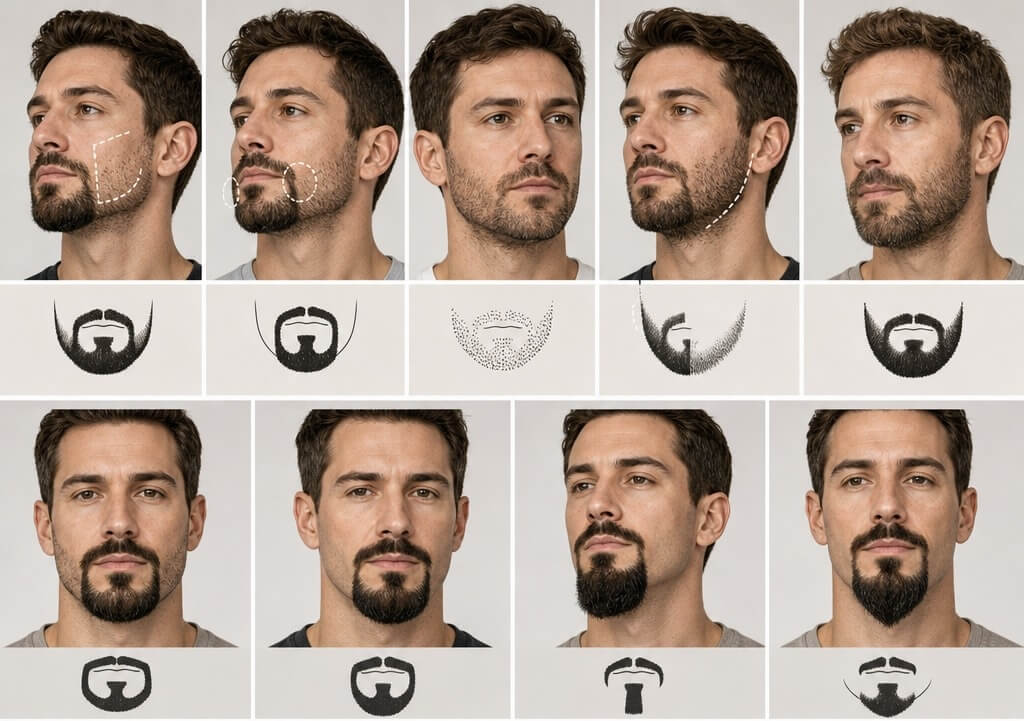
- Sparse cheeks, dense chin. Go chin focused: circle beard, Balbo, extended goatee, Van Dyke. These read as deliberate design, not as a full beard that failed.
- Gaps at the mouth corners. A circle beard closes the loop and disguises the join better than a goatee and mustache kept separate.
- Patchy everywhere, evenly. Heavy stubble at 3 to 4 mm. Short length compresses the contrast between dense and sparse areas until it stops registering.
- One sided patchiness. A faded beard, because the gradient distracts the eye from asymmetry that a flat length would highlight.
- Thin, fine, or light colored hair. Consider darkening. A shade or two deeper reads as significantly denser without changing a single follicle.
Previewing is especially worth it here. Simulation shows you a chin focused style on your actual growth pattern, which is the only honest way to compare a Balbo against a circle beard when your cheeks are not participating.
Preview chin focused styles on your own photo and skip the six week experiment.
Try the AI Beard Virtual Try-On now and see every style and shade on your own face.
How Do You Trim and Maintain a Short Beard at Home?
Short beards need less time than long ones but more consistency. The whole routine is about fifteen minutes a week.
Set the neckline first, and set it low enough
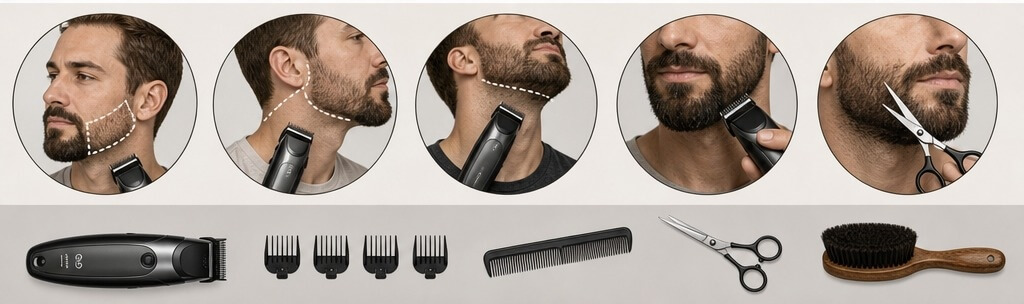
Place two fingers above your Adam's apple. That is your line. Trim in a shallow U shape from behind each ear down to that point, and never follow the jawbone itself, which is the mistake that produces a floating beard and a shadow of a double chin.
Define the cheek line, but do not overreach
Draw an imaginary line from the sideburn to the corner of the mouth and shave above it. Lowering the cheek line too far shrinks the beard and makes the face look wider. When in doubt, follow your natural growth line and only clean the strays above it.
Trim dry, trim often, trim in stages
Wet hair sits longer than dry hair and you will cut more than intended. Trim dry, against the grain for evenness, and do the whole beard at one guard before dropping down for the cheeks. Weekly beats monthly by a wide margin at these lengths.
Wash it, then oil it
Beard hair is coarser than scalp hair and the skin beneath it dries out fast, which is what causes both itch and flaking. Use a dedicated beard wash two or three times a week, not daily shampoo, and follow with a few drops of beard oil worked into the skin rather than just the hair. Two to four drops is enough at short lengths.
Own three tools, not thirty
A trimmer with adjustable guards, a detail trimmer or safety razor for edges, and a boar bristle brush. That is the entire kit for every style in this guide. The brush matters more than people expect: it trains growth direction and reveals uneven spots before you trim them.
What Are Short Beard Trends Telling Brands and Barbers in 2026?
The short beard's dominance is not a style story, it is a data story. Three patterns are worth flagging if you sell razors, grooming products, or barbershop services.
Discovery moved to the screen. Men are shortlisting styles digitally before they book. Virtual try-on has stopped being a novelty widget and become the top of funnel for men's grooming, which is why Perfect Corp launched an eleven API hair and beard suite in June 2026 covering beard style generation alongside hair color, hairstyle, and hair analysis. It serves more than 800 global brand partners across a YouCam ecosystem with over 1.1 billion downloads.
Consultation is the conversion moment. Barbershops and grooming retailers that let a customer see a Balbo on their own face close the sale in the same session. The friction being removed is not price, it is uncertainty, and uncertainty is exactly what simulation eliminates.
Personalization now includes facial analysis. Recommending a beard by face shape, growth density, and hair color has moved from barber intuition to something a facial analysis API can do at scale, inside an app, for every customer at once.
Developers building this into a grooming app, an ecommerce product page, or a salon tool can test the beard style endpoint directly in the YouCam API Playground with a free key, no sales call required.
Contact Perfect Corp. for a demo, or spin up a free API key and ship a beard try-on this week.
Frequently Asked Questions About Short Beard Styles
What is the best short beard style?
The short boxed beard is the most universally flattering, because defined edges add jaw structure to almost any face shape while staying professional. That said, "best" depends on your face shape and growth pattern more than on any ranking. Heavy stubble is the best low effort option, and the circle beard is the best pick for patchy cheeks.
How short is a short beard?
Under 2 inches, or roughly 50 mm, at the longest point. Most short beards sit between 3 mm and 20 mm, which is the range you can maintain entirely with trimmer guards rather than scissors.
What beard style is most attractive?
Research on facial hair attractiveness has repeatedly landed on heavy stubble, roughly 3 to 5 mm, as the highest rated across studies. It signals maturity without the maintenance perception of a full beard. Ratings vary by context, though, and a well groomed short boxed beard consistently scores near the top for professional settings.
Are short beards still in style in 2026?
Yes, and more so than in the peak full beard years. The trend has shifted decisively toward shorter, sharper, more maintained facial hair, with heavy stubble, the beardstache, and faded short beards leading. The unifying signal across all three is precision rather than volume.
What is the easiest short beard to maintain?
Heavy stubble. One guard setting, one neckline, about four minutes every three days, and no shaping decisions. The soul patch is technically easier but is an accent rather than a beard.
How long does it take to grow a short beard?
Between three days and twelve weeks depending on the style. Stubble takes under a week, a goatee or circle beard takes two to three weeks, a short boxed beard takes four to six weeks, and a short ducktail takes up to twelve. Facial hair grows at approximately half an inch, around 12 mm, a month.
What guard length should I use for a short beard?
A #1.5 guard (about 4 mm) for heavy stubble, #3 (about 8 mm) for a scruffy or boxed short beard, and #5 or #6 (13 to 16 mm) for a corporate beard. Start one guard longer than your target the first time, because you can always take more off.
What short beard suits a round face?
Anything that adds vertical length and keeps the sides tight. The short ducktail, classic goatee, Van Dyke, and Hollywoodian all work. Avoid wide chin straps, horseshoe mustaches, and full cheek coverage, which widen a face that is already wide.
Does a short beard make you look older or younger?
Usually a few years older, which is often the point. Stubble and short beards add perceived maturity and dominance, while a clean shave reads younger. If you want the maturity without the age, keep the length under 5 mm and the lines sharp.
What is the difference between stubble and a short beard?
Length and shaping. Stubble is under 5 mm and follows your natural growth with only a cleaned neckline. A short beard is 6 mm or more and involves deliberate shaping of the cheek line, neckline, and often the mustache.
Can I try beard styles on my face before growing one?
Yes. AI beard simulators apply realistic beard styles to a photo of your own face using facial analysis, so you can compare a goatee, a Balbo, and a short boxed beard side by side in under two minutes. It is the fastest way to avoid wasting six weeks on a style that does not suit your jaw.
What short beard style works for a patchy beard?
Chin focused styles: the circle beard, Balbo, extended goatee, or Van Dyke. They concentrate hair where growth is densest and shave the sparse cheeks entirely, so the look reads as intentional. Heavy stubble at 3 to 4 mm is the other reliable answer, because short lengths flatten the contrast between thick and thin patches.
How often should you trim a short beard?
Every 2 to 3 days for stubble, weekly for a 6 to 20 mm short beard, and every 10 to 14 days for a short full beard. Necklines need attention more often than length does, roughly twice as often.
Do short beards suit thin or fine facial hair?
They suit it better than long beards do. Fine hair looks sparse when long and dense when short, so keeping the length at 3 to 8 mm maximizes apparent thickness. Darkening the color by a shade adds visual density without adding a single hair.
What short beard style is best for work or a corporate setting?
The corporate beard or the short boxed beard. Both are evenly trimmed with clean lines and no stylistic flourishes, which is exactly what conservative environments read as well groomed. Light stubble with a sharp neckline is the acceptable minimum in most offices.
The Short Version
Twenty styles, four length tiers, seven face shapes, and one shortcut that beats all of it: look at the style on your own face before you commit six weeks to it. Pick two or three from this list, preview them, then take the winner to your barber with a millimeter number attached. That single detail, a number instead of a description, is the difference between the beard you wanted and the beard you got.



 English


