


 Author: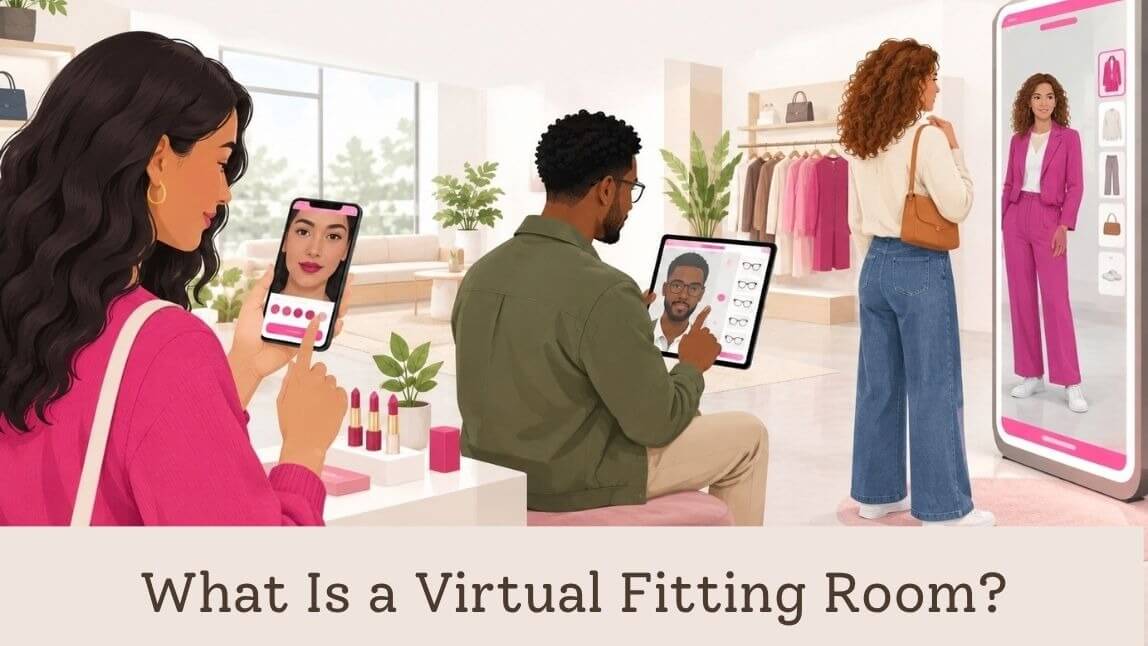
A virtual fitting room is a digital try-on experience that lets shoppers see how a product would look on them before they buy it, using their camera or a photo. In fashion, that means previewing a dress or jacket on your own body. In beauty and eyewear, it means seeing a lipstick shade or a pair of frames on your own face in real time. For retailers, it brings the "try before you buy" moment of a store fitting room to the product page, the app and the in-store mirror.
This guide explains how virtual fitting rooms work across makeup, glasses, clothing and accessories, where they help retailers most, and what to plan for before you launch one.
At a Glance
- A virtual fitting room uses augmented reality (AR) or generative AI to place products on a shopper's face, body or photo.
- Makeup and eyewear usually run as live camera try-ons; clothing usually works from a photo.
- The main business goals are shopper confidence, product discovery and fewer avoidable returns.
- Camera and photo data need clear consent and privacy practices from day one.
What Is a Virtual Fitting Room?
The term started in apparel, where it described tools that help shoppers judge fit and style without a physical changing room. Today it covers any category where how something looks on you drives the purchase: cosmetics, glasses, jewelry, watches, hair color and clothing.
Most virtual fitting rooms fall into one of three formats:
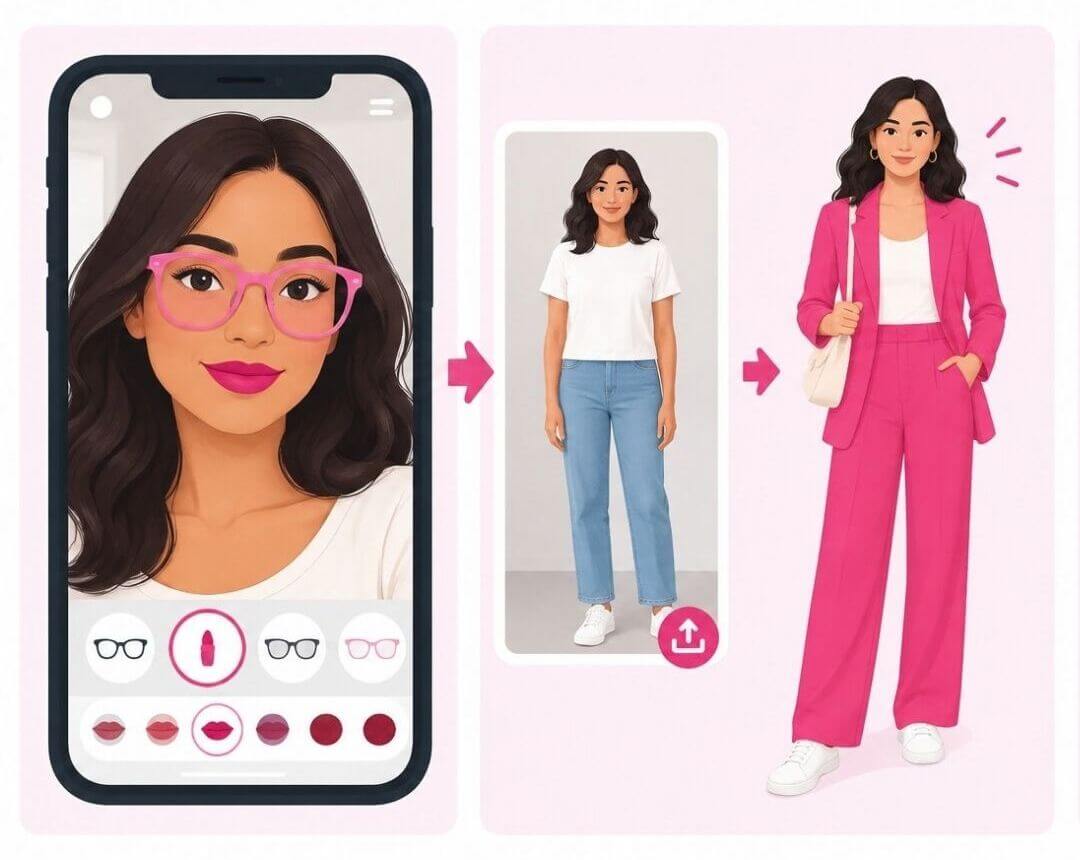
- Live AR try-on: the shopper's camera feed is tracked in real time and the product is drawn onto the face, hands or ears as they move.
- Photo-based AI try-on: the shopper uploads a photo (or picks a model), and generative AI renders the garment or look onto it.
How a Virtual Fitting Room Works by Category
Makeup
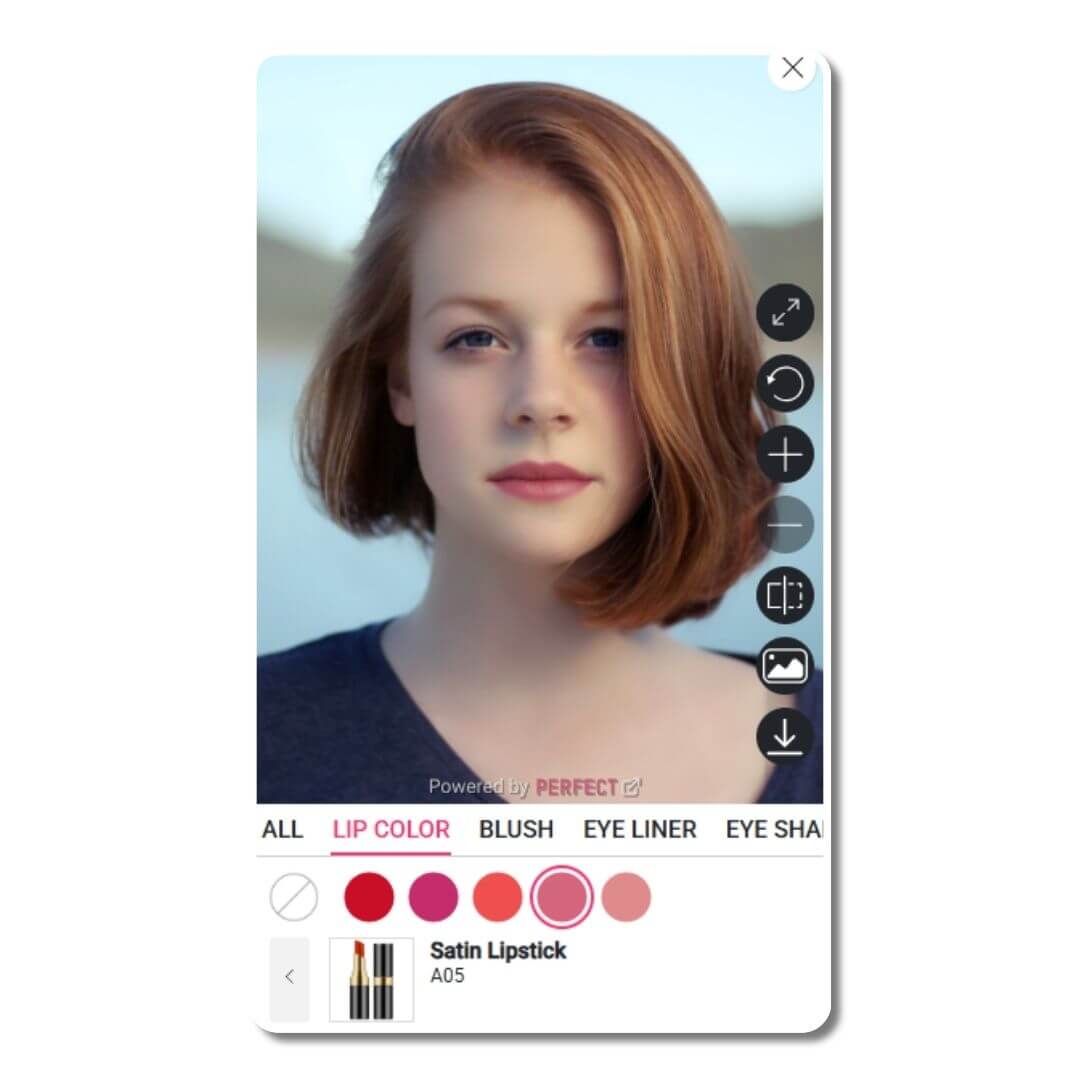
Makeup try-on relies on face tracking. The software maps facial features so a lip color, eyeliner or foundation shade stays in place as the shopper turns their head. Good tools also render finishes such as matte, satin and shimmer.
Glasses and Sunglasses
Eyewear try-on places a 3D frame on the face and scales it to the shopper. Because frame width and proportions matter as much as color, useful tools let shoppers compare sizes and lens tints side by side, and some estimate pupillary distance from the camera image to position the frames more realistically.
Clothing
Apparel is the hardest category because fabric drapes and bodies vary. Photo-based generative AI can show how a full outfit looks on the shopper's own photo. Neither replaces a physical fitting, so it helps to present the result as a style preview rather than a fit guarantee.
Jewelry, Watches and Beyond
The same AR approach extends to earrings, rings, bracelets, watches, nails and hair color. These categories are often bought as gifts or on impulse, so a quick on-body preview can help shoppers picture scale and style.
Why Retailers Are Investing in Virtual Try-On
Returns are one of the clearest pressures. The National Retail Federation and Happy Returns expect consumers to return nearly $850 billion in merchandise in 2025, with 19.3% of online sales sent back. Not every return is about appearance, but uncertainty about how a shade, frame or silhouette will look encourages buying several options and returning the rest.
Virtual fitting rooms target that uncertainty. In practice, retailers use them to:
- Build confidence on the product page by letting shoppers see a product on themselves instead of on a model.
- Support discovery by making it easy to swipe through shades, frames or outfits in seconds.
- Connect channels by offering the same try-on online, in an app and on an in-store smart mirror.
What to Plan Before You Launch
Before choosing a vendor, check these points:
- Catalog coverage: how product assets are created (for example, from existing 2D product photos or from 3D models) and how fast new SKUs can go live.
- Realism across shoppers: test results on a wide range of skin tones, face shapes, ages, hair textures and body types.
- Platform fit: whether the tool plugs into your e-commerce platform, app or in-store hardware.
- Privacy and consent: camera images and face data can be sensitive. The U.S. Federal Trade Commission has warned that surreptitious collection of biometric information and failing to assess foreseeable harms may be unfair practices, so explain what is processed, why and for how long.
- Honest framing: label try-on results as a visual preview, and pair apparel try-on with clear size guidance.
How Perfect Corp Can Support a Virtual Fitting Room
Perfect Corp offers try-on tools for several of the categories above, so beauty and fashion retailers can build a fitting room experience category by category.
- Makeup: virtual makeup try-on covers seven categories, including lip color, eyeshadow and foundation, with real-time face tracking, adjustable textures and ready-to-use plugins for Shopify and WooCommerce.
- Eyewear: virtual glasses try-on includes automatic pupillary distance detection, frame color, size and lens tint options, and can create 3D virtual glasses from 2D product images.
- Clothing: the AI clothes changer uses a shopper or model photo to visualize tops, bottoms, dresses and full outfits without 3D modeling, and is available via API.
- Accessories: AR try-on for items such as earrings can run on websites, mobile apps and in-store smart mirrors.
Bring a Virtual Fitting Room to Your Beauty or Fashion Store
Perfect Corp's AI and AR try-on tools can help your shoppers preview makeup, glasses, clothing and accessories on themselves before they buy. Talk with our team about which categories and channels fit your catalog and customers.
Virtual Fitting Room FAQ
Is a virtual fitting room the same as virtual try-on?

The terms overlap. "Virtual fitting room" traditionally refers to apparel and fit, while "virtual try-on" is broader and covers makeup, eyewear and accessories. Many retailers now use both terms for any on-body product preview.
Do shoppers need to download an app?
Not always. Many try-on tools run in a mobile or desktop web browser on the product page, and some brands also offer them in their own apps or on in-store mirrors.
Can a virtual fitting room tell shoppers their exact clothing size?
Photo-based try-on shows style and overall look; it does not measure fit precisely. Avatar and measurement tools can suggest sizes, but retailers should still show size charts and fit notes.
Which products benefit most from virtual try-on?
Products where appearance on the individual drives the decision, such as lip and foundation shades, eyeglass frames, earrings, watches and statement clothing, tend to be the strongest candidates.
How should retailers handle shopper privacy?
Ask for camera or photo access only when needed, explain what is processed and whether anything is stored, and review vendor data practices against the privacy laws in your markets.



 English


