


 Author: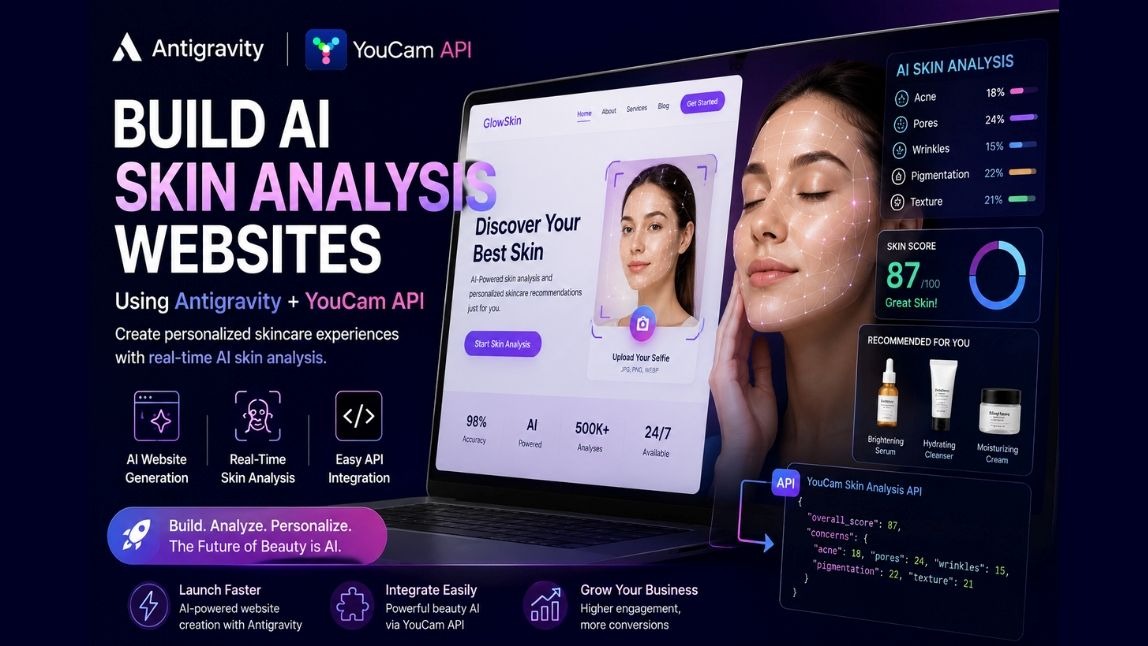
The way digital products are built is changing rapidly.
Just a few years ago, creating an interactive AI website required a large development team, machine learning engineers, backend infrastructure, and months of implementation time. Today, that process looks completely different.
AI website builders are dramatically reducing the complexity of frontend development, while APIs are making advanced AI capabilities accessible to anyone who can connect a workflow together.
This shift is especially visible in the beauty and skincare industry.
Consumers are no longer satisfied with static product pages or generic skincare quizzes. They increasingly expect personalized digital experiences that can analyze their skin, provide tailored recommendations, and simulate beauty outcomes instantly.
As a result, AI skin analysis has quickly become one of the most important entry points into modern beauty technology.
With platforms like Antigravity and the YouCam API Platform, businesses can now build intelligent skincare websites capable of real-time facial skin analysis without building AI systems from scratch.
More importantly, this is no longer limited to enterprise beauty companies. Startups, creators, ecommerce brands, and even solo founders can now launch AI skincare experiences significantly faster than before.
In this article, we’ll explore how AI skin analysis websites work, why this category is growing so quickly, and how modern AI infrastructure is changing the way beauty technology products are built online.
Why AI Skin Analysis Is Becoming a Core Beauty Technology Experience
Beauty has always been highly personal.
However, most digital skincare experiences have historically been surprisingly generic. Many skincare websites still rely on:
- Static product recommendation flows
- Manual skincare quizzes
- Broad skin-type categorizations
- One-size-fits-all content
These systems are easy to scale, but they often fail to create meaningful personalization.
At the same time, consumers have become increasingly accustomed to AI-driven experiences in other industries. Recommendation systems on streaming platforms, personalized shopping algorithms, and AI-generated assistants have all shifted user expectations toward experiences that feel tailored to the individual.
Beauty is naturally moving in the same direction.
Instead of asking users to answer a long series of skincare questions, AI skin analysis allows platforms to evaluate actual visual skin conditions directly from an image.
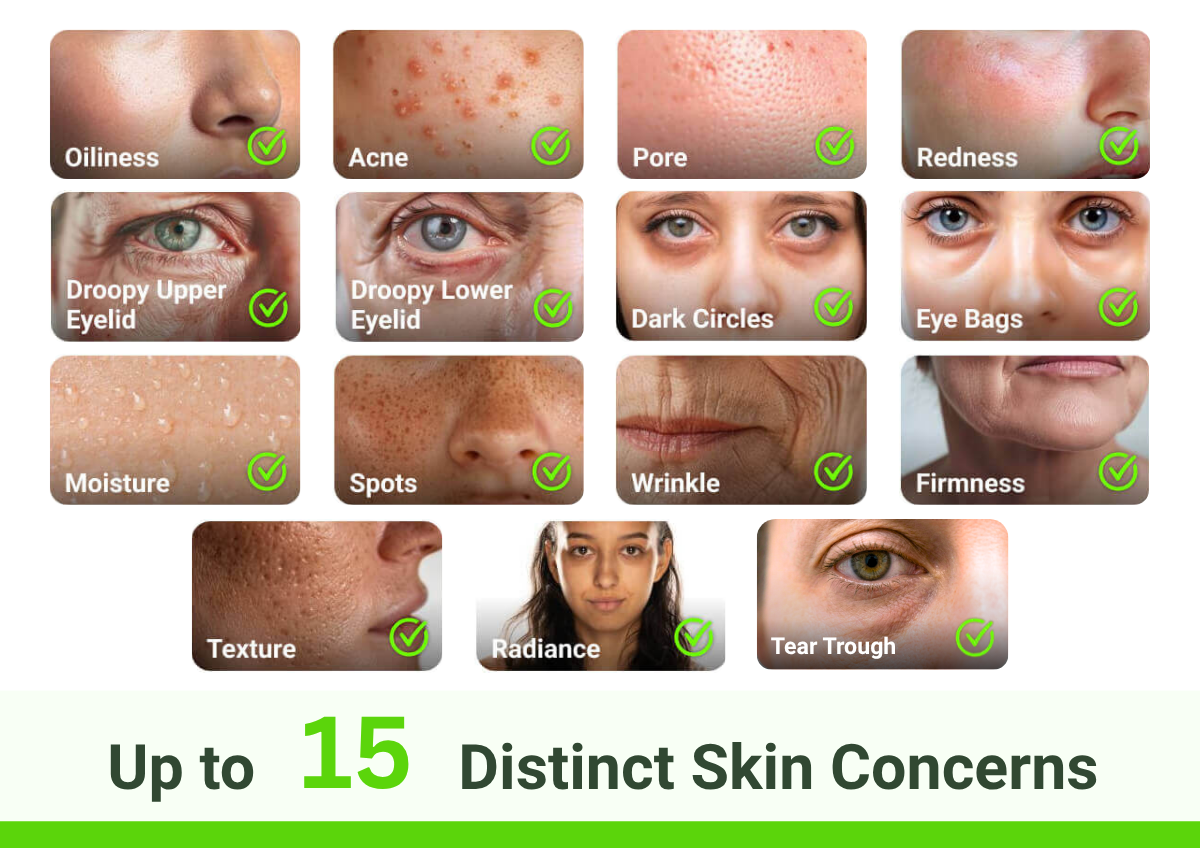
Modern skin analysis systems can now detect and evaluate concerns such as:
- Acne and blemishes
- Wrinkle visibility
- Skin texture
- Enlarged pores
- Pigmentation irregularities
- Dark spots
- Oiliness and dryness indicators
- Overall skin quality metrics
The difference between traditional quizzes and AI analysis is significant.
A questionnaire asks users to interpret their own skin condition.
AI analysis attempts to analyze the skin itself.
This creates a much more interactive and personalized experience while also increasing perceived technological sophistication from the consumer perspective.
For beauty brands, this matters because personalization is no longer simply a marketing advantage. It is increasingly becoming an expectation.
The Evolution of Beauty Websites
Traditional beauty websites were largely designed around static ecommerce principles.
The structure was relatively straightforward:
- Product pages
- Brand storytelling
- Ingredient education
- Checkout optimization
While these elements still matter, user expectations have evolved beyond passive browsing experiences.
Consumers increasingly want websites that:
- Interact with them
- Understand their needs
- Personalize recommendations
- Provide visual feedback
- Deliver instant results
This is why interactive beauty technology experiences are growing rapidly.
AI skin analysis is particularly important because it transforms a website from a content platform into an intelligent diagnostic experience.
Instead of simply reading about skincare products, users actively engage with the platform by uploading their own images and receiving personalized analysis.
This creates significantly higher engagement compared to traditional beauty websites.
It also creates stronger retention opportunities because skin is not static. Users may revisit the platform repeatedly to:
- Monitor skincare progress
- Compare results over time
- Test new routines
- Receive updated recommendations
This recurring interaction pattern makes AI skin analysis especially attractive from both a product and business perspective.
Why AI Website Builders Are Changing the Development Process
At the same time that beauty experiences are becoming more intelligent, website development itself is also undergoing major transformation.
AI website builders like Antigravity are reducing the technical complexity traditionally associated with frontend creation.
Instead of manually building:
- Website structures
- Responsive layouts
- Interaction flows
- Landing pages
- Design systems
Creators can now generate and iterate websites much more rapidly using AI-assisted workflows.
This dramatically changes the speed at which startups and businesses can validate ideas.
Previously, building an interactive beauty platform might require:
- Product designers
- Frontend developers
- Backend engineers
- AI specialists
- DevOps infrastructure

Now, much of the frontend experience layer can be accelerated through AI-assisted tools.
This does not eliminate the need for technical expertise entirely, but it significantly lowers the barrier to entry.
For startups and innovation teams, speed matters enormously.
The ability to prototype, test, and iterate quickly often determines whether an idea gains traction before competitors enter the space.
This is one of the biggest reasons why the combination of AI website builders and APIs has become so powerful.
The Role of APIs in Modern Beauty AI
While AI website builders simplify the experience layer, APIs provide the intelligence layer.
This distinction is important.
A website builder can generate layouts and interactions, but it does not inherently provide advanced computer vision or facial analysis capabilities.
That intelligence comes from specialized AI infrastructure.
The YouCam API Platform provides this infrastructure through production-ready beauty AI APIs that developers can integrate directly into digital experiences.
Rather than training machine learning models internally, businesses can leverage existing AI systems that are already optimized for:
- Facial detection
- Skin concern analysis
- Beauty simulation
- Real-time inference
- Cross-device performance
This dramatically reduces development complexity.
Building accurate facial skin analysis systems internally requires:
- Large-scale image datasets
- Annotation pipelines
- Computer vision expertise
- Model optimization
- Ongoing retraining infrastructure
For most companies, this is unrealistic to build from scratch.
APIs fundamentally change this equation by making advanced AI capabilities accessible through integration instead of internal research and development.
As a result, development teams can focus more heavily on:
- User experience
- Product positioning
- Ecommerce integration
- Personalization flows
- Customer acquisition
Rather than spending years building AI infrastructure.
 How an AI Skin Analysis Website Actually Works
From the user perspective, the experience feels relatively simple.
However, behind the scenes, several systems work together to create a seamless interaction.
The typical workflow usually looks something like this.
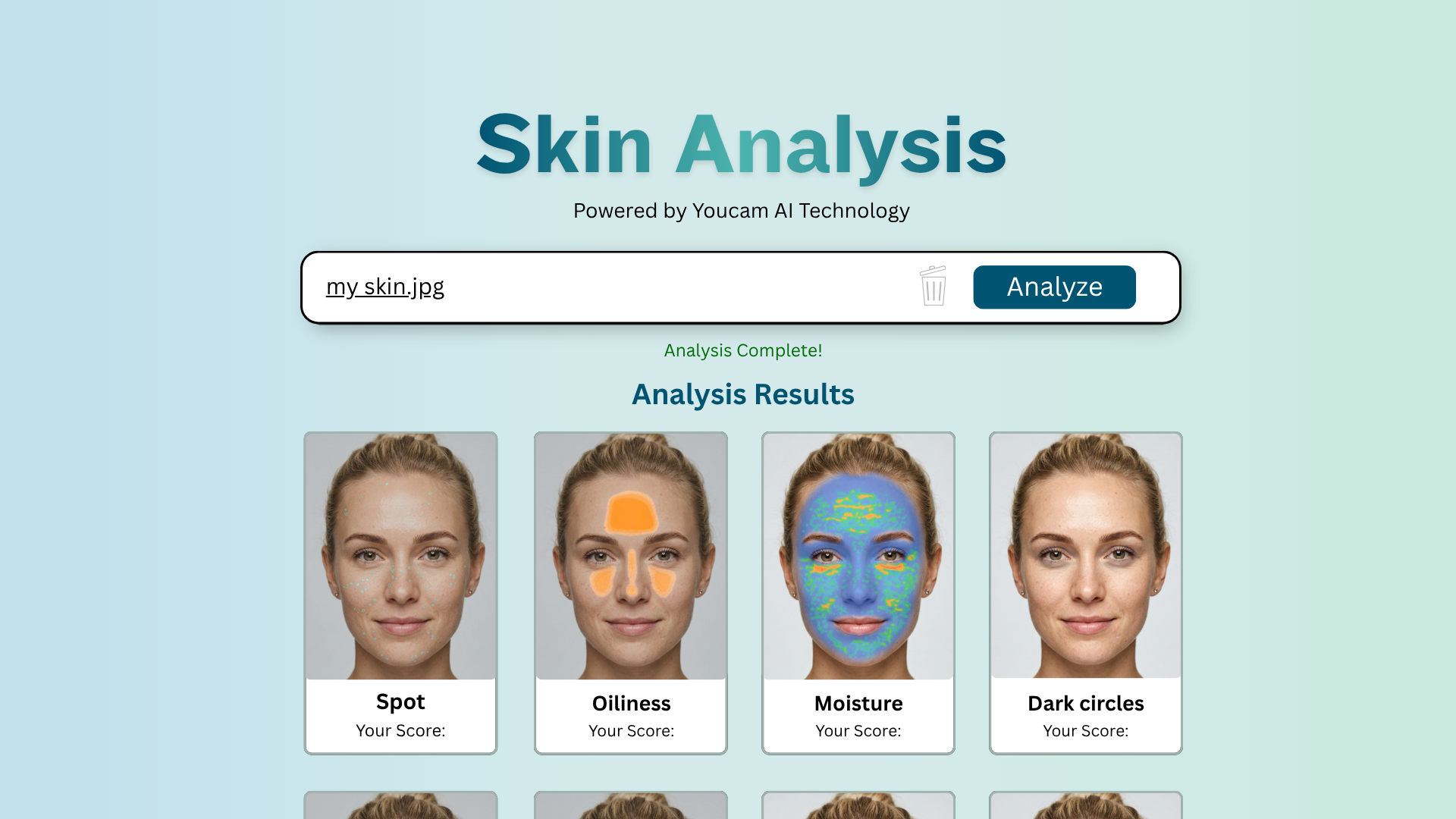
A user visits the website and is invited to upload a selfie or activate a camera-based analysis experience.
The frontend experience — including image upload, UI flow, responsiveness, and visual interaction — can be created using tools like Antigravity.
Once the image is submitted, the website sends the image securely to the skin analysis API.
The YouCam API Platform processes the image using AI facial analysis models trained to evaluate various skin conditions and characteristics.
The API then returns structured analysis data.
This may include:
- Skin scores
- Detected concerns
- Severity estimations
- Texture evaluations
- Skin age indicators
- Personalized recommendation triggers
The website can then transform these outputs into user-facing experiences such as:
- Skincare recommendations
- Progress dashboards
- Beauty reports
- Product suggestions
- Consultation flows
What makes this workflow powerful is that the intelligence layer and the experience layer remain modular.
This allows businesses to continuously improve the frontend experience while leveraging increasingly advanced AI infrastructure underneath.
Why Skin Analysis Is One of the Strongest Entry Points Into Beauty AI
Among all AI beauty experiences, skin analysis is often one of the most commercially attractive starting points.
One reason is that skincare naturally involves recurring behavior.
Unlike some beauty experiences that may be occasional or novelty-driven, skincare routines are ongoing. Consumers continuously monitor their skin condition and actively search for improvements over time.
This creates strong repeat engagement potential.
Another reason is that skin analysis produces highly personalized outputs.
When users receive analysis based on their own face rather than generic recommendations, the experience feels significantly more relevant and valuable.
This also creates natural opportunities for ecommerce integration.
For example, analysis results can directly connect to:
- Product recommendations
- Personalized skincare routines
- Subscription programs
- Professional consultations
- AI-generated beauty reports
From a business perspective, this creates multiple monetization pathways simultaneously.
It also creates a stronger emotional connection because users perceive the system as understanding their individual needs.
This perceived personalization is one of the major reasons why AI beauty experiences often generate higher engagement compared to static content platforms.
Expanding Beyond Skin Analysis
Although skin analysis is often the most compelling entry point, it is only one part of the broader beauty AI ecosystem.
Once businesses establish the infrastructure for interactive AI experiences, additional beauty technologies can often be integrated into the same platform.
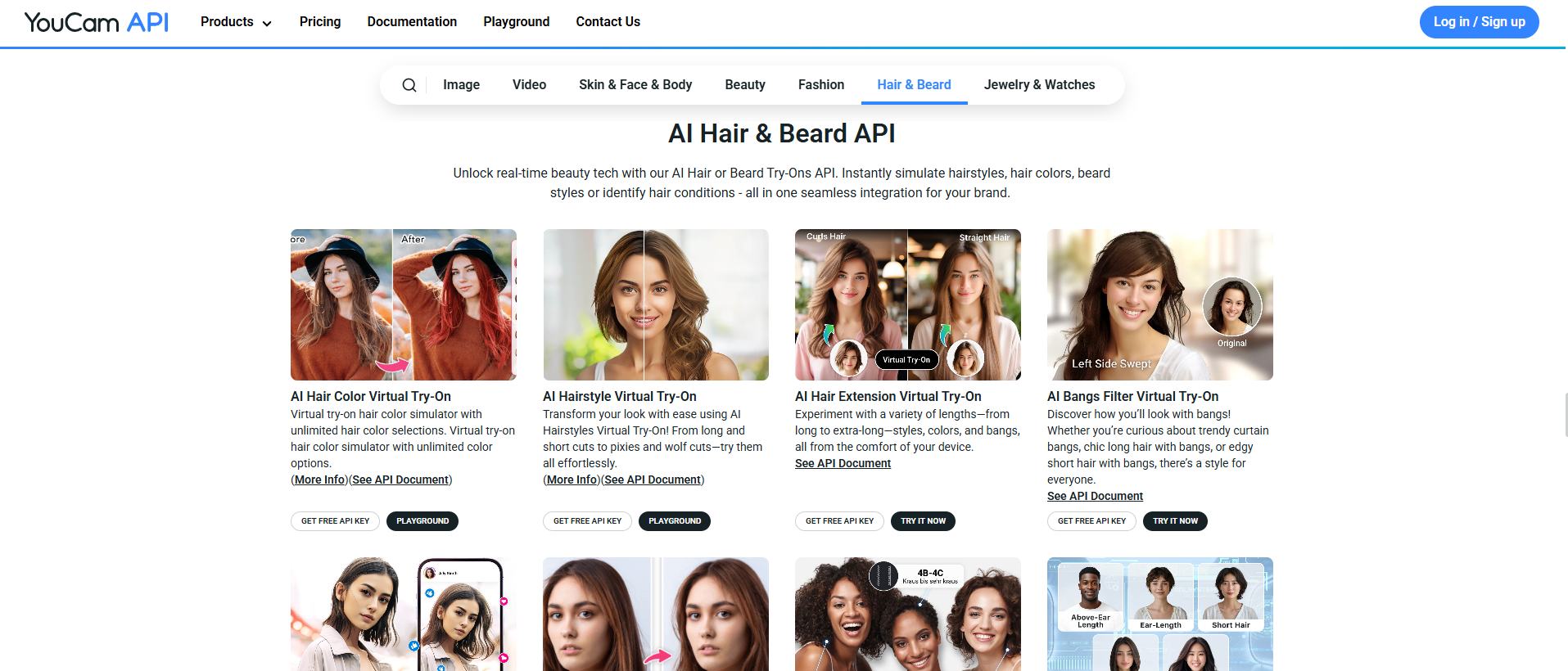
For example, the YouCam API Platform also supports other beauty AI experiences such as:
- Virtual makeup try-on
- Hairstyle simulation
- Foundation shade matching
- Facial attribute detection
- Personalized beauty recommendations
This creates opportunities for websites to evolve into complete AI beauty ecosystems rather than isolated tools.
A skincare consultation website can eventually expand into:
- Virtual beauty advisors
- Interactive ecommerce experiences
- AI personalization engines
- Digital beauty consultations
- Loyalty and retention systems
This scalability is one of the reasons why APIs are becoming such an important layer in modern digital product development.
The website itself becomes only one part of the system.
The underlying intelligence becomes the real long-term differentiator.
Why This Trend Is Accelerating Now
Several industry trends are converging simultaneously, accelerating the growth of AI beauty websites.
First, consumers increasingly expect personalization across digital experiences.
Second, AI infrastructure has become dramatically more accessible through APIs.
Third, AI website builders are reducing development speed and cost barriers.
Fourth, beauty is inherently visual, making it especially compatible with computer vision technologies.
Together, these trends create an environment where interactive beauty AI experiences are becoming both technically feasible and commercially attractive.
Importantly, this transformation is not limited to large enterprises.
Smaller brands, startups, agencies, and creators can now participate in beauty AI innovation without building massive internal AI teams.
This democratization of AI infrastructure is one of the most important shifts currently happening in digital product development.
Final Thoughts
The combination of AI website builders and beauty AI APIs is fundamentally reshaping how skincare experiences are built online.
Platforms like Antigravity simplify the creation of modern interactive websites, while the YouCam API Platform provides the intelligence layer required for real-time skin analysis and personalized beauty experiences.
Together, these technologies dramatically reduce the barrier to building advanced beauty platforms.
What once required specialized machine learning teams and large engineering resources can now be prototyped and launched much more rapidly through APIs and AI-assisted development workflows.
As personalization becomes increasingly central to the beauty industry, AI skin analysis is likely to become one of the defining features of next-generation skincare experiences online.
And while skin analysis may be the starting point, the broader future of beauty technology will likely involve fully interactive, AI-powered beauty ecosystems that continuously adapt to each individual user in real time.




 English


