


 Author: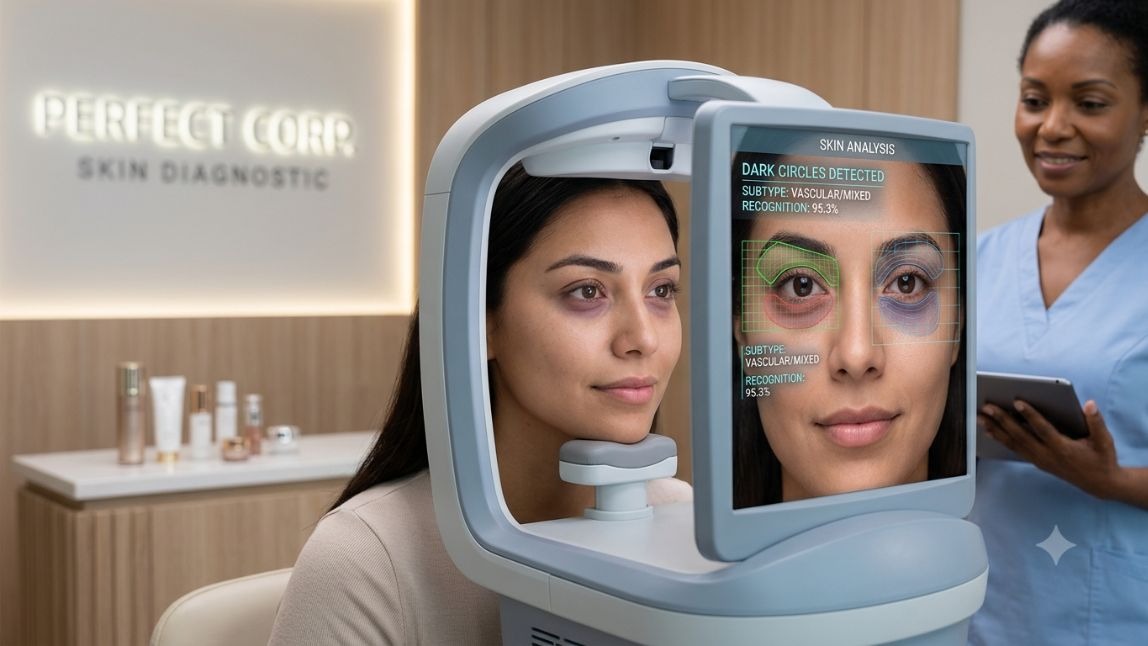
You've tried the concealer. The cold spoons. The cucumber slices. The expensive eye cream with seventeen actives on the label. And every morning, there they are — darker than ever, stubborn as ever, completely indifferent to your efforts.
Here's the uncomfortable truth about dark circles: most treatments fail not because they're ineffective, but because they're treating the wrong type. Dark circles have at least four clinically distinct subtypes — each caused by a different mechanism, each requiring a different intervention. A vitamin C serum works wonders for pigmentation-driven darkness and does almost nothing for structural shadowing caused by volume loss. A filler that transforms vascular dark circles can leave pigment-driven ones completely unchanged.
This guide breaks down the science of why dark circles form, how to identify which type you're dealing with, what treatments are matched to each cause, and how AI skin analysis is giving beauty brands the diagnostic precision to finally get under-eye recommendations right — at scale.
What Are Dark Circles — and Why Are They So Hard to Treat?
Dark circles are a form of periorbital hyperpigmentation (POH) — a broad term for any darkening of the skin beneath the lower eyelid. The challenge is that "periorbital hyperpigmentation" is not a single condition. It's an appearance outcome produced by several fundamentally different mechanisms:
- Excess melanin in the skin (true pigmentation)
- Dilated blood vessels visible through thin periorbital skin (vascular)
- Shadowing from volume loss in the tear trough (structural)
- A combination of two or more of the above
A landmark classification study by Huang et al. using Wood's lamp and ultrasound imaging confirmed four dark circle subtypes: pigmented, vascular, structural, and mixed — with the majority of patients presenting with more than one type simultaneously. One study found that 63% of participants with dark circles had a strong family history of the condition, establishing genetics as a significant driver — but lifestyle, anatomy, and aging all compound the presentation.
The 4 Types of Dark Circles — and What Causes Each
Type 1: Pigmented Dark Circles (Brown)
Caused by an overproduction of melanin in the periorbital skin. The result is a brown, tan, or grayish discoloration directly in the skin — not a shadow. More common in darker Fitzpatrick skin types (III–VI), where melanocytes are more active. Key triggers include sun exposure, chronic eye rubbing, atopic or allergic contact dermatitis, hormonal changes, and familial genetics.
How to identify it: Brown or gray darkness visible in any lighting. Doesn't change significantly with lighting angle. Gently stretching the skin doesn't reduce it.
Treatment direction: Topical brighteners (vitamin C, kojic acid, tranexamic acid, azelaic acid), chemical peels, melanin-targeting laser, daily SPF.
Type 2: Vascular Dark Circles (Blue / Purple)
Caused by blood vessels and pooled blood visible through thinning periorbital skin. The under-eye area has the thinnest skin on the face (~0.5mm), making it highly translucent. Dilated or congested periorbital blood vessels create a bluish or purplish cast — often described as a "bruised" appearance. Worsened by sleep deprivation, alcohol, allergies, aging, and cold temperatures.
How to identify it: Bluish or purplish cast, most visible after fatigue or alcohol. Pressing on the skin may temporarily blanch the darkness.
Treatment direction: Caffeine (vasoconstrictor), vitamin K, retinoids (thicken skin to reduce translucency), vascular laser (IPL or Nd:YAG).
Type 3: Structural Dark Circles (Shadowing)
Not a pigmentation or vascular issue — this type is caused by the shadow cast by the hollow groove between the eye bag and the cheek (the tear trough). As fat pads migrate and volume depletes with age, light falls at an angle that creates persistent shadow beneath the eye. This is the type most dramatically transformed by tear trough filler.
How to identify it: Darkness changes depending on lighting angle — looking upward or in bright lighting reduces it significantly. No actual skin discoloration, just shadow.
Treatment direction: Hyaluronic acid filler (tear trough), fat grafting, Sculptra (collagen biostimulation to restore volume).
Type 4: Mixed Dark Circles
The most common presentation. Most adults with dark circles have a combination of pigmented, vascular, and structural components — each contributing in different proportions. This is why a single-modality treatment almost never produces complete resolution, and why a multi-modal approach tailored to each contributing factor is the clinical standard.
Dark Circles at a Glance: Type Identification Guide
| Type | Color | Key Signal | Worsened By | Best Treatment |
| Pigmented | Brown / gray | Visible in all lighting; doesn't change with angle | Sun, eye rubbing, hormones | Vitamin C, kojic acid, laser, SPF |
| Vascular | Blue / purple | Blanches slightly with pressure | Fatigue, alcohol, allergies | Caffeine, retinoids, vascular laser |
| Structural | Gray / dark shadow | Changes with lighting angle; not true discoloration | Volume loss, aging, bone structure | HA filler, Sculptra, fat grafting |
| Mixed | Variable | Multiple signals present simultaneously | Combination of all above | Multi-modal: topicals + filler + laser |
What Causes Dark Circles to Worsen Over Time?
Aging
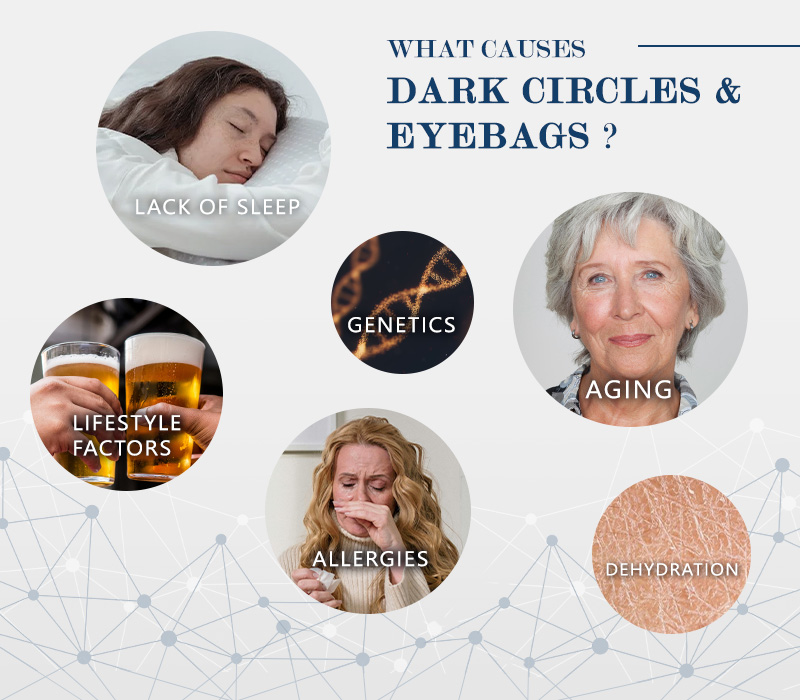
Three aging processes converge in the periorbital zone to worsen dark circles as decades pass. Collagen and elastin loss thins the skin, making blood vessels more visible. Fat pad volume decreases and migrates, deepening the tear trough shadow. And melanin accumulates from repeated UV and inflammatory exposures. Dark circles that began as a single-type concern in the twenties often become a three-way mixed presentation by the forties.
Genetics
Familial periorbital hyperpigmentation — inherited through genetic predisposition to melanin distribution, orbital bone structure, or thin periorbital skin — can appear in childhood and remain the dominant driver regardless of lifestyle. For genetic dark circles, the bar for topical improvement is lower; procedural interventions are usually required for meaningful visible results.
Chronic Sleep Deprivation
Insufficient sleep elevates cortisol, impairs circulation, and increases vascular permeability around the eyes. The CDC recommends adults get at least seven hours of sleep per night; chronic deprivation is a reliably worsening factor for vascular dark circles.
Allergies and Chronic Inflammation
Allergic rhinitis and atopic dermatitis cause chronic periorbital inflammation and repeated rubbing — two potent triggers for post-inflammatory melanin deposition. Poorly managed seasonal allergies often produce the pigmented variant of dark circles as a long-term consequence.
Dehydration
Dehydration causes periorbital skin to appear dull and sunken, exacerbating both vascular visibility and structural shadowing. Adequate hydration and a well-formulated eye cream with hyaluronic acid produce rapid visible improvement in dehydration-related dullness.
What Skincare Ingredients Actually Help Dark Circles?
| Ingredient | Mechanism | Best Dark Circle Type |
| Vitamin C (L-Ascorbic Acid) | Inhibits melanin synthesis; antioxidant; boosts collagen | Pigmented |
| Kojic Acid | Tyrosinase inhibitor — reduces melanin production | Pigmented |
| Tranexamic Acid | Blocks melanocyte-stimulating pathways; well-tolerated on darker skin tones | Pigmented, especially skin of color |
| Azelaic Acid | Inhibits abnormal melanocyte activity; anti-inflammatory | Pigmented, post-inflammatory |
| Caffeine | Vasoconstrictor — reduces blood vessel dilation and pooling | Vascular |
| Retinoids (Retinol / Tretinoin) | Thickens periorbital skin (reduces vessel translucency); stimulates collagen | Vascular, structural laxity |
| Peptides | Support collagen and elastin; skin thickening over time | Vascular (skin thinning), early structural |
| Hyaluronic Acid | Hydrates and plumps periorbital skin; reduces dehydration-related dullness | All types — supportive |
| Niacinamide | Reduces melanin transfer; strengthens barrier; anti-inflammatory | Pigmented, vascular, all types |
Professional Treatments for Dark Circles
For Pigmented Dark Circles
- Chemical Peels (Glycolic, TCA, Lactic Acid): Exfoliate the pigmented epidermal layers, accelerating melanin clearance. Requires Fitzpatrick-appropriate formulation for darker skin tones.
- Laser (Q-switched Nd:YAG, PicoWay): Targets and fragments melanin deposits in the periorbital skin. Multiple sessions typically required.
- Prescription topicals (Hydroquinone, Tretinoin): Prescription-strength melanin suppression. Most effective with diligent SPF compliance.
For Vascular Dark Circles
- Vascular Laser (IPL, Pulsed Dye Laser): Targets oxyhemoglobin in dilated periorbital vessels to reduce their prominence.
- Carboxytherapy: CO₂ injected under the skin improves microcirculation and oxygenation in the periorbital area.
- PRP (Platelet-Rich Plasma): Promotes skin renewal and improves microvascular health. A registered clinical trial found improvements in skin texture and vascular visibility in the periorbital zone.
For Structural Dark Circles
- Hyaluronic Acid Filler (Tear Trough): The most effective intervention for structural dark circles. Fills the hollow groove, eliminates the shadow, and often produces dramatic immediate improvement. Results last 6–12 months.
- Sculptra (Poly-L-Lactic Acid): Collagen biostimulator that restores volume progressively over months — for patients who prefer gradual, natural-looking improvement.
- Fat Grafting: Permanent volume restoration using harvested fat; longer duration but higher variability in retention.
Treatment Timeline
| Treatment | Results Timeline | Duration | Best For |
| Topical brighteners | 6–12 weeks | Ongoing use required | Pigmented dark circles |
| Chemical peel | 2–4 weeks post-peel | 3–6 months (repeat sessions) | Pigmented, epidermal melanin |
| Laser (Q-switched / pico) | 2–4 weeks per session | Long-lasting with maintenance | Pigmented, dermal melanin |
| Vascular laser / IPL | 2–4 weeks per session | 12–18 months | Vascular (blue/purple) |
| HA filler (tear trough) | Immediate | 6–12 months | Structural (shadow) |
| PRP | 4–8 weeks | 12–18 months | Vascular, skin quality |
Daily Habits That Help (and Hurt) Dark Circles
What Helps
- Sleep 7–9 hours consistently — reduces vascular congestion overnight
- Sleep on your back with head slightly elevated — reduces fluid pooling
- Apply SPF 30+ daily — UV is the primary driver of periorbital melanin accumulation
- Manage allergies — antihistamines reduce histamine-driven vascular dilation and rubbing
- Stay hydrated — dehydration worsens both structural shadowing and vascular visibility
- Apply a cold compress in the morning — constricts blood vessels within minutes
What Hurts
- Rubbing your eyes — friction directly triggers post-inflammatory melanin deposition
- Alcohol consumption — vasodilatory effect worsens vascular dark circles overnight
- Smoking — impairs circulation and accelerates periorbital skin thinning
- Skipping SPF — single biggest preventable driver of pigmented dark circles over time
- High-sodium diet — drives overnight periorbital fluid retention, worsening shadows
How AI Detects Dark Circles — And Why Subtype Detection Matters
The core problem with dark circle treatment in the beauty industry isn't a lack of products. It's a diagnosis problem. When a customer receives a vitamin C serum recommendation for "dark circles," it may be exactly right — or it may be completely wrong, depending on which subtype they have. Without knowing whether the cause is pigmented, vascular, structural, or mixed, any recommendation is essentially a guess.
Perfect Corp.'s AI Skin Analysis includes dedicated dark circle detection as one of its 15 core skin concerns — analyzed using 180° HD face mapping across the full periorbital zone. The system assesses the under-eye area in high resolution, measuring degree and pattern of discoloration to generate a dark circle severity score that can be tracked over time.
Dark circle detection is cross-referenced with eye bags, tear trough assessment, droopy upper eyelid, and droopy lower eyelid findings — giving brands and consumers a complete periorbital picture from a single selfie scan. An NIH/PMC-published AI study analyzing dark circle prevalence in nearly a million user selfies confirmed that AI can accurately distinguish aging-related structural darkening from pigmentation-driven discoloration at scale — validating AI periorbital assessment as a clinically meaningful diagnostic tool.
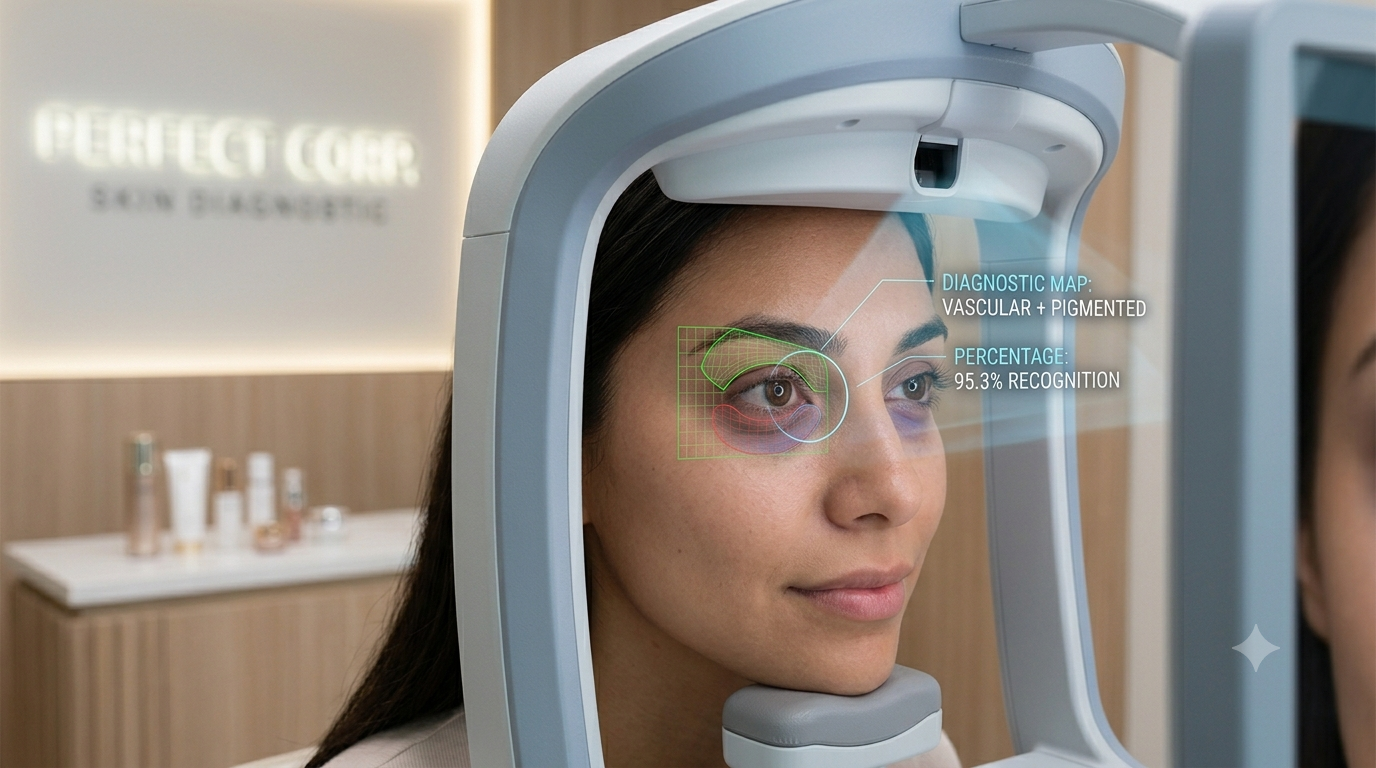
A medical study confirms Perfect Corp.'s AI Skin Analyzer achieves a 95% test-retest reliability rate — consistent, actionable results across diverse skin tones, ages, and lighting conditions. Brands typically see a 2–3× increase in conversion rates and a 20–40% lift in average order value through AI-driven recommendations — driven by the accuracy improvement that diagnostic AI creates.
Want to help your customers identify their dark circle type and find the right solution?

Dark Circles and Skin of Color: Why Fitzpatrick Type Matters
Dark circles present differently across Fitzpatrick skin types, with significant treatment implications:
- Fitzpatrick I–II: Vascular dark circles (blue/purple) tend to predominate — thin, fair periorbital skin makes blood vessels highly visible. Vascular-targeting treatments perform well.
- Fitzpatrick III–IV: Mixed-type dark circles are common — a combination of vascular visibility and melanin deposition. Both pigmentation-targeting and vascular interventions are relevant.
- Fitzpatrick V–VI: Pigmented dark circles predominate in deeper skin tones, where melanocyte activity is higher and post-inflammatory hyperpigmentation risk is greater. Gentler melanin-targeting topicals (tranexamic acid, azelaic acid, niacinamide) and appropriately calibrated laser modalities are preferred over aggressive peels or high-energy lasers.
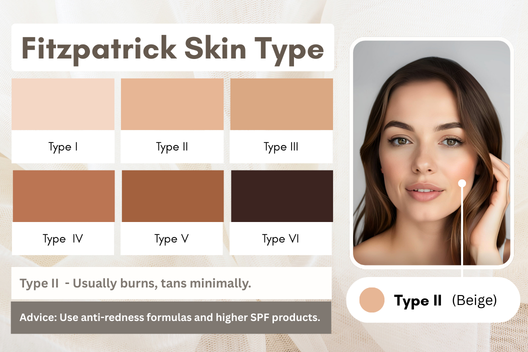
Perfect Corp.'s AI Skin Analysis is trained on a globally diverse dataset across all six Fitzpatrick types, ensuring accurate dark circle detection for every skin tone.
See how global beauty brands deliver inclusive, Fitzpatrick-aware AI skin diagnostics.

When to See a Doctor About Dark Circles
Most dark circles are benign and cosmetic. However, consult a dermatologist or physician if:
- Dark circles appeared suddenly, especially in only one eye
- They are accompanied by puffiness, pain, or vision changes
- You have persistent fatigue, shortness of breath, or pallor alongside dark circles (may indicate anemia)
- Topical treatments show no response after 3–4 months of consistent use
- You are uncertain which type you have and want a professional diagnosis before pursuing in-clinic treatments
Frequently Asked Questions
Why do dark circles appear even when I get enough sleep?
Sleep deprivation worsens vascular dark circles, but it's only one of four possible causes. Pigmented dark circles (caused by melanin), structural dark circles (caused by volume loss and shadowing), and genetic predisposition are all completely independent of sleep. If dark circles persist despite adequate rest, the cause is likely pigmented, structural, or genetic — and a different treatment approach is needed.
What is the fastest treatment for dark circles?
For structural dark circles (tear trough shadowing), hyaluronic acid filler delivers immediate visible improvement. For fluid-driven puffiness and vascular congestion, a cold compress reduces swelling within minutes. For true pigmented dark circles, there is no instant fix — consistent use of melanin-inhibiting topicals and SPF over weeks to months produces the most reliable results.
Can dark circles go away permanently?
It depends on the type. Structural dark circles can be maintained with periodic filler. Laser-treated pigmented dark circles can have long-lasting results with diligent SPF compliance. Genetic and vascular dark circles tend to require ongoing management rather than one-time resolution.
Can AI accurately identify the type of dark circles?
Advanced AI skin analysis platforms — including Perfect Corp's — use HD computer vision to assess discoloration pattern, depth, and distribution in the periorbital zone, generating a quantitative dark circle severity score. Cross-referenced with tear trough and eye bag findings, the system provides a comprehensive under-eye diagnostic profile with a clinically validated 95% test-retest reliability rate.
Are dark circles worse in people with darker skin tones?
Dark circles are highly prevalent across all skin tones but manifest differently. Pigmented dark circles are more common in Fitzpatrick types IV–VI due to higher melanocyte activity and greater post-inflammatory pigmentation risk. Vascular dark circles are more visible in lighter skin types due to greater translucency. Fitzpatrick-aware AI analysis — like Perfect Corp's — ensures accurate detection across all skin tones.
How do beauty brands use AI dark circle detection?
Brands use AI dark circle detection to route customers to the correct product category for their specific dark circle type — preventing the frustration of buying a vitamin C serum for structural dark circles, or a filler-targeting product for pigmented ones. This improves recommendation accuracy, reduces returns, and builds the trust that drives repeat purchases.
The Bottom Line
Dark circles are not one problem with one solution. They're four distinct types — pigmented, vascular, structural, and mixed — each driven by a different mechanism and each responding to a different treatment. Every recommendation that ignores this distinction is, at best, a coin flip.
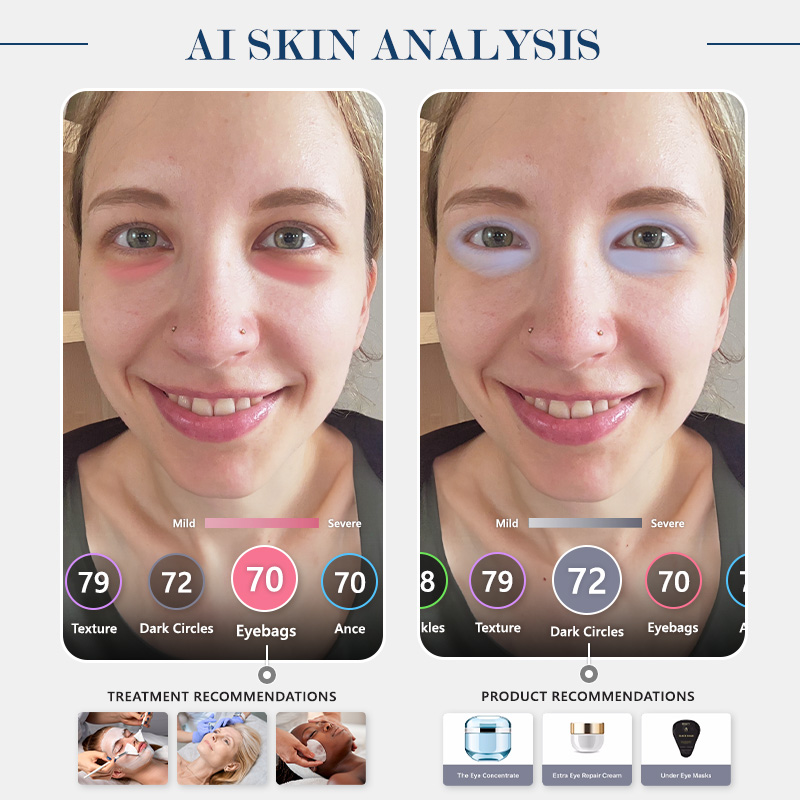
AI skin analysis finally gives beauty brands the diagnostic infrastructure to get this right at scale. Perfect Corp.'s AI Skin Analysis detects dark circles as a trackable concern within a 15-point full-face assessment — cross-referenced with tear trough hollowing, eye bags, and eyelid laxity — delivering the periorbital precision that converts browsers into buyers and buyers into loyal customers.
Ready to give your customers an accurate dark circle diagnosis — and the right products to match

Sources
- Cleveland Clinic – Dark Circles Under Eyes: Causes & Treatment. clevelandclinic.org
- NIH / PMC – Artificial intelligence analysis of over a million Chinese men and women reveals level of dark circle in facial skin aging (2023). pmc.ncbi.nlm.nih.gov
- NIH / PMC – Periorbital Hyperpigmentation: A Comprehensive Review (Sarkar et al., 2016). ncbi.nlm.nih.gov
- Journal of Cutaneous and Aesthetic Surgery – Infraorbital Dark Circles: A Review (Nakra et al., 2016).
- Indian Journal of Dermatology – Periorbital Hyperpigmentation: Prevalence, Causative Factors (Sheth et al., 2014).
- Coherent Market Insights – AI Skin Analysis Market Size, Trends & Forecast 2026–2033. coherentmarketinsights.com
- Perfect Corp. – AI Skin Analysis Solution for Beauty Brands & Clinics. perfectcorp.com



 English


