


 Author: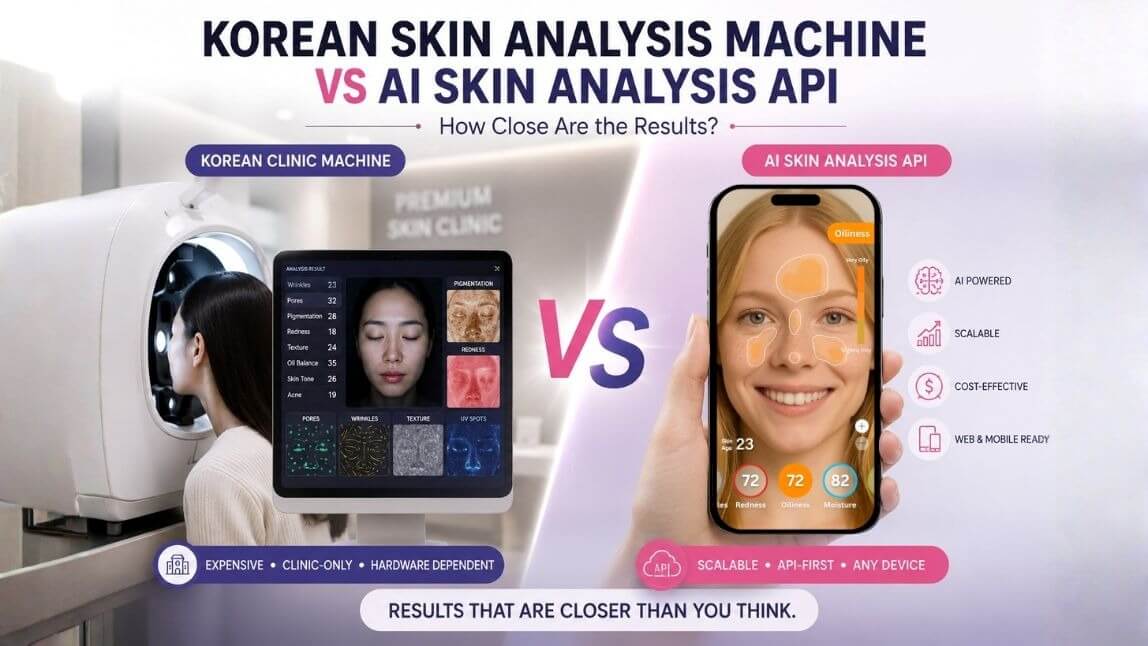
Korean skin analysis machines have become one of the most recognizable technologies in modern skincare clinics.
In many Korean dermatology centers and beauty clinics, the consultation process often begins with a high-end facial skin analysis system capable of scanning:
- wrinkles
- pores
- pigmentation
- redness
- texture
- oil balance
- acne-related concerns
These machines are designed to provide highly detailed skin diagnostics through a combination of imaging hardware, controlled lighting environments, and AI facial analysis. For years, these systems were viewed as premium clinic-only technologies. But recently, a new question has started emerging across the beauty tech industry:
Can AI skin analysis APIs deliver results comparable to expensive Korean skin analysis machines?
A recent comparison video explores exactly this idea by comparing the results generated from a Korean skin analysis machine against an AI skin analysis API workflow.
Watch the Comparison Video
The video below compares the results generated by a professional Korean skin analysis machine with AI skin analysis technology, highlighting how modern APIs are beginning to achieve increasingly similar skincare analysis outputs.
What makes this comparison particularly interesting is not simply the technology itself, but what it represents for the future of skincare experiences.
For years, advanced skin analysis was heavily dependent on expensive clinic hardware.
Now, software-based AI skin analysis systems are beginning to narrow that gap.
Why Korean Skin Analysis Machines Became So Popular
South Korea has long been considered one of the world’s leading beauty technology markets.
In areas like Gangnam, advanced skincare consultations are often deeply integrated with technology-driven diagnostics.
Rather than relying only on visual consultations, many Korean clinics use professional skin analysis machines to generate detailed facial skin reports before recommending:
- skincare products
- dermatology treatments
- laser procedures
- hydration plans
- anti-aging routines
This process creates a more personalized and data-driven skincare experience.
The machines themselves often combine:
- high-resolution facial imaging
- UV imaging
- polarized lighting
- AI facial analysis
- comparative skin scoring systems
The result is a consultation process that feels highly scientific and personalized.
“Korean consumers are extremely familiar with technology-assisted skincare consultations,” explains a Seoul-based beauty market researcher. “For many clinics, skin analysis machines have become a standard part of the customer experience.”
The Problem With Traditional Skin Analysis Machines
Although these machines are impressive, they also come with several limitations.
Most professional systems are:
- expensive
- hardware-dependent
- difficult to scale
- limited to physical clinic environments
This creates a major accessibility problem.
A premium skin analysis experience may only be available:
- inside clinics
- inside beauty stores
- through expensive consultations
- within certain geographic regions
For beauty brands and digital platforms, scaling this type of experience globally becomes difficult.
This is one of the main reasons software-based AI skin analysis has become such an important category.
Shared Materials by Strapi
*Adjust the size of images ONLY. Please go to Strapi to edit the materials info.
The Rise of AI Skin Analysis APIs
Modern AI skin analysis APIs are attempting to solve this scalability problem.
Instead of requiring specialized imaging hardware, AI APIs use facial analysis models trained to evaluate skin conditions directly from standard facial images.
This allows skin analysis experiences to move beyond physical clinics into:
- mobile apps
- ecommerce websites
- tablets
- smart mirrors
- digital skincare consultations
Platforms like the YouCam API Platform allow developers and beauty brands to integrate AI skin analysis capabilities into digital experiences through APIs.
This fundamentally changes the delivery model of skincare diagnostics.
Instead of: expensive machine → physical clinic → limited access
the workflow becomes: smartphone camera → AI API → scalable digital experience
That shift is extremely important for the future of beauty technology.

Why the Comparison Matters
The reason this comparison video is so compelling is because it addresses one of the biggest questions surrounding AI skincare technology:
Can software-based AI actually approach clinic-level skin analysis quality?
Historically, professional skin analysis machines were perceived as significantly more accurate because they relied on:
- controlled lighting environments
- specialized imaging hardware
- multi-angle facial capture
- UV imaging systems
Software-only AI analysis was often viewed as a simplified alternative.
However, improvements in computer vision and AI facial analysis have dramatically improved the quality of software-based skin analysis systems.
In the comparison video, the overlap between the machine-generated results and the AI API-generated results is surprisingly close in several categories.
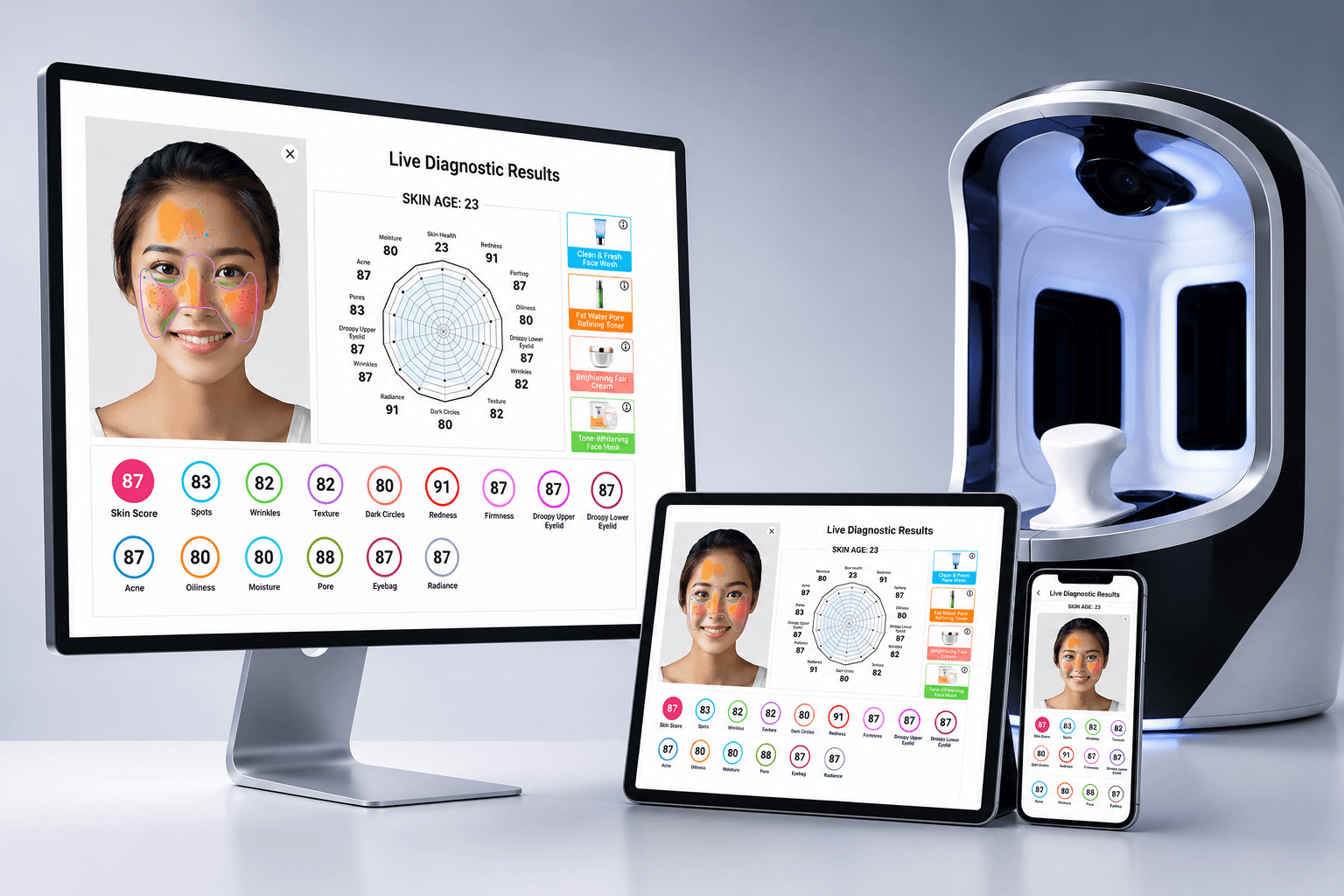
This does not necessarily mean APIs completely replace professional clinic systems in every scenario.
But it does suggest that modern AI skin analysis APIs are reaching a level where they can provide highly valuable skincare analysis experiences at significantly larger scale.
“The biggest disruption is not necessarily perfect replication,” says an AI beauty technology consultant. “It’s the fact that software-based systems are becoming good enough to deliver meaningful skincare analysis without requiring expensive hardware.”
How AI Skin Analysis APIs Work
Modern AI skin analysis systems rely heavily on computer vision models trained on large-scale facial image datasets.
The workflow is relatively straightforward from the user perspective.
A user uploads a selfie or activates a camera experience.
The image is then processed through AI facial analysis systems trained to evaluate conditions such as:
- wrinkles
- pores
- acne
- pigmentation
- skin texture
- redness
- oil balance
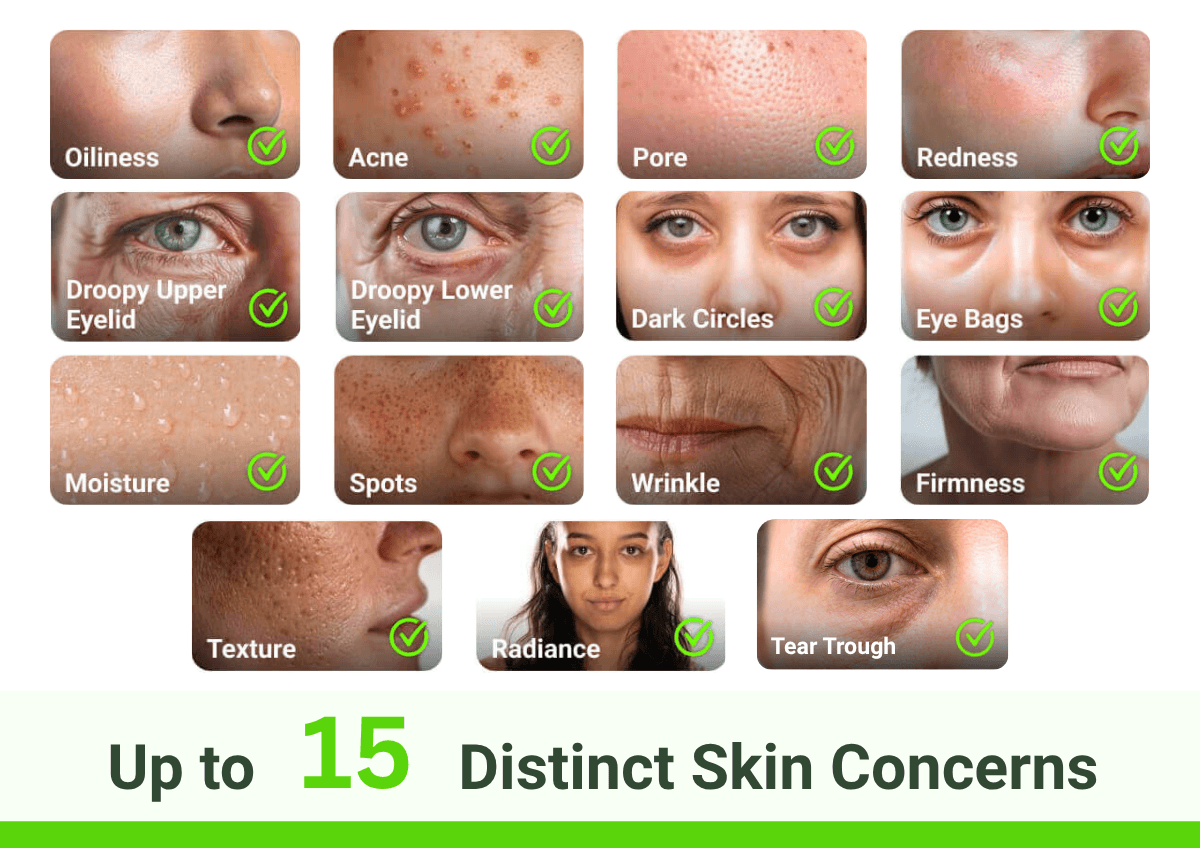
The AI then generates structured outputs including:
- skin scores
- severity estimations
- condition breakdowns
- skincare recommendations
Platforms like the YouCam API Platform provide these capabilities through scalable API infrastructure.
This allows businesses to integrate advanced skincare analysis into digital experiences without building machine learning systems internally.

Why This Changes the Future of Beauty Tech
The shift from hardware-based diagnostics to scalable AI APIs has major implications for the beauty industry.
Previously, advanced skin analysis experiences were limited primarily to:
- dermatology clinics
- luxury skincare consultations
- premium beauty stores
Now, AI APIs allow similar experiences to become accessible through:
- ecommerce websites
- skincare apps
- mobile consultations
- digital beauty platforms
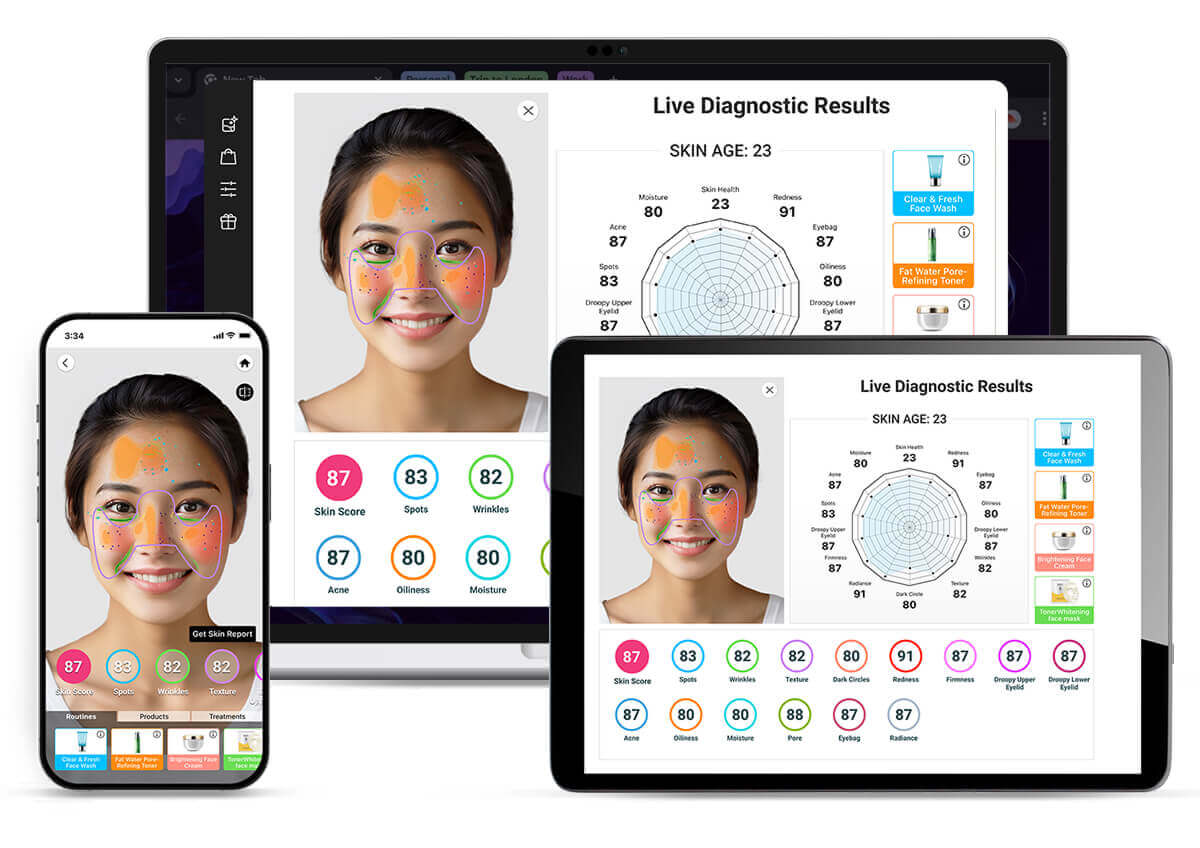
This dramatically expands access to personalized skincare technology.
It also changes how beauty brands think about customer engagement.
Instead of static product pages and generalized skincare advice, brands can now create interactive AI skincare experiences directly inside digital platforms.
“The smartphone is becoming the new beauty consultation device,” explains a product strategist working in AI skincare technology. “That changes the scale of what’s possible.”
Why Consumers Respond So Strongly to AI Skin Analysis
One reason these experiences are becoming so popular is because skincare is highly personal.
Consumers increasingly expect:
- personalization
- visual feedback
- measurable progress
- data-driven recommendations
AI skin analysis creates a stronger sense of customization because the recommendations are generated directly from the user’s own facial data.
The experience also feels significantly more interactive than traditional skincare quizzes.
Instead of simply answering questions, users can visually see:
- facial analysis overlays
- highlighted skin concerns
- skin scores
- before-and-after comparisons
This creates stronger engagement and often increases trust in the recommendations themselves.
Beyond Skin Analysis: The Expansion of Beauty AI
Skin analysis is only one part of a rapidly growing beauty AI ecosystem.
Many AI beauty platforms now also support:
- virtual makeup try-on
- hairstyle simulation
- foundation shade matching
- AI beauty recommendations
- personalized skincare routines
The YouCam API Platform supports several of these capabilities through API-based beauty AI infrastructure.
This broader ecosystem is transforming beauty websites and apps into fully interactive AI beauty experiences.
The Future of Korean Skin Analysis Technology
Korean skin analysis machines helped define the premium skincare diagnostic experience.
But the future of skincare analysis is increasingly shifting toward scalable software-driven systems.
The comparison between professional clinic machines and AI APIs highlights a major industry transition:
- from hardware-centric beauty diagnostics
- toward scalable AI skincare infrastructure
Professional clinic systems will likely continue playing an important role, especially in medical and high-end dermatology environments.
However, AI APIs are rapidly expanding access to personalized skincare analysis at global scale.
And as computer vision technology continues improving, the gap between hardware-based analysis and software-based analysis may continue narrowing even further.
For the beauty industry, this represents something much larger than a technology upgrade.
It represents a complete transformation in how personalized skincare experiences are delivered.




 English


