


 Author: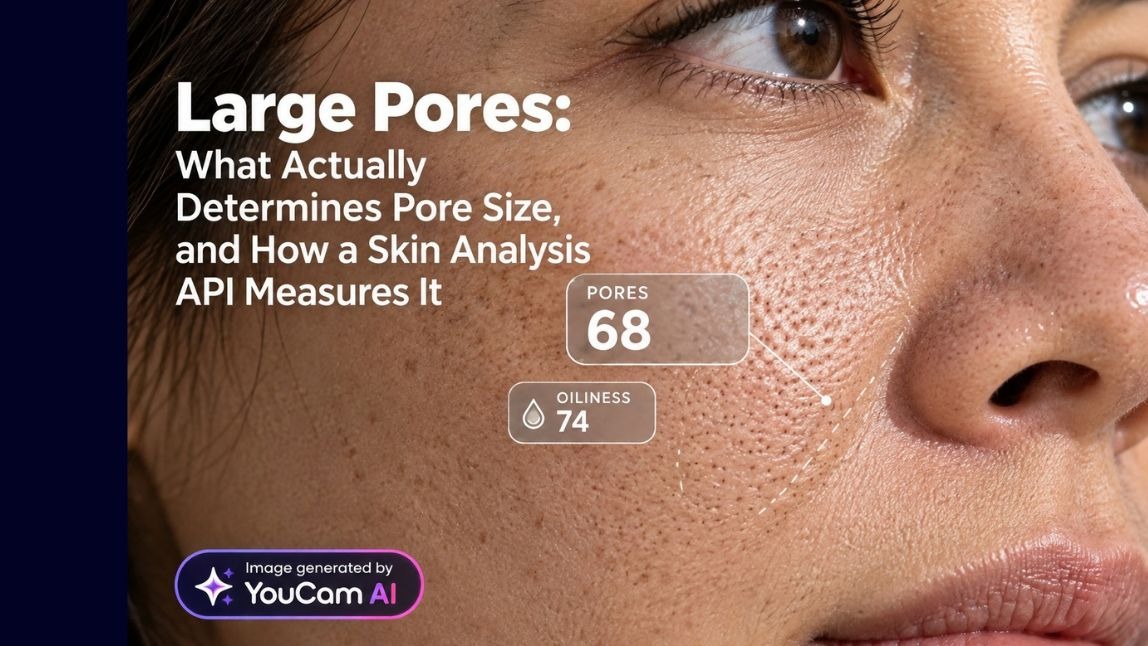
Images generated by YouCam AI
Pores do not open and close. They have no muscle, they are not doors, and nothing you apply will permanently make one smaller. What does change, sometimes dramatically, is how visible they are, and visibility runs on three variables you can influence. This guide separates the fixed part from the moveable part, explains why your pores look catastrophic in a car mirror and fine in a selfie, and shows how AI skin analysis scores pore appearance separately from oiliness and texture so a product recommendation can target the right variable instead of promising to shrink something that has no size control.
What this guide covers
What Determines Pore Size?
Mostly genetics. Your inherited pore size and sebaceous gland density set the baseline, and nothing changes that baseline. On top of it sit three modifiable factors: how much oil you produce, whether the pore is clogged and stretched by its own contents, and how much collagen supports the skin around the rim.
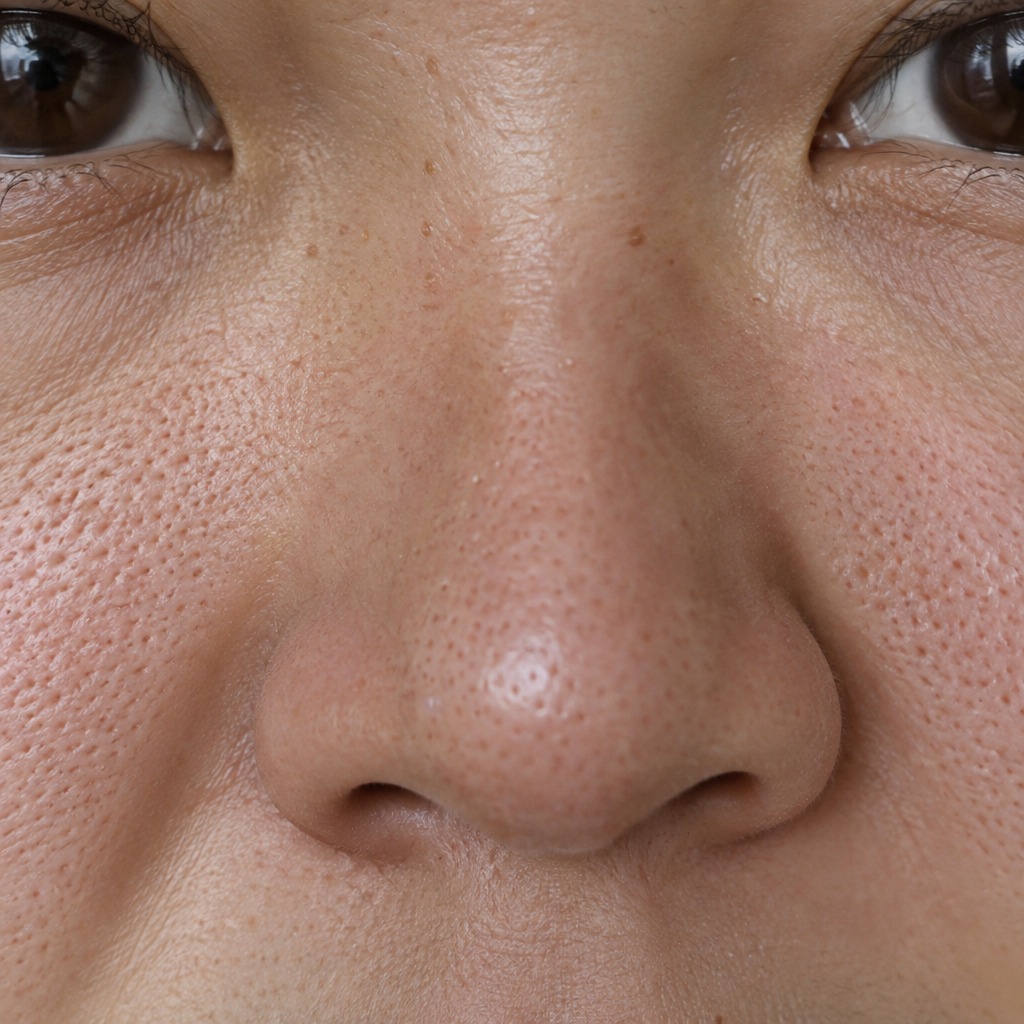
Two additional facts worth having. Sebaceous glands are densest in the centre of the face, which is why the nose, inner cheeks and chin are where this conversation happens. And men typically have more sebaceous glands and oilier skin, so more visible pores, on average.
Can You Actually Shrink Your Pores?
No, and yes, depending on what you mean. You cannot reduce the number of pores or change the anatomical opening you were born with. You can meaningfully reduce how large they appear, sometimes by enough that the difference is obvious in a photograph.
The distinction is not pedantry, it is the whole basis of a realistic plan. Products that claim to shrink pores are describing an appearance change, and the honest ones will say so. Anything promising permanent structural reduction from a bottle is selling a temporary tightening effect that wears off by evening.
Why Do Pores Look Bigger in Some Places and Some Photos?
Because pore visibility is a shadow effect, and shadows are made by light direction rather than by pores.
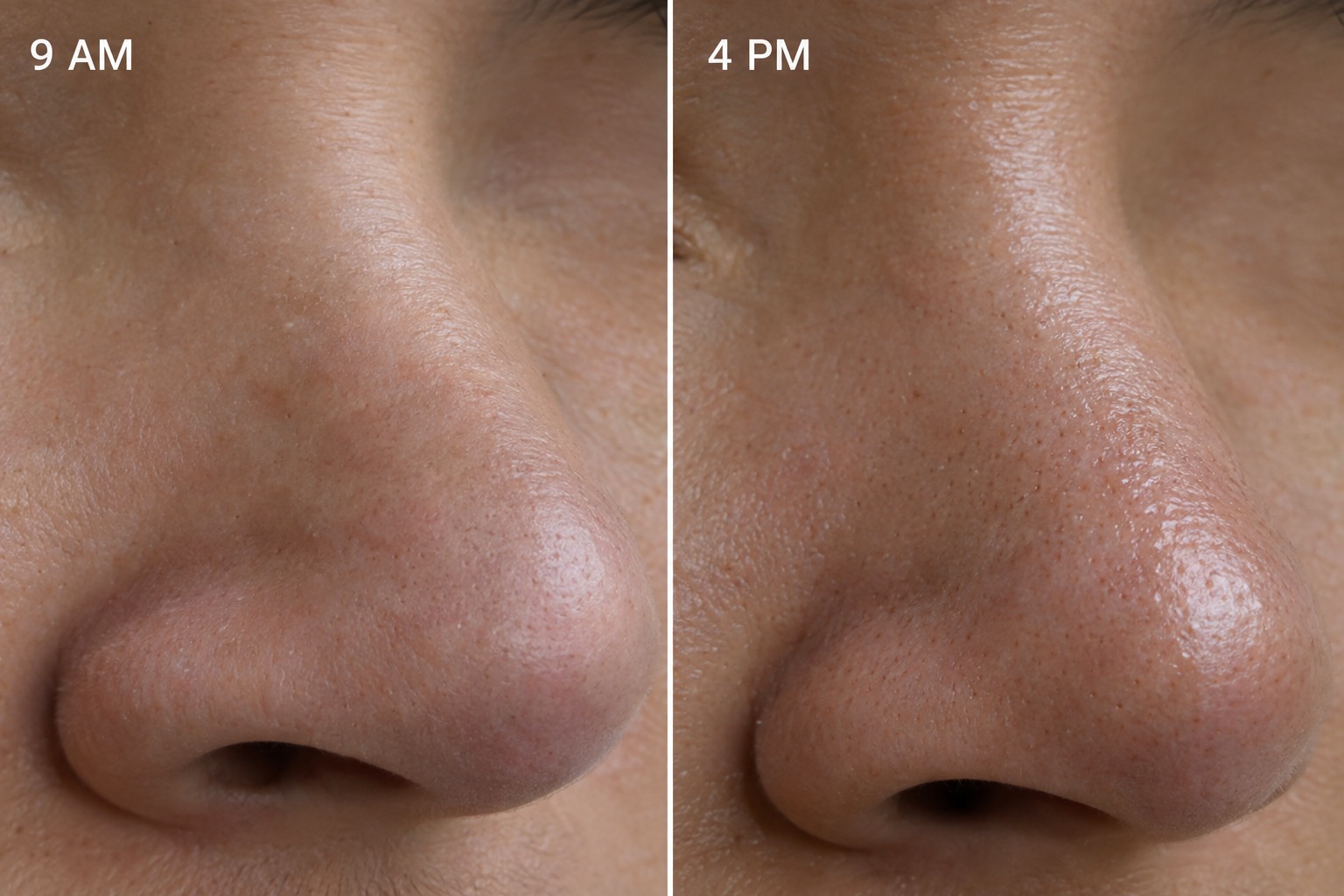
- Side lighting exaggerates. Light raking across the face drops a shadow into every opening. This is the car mirror at 4pm, and it is why your skin seems to deteriorate on the drive home.
- Flat frontal lighting hides. Ring lights fill those shadows, which is why pores vanish in selfies and reappear in a friend's candid photo.
- Oil amplifies. A shiny surface scatters light unevenly and makes every opening more conspicuous, so pore visibility rises through the day with sebum.
- Magnifying mirrors are not real. A ten times mirror shows you something no human being will ever see at conversational distance.
- Phone processing interferes in both directions. Default smoothing erases pores; a high-contrast filter carves them deeper.
The practical rule: judge pores in daylight, at arm's length, at the same time of day, with no filters. Anything else is measuring the light.
What Are the Three Things That Make Pores Look Larger?
This model is what turns a vague concern into a plan, because each driver has a different answer.
| Driver | What is happening | What addresses it | How fast |
| Sebum volume | More oil means more shine and more visible openings, and oil output rises with heat, hormones and time of day | Niacinamide, BHA, oil-controlling formulas, blotting | Days to weeks |
| Clogging | The pore is filled and stretched by keratin and sebum, which makes the opening read wider than it is | Salicylic acid, retinoids, consistent gentle cleansing | 4 to 12 weeks |
| Structural support | Collagen and elastin around the rim decline with age and sun damage, so the opening loses its shape and widens visually | Retinoids, daily SPF, energy based treatments | Months to years |
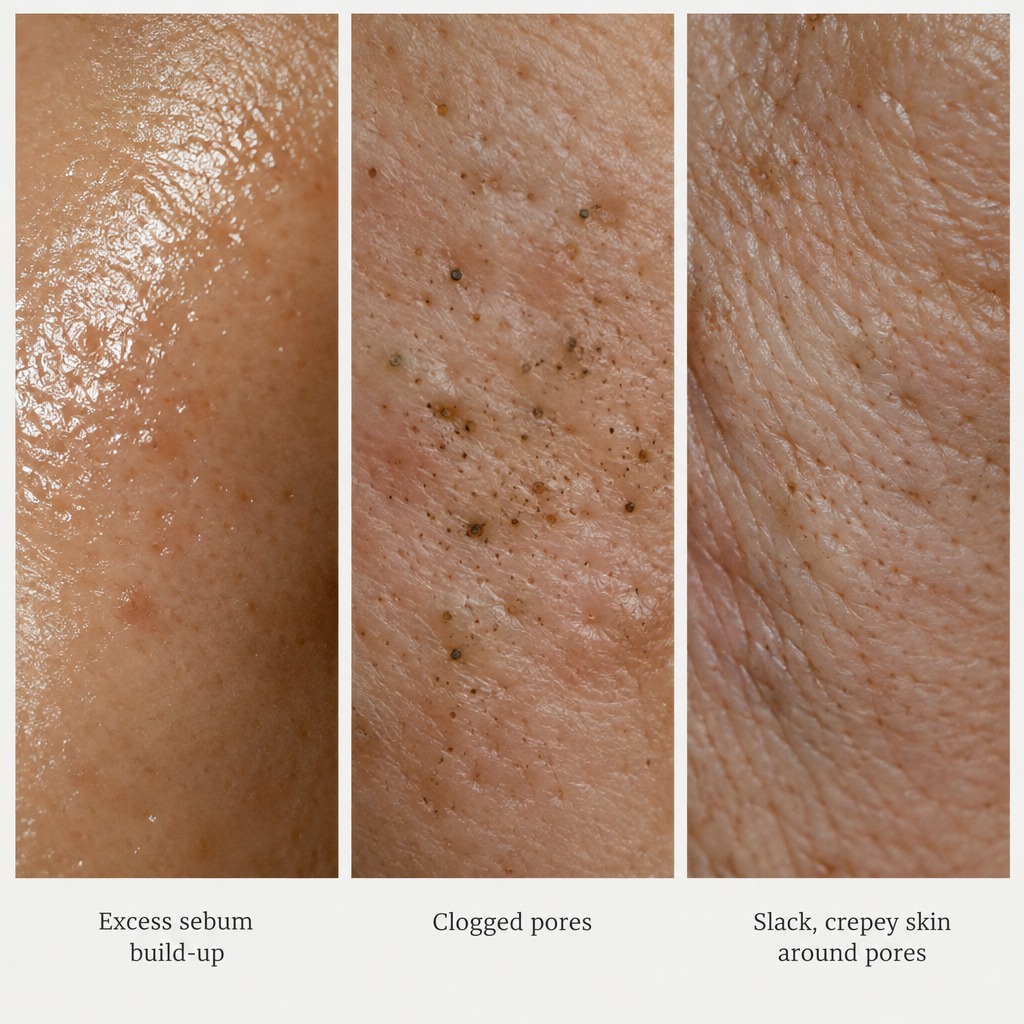
Most people attack the first driver with products aimed at the second and wonder why nothing changed. If your pores look worse by mid afternoon and fine in the morning, you have a sebum problem. If they look the same all day, you have a clogging or structural problem.
Are Those Blackheads or Sebaceous Filaments?
Worth settling before you spend anything, because the two get treated identically and only one of them is a problem.
| Sebaceous filaments | Blackheads | |
| What they are | Normal structures that line the pore and channel oil | Clogged pores oxidised at the surface |
| Appearance | Uniform grey or tan dots in a regular grid, mostly on the nose | Darker, irregularly distributed, raised slightly |
| Can they be removed? | They refill within days. They are supposed to be there | Yes, and they should be, ideally chemically rather than by squeezing |
| Best approach | Management with BHA and retinoids, plus accepting them | BHA, retinoids, professional extraction if stubborn |
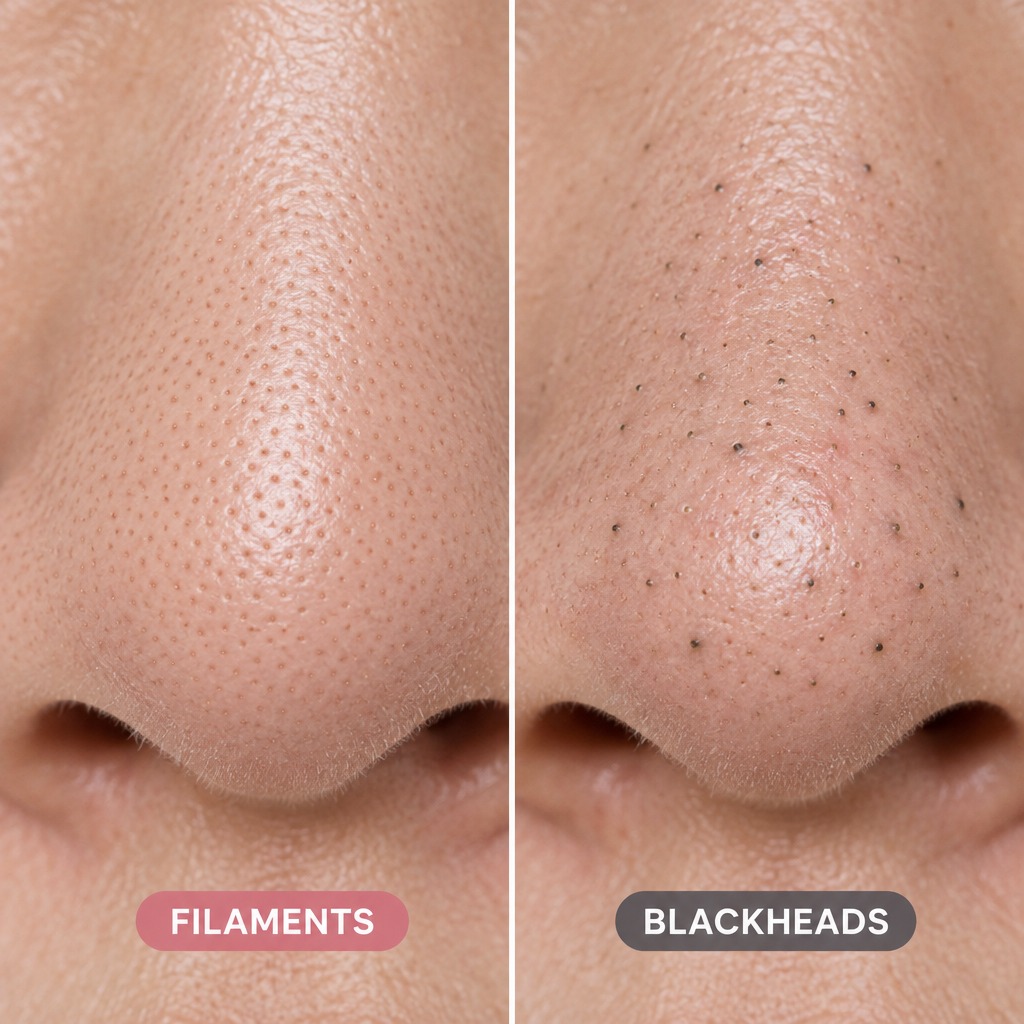
Our full breakdown of sebaceous filaments versus blackheads goes deeper. The short version: if the dots on your nose are evenly spaced and come back three days after every extraction session, they are filaments, and the squeezing is doing more harm than the filaments ever did.
How Does a Skin Analysis API Score Pores?
As appearance, which is the only honest thing to score, and separately from the two concerns that drive it.
The AI Skin Analysis returns 15 dermatologist verified concerns from one selfie as individual scored values. Four of them matter here:
| Scored concern | What it captures | What it tells you |
| Pores | Visible pore appearance and density by zone | The headline number. It moves, even though pore count does not |
| Oiliness | Sebum output, measured separately from moisture | High alongside pores means the sebum driver dominates |
| Texture | Surface irregularity | High alongside pores means clogging or surrounding roughness is contributing |
| Wrinkles and firmness | Line depth and apparent laxity | Elevated alongside pores in the cheeks points at the structural driver |
The combination is what makes it useful. A customer with pores at 70 and oiliness at 75 needs sebum control and will see change in two weeks. A customer with pores at 70, normal oiliness and elevated firmness signals has a collagen problem in the cheeks, needs a retinoid and sun protection, and should be told the horizon is months. Both would have typed "large pores" into a concern picker and received the same clay mask.

Capture conditions matter more for pores than almost any other concern, because the signal is shadow. Same distance, same room, same time of day, no filters. Scan in the morning one week and the afternoon the next and the score will move purely on sebum and light.
What Actually Reduces the Appearance of Pores?
| Intervention | Targets | Evidence |
| Retinoid, nightly, built up slowly | Clogging and structural support | The strongest topical option for this concern |
| Salicylic acid (BHA) | Clogging | Oil soluble, so it works inside the pore. Two or three times weekly |
| Niacinamide | Sebum and appearance | Well tolerated daily, modest but real |
| Broad spectrum SPF | Structural support | Prevents the collagen loss that widens pores over decades |
| Gentle consistent cleansing | Clogging | Twice daily. Over-cleansing rebounds into more oil |
| Blotting papers and mattifying primers | Sebum, cosmetically | Immediate, temporary, entirely legitimate |
| Clay masks | Sebum, briefly | Hours, not days. Fine as maintenance, not a treatment |
| Pore strips | Nothing durable | Remove surface plugs, refill within days, can irritate |
What Professional Treatments Work?
| Treatment | Targets | Realistic expectation |
| Chemical peels | Clogging and surface texture | Visible improvement in a series, maintenance needed |
| Microneedling | Structural support | Gradual over 3 to 6 sessions |
| Radiofrequency microneedling | Structural support, stronger | Better on laxity-driven pore widening, more downtime |
| Fractional laser | Structure and surrounding texture | The strongest option, real downtime |
| Professional extraction | Clogging | Immediate for those specific pores only, they refill |
| Prescription topicals | Sebum and clogging | Worth discussing if over the counter options have plateaued |
What Makes Pores Look Worse?
- Squeezing. Stretches the opening and can leave a permanently wider pore or a scar. The most common self-inflicted cause.
- Over-cleansing and stripping. Strips lipids, triggers rebound oil, and compromises the barrier that keeps everything else calm.
- Skipping sunscreen. Collagen loss is what turns a normal pore into a slack one over a decade.
- Heavy occlusive makeup on oily skin. Sits in the openings and outlines them.
- Chasing them in a magnifying mirror. Produces picking, and picking produces the outcome you were trying to avoid.
How Long Until You See a Difference?
| What you are working on | First visible change | Full effect |
| Sebum and shine | Days to 2 weeks | Ongoing management |
| Clogging | 4 to 6 weeks | 3 months |
| Structural support on a retinoid | 8 to 12 weeks | 6 to 12 months |
| In-clinic series | After session 2 or 3 | 3 to 6 months |
How Do Teams Build Pore Scoring with an API?
Pores are one of the most searched concerns in skincare and one of the easiest to over-promise on, which makes the routing logic a trust decision as much as a commercial one.
| Pores | Oiliness | Texture | Route the customer to |
| High | High | Normal | Sebum path. Niacinamide, BHA, mattifying options. Promise weeks, and deliver |
| High | Normal | Elevated | Clogging path. BHA and a retinoid. Promise 4 to 12 weeks |
| High | Low | Normal, with firmness signals down | Structural path. Retinoid and SPF, and set a months-long expectation. Consider a professional referral |
| Moderate | High | Normal | Oil control alone. Do not sell a resurfacing regimen into a shine problem |
| Low | Any | Any | Maintenance. Say the pores are normal rather than inventing a concern |
Three implementation notes. Lock capture time of day as well as lighting, because sebum swings through the day and it will dominate any week to week comparison. Never phrase the output as shrinking pores; phrase it as reducing visible pore appearance, which is both accurate and still compelling. And use the last row: a flow that always finds something to sell is a flow customers stop trusting.
You can test the scoring against real images in the YouCam AI API Playground before writing integration code, and our walkthrough of how to use an API for digital skin analysis covers the request and response shape. Perfect Corp works with 800+ brand partners on flows like this.
Large Pores FAQ
What determines pore size?
Genetics sets the baseline, including sebaceous gland density. On top of that, three modifiable factors change how large pores appear: how much oil you produce, whether the pore is clogged and stretched, and how much collagen supports the skin around it.
Can you shrink your pores permanently?
No. Pores have no muscle and the anatomical opening you inherited does not change. Appearance can improve substantially, which is what every effective treatment is actually doing.
Why do my pores look bigger in the afternoon?
Sebum. Oil accumulates through the day and a shinier surface makes every opening more conspicuous. If your pores look fine in the morning and poor by 4pm, oil control is your lever rather than exfoliation.
Do pore strips work?
They remove surface plugs and those refill within days, and repeated use can irritate the surrounding skin. Salicylic acid and a retinoid do more for less damage.
Does cold water close pores?
No. Pores do not open or close. Cold water causes brief tightening of the surrounding skin that looks like an effect and reverses within minutes.
Are the dots on my nose blackheads?
Often not. Evenly spaced grey or tan dots in a regular grid are usually sebaceous filaments, which are normal structures that refill after any extraction. Blackheads are darker, more irregular and genuinely clogged.
Does niacinamide reduce pore size?
It reduces pore appearance, mostly by moderating sebum and improving surrounding skin quality. The effect is real, modest and gradual, and it stacks well with a retinoid.
Do men have larger pores than women?
On average yes, because men typically have more sebaceous glands and higher sebum output. It is an average, not a rule.
Can a skin analysis API measure pore size?
It scores visible pore appearance by zone, alongside oiliness and texture, rather than measuring an anatomical diameter. That combination is what identifies which driver is dominant for a given face, and it should be described as appearance rather than size.
How often should I re-scan for pores?
Every two to four weeks, at the same time of day, same distance, same room, filters off. Pore visibility swings with sebum and lighting far more than it does with slow structural change, so uncontrolled scans mostly measure conditions.
Stop Shrinking, Start Targeting
The number of pores on your face is fixed and the size you inherited is fixed. What is genuinely moveable is shine, clogging and the collagen holding the rim in shape, and each of those has a different product and a different timeline. Work out which one is driving your appearance, in daylight and not in a magnifying mirror, and the plan becomes short. For teams building the flow, score pores alongside oiliness and texture, branch on the combination, and call it pore appearance, because that is what you can honestly change.
Test the skin analysis API in the YouCam AI Playground, or contact Perfect Corp for a demo to see how per-concern scoring fits your customer flow.



 English


