


 Author: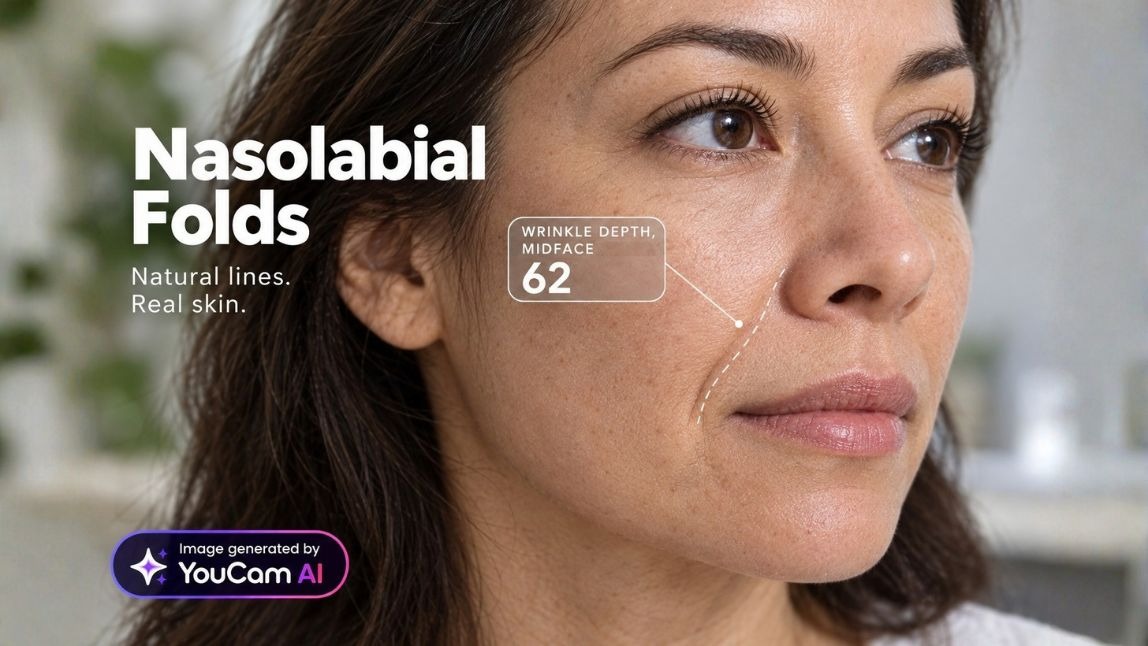
Images generated by YouCam AI
Everyone has nasolabial folds. They are anatomy, not damage: the crease where the cheek meets the upper lip, present on infants and on models. What changes with time is depth, and depth is where the confusion starts, because the fold deepens for three different reasons and only one of them responds to anything you can buy in a bottle. This guide covers what actually drives the deepening, why retinol disappoints here specifically, what genuinely moves the needle, and how AI skin analysis measures fold depth by zone so progress over months becomes visible rather than argued about.
What this guide covers
What Are Nasolabial Folds, and Is Having Them Normal?
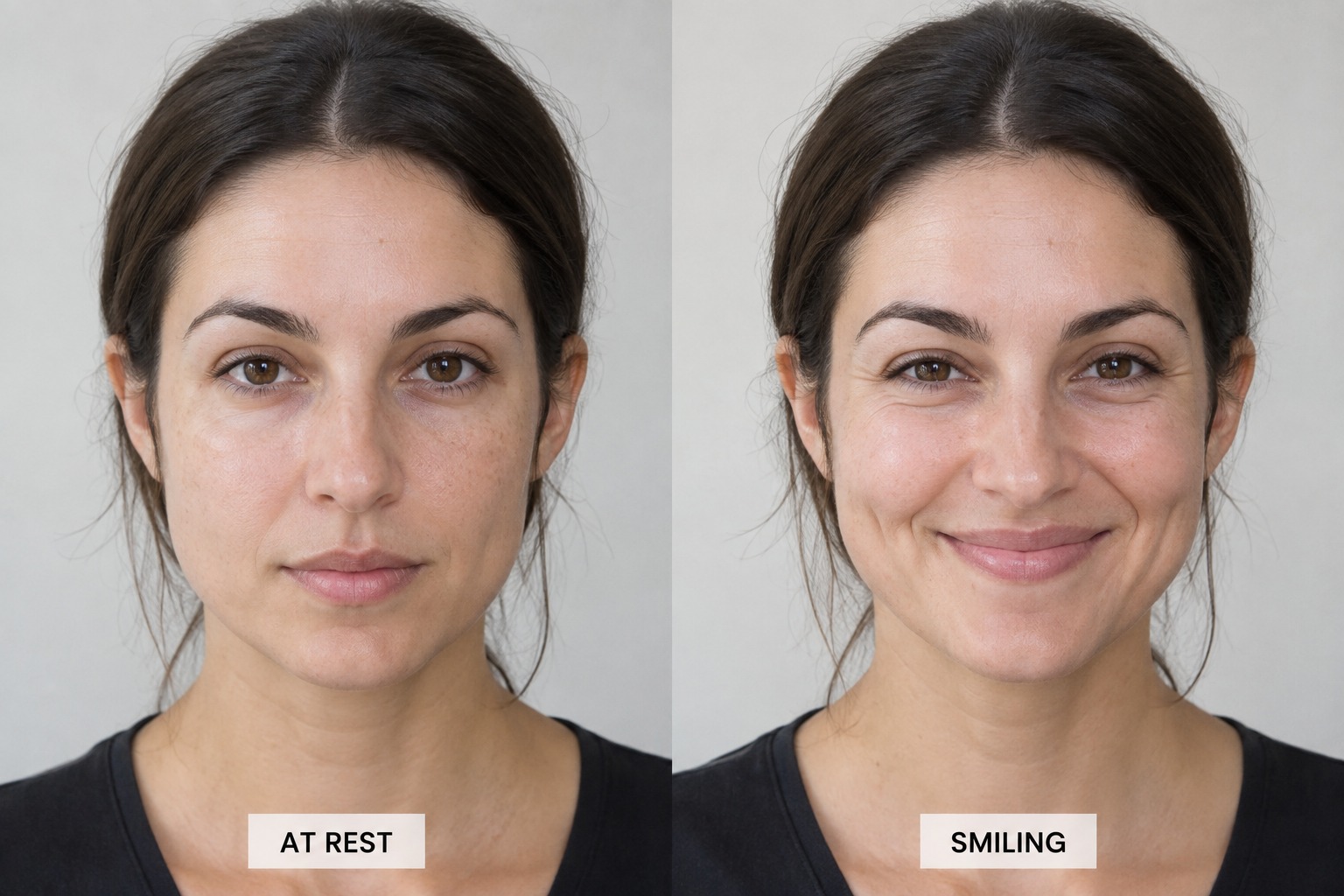
Nasolabial folds are the two creases running from the sides of the nose to the corners of the mouth. They are a normal anatomical boundary between the cheek and the upper lip, visible on almost everyone from childhood, and they become more pronounced when you smile. Having them is not a sign of aging. Having deep ones at rest can be.
That distinction matters because a great deal of marketing is aimed at people trying to remove a structure that is supposed to be there. The realistic goal is softening depth, not erasure.
What Causes Nasolabial Folds to Deepen?
Three separate mechanisms, usually running together, and they respond to completely different interventions.
| Mechanism | What happens | What it responds to |
| Volume loss | Midface fat pads shrink and descend, and cheekbones flatten with time, so the cheek no longer supports the skin above the fold | Fillers and volume restoration. Nothing topical |
| Skin laxity | Collagen and elastin decline, so skin sags across the fold rather than sitting taut | Energy based tightening, retinoids slowly, sun protection over years |
| Repeated movement | Decades of smiling and speaking etch a line into the fold | Resurfacing for the etched line, prevention through sun protection |
Additional accelerants: sun exposure, which degrades the collagen holding everything up, smoking, which does the same faster, significant weight fluctuation, which stretches then empties the midface, and side sleeping, which creases one side nightly.
Fold, Line or Wrinkle: Which Do You Actually Have?
Look in a mirror with your face completely relaxed for ten seconds, in daylight, then again while smiling.
| What you see | What it is | What will help |
| A shallow crease that appears only when you smile | Normal anatomy | Nothing needed. Sun protection for the future |
| A visible fold at rest, no fine line inside it | Volume and laxity | Volume restoration, tightening procedures |
| A fine etched line running inside the fold | A true static wrinkle | Retinoids, resurfacing. This part does respond to topicals |
| Deeper on one side only | Sleep creasing, sometimes uneven sun exposure | Back sleeping, a smoother pillowcase |
| Fold plus loose jawline and cheek descent | Structural laxity across the midface | A professional consultation. Topicals will not reach this |
Most people have a combination, and most product disappointment comes from buying for row three while having row two.
Why Does Retinol Disappoint on Nasolabial Folds?
Because the fold is mostly a structural problem and retinoids are a surface tool. Retinoids genuinely improve fine surface lines, skin quality and the etched line component inside a fold. What they cannot do is restore a fat pad, lift a descended cheek, or change the bone under it.
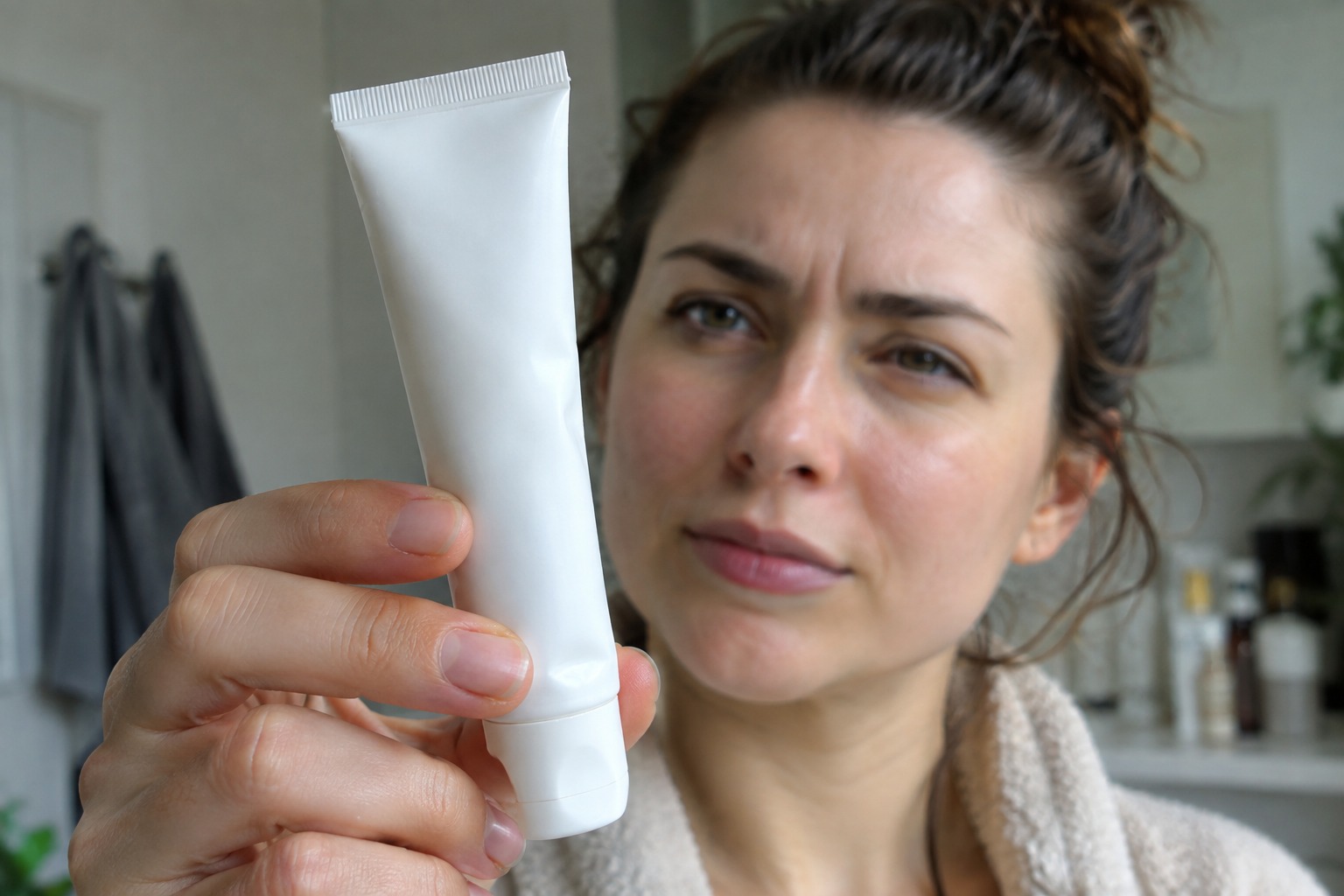
This is worth being blunt about, because the usual experience is six months of diligent nightly use, a fold that looks essentially the same, and a conclusion that the product was fake. The product was fine. It was aimed at the wrong third of the problem.
The honest framing: retinoids are excellent insurance against the line component and against the next decade of laxity, and they are not a treatment for an existing fold driven by volume.
How Does a Skin Analysis API Measure Fold Depth?
By grading wrinkle depth per zone rather than returning a single face-wide verdict, which is what makes progress on a slow-moving concern legible at all.
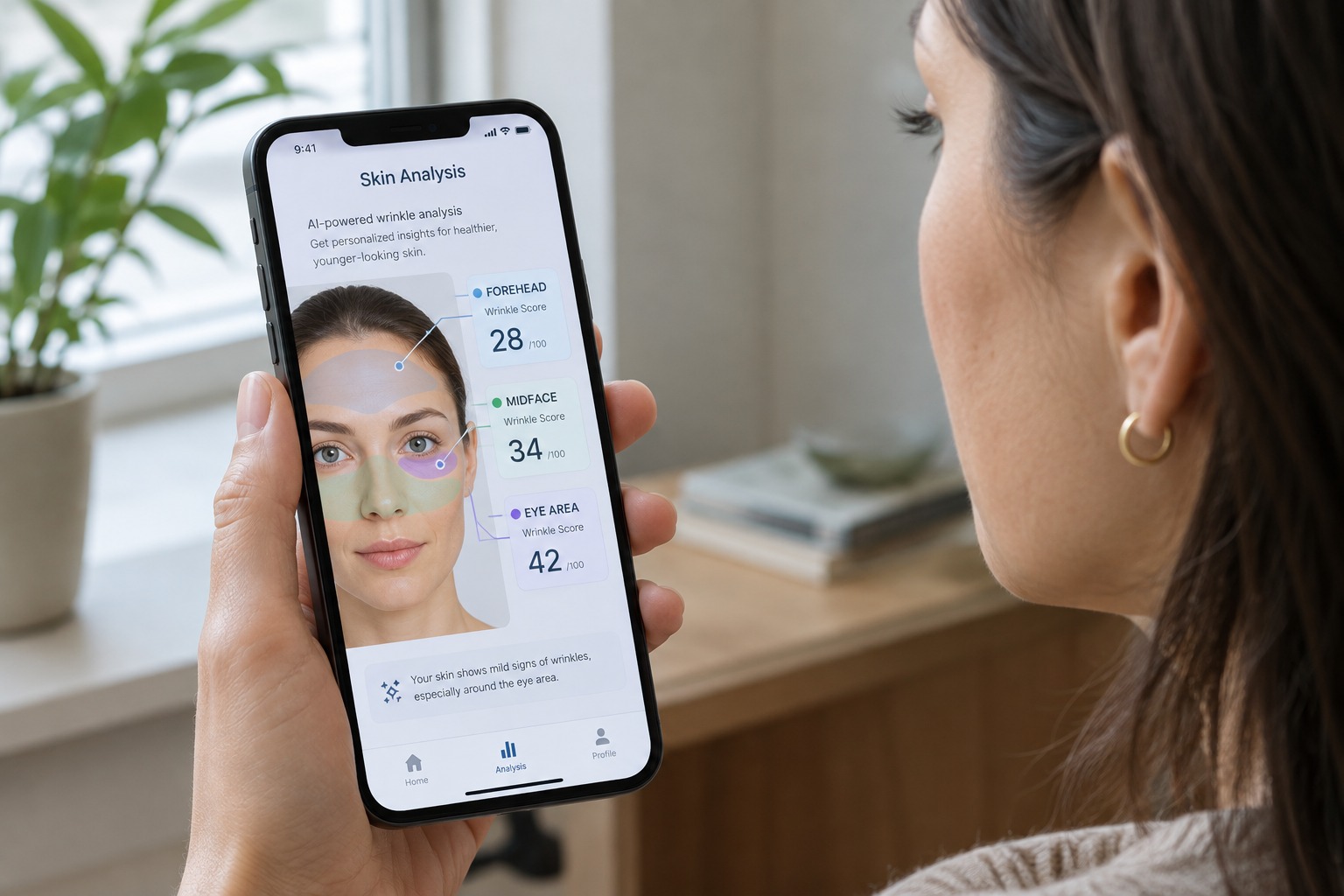
The AI Skin Analysis API returns 15 dermatologist verified concerns from one selfie as separate scored values. For the midface, three of them carry the signal:
| Scored concern | What it captures | Why it matters here |
| Wrinkles | Line depth and location, including the midface zone | The trackable number. Moves slowly, which is why it needs measuring rather than remembering |
| Firmness | Apparent skin tautness and laxity | Separates a laxity driven fold from a movement driven line |
| Texture | Surface quality of the surrounding cheek | Improves first on a retinoid, which is the early evidence that keeps people going |
The useful pattern is the divergence. If texture and fine lines improve over twelve weeks while the midface wrinkle score barely moves, that is not a failing routine, it is a correctly working routine meeting a structural problem. Showing a customer that split is more honest than a before and after photo and considerably more persuasive than a promise.
Two limits to state plainly. A photo based reading estimates visible signs, so it tracks the fold's appearance rather than measuring the tissue beneath it. And appearance here is extremely sensitive to capture: angle, expression and lighting direction each change apparent fold depth more than three months of skincare does. Same distance, eye level, face fully relaxed, filters off, or you are comparing photographs rather than faces.
What Actually Reduces Nasolabial Folds?
Matched to mechanism, because that is the only way this question has a useful answer.
| Treatment | Addresses | Honest expectation |
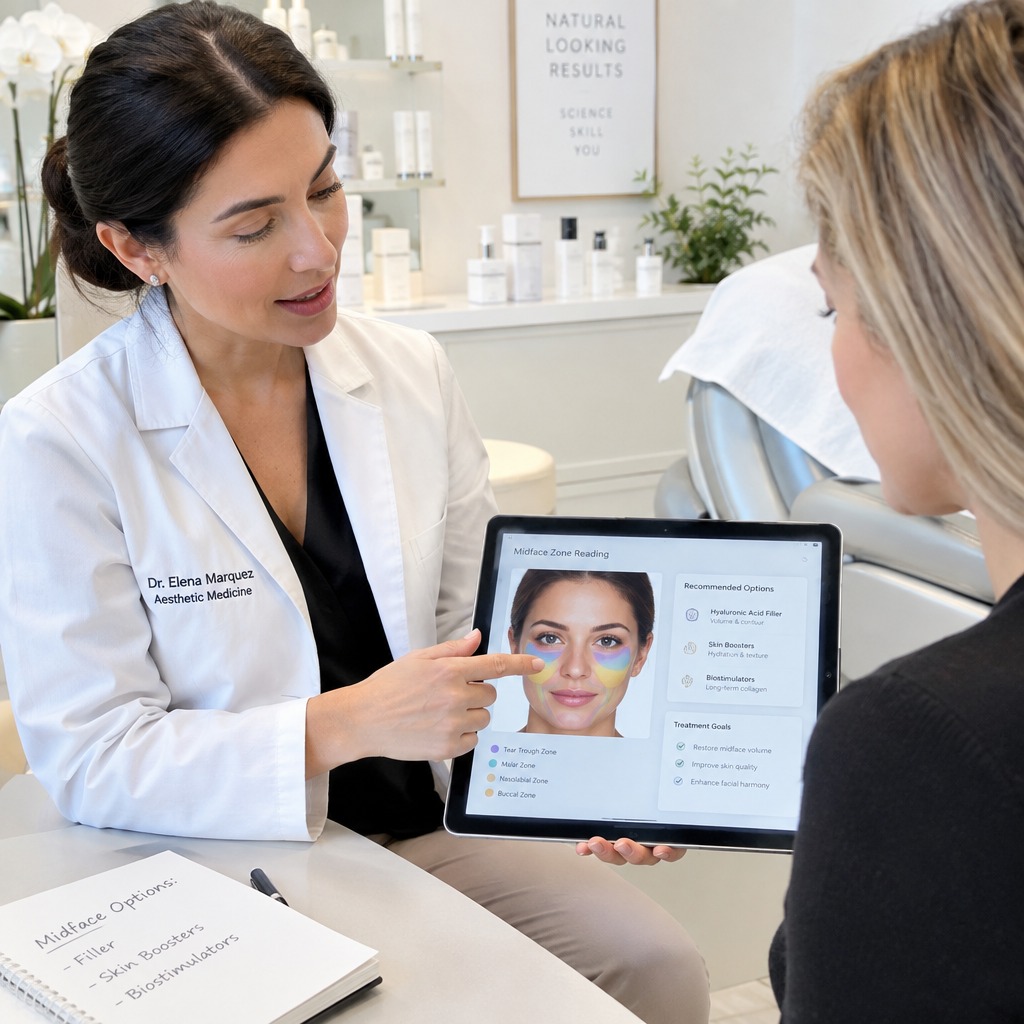
| Dermal filler | Volume loss | The most direct option. Results typically last 6 to 12 months and need maintenance. Often placed in the cheek rather than the fold itself |
| Radiofrequency or ultrasound tightening | Laxity | Gradual firming over months, modest on deep folds |
| Fractional laser resurfacing | The etched line inside the fold | Good on the line, does nothing for the fold's depth |
| Microneedling with radiofrequency | Laxity and surface quality | A series, incremental |
| Thread lift | Descent | Repositions rather than restores. Temporary |
| Surgical cheek lift or facelift | Structural descent | The definitive option, with the recovery that implies |
| Retinoid | Line component, skin quality, prevention | Real but slow, and limited to a third of the problem |
| Daily SPF | All three, preventively | Nothing visible now. The largest lever over ten years |
What Can You Do at Home?
- Sunscreen every morning. The collagen you keep is the fold you do not get. This outperforms every serum in the long run.
- A retinoid, consistently. Eight to twelve weeks for a first sign, six to twelve months for the full effect on the line component.
- Sleep on your back. If one fold is deeper than the other, this is usually why, and it is free to fix.
- Keep weight reasonably stable. Repeated large fluctuations stretch and empty the midface.
- Do not smoke. It accelerates the collagen loss that drives two of the three mechanisms.
- Be careful with facial exercises. Evidence is limited and mixed, and repeated forceful expression can deepen the etched line you are trying to soften.
- Use lighter coverage makeup in that zone. Heavy foundation settles into the fold and makes it read deeper, which is the fastest visible change on this list.
What Do In-Clinic Treatments Cost You in Downtime?
| Treatment | Typical downtime | When you see the result |
| Dermal filler | Swelling and bruising for a few days | Immediate, settles over 2 weeks |
| Radiofrequency tightening | None to minimal | Gradual over 2 to 6 months |
| Microneedling | Redness for 1 to 3 days | After the second or third session |
| Fractional laser | Several days to over a week, depending on depth | 4 to 8 weeks after each session |
| Thread lift | Swelling and tenderness for days to weeks | Immediate, then settles |
| Surgical lift | Weeks | Once swelling resolves, months for the final result |
How Do You Prevent Them Deepening?
Prevention here is unglamorous and genuinely effective, because two of the three mechanisms are driven by collagen loss you can slow.
- Broad spectrum SPF 30 or higher, every morning, including the days you do not go out much.
- A retinoid, started early and used consistently rather than aggressively.
- No smoking.
- Stable weight, and gradual change when change is needed.
- Back sleeping, or at least alternating sides.
- A baseline measurement now, so that in three years you are comparing numbers rather than memories.
How Do Teams Build Midface Tracking with an API?
Nasolabial folds are a high intent, high disappointment query, which makes them an unusually good test of whether a recommendation flow is honest.
| Midface wrinkle score | Firmness | Texture | Route the customer to |
| Low | Normal | Any | Prevention. Sunscreen and a retinoid, framed as insurance rather than correction |
| Moderate | Normal | Elevated | Retinoid and resurfacing support. The line component is the addressable part |
| High | Low firmness | Any | Structural. Say plainly that topicals will soften the surface only, and offer a consultation |
| Asymmetric between sides | Any | Any | Sleep creasing advice first. Free, fast, and builds trust before any upsell |
| Any, improving over scans | Any | Improving | Show the trend and tell them to hold. Do not sell into a working routine |
Three implementation details decide whether the score is worth anything. Lock the capture to eye level with a relaxed expression, since a half smile changes apparent depth more than a year of treatment. Re-scan on a quarterly cadence rather than monthly, because this concern moves slower than almost any other. And pair the wrinkle score with firmness, or you will route volume problems into serum recommendations and lose the customer at month three.
You can test the scoring against real images in the YouCam AI API Playground before writing integration code, and our explainer on how visible signs are scored into a skin age estimate covers why midface signs carry so much weight in perceived age. Perfect Corp works with 800+ brand partners on flows like these.
Nasolabial Folds FAQ
What causes nasolabial folds?
Three things together: midface volume loss as fat pads shrink and descend, skin laxity from declining collagen and elastin, and decades of repeated movement etching a line into the crease. Sun exposure, smoking, weight fluctuation and side sleeping all accelerate them.
Is it normal to have nasolabial folds?
Yes. They are a normal anatomical boundary between the cheek and upper lip, visible on almost everyone including children. What changes with age is how deep they are at rest.
Can nasolabial folds be reversed?
Softened rather than reversed. Volume restoration addresses the deepest component, tightening procedures address laxity, and resurfacing addresses the etched line. Complete erasure is not a realistic goal, and would not look natural if it were.
Does retinol help nasolabial folds?
It helps the fine etched line inside the fold and improves surrounding skin quality, over six to twelve months. It does not restore lost volume or lift a descended cheek, which is usually most of what makes a fold deep.
Why is one nasolabial fold deeper than the other?
Usually side sleeping, which creases the same side nightly. Uneven sun exposure and natural facial asymmetry contribute too. Back sleeping and a smoother pillowcase are the free fixes.
Do facial exercises reduce nasolabial folds?
Evidence is limited and mixed. Some programs show modest improvement in fullness, while repeated forceful expression can deepen the etched line. It is not among the higher leverage options.
At what age do nasolabial folds become noticeable?
They are present from childhood and typically become visible at rest from the mid to late thirties, becoming more pronounced through the forties as midface volume shifts. The spread between individuals is wide, and sun history explains much of it.
How long does filler last in nasolabial folds?
Usually six to twelve months depending on the product and the individual. Many practitioners place filler in the cheek to restore support rather than directly into the fold, which often looks more natural.
Can a skin analysis API measure nasolabial folds?
It grades wrinkle depth by zone, including the midface, and returns it alongside firmness and texture as separate values. That tracks the fold's appearance over time. It is not a measurement of the underlying tissue, and it should be presented as a trend rather than a diagnosis.
How often should I re-scan to track a fold?
Quarterly. This concern changes more slowly than texture or redness, so monthly scans mostly measure your lighting and expression. Keep the angle at eye level with the face fully relaxed each time.
Match the Treatment to the Mechanism
The fold itself is normal. Its depth comes from volume, laxity and movement in some combination, and knowing your combination is what stops you spending a year on a product aimed at the smallest third of the problem. Sunscreen and a retinoid are the right long game for everyone. A structural fold needs a structural answer. And for teams building this into a product, the same rule applies in code: score midface wrinkles alongside firmness, branch on the pair, and be honest when the correct answer is a referral.
Test the skin analysis API in the YouCam AI Playground, or contact Perfect Corp for a demo to see how zone level scoring fits your customer flow.



 English


