 Author:




The neck is the part of the body most reliably neglected and most reliably noticed. People run a disciplined facial routine for years and stop at the jawline, then wonder why the neck appears to belong to someone a decade older. Add the hours per day most of us now spend looking down at a phone and the horizontal bands that used to arrive in the fifties are turning up considerably earlier.
This guide covers what neck lines actually are, which ones respond to treatment and which do not, and an honest limit worth knowing: facial skin analysis scores the face, not the neck, so the neck is the one area a selfie based assessment will not measure for you. That makes the skin analysis demo useful as a proxy rather than a direct reading, which is covered further down.

What this guide covers
What Are Neck Wrinkles and Tech Neck?
Neck wrinkles are the horizontal and vertical lines that develop on the front and sides of the neck. The horizontal bands, often called necklace lines, run across the throat. Vertical bands run from the jaw down toward the collarbone and are muscle related.
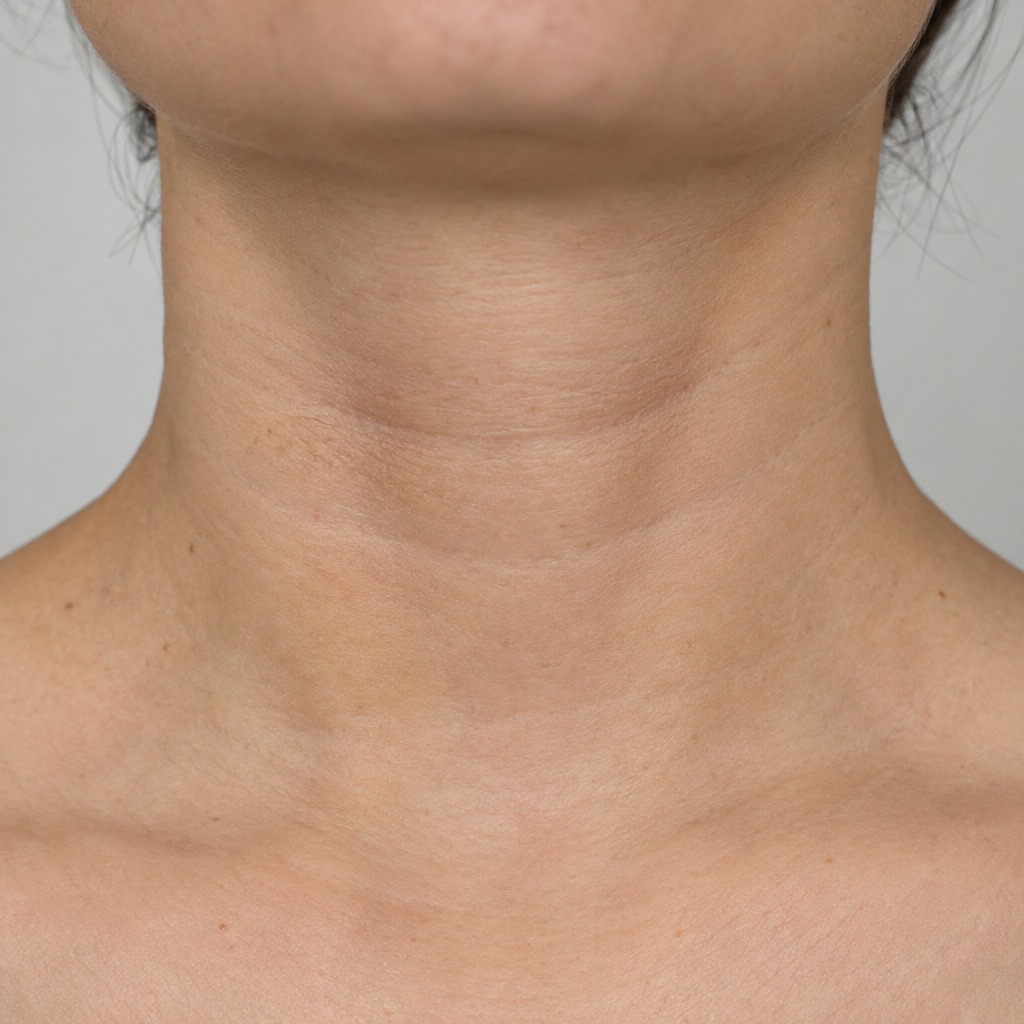
Tech neck is the popular name for horizontal lines attributed to repeatedly flexing the neck forward to look at a phone or laptop. The term covers both the skin creasing and the postural strain, which are related but distinct, and only the first is a skincare concern.
Why Does the Neck Age Faster Than the Face?
| Factor | Why the neck is worse off |
|---|---|
| Skin thickness | Thinner than facial skin, with less dermal support to resist creasing |
| Sebaceous glands | Fewer than the face, so less natural lipid protection and faster dehydration |
| Movement | Constant flexion, extension and rotation, in every direction |
| Sun exposure | Heavily exposed and routinely unprotected, since most people stop sunscreen at the jaw |
| Routine | Actives, retinoids and treatments are applied to the face and stop at the jawline |
| Support | Less underlying structure, so laxity shows sooner once it starts |
Of those six, two are entirely behavioural. Extending sunscreen and your retinoid down the neck costs nothing and addresses the two biggest avoidable contributors.
What Are the Different Kinds of Neck Lines?
They are not one concern, and the distinction determines what helps.
| Type | What it looks like | What is happening | What helps |
|---|---|---|---|
| Horizontal necklace lines | Rings across the front of the neck | Creasing from flexion plus collagen loss. Some people have these from childhood | Retinoid, sun protection, in clinic resurfacing or filler |
| Tech neck lines | Horizontal, often appearing earlier than expected | The same mechanism, accelerated by repeated forward flexion | The above, plus changing how you hold your phone |
| Vertical platysmal bands | Two cords running down the front of the neck | The platysma muscle, not the skin | Muscle focused in clinic treatment. Topicals do nothing |
| Crepey neck skin | Fine crinkled texture over a wide area | Thinning dermis and sun damage | Retinoid and hydration, over months |
| Loose or sagging neck skin | Slackness under the jaw and along the neck | Laxity plus underlying structural change | Energy devices or surgery. Not a skincare problem |
| Poikiloderma | Reddish brown mottling on the sides of the neck, sparing the shaded area under the chin | Cumulative sun damage | Pigment and vascular treatment. Strong sun protection |
The last row is diagnostically useful. If the discoloration spares the shaded patch directly under the chin, you are looking at sun damage rather than anything else, and that pattern is one of the clearest demonstrations of cumulative UV exposure anywhere on the body.

Is Tech Neck Real?
The skin creasing is real and mechanically obvious: fold anything thin and poorly supported often enough and the fold persists. Whether phones have measurably changed the age at which neck lines appear across a population is not something that has been cleanly demonstrated, and the term itself is popular rather than clinical.
What can be said confidently is that neck lines come from repeated flexion plus collagen loss plus sun exposure, and that looking down at a device adds flexion. How much it adds relative to a lifetime of ordinary movement is not established. Treat it as one contributor worth reducing rather than as the explanation.
The evidence on what drives visible aging generally is worth holding alongside this.
In a study of 298 women aged 30 to 78, twelve trained experts scored 22 clinical signs of facial aging. The wrinkles and texture cluster correlated 0.860 with apparent age, the highest of the four clusters measured. The same study found the difference in wrinkles between sun seeking and sun avoiding groups became statistically significant only after age 50.Flament F, Bazin R, Laquieze S, Rubert V, Simonpietri E, Piot B. Effect of the sun on visible clinical signs of aging in Caucasian skin. Clinical, Cosmetic and Investigational Dermatology, 2013;6:221 to 232. doi:10.2147/CCID.S44686
Two readings follow. Lines are the strongest driver of how old someone looks, which is why the neck is noticed. And sun protection takes decades to show its difference, which is an argument for starting early rather than evidence that it is not working.
What Causes Neck Wrinkles?
| Cause | Contribution | Within your control? |
|---|---|---|
| Sun exposure | Major, and usually unprotected because sunscreen stops at the jaw | Yes. The single biggest lever |
| Repeated flexion | The mechanical driver, device use included | Partly |
| Collagen and elastin decline | Reduces recoil so creases stay | Slowed, not stopped |
| Sleep position | Side and front sleeping compress the neck for hours nightly | Partly |
| Weight fluctuation | Stretches then slackens the skin envelope | Partly |
| Smoking | Degrades collagen and elastin directly | Yes |
| Genetics | Some people have horizontal neck creases from birth | No |
That last row is worth knowing before you spend money. Congenital horizontal neck creases are a normal anatomical variant, present long before any aging, and they do not respond to anti aging treatment because there is nothing to reverse.
What Actually Treats Neck Wrinkles?
| Approach | What it does | Timeline | Note |
|---|---|---|---|
| Extend sunscreen to the neck and chest | Stops further accumulation | Preventive | The highest value change, and most people are not doing it |
| Extend your retinoid down the neck | Stimulates dermal collagen | 12 weeks to 12 months | Start twice weekly. Neck skin irritates more easily than the face |
| Rich moisturiser with ceramides | Hydrates skin with few oil glands of its own | Days for appearance | Makes existing lines less visible, changes nothing structural |
| Peptides and vitamin C | Collagen support | 12 weeks and beyond | Supportive rather than corrective |
| Gentle exfoliation | Surface texture | 4 to 8 weeks | Go lighter than on the face. This skin is thinner |
| Adjust device height | Reduces the flexion | Preventive | Raise the phone rather than lowering your head |
| Sleep on your back | Removes hours of nightly compression | Months | Hard to change, modest payoff |
A warning that applies specifically here. Neck skin reacts more readily than facial skin, so a retinoid strength you tolerate on your face can leave the neck red and flaking. Build up over weeks, and if it stings, you have gone too fast.
What Do In Clinic Treatments Do?
| Treatment | Targets | What to expect |
|---|---|---|
| Injectable filler into the creases | Established horizontal lines | Softens the crease directly. Temporary, repeated |
| Botulinum toxin | Vertical platysmal bands | The appropriate treatment for the muscle bands, which topicals cannot reach |
| Fractional laser or microneedling | Texture, crepiness, fine lines | Gentler settings than the face. Several sessions |
| Radiofrequency or ultrasound | Mild laxity | Modest tightening over months |
| Light based treatment | Sun damage mottling and vessels | Effective for poikiloderma. Settings must suit the skin tone |
| Surgery | Significant laxity | The only reliable answer for marked sagging |
The neck has a reputation for healing less predictably than the face after aggressive resurfacing, which is why practitioners use gentler settings there. Anyone proposing facial strength settings on a neck is worth a second opinion.

Why Does Facial Skin Analysis Not Score the Neck?
This is the honest limit, and it is worth being clear about rather than vague.
The AI Skin Analysis API returns 28 skin diagnostics across 16 skin concerns, with wrinkles scored across seven regions: forehead, glabellar, crow's feet, periocular, nasolabial, marionette and whole face. Every one of those is on the face. The capture requirements ask for the face to fill a substantial portion of the frame, which by design excludes the neck.
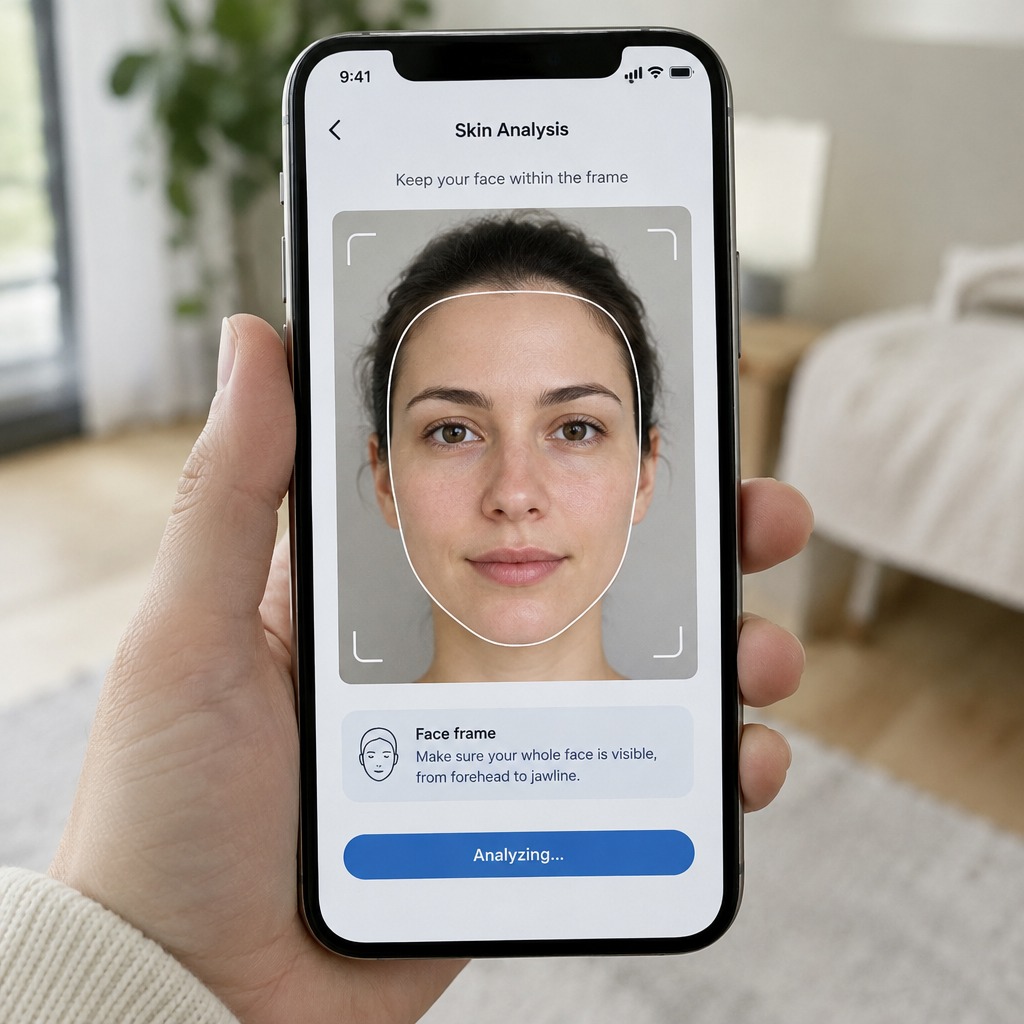
So a selfie based skin analysis cannot tell you about your neck. What it can do is act as a proxy, because the drivers overlap heavily.
| Facial score | What it suggests about the neck |
|---|---|
| Low firmness | The same collagen decline is affecting the neck, usually more |
| High spots or low radiance | Accumulated sun exposure, and the neck has had the same exposure with less protection |
| Low moisture | The neck has fewer oil glands, so it is likely drier still |
| Low wrinkle scores in several regions | General photoaging rather than one localised problem |
Used that way the scan is genuinely informative. Treated as a neck reading it is not, and any tool claiming to score a neck from a facial selfie is describing something its capture requirements do not permit.
How Do You Track Neck Change Properly?
- Photograph separately. Head level and facing forward, then a second shot with the chin slightly raised, under the same light each time.
- Keep the chin position identical. Raising or lowering the chin changes neck lines more than any treatment will, which makes an unmatched comparison worthless.
- Compare at ninety days. Collagen change is slow.
- Judge texture before lines. Crepiness and hydration improve first. Established creases move last, if at all.
- Use the facial scan for the drivers. Firmness, spots and moisture on the face tell you what is happening to the collagen and the sun damage that the neck shares.

How Do You Prevent Neck Wrinkles?
- Take sunscreen past the jawline, every day. Down the neck and onto the chest. This is the single most effective thing on the list.
- Take your retinoid down too, at a lower frequency than your face until the skin adapts.
- Raise the phone instead of lowering your head. Free, and it addresses the flexion.
- Moisturise the neck, since it has fewer oil glands and dehydrates faster.
- Consider back sleeping if you can manage it.
- Do not smoke.
Our guide to preventing wrinkles in your twenties and thirties covers the same logic across the whole face, and crepey skin versus sagging skin explains the texture side, which behaves differently from laxity.
When Should You See a Professional?
- Vertical bands that stand out visibly at rest, since these are muscular and topicals will not reach them.
- Mottled reddish brown discoloration on the sides of the neck, which is a recognised sun damage pattern worth assessing.
- Any new growth, changing mole or persistent scaly patch. The neck and chest are common sites and get less scrutiny than the face.
- Marked laxity, where realistic options are device based or surgical rather than topical.
- Skin that has not improved after four to six months of consistent sun protection and a retinoid.
Neck Wrinkles FAQ
What causes neck wrinkles?
Repeated flexion of thin, poorly protected skin, plus collagen and elastin decline, on an area that receives heavy sun exposure and is usually left out of both sunscreen and skincare routines. Some horizontal neck creases are congenital rather than age related.
Is tech neck real?
The skin creasing from repeated forward flexion is real and mechanically straightforward. Whether devices have measurably shifted when neck lines appear across a population has not been cleanly demonstrated, and the term is popular rather than clinical. Treat it as one contributor worth reducing.
Can neck wrinkles be reversed?
Texture and crepiness improve meaningfully with a retinoid and sun protection over three to twelve months. Established horizontal creases soften but rarely disappear with topicals, and in clinic options do more. Vertical bands are muscular and need a different approach entirely.
Does retinol work on the neck?
Yes, and it is the best supported topical, but neck skin irritates more easily than facial skin. Start at twice weekly with a lower strength and build up. Stinging and flaking mean you are going too fast.
At what age do neck wrinkles start?
Commonly from the late thirties and forties, though some people have horizontal creases from childhood as a normal anatomical variant. Sun exposure and how much the area has been protected matter more than the number.
Can a skin analysis app measure my neck?
No. Facial skin analysis scores seven wrinkle regions, all of which are on the face, and the capture requirements exclude the neck by design. The facial firmness, spots and moisture scores work as a proxy for the shared drivers, which is a different and more honest claim.
What is the difference between neck lines and neck bands?
Horizontal lines are creases in the skin and respond to skincare and resurfacing. Vertical bands are the platysma muscle showing through and respond to muscle focused in clinic treatment. Topicals do nothing for the second.
Does sleeping position cause neck wrinkles?
Side and front sleeping compress the neck for several hours nightly, which contributes. Back sleeping removes that, though it is a hard habit to change and the payoff is modest compared with sun protection.
Why does my neck look older than my face?
Thinner skin, fewer oil glands, constant movement, heavy sun exposure, and a routine that usually stops at the jawline. The last two are the ones you can fix today.
Do neck creams work better than face creams?
Not inherently. What matters is the active ingredient and whether the formula is tolerable on thinner skin. A face product you already tolerate, applied more cautiously, is usually a better choice than buying a separate one.
Take the Routine Past the Jawline
Most neck aging is the predictable result of treating the neck as though it ended at the chin. It has thinner skin than the face, fewer oil glands, more movement, the same sun exposure and, for most people, none of the protection or treatment. Extending sunscreen and a retinoid down the neck is close to free and addresses the two largest avoidable causes.
Beyond that, know which line you have. Horizontal creases respond to skincare and resurfacing. Vertical bands are muscle and need a clinic. Mottled discoloration is sun damage with its own treatment. And when you track progress, keep the chin position identical, because that single variable moves neck lines more than anything you apply.
Run a facial scan in the skin analysis demo to see the firmness, spots and moisture scores that tell you what your neck is likely dealing with, test the API in the YouCam AI Playground, or contact Perfect Corp.