


 Author: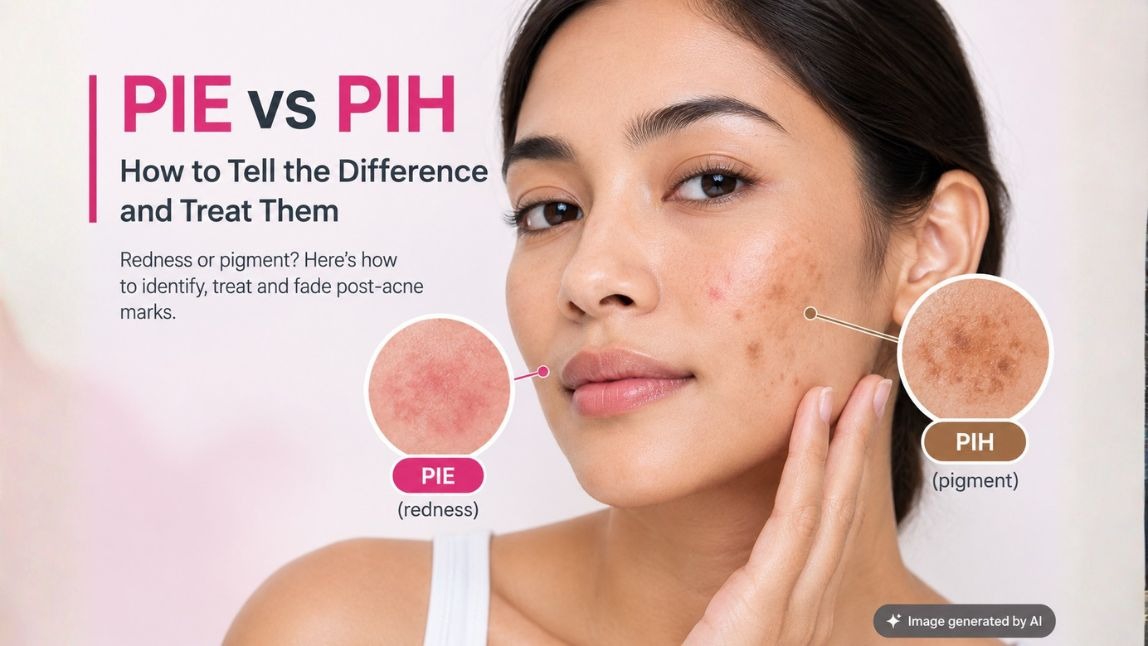
The spot healed weeks ago and the mark it left behind is still there. Whether that mark is pink or brown decides everything that follows, because the two are different tissues doing different things, and the products that fade one do very little for the other. There is a five second test that settles it, and there is a reason a skin analysis can settle it too: redness and pigment are scored on separate channels, so the machine is not guessing at a colour, it is reading two different signals.
What this guide covers
What Is the Difference Between PIE and PIH?
Colour and tissue. PIE, post-inflammatory erythema, is pink or red and vascular: damaged capillaries left behind by inflammation. PIH, post-inflammatory hyperpigmentation, is tan, brown or grey and pigmentary: excess melanin produced during healing. Press the mark. If it blanches and briefly disappears, it is PIE. If it stays, it is PIH.
Neither one is a scar. Scars are textural, meaning you can feel a dent or a raised ridge. Both PIE and PIH are flat, and flat marks fade. That single fact saves people a great deal of money on procedures they do not need.
What Is PIE?
Post-inflammatory erythema is what remains when inflammation damages or dilates the small blood vessels under a healing spot. The redness you are seeing is blood, not pigment, sitting in capillaries that have not yet returned to normal.
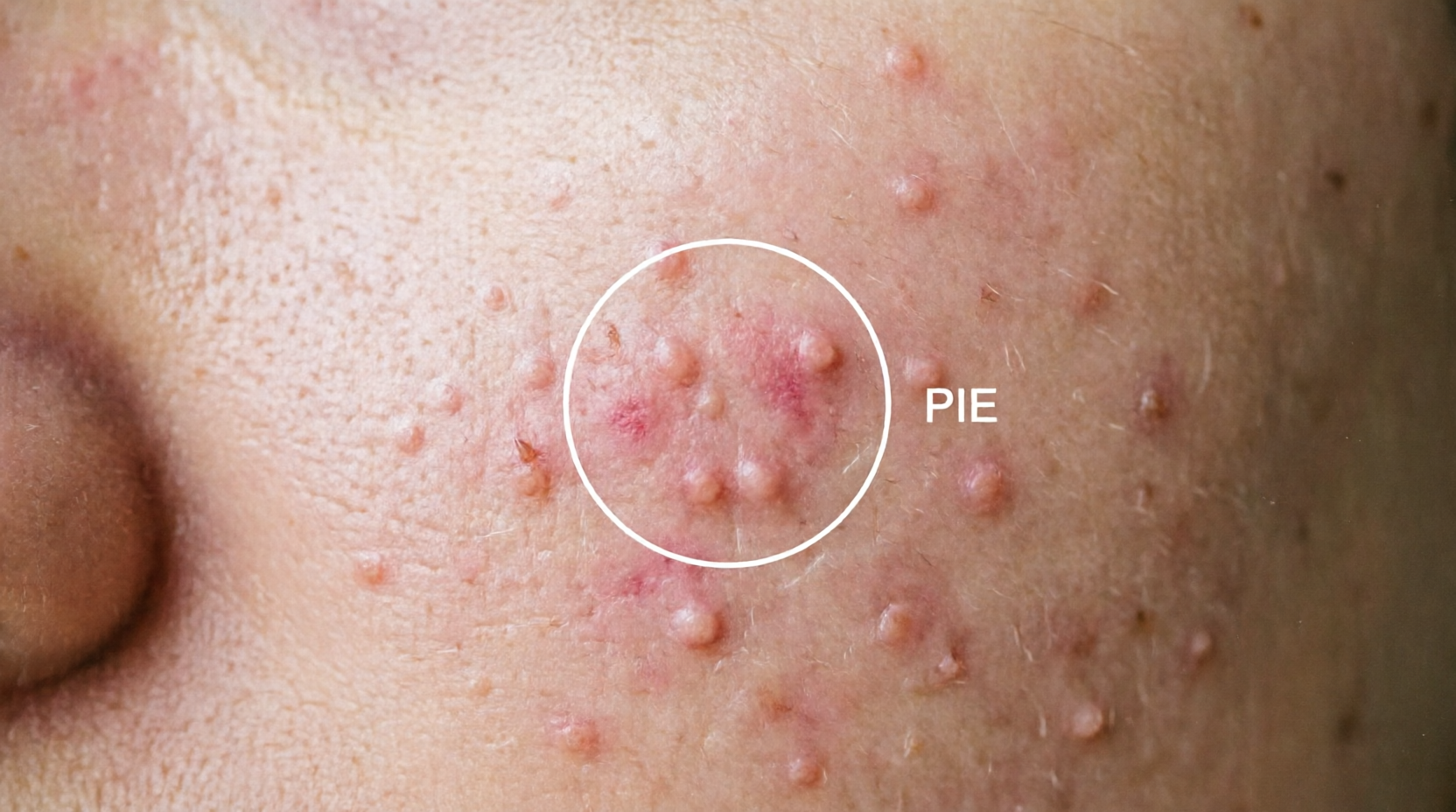
- Colour. Pink, red, occasionally purplish.
- Behaviour. Blanches under pressure, because you are briefly pushing the blood out.
- Who gets it. More frequently noticed on lighter skin tones, where the contrast is greater. It occurs across all tones.
- Triggers. Picking and squeezing are the reliable ones. Any trauma that deepens inflammation deepens the mark.
- Timeline. Usually fades on its own over months, and faster with sun protection.
What Is PIH?
Post-inflammatory hyperpigmentation is the opposite mechanism. During healing, melanocytes overproduce melanin at the site of inflammation, and that pigment lingers in the skin long after the spot itself has gone.
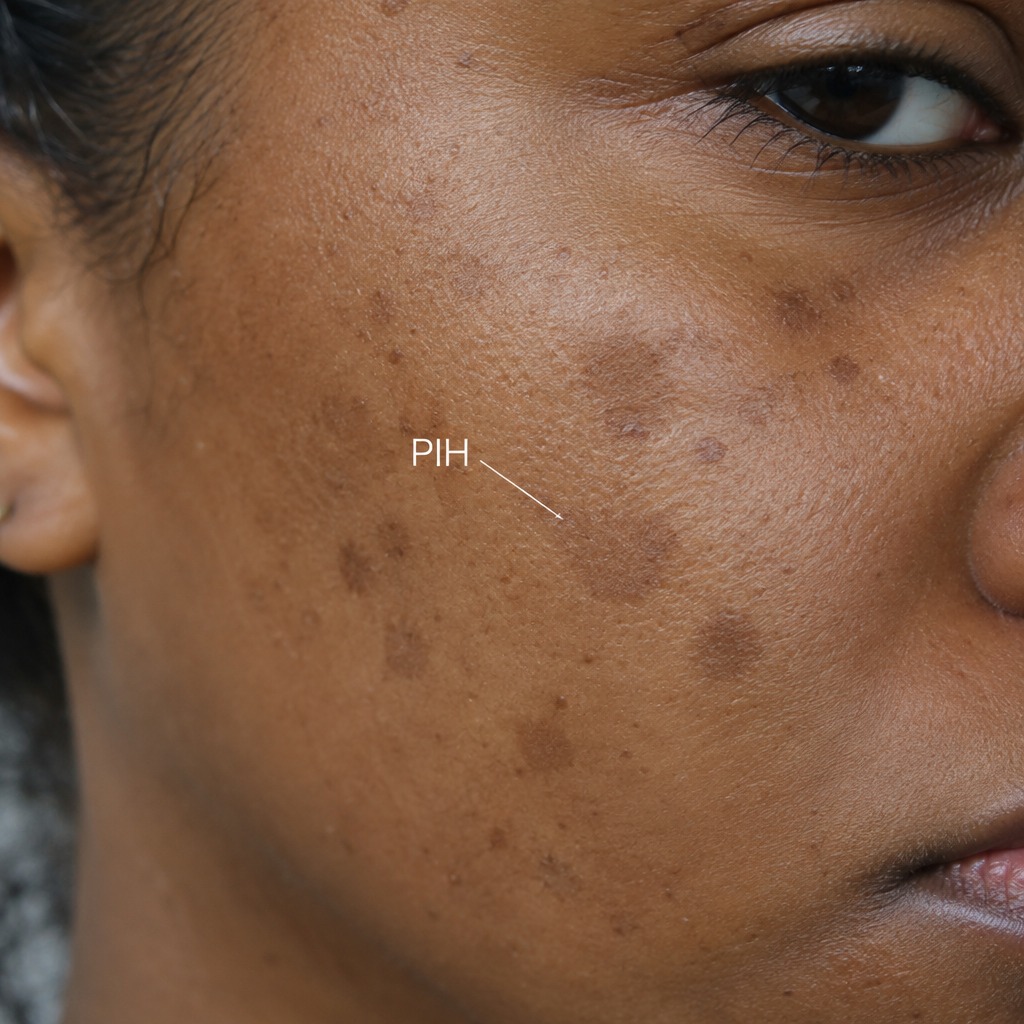
- Colour. Tan, brown, sometimes grey or blue-grey when the pigment sits deeper.
- Behaviour. Does not blanch. Press it and nothing changes.
- Who gets it. More common and more persistent in deeper skin tones, because there is more melanin available to deposit.
- Triggers. Sun exposure is the single biggest accelerant. An unprotected PIH mark can darken faster than it fades.
- Timeline. Months to a year or more, and considerably longer without daily sunscreen.
How Do You Tell Them Apart at Home?
Two tests and a table. The first test takes five seconds.
The press test
Press a clear drinking glass or a fingertip firmly against the mark for two seconds, then look. PIE blanches and momentarily vanishes because you displaced the blood. PIH sits unchanged because pigment does not move.
The stretch test
Gently stretch the skin either side of the mark. A flat mark stays flat, which confirms you are dealing with PIE or PIH rather than a scar. If a shallow dent appears or deepens, you are looking at atrophic scarring, which is a different problem entirely.
| Feature | PIE | PIH |
| Colour | Pink, red, purplish | Tan, brown, grey |
| Press test | Blanches | No change |
| Underlying tissue | Blood vessels | Melanin |
| Texture | Flat | Flat |
| Worsened most by | Picking, heat, further inflammation | Sun exposure |
| Key ingredients | Azelaic acid, niacinamide, centella, tranexamic acid | Vitamin C, azelaic acid, tranexamic acid, alpha arbutin, retinoid |
| In-clinic option | Vascular laser, IPL | Chemical peels, pigment-targeting laser, with caution on deeper tones |
Can You Have Both at Once?
Commonly, and often on the same face from the same breakout. A mark can begin as PIE and develop a pigment component, particularly in deeper skin tones or after sun exposure during healing. You can also have pink marks along the jaw and brown marks on the cheeks from breakouts that happened weeks apart.
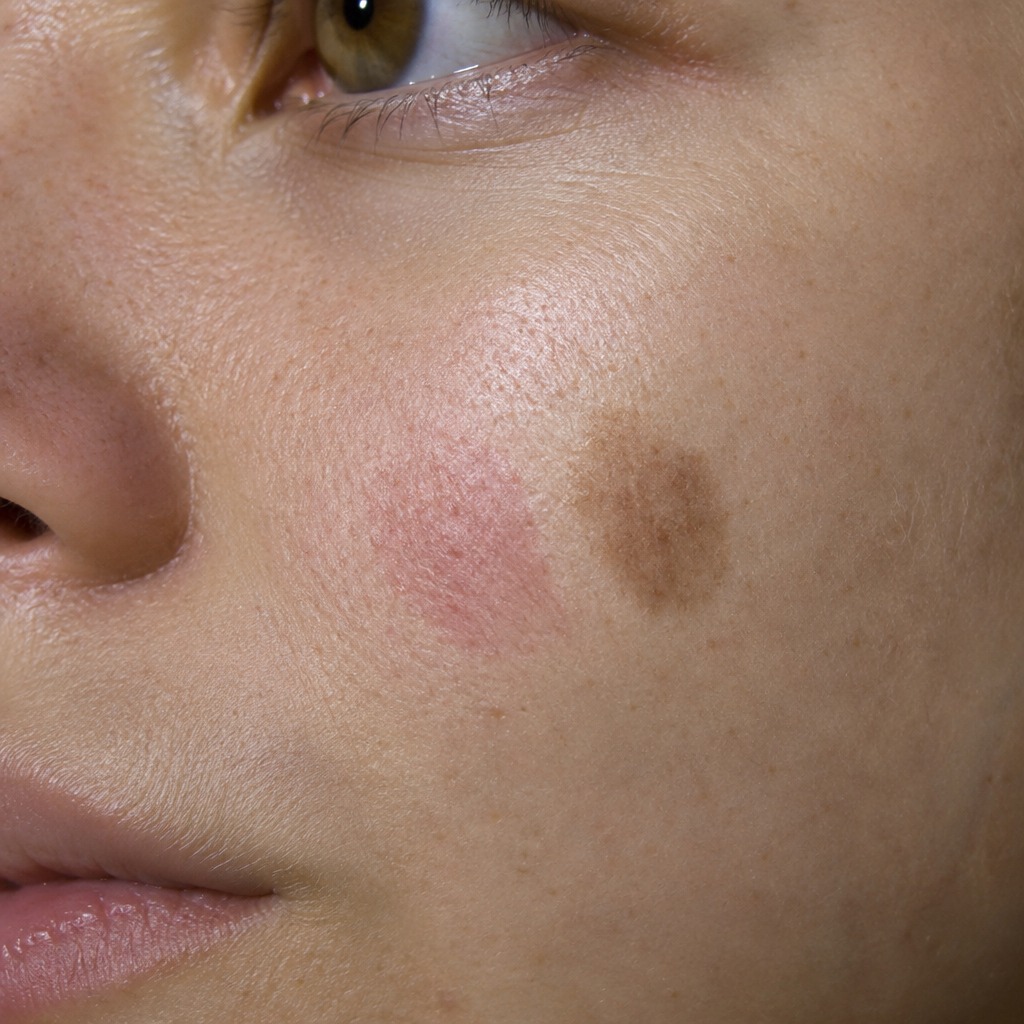
This is the practical reason a single verdict for a whole face is not very useful. Mark type varies by zone, and so should the routine.
How Does a Skin Analysis API Separate Redness from Pigment?
By scoring them on two separate channels, which is exactly the distinction people cannot reliably make by eye under bathroom lighting.
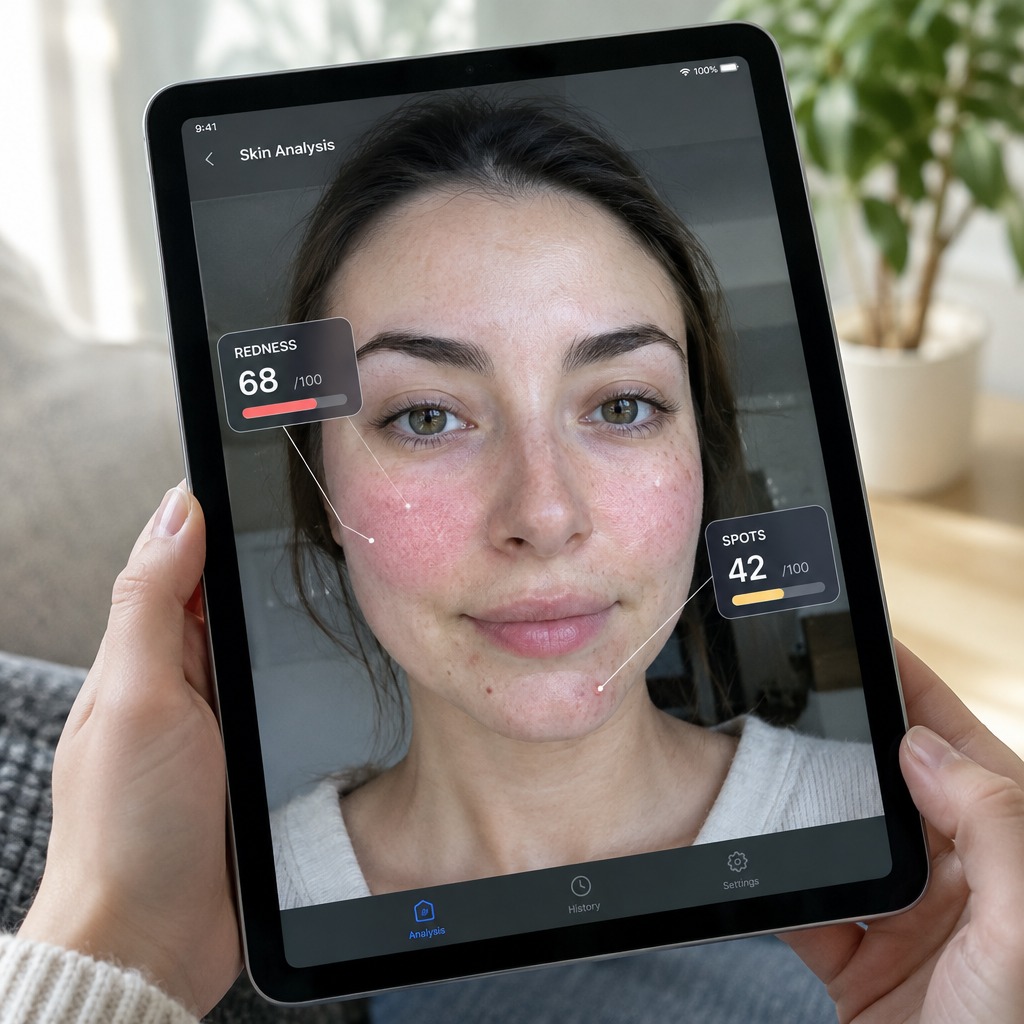
The AI Skin Analysis returns 15 dermatologist verified skin concerns from one selfie as individual values. For post-acne marks, three of them carry the signal:
| Scored concern | What it captures | What it tells you |
| Redness | Erythema intensity and distribution | Elevated where PIE dominates |
| Spots | Flat pigmented areas and their pattern | Elevated where PIH dominates |
| Texture | Surface irregularity and depth | Elevated means scarring is in play, not just marks |
Read together, the three answer the question the user is actually asking. High redness with low spots and normal texture is a PIE face, and the recommendation should be calming and vascular-supporting rather than a brightening serum. High spots with low redness is a PIH face, where tyrosinase inhibitors and sunscreen do the work. Elevated texture alongside either means part of what the customer is calling a mark is a scar, and no topical will close it.
Two honest limits. A photo based reading estimates visible signs, it does not biopsy tissue, so it should be presented as a pattern rather than a diagnosis. And redness reads differently across skin tones, under-reporting on deeper tones unless thresholds are tone aware, which is why Fitzpatrick classification belongs in the same call rather than as an afterthought. That matters more here than almost anywhere else, because PIH is both more common and more stubborn in exactly the tones where naive redness detection is weakest.
How Do You Treat PIE?
You are supporting vessels and preventing further inflammation, not lightening anything.
| Step | What to use | Why |
| Stop the trauma | No picking, no squeezing, no aggressive extractions | Every episode restarts the clock |
| Calm | Azelaic acid, niacinamide, centella asiatica | Reduce inflammation and support vessel recovery |
| Protect | Broad spectrum SPF every morning | UV prolongs redness and can push PIE toward PIH |
| Support the barrier | Ceramides, gentle cleanser | A compromised barrier keeps inflammation running |
| Escalate if needed | Vascular laser or IPL | The only fast route for stubborn PIE |
Brightening products do nothing useful here. If your marks are pink and you have been using a vitamin C serum for three months without progress, this is why.
How Do You Treat PIH?
Here you are slowing melanin production and clearing what has already been deposited.
| Step | What to use | Why |
| Sunscreen, non-negotiable | Broad spectrum SPF 30 or higher, reapplied | Without it, nothing else works. UV re-darkens faster than actives fade |
| Inhibit pigment production | Vitamin C, azelaic acid, tranexamic acid, alpha arbutin, kojic acid, niacinamide | Each interrupts melanin synthesis at a different point |
| Accelerate turnover | Retinoid, and gentle chemical exfoliation | Clears pigmented cells faster |
| Treat the acne itself | Whatever keeps you clear | New inflammation makes new marks faster than old ones fade |
| Escalate carefully | Chemical peels, targeted laser, under professional supervision | Aggressive treatment on deeper tones can trigger more PIH |
How Long Do They Take to Fade?
| Mark type | Typical fading time | What changes the number |
| PIE, mild | 2 to 6 months | Not picking, daily SPF |
| PIE, persistent | 6 to 12 months, or a laser session | Vessel damage depth |
| PIH, lighter tones | 3 to 12 months | Sun exposure dominates everything else |
| PIH, deeper tones | 6 months to 2 years | Pigment depth, sun exposure, ongoing breakouts |
| Atrophic scarring | Does not fade | Needs resurfacing procedures |
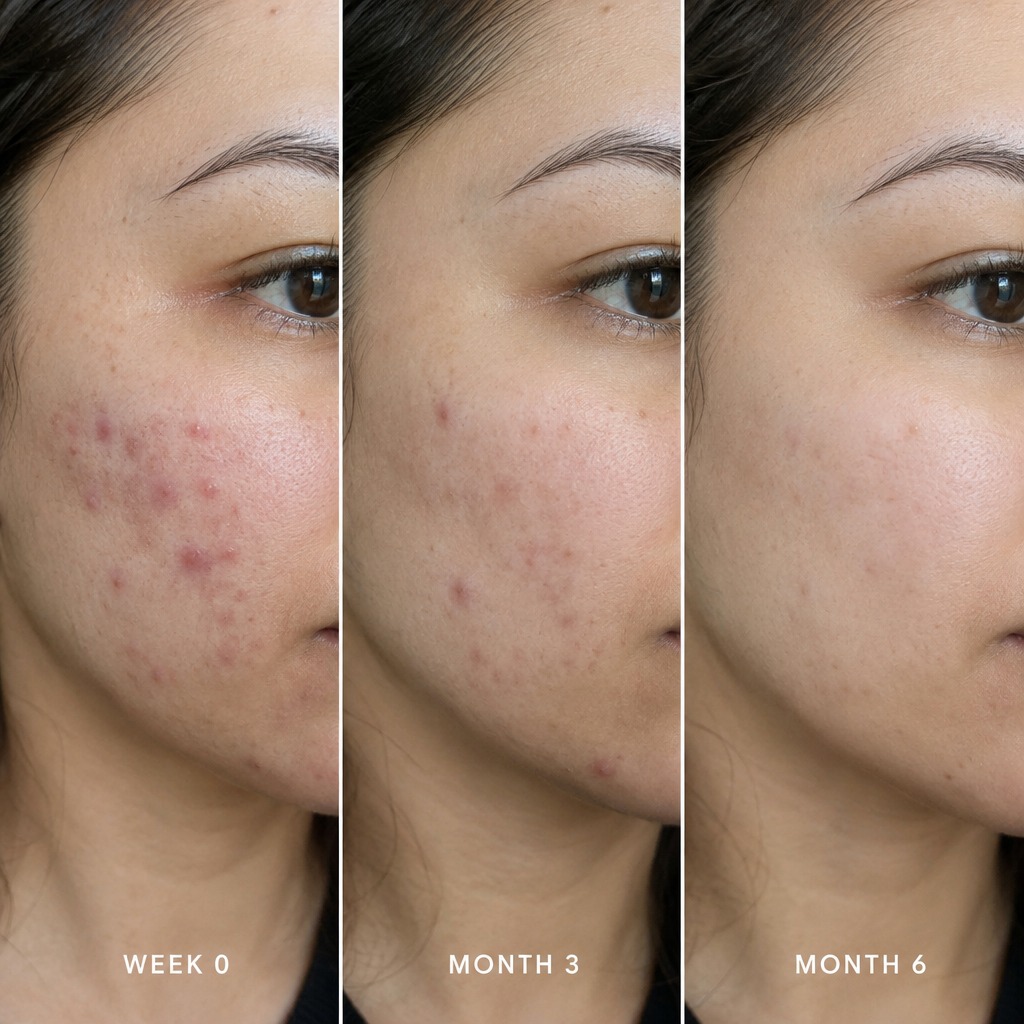
The gap between the fastest and slowest row is the reason so many people conclude their routine has failed. It usually has not. It is measuring itself against the wrong timeline.
What Makes Both Worse?
- Picking. The single most controllable factor, and the hardest. Every squeeze deepens inflammation and lengthens the mark.
- Skipping sunscreen. Catastrophic for PIH, meaningfully bad for PIE.
- Over-treating. Layering acids and retinoids onto inflamed skin creates new inflammation, which creates new marks.
- Ignoring the acne. Fading marks while new spots keep arriving is a treadmill.
- Judging progress weekly. These fade on a scale of months. Weekly mirror checks show nothing and destroy adherence.
How Do Teams Build Post-Acne Mark Detection with an API?
For anyone building the flow rather than following it, post-acne marks are a high frequency, high frustration query, and the routing is unusually clean once redness and pigment are separate values.
| Redness | Spots | Texture | Route the customer to |
| High | Low | Normal | PIE path: calming actives, azelaic acid, SPF. Suppress brightening serums |
| Low | High | Normal | PIH path: tyrosinase inhibitors, retinoid, SPF as the hero product |
| High | High | Normal | Both present. Azelaic acid first, since it works on both |
| Any | Any | Elevated | Scarring is in play. Set expectations and offer a professional referral |
| High | Any | Any, with active acne elevated | Treat the acne first. Marks cannot be won while new ones form |
Two implementation notes that decide whether this works. Capture conditions must be locked, because both redness and pigment shift dramatically with white balance, so guide the user to even lighting and reject filtered frames. And re-scan on a two to four week cycle: these marks change on a monthly scale, so a daily scan feature produces noise and erodes trust in the score.
You can run the scoring against real images in the YouCam AI API Playground before writing integration code, and our walkthrough of how to use an API for digital skin analysis covers the request and response shape. Perfect Corp works with 800+ brand partners running flows of this kind.
PIE vs PIH FAQ
What is the difference between PIE and PIH?
PIE is post-inflammatory erythema, a vascular mark that looks pink or red and blanches when pressed. PIH is post-inflammatory hyperpigmentation, a melanin mark that looks tan or brown and does not blanch. Both are flat, and both fade.
How do I know if I have PIE or PIH?
Press the mark with a fingertip or a clear glass for two seconds. If it briefly disappears, it is PIE. If it stays exactly the same, it is PIH. Then stretch the skin: if a dent appears, part of what you are seeing is a scar.
Are post-acne marks scars?
No. Scars are textural, meaning raised or indented. PIE and PIH are flat discolouration, and flat marks fade over months. This distinction is worth confirming before paying for any resurfacing procedure.
Does vitamin C help PIE?
Not much. Vitamin C is a pigment tool and PIE is vascular. Azelaic acid, niacinamide and centella are better matched, and daily sunscreen supports both.
Why is my PIH so much darker than my friend's?
Deeper skin tones produce more melanin during healing, so PIH is both more common and more persistent there. It is not a sign you are doing anything wrong, and it does mean sun protection matters even more.
Can PIE turn into PIH?
The two can coexist, and sun exposure during healing can add a pigment component to a mark that started purely vascular. Sunscreen during the healing window is the practical prevention.
How long until post-acne marks go away?
PIE usually takes two to six months, persistent cases up to a year. PIH takes three to twelve months on lighter tones and can take six months to two years on deeper tones. Daily sunscreen shortens both.
Does picking really make marks last longer?
Yes, and it is the most controllable factor on the list. Squeezing deepens the inflammation that created the mark, which both darkens it and extends the fade time, and it can convert a mark into a scar.
Can a skin analysis API tell PIE from PIH?
It separates the underlying signals, scoring redness and pigmented spots as independent values, which is what the distinction rests on. Present the result as a pattern that routes product advice, not as a clinical diagnosis.
How often should I re-scan to track fading?
Every two to four weeks, under identical lighting and distance with filters off. These marks change on a monthly scale, so more frequent scanning measures your lighting rather than your skin.
Press the Mark, Then Pick the Path
Five seconds of pressure tells you which of two entirely different problems you have, and every product decision after that follows from the answer. Pink means vessels and calming. Brown means melanin and sun protection. Flat means it will fade either way, and textured means a different conversation. For teams building this into a product, the same split holds in code: keep redness and spots as separate scored values, branch on the pair, and let the reading do the work the mirror cannot.
Test the skin analysis API in the YouCam AI Playground, or contact Perfect Corp for a demo to see how per-concern scoring fits your customer flow.



 English


