


 Author: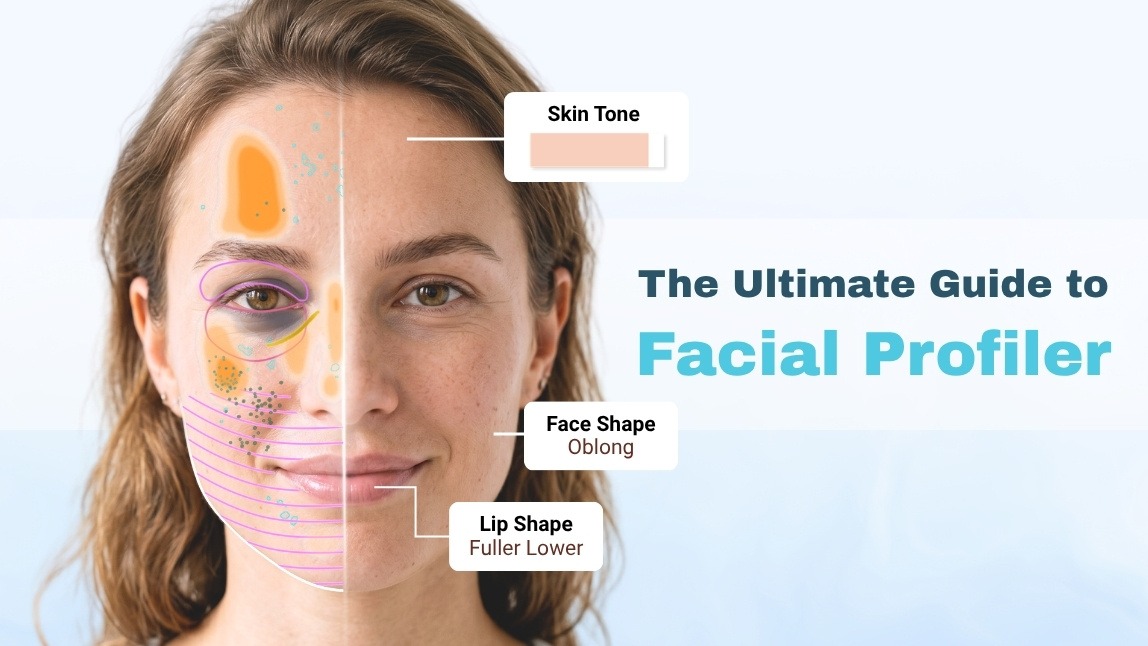
What Is a Facial Profiler?
In its broadest sense, a facial profiler refers to any system designed to "read the face," from AI-driven algorithms and aesthetic medicine assessments to psychological face-reading approaches. The core concept is the same: transform the information contained in facial features into actionable insights, whether for beauty, health, or self-understanding.
Three Main Applications of Facial Profiling
Facial profilers currently serve three distinct purposes:
Digital Aesthetic Analysis
AI tools evaluate facial geometry against the Golden Ratio, providing symmetry scores, face shape detection, and appearance recommendations.
Personalized Skincare
Beauty brands use selfie-based analysis to assess skin condition and recommend bespoke routines — making precision skincare accessible to everyone.
Medical Profile Balancing
Clinicians evaluate facial proportions to plan non-surgical filler treatments that restore or enhance overall facial harmony.
AI-Powered Facial Proportion Analysis
AI-driven facial analysis tools can scan a selfie in seconds, outputting quantified data on facial width-to-height ratio, inter-eye distance, jawline contour, and more, then benchmark those measurements against the aesthetic Golden Ratio. These tools give users an objective, data-backed way to understand their facial features and represent one of the fastest-growing areas of beauty technology.
How Does AI Facial Analysis Work?
AI facial profilers use computer vision models to detect facial landmarks, including eyebrows, eyes, the nose bridge, lip corners, and jaw outline, and then calculate the proportional relationships between each zone. Key metrics include:
- Image Detection: The AI Facial analysis scans a live camera feed or uploaded photo, detecting 70+ facial feature points, including face shape, eye shape, eyebrow arch, nose structure, lip contour, and cheekbone profile, in real time.
- Multi-Dimensional Feature Mapping: Advanced AI analyze three layers of facial data simultaneously: face structure (shape classification and feature attributes), personal color (skin tone, eye color, lip color, and hair color), and face ratios (horizontal and vertical proportions benchmarked against golden ratio standards).
- Personalized Recommendation Engine: Once the analysis is complete, the results feed directly into a recommendation layer that translates facial attribute data into actionable suggestions, such as matched makeup looks, flattering hairstyles, skincare products suited to skin tone, and aesthetic treatment guidance.
On brand-facing platforms, this typically connects directly to product catalogs and consultation flows, so the customer receives a tailored beauty plan rather than a raw data report.
Personalized Skincare & Skin Profiling
Many dermatology and beauty brands have integrated facial profiling technology into their digital skincare ecosystems. With just one selfie, consumers can now receive a tailored skin analysis report and product recommendations, bringing "precision skincare" to the mainstream.
Skin Analyzer
Within the Facial Profiler, the Skin Analyzer becomes the foundation of every personalized skincare journey. The AI generates a structured skin report for each user, including:
- spots
- dark circles
- radiance
- eyebags
- tear troughs
- redness
- pores
- texture
- oiliness
- droopy eyelids
- wrinkles
- moisture levels
- firmness, and acne
Skin Simulation
Skin simulation renders realistic before-and-after visualizations directly on the user's face using augmented reality. Shoppers can see how their specific concerns, such as wrinkles, spots, dark circles, pores, and more, would improve after a course of treatment, with the results overlaid live via their camera. The simulation is fully adjustable by the brand: severity of the skin issue, product strength, and treatment length can all be tuned to reflect real product claims.
By letting consumers visualize results on their own face rather than a model's, it directly bridges the gap between skin diagnosis and purchase confidence.
Medical Aesthetic Profile Balancing
A practitioner systematically evaluates facial proportions, then uses dermal fillers to subtly refine features like the chin, lips, and nose, achieving overall facial harmony without surgery.
What a Full Facial Profiling Assessment Covers
A comprehensive facial profiling evaluation typically examines the following:
- Facial thirds ratio: forehead, mid-face, and lower face balance
- Frontal and lateral symmetry
- Chin–nose–lip ratio in profile view
- Volume distribution across facial zones
- Age-related hollowing and laxity patterns
Face Reshape Simulator
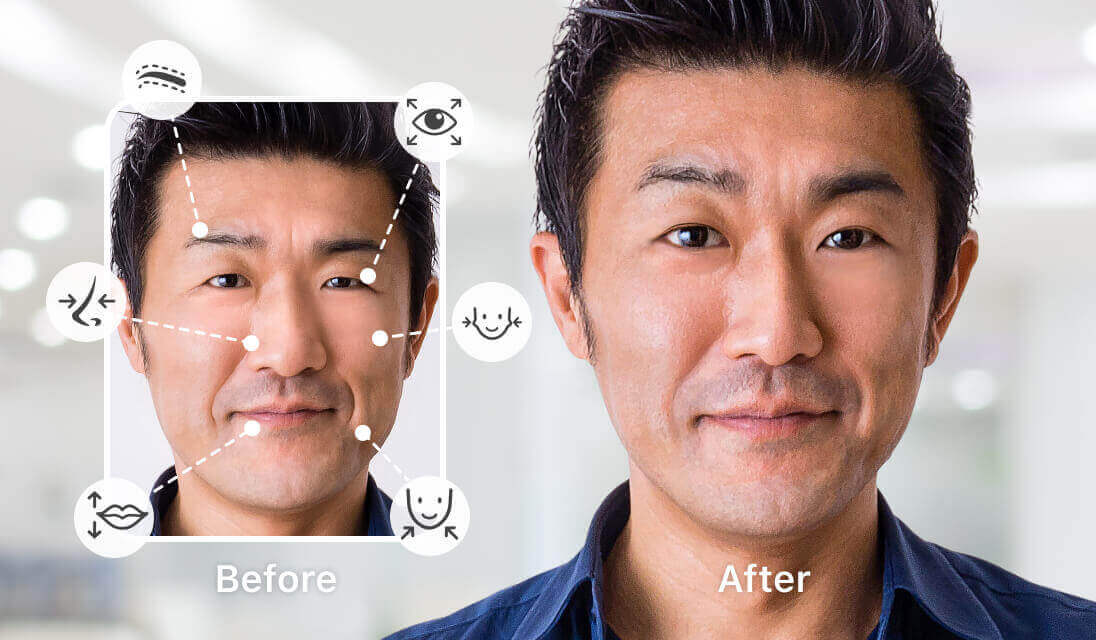
The Face Reshape Simulator is an AI-powered consultation tool that visualises the anticipated outcomes of non-surgical and surgical facial procedures directly on the patient's own face, in real time, before any treatment begins. During a profiling consultation, practitioners can use the simulator to demonstrate potential enhancements across the following treatment areas:
- Nose reshaping (rhinoplasty / filler): Preview adjustments to tip size, bridge shape, nose length, width, and roundness
- Lip augmentation: Simulate volume and contour changes from lip filler, aligned with the chin–lip–nose ratio identified in the assessment
- Cheek and mid-face volumisation: Visualise filler placement to restore lost volume and improve facial thirds balance
- Jaw and lower face contouring: Model jaw implant or Botox slimming outcomes to refine lower-face harmony
- Eyelid and brow lift: Preview upper eyelid rejuvenation and brow repositioning for improved frontal symmetry
Benefits of Using the Facial Profiler
Whether integrated into an online beauty experience or used during an in-store consultation, the Facial Profiler helps brands deliver more personalized, data-driven recommendations. By analyzing each user’s facial features and skin-related concerns, it supports a smoother consultation journey and helps businesses create more engaging beauty experiences.
- Personalized Product Recommendations: Help customers discover skincare, makeup, or aesthetic solutions that better match their facial features and beauty goals.
- Higher Customer Engagement: Turn a simple browsing experience into an interactive consultation that keeps users engaged longer.
- Improved Consultation Efficiency: Give beauty advisors or practitioners structured insights before the consultation begins, making recommendations faster and more relevant.
- Stronger Customer Trust: Use AI-powered analysis to provide objective, easy-to-understand insights that make recommendations feel more credible.
- Better Conversion Opportunities: Guide customers from analysis to product discovery, treatment recommendations, or booking decisions with greater confidence.
Why Choose Perfect Corp.?
Perfect Corp. is the world's leading AI and AR beauty technology provider. When it comes to AI facial profiling, partnering with Perfect Corp. means accessing enterprise-grade technology that is both clinically validated and commercially proven.
- Seamless Integration: Every solution runs as a web module, mobile SDK, in-store kiosk, or APIintegration, deployable across websites, apps, WeChat mini-programs, and physical retail touchpoints with minimal development lift.
- Unmatched analysis depth: The AI Face Analyzer detects 70+ facial attributes across face structure, personal color, and facial ratios, while the AI Skin Analysis platform identifies 15+ skin concerns with 180° full-face mapping, coverage no competing platform currently matches.
- Clinically validated accuracy: The AI Skin Analysis engine is trained on 70,000+ medical-grade images and achieves a 95% test-retest reliability rate, with results correlating with physician evaluations at over 80% accuracy.
- Proven Global Track Record: Trusted by over 600 of the world's leading beauty brands, Perfect Corp. has a demonstrated history of driving measurable results in customer engagement, conversion, and satisfaction.
Conclusion
Whether you're exploring AI skin analysis, planning a filler consultation, or simply curious about your facial proportions, a facial profiler gives you the clarity to make more confident, informed beauty decisions. With Perfect Corp.'s technology behind it, that insight is now more accurate, accessible, and personalised than ever before.

FAQ
What is facial profiling?

Facial profiling is a systematic process or tool for evaluating facial proportions, symmetry, and features. Depending on the context, it can refer to AI-driven geometric analysis (benchmarked against the Golden Ratio), a personalized skincare diagnosis, or a medical aesthetic treatment plan for profile balancing. The core goal in all cases is to translate facial data into actionable guidance, helping users achieve greater facial harmony.
What is the difference between facial profiling and profile balancing?
The two terms are closely related but used in different contexts. "Facial profiling" is the broader concept, encompassing all forms of face analysis — AI tools, psychological reading, and medical assessment. "Profile balancing" is a clinical term used specifically to describe the physical treatment process: non-surgical dermal filler injections designed to balance the lateral and frontal proportions of the face. In short: facial profiling is the evaluation; profile balancing is the corresponding treatment action.



 English


