


 Author: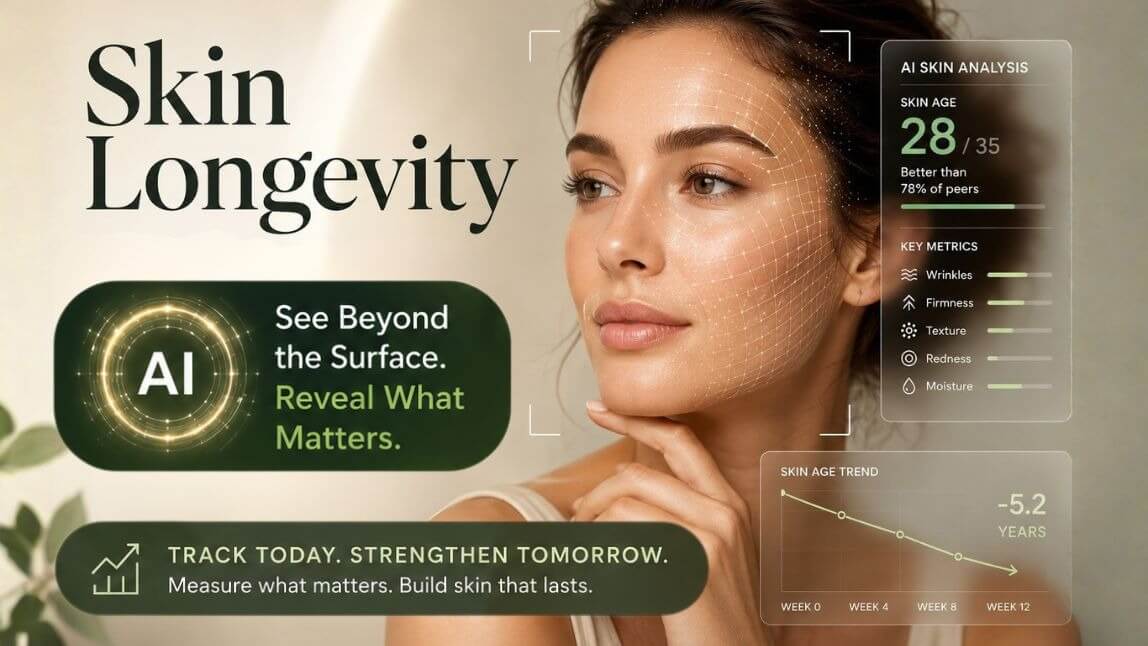
Skin longevity is the science of keeping skin functioning well for decades, not just looking smooth for a weekend. Instead of chasing the disappearance of a wrinkle, it tracks whether your skin's collagen, barrier, and repair systems are actually holding up over time — and increasingly, brands are using AI diagnostics to prove it with numbers instead of guesswork.
What Is Skin Longevity, Exactly?
"Skin longevity" borrows its logic from the broader longevity-medicine movement: the goal isn't just a longer lifespan, it's a longer healthspan — more years spent functioning well. Applied to skin, that means less emphasis on erasing today's fine line and more emphasis on whether your skin's structure, hydration, and repair capacity will still be solid in ten or twenty years.
Where traditional anti-aging is reactive — treat the wrinkle, fade the spot — skin longevity is proactive. It asks what's happening at the cellular level, months or years before anything becomes visible on the surface.

Is Skin Longevity the Same Thing as Anti-Aging?
Not quite. They overlap, but the mindset — and the metrics — are different.
| Angle | Anti-Aging | Skin Longevity |
| Core question | How do I fix what's already visible? | How do I keep my skin functioning well? |
| Timeframe | Short-term, visible results | Long-term, cumulative health |
| What's measured | Wrinkle depth, spots, texture | Collagen turnover, barrier strength, biological skin age |
| Typical response | Correct or conceal a symptom | Support the underlying biological system |
Most dermatologists will tell you there's a lot of practical overlap — many longevity-focused ingredients are the same ones anti-aging routines have used for years. The real shift is in framing: aging is treated as a natural, manageable process rather than a problem to defeat.
What Biological Factors Actually Drive Skin Longevity?
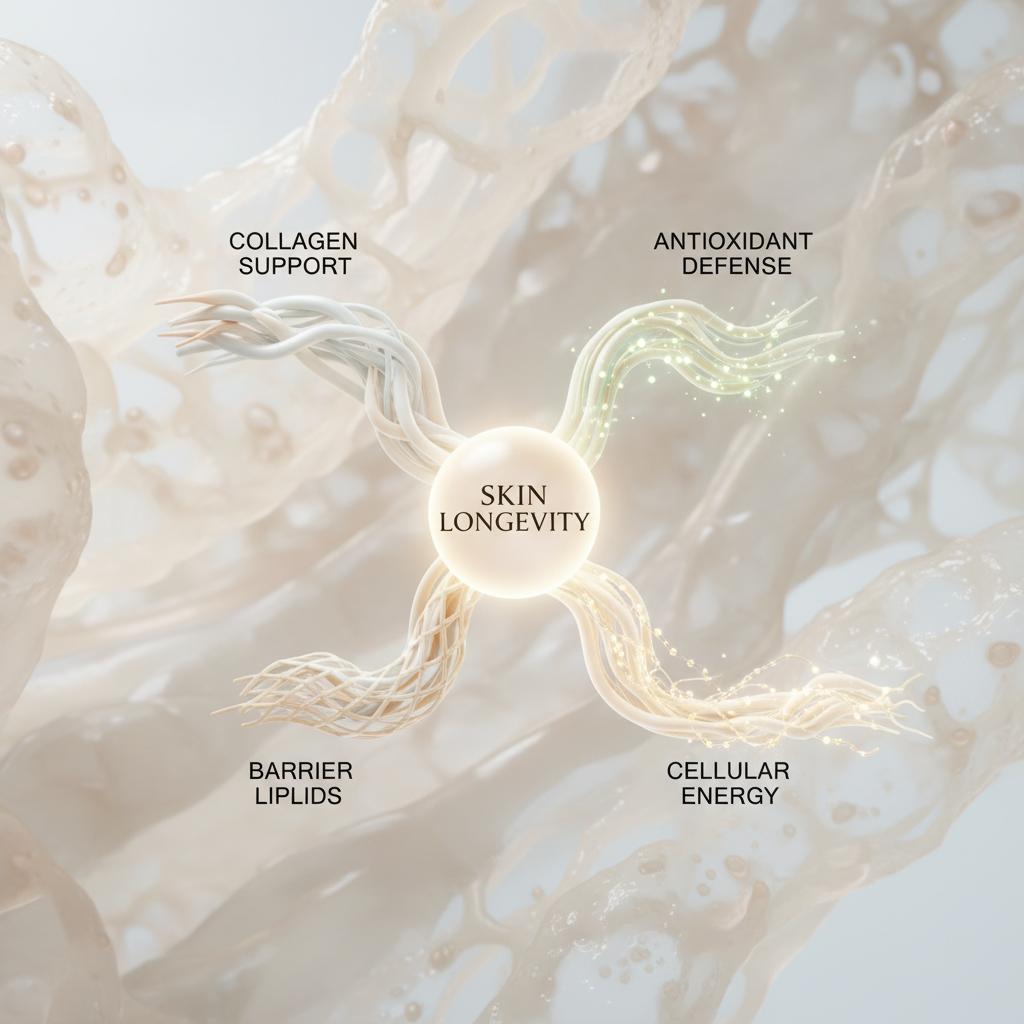
Four systems tend to show up across the science again and again:
- Collagen and elastin turnover — the structural proteins that keep skin firm and springy. Production slows with age, and cell turnover itself stretches from roughly every 28 days in your 20s to 45–60 days by your 50s.
- Barrier lipids — ceramides and other lipids that prevent water loss and keep irritants out. A compromised barrier accelerates almost every other visible sign of aging.
- Oxidative stress management — UV exposure and pollution generate free radicals that damage collagen and DNA long before anything is visible on the surface.
- Cellular energy (NAD+ levels) — NAD+ declines with age, slowing the cellular processes responsible for renewal and repair.
Some researchers group these into a simple mental model: Collagen integrity, Antioxidant balance, Lipid barrier, and Mitochondrial function — four systems that interact constantly, so weakness in one tends to accelerate breakdown in the others.
What Is "Biological Skin Age," and How Is It Different From Your Real Age?
Your chronological age is fixed. Your skin's biological age isn't — it's a function of genetics, sun exposure, sleep, stress, and skincare habits, and it can move in either direction depending on how well those systems are supported. This is the concept that turns skin longevity from a philosophy into something you can actually put a number on.
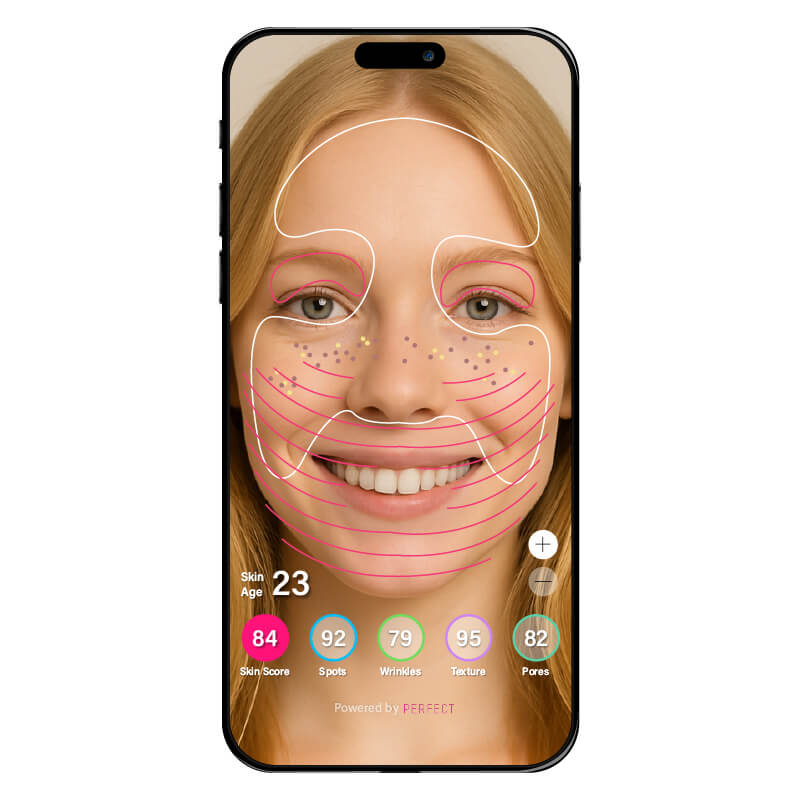
That distinction matters commercially, too: once "biological skin age" is measurable, it becomes something a consumer can track quarter over quarter — which is a very different retail conversation than "try this cream and see."
How Do You Actually Measure Skin Longevity?
This is where the category moves from marketing language to data. A one-time photo or mirror check can't tell you whether a routine is working — you need a consistent, repeatable way to track the same skin metrics over weeks and months.
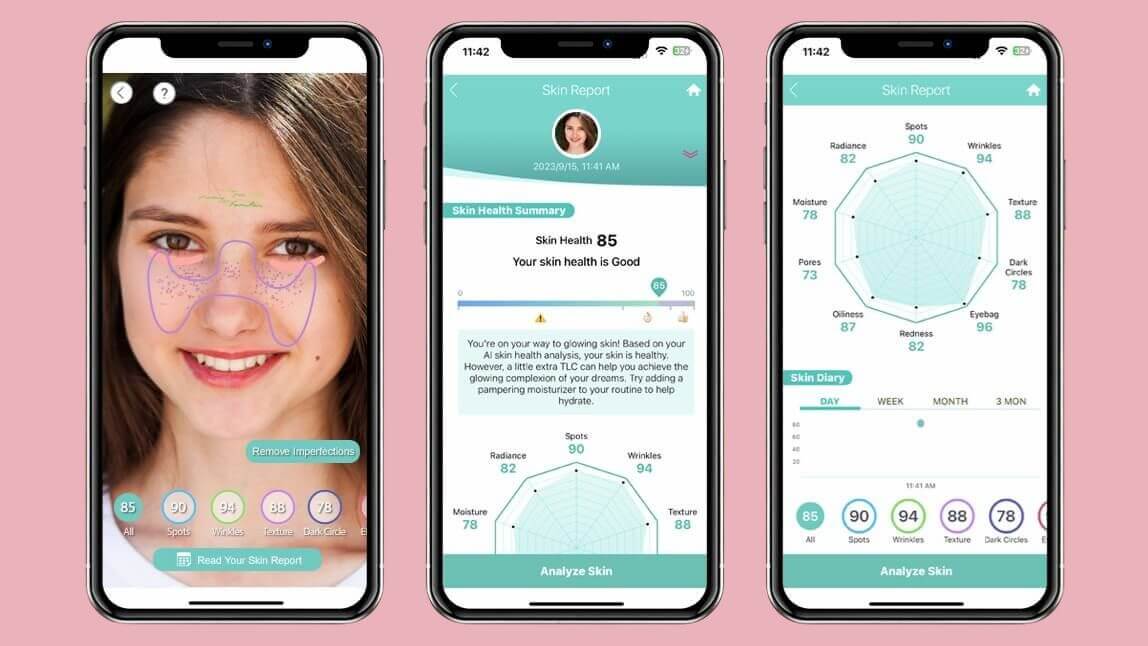
AI skin diagnostics are increasingly filling that gap. Perfect Corp's AI Skin Analysis engine, for example, scans for 15 tracked concerns — including wrinkles, texture, redness, firmness, and moisture — and estimates skin age from a single photo, trained on 70,000+ medical-grade images with a reported 95% test-retest reliability. Run the same scan every few weeks and you get a longevity trendline instead of a single snapshot, which is exactly the kind of evidence-based tracking the science calls for.
For brands and clinics, that repeatability is the differentiator: a consumer who can see their own skin-age score trending down over three months is far more likely to stick with (and repurchase) a routine than one relying on visual memory alone.
Why Is Skin Longevity One of the Biggest Trends in Beauty Right Now?
Three forces are converging at once:
- Consumer demand has shifted toward prevention. Buyers increasingly want to know what a product does for skin health, not just how it looks by Friday.
- Biomarker science has caught up. Tools that once lived in research labs — measuring cellular aging markers, tracking treatment efficacy over time — are being adapted for consumer and clinical use.
- AI has made tracking scalable. Real-time, photo-based tracking of health and skin parameters gives everyday consumers a way to monitor progress that used to require a dermatology visit.
Perfect Corp's own research echoes this shift: its Modern Aesthetics Consumer trend report found that longevity, natural-looking results, and AI visualization tools are now top priorities for consumers considering aesthetic treatments — not just quick fixes.
What Ingredients and Habits Actually Support Skin Longevity?
| Category | What It Does | Examples |
| Daily protection | Blocks the single largest driver of visible aging | Mineral or broad-spectrum SPF, worn daily |
| Cell turnover support | Encourages renewal and collagen production | Retinoids, retinal |
| Structural support | Signals skin to rebuild and repair | Peptides |
| Environmental defense | Neutralizes free-radical damage | Vitamin C, other antioxidants |
| Barrier and hydration | Reduces water loss, keeps skin resilient | Hyaluronic acid, ceramides |
None of this requires a ten-step routine. The consistent theme across dermatologist commentary is simple: fewer, well-chosen actives used consistently beat an elaborate routine abandoned after three weeks.
How Are Beauty Brands Turning Skin Longevity Into a Business Opportunity?
For brands, skin longevity isn't just a content trend — it's a retail mechanism. Once a customer can see a measurable skin-age or concern score, brands have a natural, recurring reason to bring them back: rescan, show progress, recommend the next step. That loop is much stickier than a one-time product pitch.
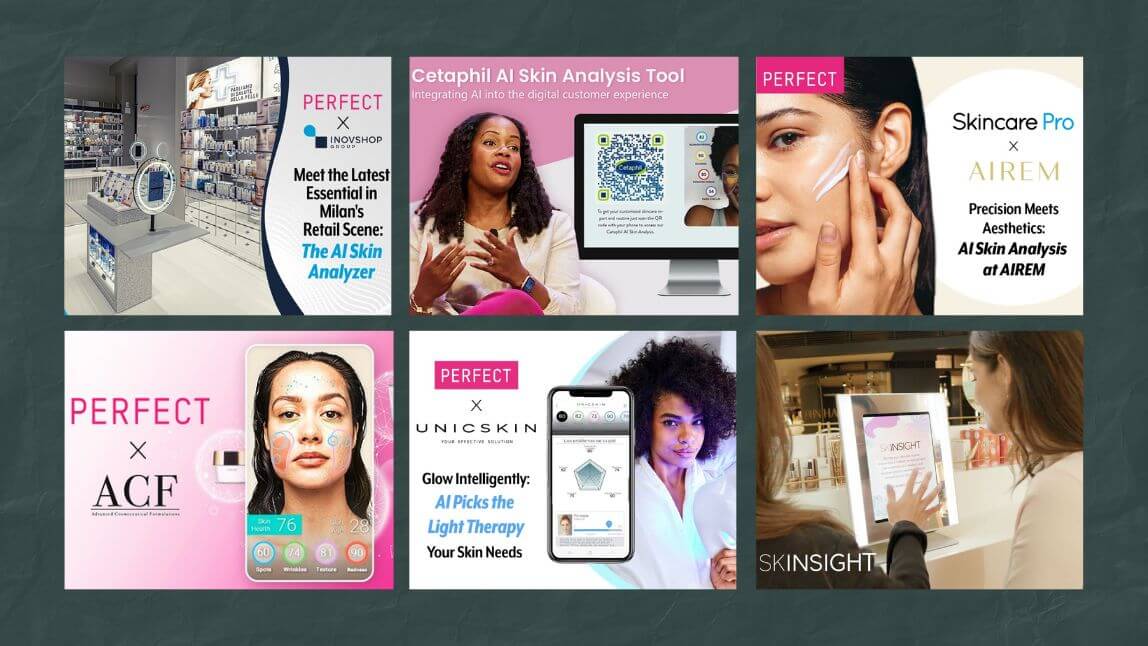
This is why AI skin diagnostics are showing up everywhere from counter consultations to app-based routines and clinic intake forms — brands that once relied on subjective before/after photos can now offer a standardized, repeatable score that works across every touchpoint. Perfect Corp reports engagement lifts of up to 14x in sales when shoppers interact with an AI skin analysis tool, and longer on-page dwell time when scoring is built into the shopping experience — evidence that longevity tracking doesn't just build trust, it converts.
Businesses exploring this space can try Perfect Corp's free AI skin analysis demo to see how a 15-concern, dermatologist-verified scan fits into a consultation or e-commerce flow.
Frequently Asked Questions
Is skin longevity just a rebrand of anti-aging?
Not entirely. The ingredients often overlap, but skin longevity reframes the goal from correcting visible signs of aging to proactively supporting the biological systems — collagen, barrier, cellular energy — that keep skin functioning well over time.
At what age should you start focusing on skin longevity?
Earlier than most people expect. Collagen production and cell turnover begin slowing gradually in your late 20s and 30s, so preventive habits like daily SPF and antioxidant use pay off more the earlier they're adopted — though it's never too late to start.
Can skincare products really extend skin longevity, or is it mostly genetics?
Both play a role. Genetics set a baseline, but environmental factors — UV exposure, pollution, sleep, and product choices — are largely within your control and are considered major drivers of how quickly skin visibly ages.
What does "skin healthspan" mean?
It's the period of time your skin can function at its best — staying hydrated, resilient, and able to repair itself — as opposed to lifespan, which just counts years. Skin longevity strategies aim to extend healthspan, not just delay visible aging.
How is skin longevity actually measured or tracked?
Increasingly through AI skin diagnostics that score concerns like wrinkles, firmness, texture, and estimated skin age from a photo, then let you rescan over time to see whether a routine or treatment is working — rather than relying on memory or a mirror.




 English


