 Author:


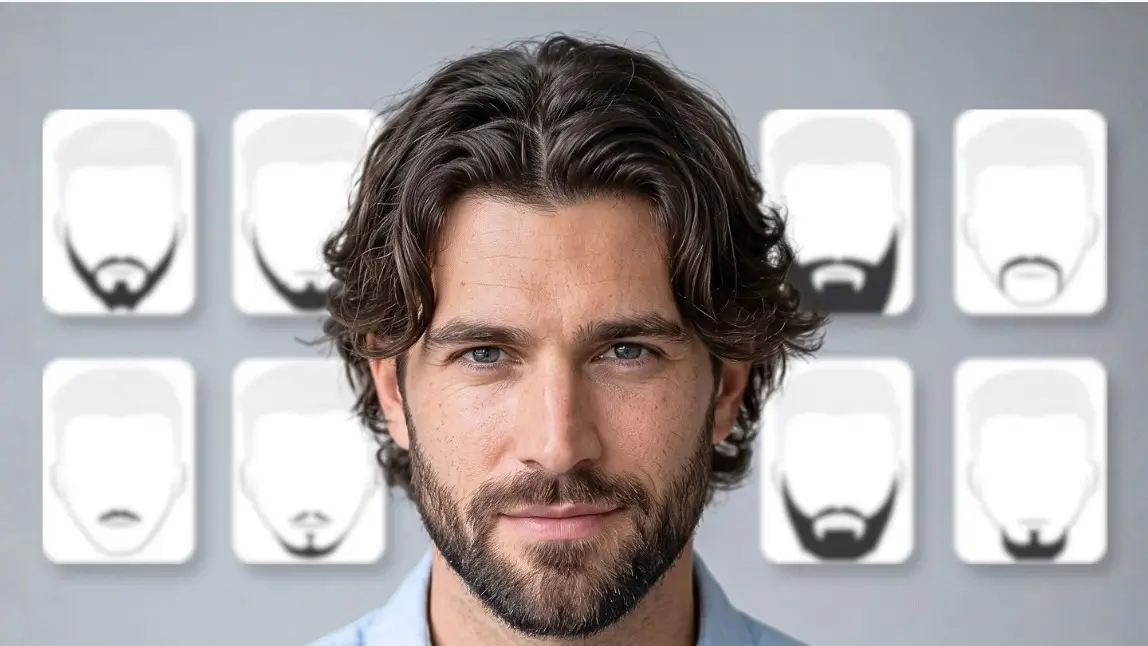
Picking a shape for your beard is not really a hair decision. It is a geometry decision. The same three inches of facial hair can make a round face look rounder or give a soft jaw the kind of edge that photographs well, and the only variable that changed was where the lines sat. That is why the guys who look effortlessly groomed are usually not the guys with the best genetics. They are the guys who figured out their proportions and stopped guessing.
This guide walks through how to choose a beard shape based on your actual face, where every line belongs, and how AI face analysis now lets you preview a shape before a single hair hits the sink. It also covers how grooming brands, barbershop chains, and app developers use the same technology to turn "what would this look like on me" into a sale.
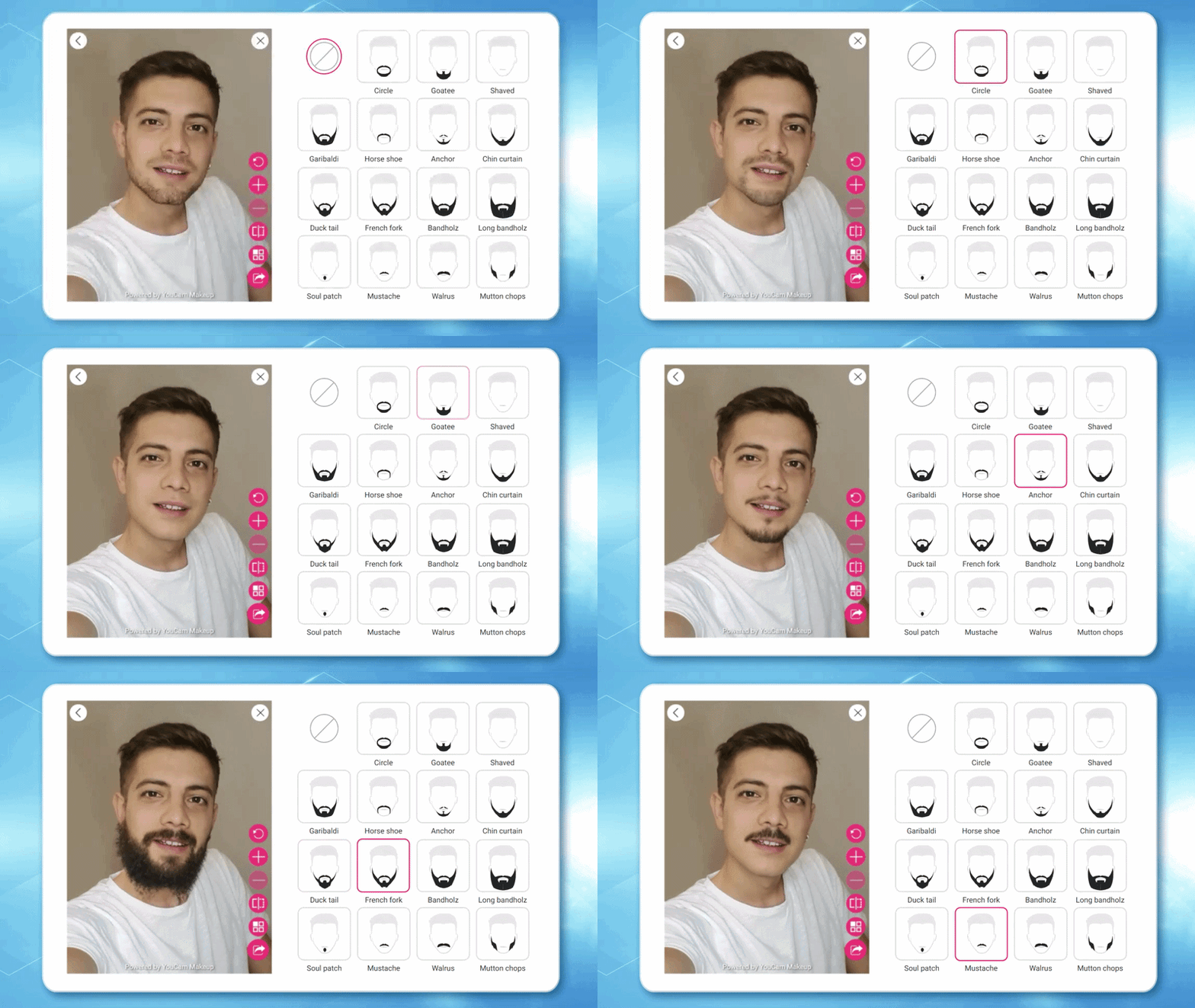
Try the AI Beard Virtual Try-On now and see every style and shade on your own face.
Table of Contents
What Does "Shape for Beard" Actually Mean?
A beard shape is the outline created by four decisions: how high the cheek line sits, how low the neckline sits, how much volume stays at the chin, and how the mustache connects. Change any one of those four and you change the perceived shape of the whole face. Length and style names come second.
That definition matters because most people shop for a beard the way they shop for a haircut, by name. They walk in asking for a Van Dyke or a ducktail without knowing whether the underlying geometry works on them. Style names describe a result. Shape describes the levers that produce it.
Think of the four levers this way:
| Lever | What it controls | Move it up or in when | Move it down or out when |
|---|---|---|---|
| Cheek line | How wide the upper face reads | You want a cleaner, sharper, more corporate look | You want fullness and a wider mid-face |
| Neckline | Whether the jaw looks defined or blurred | Never higher than the jaw itself | You want the illusion of a longer face |
| Chin volume | Apparent face length | Your face is already long | Your face is round or wide |
| Mustache connection | How intentional the beard reads | Growth allows a full connection | Patchy connection zones, go deliberately disconnected |

How Do You Find the Right Shape for Your Beard?
Three steps, in this order. Skipping step one is why so many beards look fine in the mirror and wrong in photos.
Step 1: Identify Your Face Shape First
Beard shape is a correction tool. You cannot correct proportions you have not measured. The quick manual version: pull your hair back, look straight into a mirror, and compare four measurements. Forehead width, cheekbone width, jaw width, and total face length from hairline to chin.
- Oval: length is noticeably greater than cheekbone width, with a gently curved jaw.
- Round: length and width are close, and the jaw is soft with no clear corners.
- Square: forehead, cheekbones, and jaw are similar in width, with visible jaw corners.
- Oblong or rectangle: the same widths as square, but the face is clearly longer than it is wide.
- Heart: wide forehead, narrow chin.
- Diamond: cheekbones are the widest point, forehead and jaw both narrower.
- Triangle: jaw is the widest point, forehead the narrowest.
Self-assessment is where accuracy quietly breaks down. People consistently read their own jaw as narrower than it is, and lighting plus camera angle skew perception further. AI facial analysis removes the guesswork by measuring proportions from a single photo instead of a judgment call. If you want the measured version rather than the mirror version, run the AI face shape detector first, then come back to this guide.
Step 2: Match Volume to Where Your Face Needs It
Once you know the shape, the rule collapses into one sentence: add beard volume where your face is narrow, and take it away where your face is wide. A round face needs length at the chin and tight sides. A long face needs the opposite, fullness on the sides and almost nothing added at the bottom.
This is the same logic stylists use for hair, applied downward. Hair adds height and frames the top third of the face. Beard adds mass and reshapes the bottom third. Read them together and you can compensate for a lot. Our breakdown of men's face shapes covers the hair side of that equation in more detail.

Step 3: Simulate Before You Cut
Beard hair grows roughly half an inch per month. A cheek line taken a quarter inch too low is a three to four week wait to undo. That asymmetry between how fast you can cut and how slowly you can recover is exactly what virtual try-on solves.
Modern AI grooming simulators use facial analysis to map the beard region and render a chosen shape onto a live camera feed or an uploaded photo, adjusting for head angle and skin tone. You can compare a short boxed beard against a goatee against a full beard in under a minute, on your own face, in your own lighting. Then you cut once.
-
Try the AI Face Analyzer to see how proportion measurement and shape simulation work together before you commit to a trim. See the live demos.
Which Beard Shape Suits Each Face Shape?
Here is the fast matrix. Full reasoning for each shape follows underneath.
| Face shape | Goal | Best beard shapes | Avoid |
|---|---|---|---|
| Oval | Maintain balance | Short boxed beard, stubble, full beard, Van Dyke | Extreme length at the chin |
| Round | Add length, reduce width | Goatee, extended goatee, ducktail, angular boxed beard | Full round cheeks, chin straps, mutton chops |
| Square | Soften corners slightly | Short full beard, rounded beard, circle beard | Hard boxed lines that double the jaw angle |
| Oblong / rectangle | Add width, remove length | Full beard with fuller sides, mutton chops, wide chin strap | Goatees, ducktails, anything pointed |
| Heart | Add weight at the chin | Full beard, ducktail, chin curtain | Thin pencil lines, bare chin with heavy mustache |
| Diamond | Widen chin and forehead read | Full beard, chin curtain, wider bottom shapes | Narrow goatees that sharpen the point further |
| Triangle | Reduce jaw width | Short stubble, light beard, taller cheek line | Mutton chops, heavy full beards, chin straps |

Oval Face: What Beard Shape Works?
Oval is the shape everything is measured against, which means almost any beard shape is technically viable. The job is not correction, it is not breaking a balance you already have. Short boxed beards, well kept stubble, and moderate full beards all land. The one real risk is over-lengthening the chin and turning an oval into an oblong. Keep the bottom in check and you are fine. Our deeper dive on beard shapes for oval faces covers the seven strongest options.
Round Face: What Beard Shape Works?
A round face has soft transitions and roughly equal height and width. The fix is vertical. Grow length at the chin, keep the cheeks and sides trimmed short, and finish the bottom with a slight point rather than a curve. An extended goatee is the cleanest single answer. A ducktail is the higher effort version of the same idea. What kills a round face is anything that adds horizontal mass, which is why chin straps and mutton chops are on the avoid list.
Square Face: What Beard Shape Works?
A strong square jaw is already doing the work most beards are hired for. The mistake is amplifying it. A hard boxed beard on a hard boxed jaw reads heavy and blocky. Instead, round the corners slightly. A short full beard with a softened bottom edge, or a circle beard, keeps the jaw impressive without turning the face into a rectangle. Keep the cheek line natural rather than razored high.

Oblong or Rectangle Face: What Beard Shape Works?
Long faces need width, not length. That means fuller sides, a lower cheek line than you would use elsewhere, and a deliberately flat bottom edge. Mutton chops work here in a way they work almost nowhere else. Every pointed shape is a mistake, because a point at the chin adds apparent length to a face that already has plenty. Pair it with hair that has some side volume and the proportions even out fast. Our guide to rectangle face hairstyles for men handles the top half.
Heart Face: What Beard Shape Works?
Wide forehead, narrow chin. The beard's job is to build mass at the bottom so the top no longer dominates. Full beards win. Ducktails and chin curtains win. Anything thin or sparse at the chin loses, because it leaves the imbalance intact while adding visual noise. If growth at the chin is thin, go shorter and denser rather than longer and patchy.
Diamond Face: What Beard Shape Works?
Cheekbones are the widest point, and both forehead and chin taper. A beard that widens the lower face closes the gap. Full beards and chin curtains do this well. Narrow goatees do the opposite, sharpening the taper the face already has. Keep the cheek line moderate so the beard does not visually pull the widest part of the face wider still.
Triangle Face: What Beard Shape Works?
Triangle is the inverse problem: the jaw is already the widest point. Adding beard mass makes a wide jaw wider. This is the one face shape where less beard is the answer. Short stubble, a light beard kept tight to the skin, and a slightly higher cheek line all pull the lower face in. Heavy full beards and mutton chops are the two worst choices available.
How Do You Shape a Beard at Home, Step by Step?
Wash, dry, and comb the beard down before you touch a trimmer. Wet hair sits shorter than dry hair, so shaping wet is how people accidentally take an inch off. Then work in this order: length first, cheek line second, neckline third, jawline corners fourth, mustache last. Bulk before borders, always.

Where Should the Cheek Line Sit?
Find the point where your sideburn meets the top of your ear, then find the corner of your mustache. Imagine a straight line between them. Everything above that line can come off. That is the safe default, and it flatters nearly everyone because it follows the natural growth boundary instead of fighting it.
From there you have two adjustments. Lower and straighter reads sharper and more formal. Higher and more natural reads fuller and more relaxed. Start high, take a little at a time, and remember that this line is symmetrical only if you check it from straight on, not at an angle.
Where Should a Beard Neckline Sit?
Place two fingers above your Adam's apple. That is your lowest point. Now curve upward from there toward the back of each ear, following the natural round of your jaw rather than cutting a straight horizontal line across.
The single most common beard error is setting this line too high, at the jawbone instead of below it. A neckline on the jawline erases the jaw. It reads as a floating beard and it flattens the profile in every photograph. Too low is a fixable, forgivable mistake. Too high is a three week penalty.
How Do You Shape the Jawline and Corners?
The corners where the cheek line meets the neckline are what give a beard its shape signature. Square them off for a boxed, structured look. Round them for something softer. Taper them (shorter at the top, gradually longer toward the chin) for the most universally flattering result, because a taper draws the eye downward and lengthens the face.
Use a guard two settings shorter on the sides than on the chin. That single move creates a taper without any real skill required.
How Do You Shape the Mustache and Lip Line?
Comb the mustache downward and trim along the top of the upper lip so nothing hangs into your mouth. Keep the width slightly narrower than the corners of the mouth for a tidy look, or let it extend past for a fuller, more traditional shape. Clean the small strip directly under the lower lip only if you are going for a defined circle beard, because clearing it too aggressively separates the mustache from the beard and makes both look smaller.
What Beard Shaping Mistakes Cost You the Most?
Ranked by how long they take to fix.
| Mistake | Why it hurts | Recovery time |
|---|---|---|
| Neckline cut at the jawline | Erases jaw definition, flattens the profile | 3 to 4 weeks |
| Cheek line taken too low | Shrinks the beard and narrows the face | 2 to 3 weeks |
| Shaping while wet | Removes more length than intended | 2 to 6 weeks depending on style |
| Chasing symmetry by alternating sides | Each correction removes more, ending shorter than planned | 2 to 4 weeks |
| Trimming before the beard has filled in | Judges a shape on incomplete growth | 4 to 8 weeks |
| Picking a style by name, not proportion | Fights your face shape instead of correcting it | Indefinite until diagnosed |
Notice the pattern. Every one of these is a decision made before the cut, not a technique failure during it. That is the case for measuring and simulating first.

Does Beard Density Change the Right Shape?
Yes, and this is the variable most face shape guides ignore entirely. Face shape tells you what the beard should do. Density and growth pattern tell you what the beard can actually do.
Four growth patterns and what each one means for shape selection:
- Uniform density: the full menu is open. Face shape alone can drive the decision.
- Patchy cheeks, strong chin: lean into chin-forward shapes. Goatees, circle beards, and Van Dykes turn a limitation into a deliberate style.
- Strong cheeks, weak chin: keep the whole beard short and even. Length exposes the gap at the bottom.
- Sparse but even: stubble length hides sparseness better than any other length, because at 3 to 5 millimeters the eye reads coverage rather than individual hairs.
There is a practical hierarchy here. When density and face shape disagree, density wins, because you cannot execute a shape your growth will not support. A round-faced man with no chin growth should not force a ducktail. He should run a short angular boxed beard and get the vertical effect from a higher cheek line instead.
This is also where automated analysis pulls ahead of a mirror. Facial analysis models can assess coverage and density across the beard region and flag a shape as unrealistic before you spend six weeks discovering it yourself. Density-aware recommendations are what separate a genuinely useful grooming tool from a style quiz.

How Do Brands and Barbershops Use AI Beard Shape Analysis?
The consumer question is "what shape suits me." The commercial question is "how many of these people buy something." Both are answered by the same technology, and this is where beard shape stops being a grooming topic and becomes a conversion topic.
Grooming and Personal Care Retail
Trimmer and beard care brands have a hard problem: the product is a means, and the customer is shopping for an outcome they cannot picture. A face analysis tool that returns a shape recommendation reframes the entire funnel. Instead of browsing guard lengths, the customer receives a specific shape, a specific product set, and a rendering of the result on their own face. That is a bundled recommendation with a visual, which converts differently from a product grid.
Perfect Corp. works with 800+ brand partners across beauty and personal care, and the pattern repeats across categories. Virtual try-on consistently lifts engagement and add-to-cart rates because it removes the imagination gap between a product and a result.
Barbershops and Grooming Chains
Every barber has had the conversation where a client asks for something that will not work on their face, or cannot describe what they want at all. A tablet-based simulator resolves both in about ninety seconds. The client sees three options on their own face, picks one, and the barber cuts with an agreed reference instead of a verbal description. Fewer redo appointments, better before-and-after content for social, higher upsell rate on beard oil and balm because the recommendation arrives attached to a visual.
Grooming Apps and Developers
If you are building the app rather than buying the tool, the same capability is available as an API. Facial analysis returns face shape classification and proportion data. Virtual try-on renders beard and hair styles onto a live camera feed or an uploaded image. You get the measurement layer and the rendering layer without training models or building a facial analysis pipeline from scratch.
Try the API in our AI Playground and test face analysis on your own images before you write a line of integration code: AI API Playground.
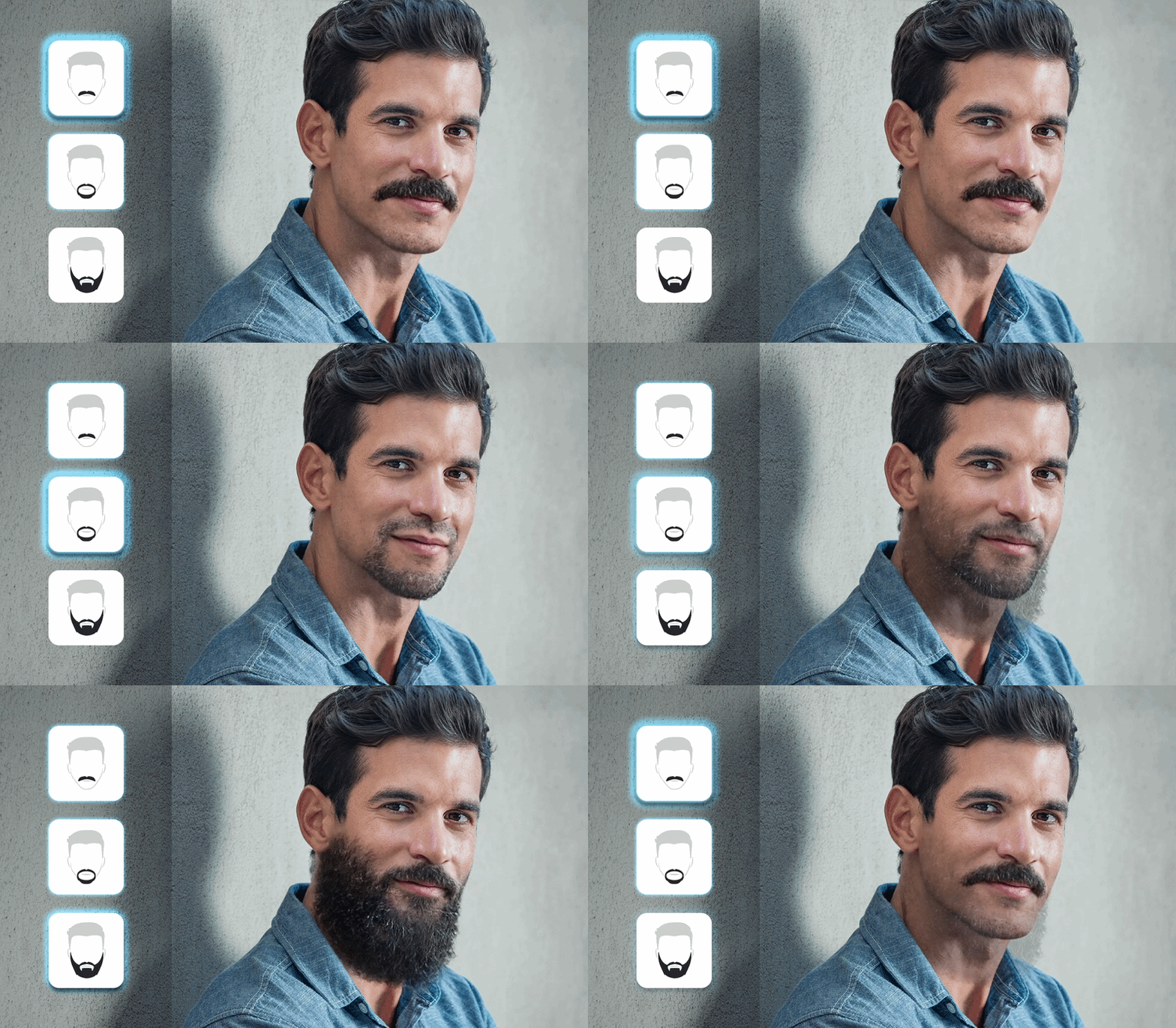
Try the AI Beard Virtual Try-On now and see every style and shade on your own face.
How Often Should You Reshape Your Beard?
Beard hair grows about half an inch per month, but not every part of the shape drifts at the same rate. Borders go first, bulk goes last. A simple schedule keeps a shape intact with far less work than a full monthly reset.
| Task | Frequency | Why |
|---|---|---|
| Neckline cleanup | Every 3 to 5 days | Neck growth is fast and the most visible when neglected |
| Cheek line cleanup | Weekly | Stray growth above the line blurs the shape quickly |
| Mustache and lip line | Weekly | Functional as much as aesthetic |
| Overall length trim | Every 2 to 4 weeks | Keeps proportions from drifting as length builds |
| Full reshape or restyle | Every 2 to 3 months | Reassess whether the shape still suits current length and density |

Short styles need more frequent attention than long ones, which is the opposite of what most people assume. At stubble length, three days of growth is a visible percentage change. At four inches, it is not.
Contact Perfect Corp. for a demo if you want to see how face analysis and virtual try-on fit into your own retail, salon, or app experience. More technical breakdowns live on the Perfect Corp. business blog.
Frequently Asked Questions
What is the best shape for a beard?
There is no universal best. The best shape is the one that counteracts your face's dominant proportion: length at the chin for round faces, width at the sides for long faces, softened corners for square faces, and mass at the bottom for heart and diamond faces. If you want one shape with the widest success rate across face types, a short full beard with a tapered neckline is the safest bet.
How do I know what beard shape suits me?
Start by measuring your face rather than eyeballing it. Compare forehead, cheekbone, and jaw width against total face length, or run a photo through an AI face shape detector for a measured result. Then apply the add-volume-where-narrow rule, and check your growth pattern to confirm the shape is realistic for your density.
How do I shape my beard at home?
Wash and dry the beard, comb it down, then work in this order: overall length, cheek line, neckline, jawline corners, mustache. Use a guard two settings shorter on the sides than the chin to build a taper. Trim in small passes and check symmetry from straight on, never at an angle.
Where should the beard line be on the cheeks?
Draw an imaginary straight line from the top of your ear where the sideburn begins to the corner of your mustache. Clear everything above it. Lower and straighter looks sharper and more formal. Higher and more natural looks fuller and more relaxed.
Where should a beard neckline be?
Two finger-widths above the Adam's apple at the lowest point, curving upward toward the back of each ear. Never on the jawbone itself, which erases jaw definition and makes the beard look detached from the face.
What face shape is best for a full beard?
Oval, heart, and diamond faces get the most out of a full beard. Oval faces can carry it without any correction needed, while heart and diamond faces gain the chin and jaw width they lack. Triangle faces, where the jaw is already the widest point, benefit least from a heavy full beard.
What beard style looks good on a round face?
Anything that adds vertical length while keeping the sides tight. Extended goatees, ducktails, and angular boxed beards all work. Avoid chin straps, mutton chops, and full rounded cheeks, since all three add width to a face that is already as wide as it is long.
Should a beard follow the jawline?
The cheek line and taper should complement the jawline, but the neckline should sit clearly below it. A neckline that follows the jaw exactly is the most common shaping mistake, because it removes the shadow and contrast that make the jaw visible in the first place.
How often should you shape your beard?
Clean the neckline every 3 to 5 days, tidy the cheek line and mustache weekly, trim overall length every 2 to 4 weeks, and reassess the whole shape every 2 to 3 months. Shorter styles need more frequent maintenance than longer ones.
Can the wrong beard shape make your face look worse?
Yes, and usually by exaggerating whatever proportion is already dominant. A wide beard on a round face, a pointed beard on a long face, or a hard boxed beard on a square jaw all push the face further from balance. Because these are geometry errors rather than grooming errors, they are visible in photos even when the trim work itself is clean.
How long should I grow my beard before shaping it?
Give it 4 to 6 weeks before the first real shaping. Growth rates vary a lot across the beard region, so early trimming judges a shape on incomplete coverage. Clean the neck during this period if you like, but leave the cheek line and length alone until you can see the full pattern.
Do beard shaping tools and templates actually work?
Physical templates give you a consistent line, which helps with symmetry, but they impose a generic curve rather than one matched to your face. They are useful for repeating a shape you have already chosen well. They are not useful for choosing it. That decision is better made with proportion measurement and simulation.
Should I change my beard shape as I age?
Often, yes. Density thins and the growth pattern shifts, and a shape that relied on heavy coverage at 25 can read patchy at 45. Face proportions also change subtly as the jawline softens. Reassessing shape every year or two is reasonable, and it is usually a move toward shorter and more structured rather than longer.
Does face shape matter more than beard density?
Density wins when the two conflict. Face shape tells you what the beard ought to do, but density decides what it can do. A shape your growth cannot support will look unfinished no matter how well it suits your proportions on paper, so pick within the range your coverage allows and use line placement to get the rest of the effect.
Can AI really recommend a beard shape accurately?
AI facial analysis measures proportions from a photo far more consistently than self-assessment does, and virtual try-on shows the result on your own face rather than a model's. It will not replace a good barber's judgment on texture and growth direction, but it removes the two biggest sources of error: misidentifying your own face shape, and being unable to picture the outcome before you commit.