


 Author: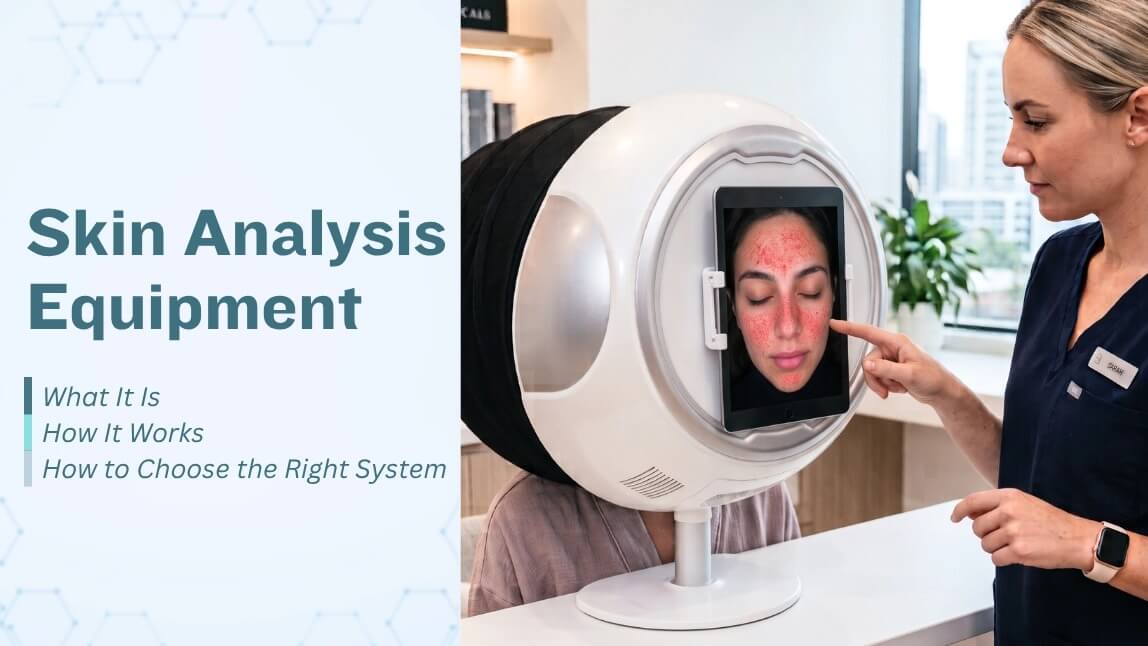
Walk into any skincare consultation today and you will probably find a piece of skin analysis equipment. This is how modern skincare works now. Brands, spas, and clinics use skin analysis equipment to measure things the naked eye cannot reliably catch, like sub-surface pigmentation, pore density, and early signs of moisture loss, then turn those measurements into product recommendations a customer actually trusts.
Skin analysis equipment is any tool, hardware device, or AI-powered software system used to measure and evaluate skin conditions such as wrinkles, pores, pigmentation, redness, and hydration, typically to guide a skincare recommendation or treatment plan. That covers everything from a handheld UV lamp at a facial counter to a multi-camera imaging station in a dermatology clinic to a smartphone-based AI skin diagnostic tool used in an online consultation.
This guide breaks down the types of skin analysis equipment on the market in 2026, how each one actually works, what it costs, and how to pick the right system for your business. We will also cover two things most buying guides skip: data privacy compliance and how to fit the equipment into your existing retail or clinical workflow.

What Counts as Skin Analysis Equipment?
Skin analysis equipment falls into three broad categories, and most businesses end up combining at least two of them.
1. Magnifying and UV Lamps
The oldest tool in the kit. A magnifying lamp with a UV or Wood's lamp function lets an esthetician see oil buildup, dehydration, and some pigmentation issues under fluorescent light. Affordable, no software involved, and still common in traditional facial rooms. The tradeoff is that results depend entirely on the operator's trained eye, and there is no data trail to show a client before and after progress.
2. Multi-Spectral Imaging Stations
These are the large countertop or wall-mounted systems, think VISIA-style booths, that capture standard, UV, and polarized light images in one session. They produce detailed reports on texture, pores, spots, and sun damage, and many clinics use them for medical-grade documentation. They are accurate, but they are also bulky, expensive, and usually fixed to one location.

3. AI-Powered Software and Camera-Based Systems
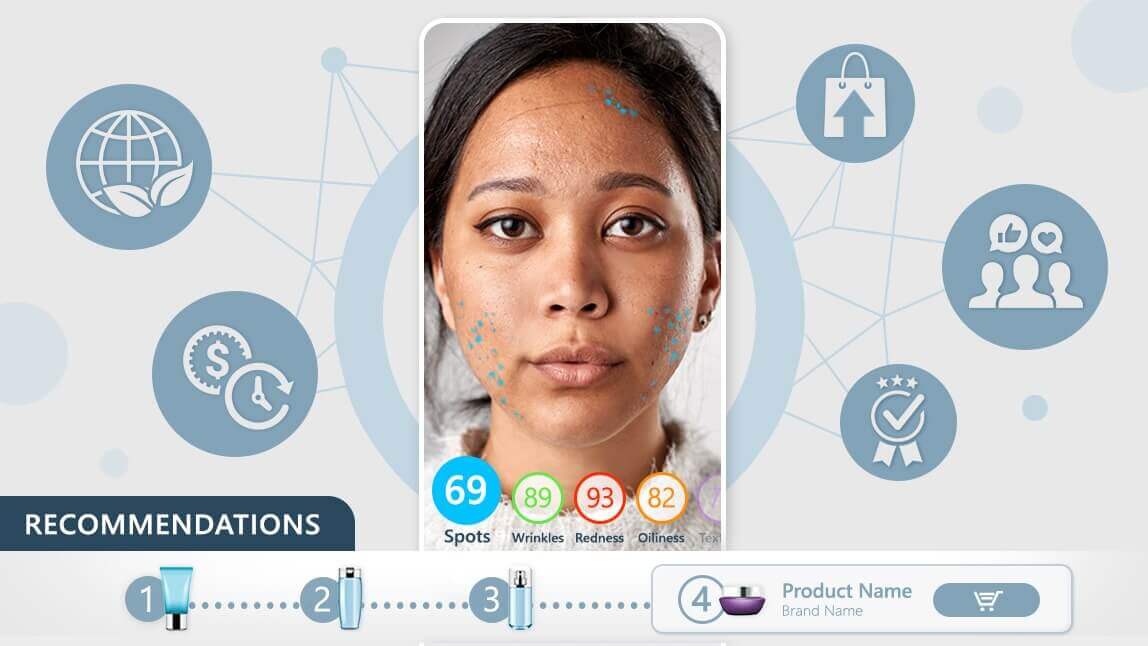
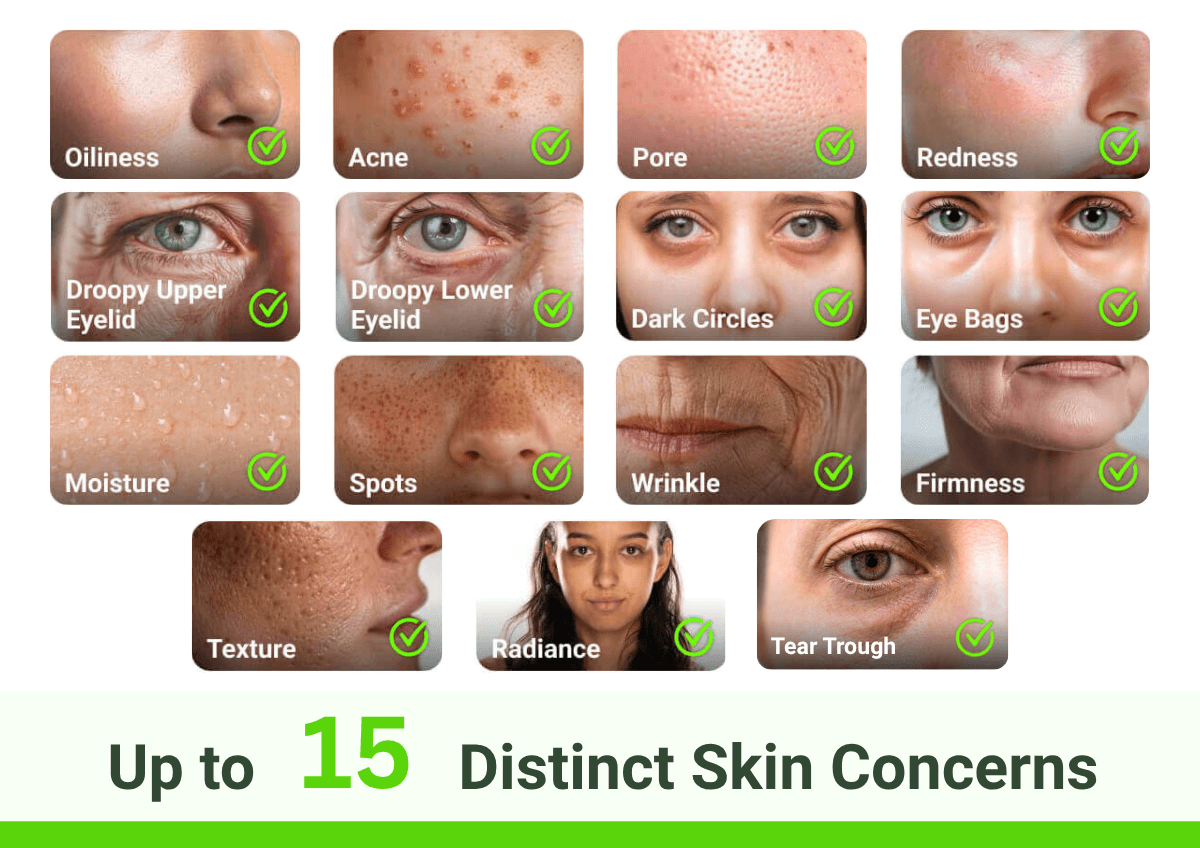
The newest category, and the fastest growing one. Instead of a dedicated optical unit, these systems use a standard camera, sometimes a phone camera, paired with machine learning models trained on large sets of medical-grade images. Perfect Corp.'s AI Skin Diagnostic, for example, is trained on over 70,000 medical-grade images and analyzes 15+ skin concerns including wrinkles, texture, pores, acne, redness, and hydration, using 180-degree full face mapping across three angles. No hardware installation, and it scales from a single retail counter to millions of online sessions.
How Does Skin Analysis Equipment Actually Work?
Regardless of category, most skin analysis equipment relies on some combination of these techniques.
- Standard light imaging, which captures surface texture, redness, and visible pore size.
- UV or polarized light, which reveals sub-surface pigmentation, sun damage, and oil concentration that regular light misses.
- Multispectral or 3D imaging, used in clinical-grade hardware to build a depth map of wrinkles and volume loss.
- Computer vision and machine learning, which is how AI-based tools convert a plain photo into a structured skin score without any specialized optics at all. The model has learned what healthy versus concerning skin patterns look like from a large, labeled training set, then applies that pattern recognition to a new face in real time.
The output, in almost every case, is a report: a numeric score or heat map for each skin concern, usually paired with a product or treatment recommendation.
What Should You Look for When Choosing Skin Analysis Equipment?
Here is the checklist we would hand a spa owner, a dermatology clinic manager, and an e-commerce skincare brand, because honestly, they should all be asking the same questions.
| Criteria | Why It Matters |
|---|---|
| Accuracy and validation | Ask whether the results are validated against physician evaluations, not just internal testing. |
| Hardware vs. software cost | Physical stations run from roughly $2,700 to $18,000 upfront. AI software solutions are typically priced as a subscription or API call, with no hardware to maintain. |
| Portability and footprint | A countertop imaging station stays in one room. A camera-based AI tool travels to pop-ups, online consultations, and every retail counter you have. |
| Integration options | Can it plug into your point-of-sale, CRM, or e-commerce product recommendation engine, or does it live as an island? |
| Data privacy and compliance | Skin scans are biometric data. Confirm HIPAA or GDPR-aligned handling before you collect a single face scan. |
| Client experience | A 30-second scan on a tablet feels different to a customer than a 10-minute session under a hood. |
Hardware or AI Software: Which Skin Analysis Equipment Fits Your Business?
This is the decision most businesses actually get stuck on, so let's make it simple.
Choose hardware imaging stations if you run a dermatology or medical aesthetics clinic that needs documented, in-person, medical-grade imaging for treatment planning, and you have a dedicated room to house the equipment.
Choose AI-powered software if you are a skincare brand, retailer, or spa chain that needs to scale skin analysis across multiple locations, an e-commerce site, or a mobile app, without buying and maintaining physical units at every touchpoint. We go deeper on this exact tradeoff, including five specific advantages of the software route, in our AI skin analysis versus traditional hardware breakdown.
Plenty of larger operations run both: a clinical-grade station in the treatment room, and an AI-powered tool on the website or in-app for pre-consultation and repeat check-ins.
A useful gut check: if you can name the exact room your equipment will live in, hardware is probably fine. If you are trying to picture it working across a website, an app, and multiple physical locations at once, you are really describing a software problem, even if part of you still wants to buy a machine.
How Much Does Skin Analysis Equipment Cost?
| Equipment Type | Typical Price Range | Best For |
|---|---|---|
| Magnifying/UV lamp | Under $500 | Small facial studios, basic visual assessment |
| Multi-spectral imaging station | Approximately $2,700 to $18,000 | Dermatology clinics, med spas needing documented imaging |
| AI-powered software or API | Subscription or per-scan pricing, no hardware purchase | Retail brands, e-commerce, multi-location spas, apps |
Beyond sticker price, factor in maintenance, calibration, staff training time, and how many locations need coverage. A single imaging station might look cheaper on paper than a software subscription until you multiply it across 15 retail counters.

Is Skin Analysis Equipment Data Safe? Privacy and Compliance Considerations
This part gets skipped in most buying guides, and it shouldn't, because a face scan is biometric data in most jurisdictions.
Before you deploy any skin analysis equipment, confirm:
- Whether scan images and results are stored, and for how long.
- Whether the vendor is HIPAA compliant (relevant for clinical settings in the US) and GDPR aligned (relevant for any European customers).
- Whether the vendor has third-party security certification. Perfect Corp.'s AI Skin Diagnostic, for instance, is Vanta-certified for HIPAA and GDPR compliance.
- Whether customers give explicit consent before a scan, and whether they can request deletion of their data afterward.
Skipping this step does not just create legal exposure. It also erodes the exact trust you are trying to build with a skin analysis experience in the first place.

How Do You Integrate Skin Analysis Equipment Into Your Existing Workflow?
A skin scan that produces a nice report and then goes nowhere is a missed opportunity. The equipment you choose should connect to the rest of your stack, not sit next to it.
- Retail and e-commerce: Feed scan results directly into your product recommendation engine so a customer moves from scan to cart without a manual handoff.
- CRM and POS: Store historical scores against a customer profile so staff can show progress across visits, which is a strong driver of repeat bookings.
- AR and virtual try-on: Pair the skin diagnosis with a virtual try-on experience so customers can preview how a treatment or product might change their results over time.
- API-first deployment: If you already have an app or website, an API integration like Perfect Corp.'s Skin Analysis API can be embedded directly, with no separate hardware purchase required.
This is where AI-powered skin analysis equipment tends to pull ahead of standalone hardware stations. It was built to plug into a stack, not to be the whole stack.
Real-World Use Cases for Skin Analysis Equipment
| Business Type | How Skin Analysis Equipment Gets Used |
|---|---|
| Dermatology and medical aesthetics clinics | Documented before-and-after imaging to support treatment plans and track progress across visits. |
| Spas and beauty salons | A quick in-person scan that opens a facial consultation and justifies an upsell to a targeted treatment. |
| Skincare brands and retail counters | An interactive kiosk or tablet scan that recommends specific SKUs on the spot. |
| E-commerce and DTC skincare | An online quiz plus camera scan that personalizes product bundles before checkout. |
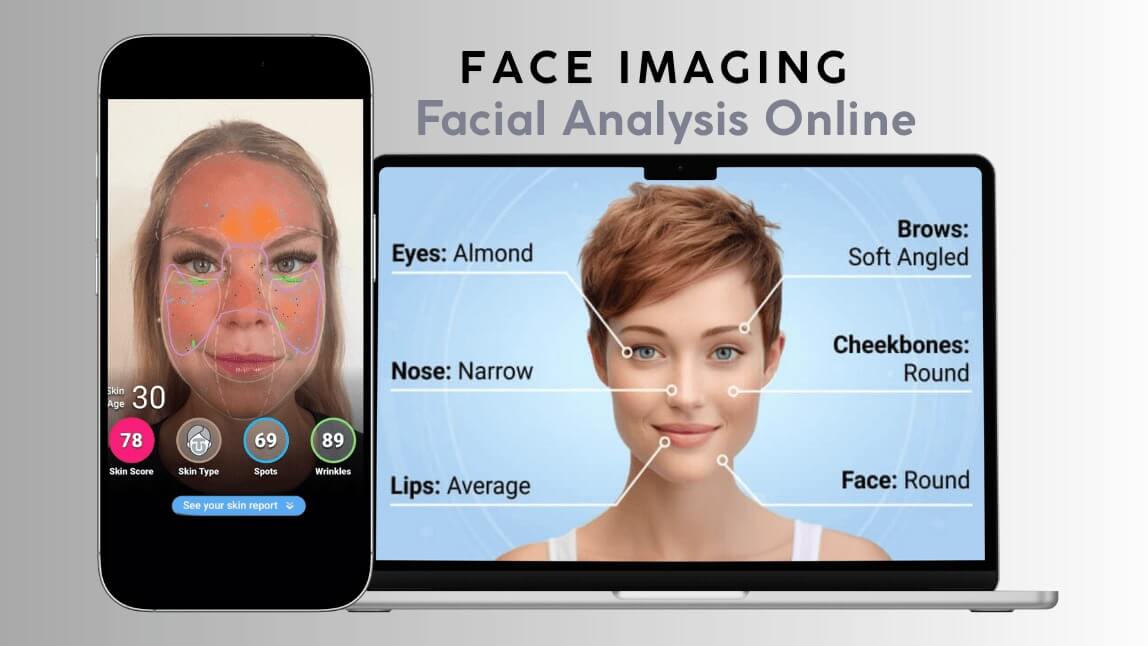
Approximately 800 brands, including Cetaphil and Decorté, already run some version of AI-powered skin analysis across one or more of these scenarios, which suggests the technology has moved well past the experimental stage.
Picture a mid-size spa chain onboarding a new client. Ten years ago, that consultation started with a paper intake form and a guess. Today, it starts with a 30-second scan on a tablet, a report the client can screenshot and keep, and a treatment recommendation the esthetician can defend with actual numbers instead of a hunch. That shift, from subjective opinion to shared, visible data, is the real reason skin analysis equipment adoption has accelerated so quickly across both retail and clinical settings.

Where Is Skin Analysis Equipment Heading in 2026?
A few trends are worth watching if you are buying equipment now and want it to still make sense in two or three years.
- Hardware and AI are merging, not competing. Newer imaging stations increasingly ship with AI-based scoring layered on top of the optics, rather than treating hardware and software as separate purchase decisions.
- Longitudinal tracking matters more than a single scan. Businesses are shifting focus from "what does my skin look like today" to tracking change across weeks and months, which rewards tools that store and compare historical results, not just single-session snapshots.
- Software flexibility is becoming part of the product itself. API access, white-labeling, and the ability to plug a skin diagnostic into an existing app or e-commerce flow are turning into baseline expectations rather than premium add-ons.
None of this means hardware imaging stations are going away. Clinics doing documented medical work will keep needing them. It does mean that any equipment you buy today should have a credible answer for how it connects to software, data storage, and personalization down the line.
Frequently Asked Questions
What is skin analysis equipment used for?
It is used to measure skin conditions such as wrinkles, pores, pigmentation, redness, acne, and hydration levels, then turn those measurements into a skincare or treatment recommendation.
What are the different types of skin analysis equipment?
The three main categories are magnifying or UV lamps, multi-spectral imaging stations, and AI-powered software or camera-based systems. Each suits a different budget, setting, and use case.
How much does skin analysis equipment cost?
Basic lamps run under $500. Multi-spectral imaging stations typically range from about $2,700 to $18,000. AI-powered software is usually priced as a subscription or per-scan fee rather than a hardware purchase.
How accurate is skin analysis equipment?
Accuracy varies by system. Some AI-powered solutions report up to 95% clinical accuracy and over 80% correlation with physician evaluations when trained on large sets of medical-grade images. Always ask a vendor for their specific validation data rather than assuming accuracy across the category.
Can I do a professional-grade skin analysis at home?
Many AI-powered tools now work through a smartphone camera, which brings professional-style analysis closer to home use. Results are generally strongest when the tool has been trained and validated on medical-grade image data rather than casual selfies.
Is AI skin analysis as accurate as hardware-based machine analysis?
Increasingly, yes, for most consumer and retail use cases. Leading AI models are trained on tens of thousands of medical-grade images and validated against physician evaluations. Clinical-grade hardware still has an edge for documented medical imaging in a dermatology setting, but the accuracy gap for everyday skincare recommendations has narrowed considerably.
How often should a skin analysis be repeated?
Most spas and clinics recommend rescanning every 4 to 6 weeks to track meaningful change, since that roughly matches typical skin cell turnover and product adjustment cycles.
Is skin analysis equipment data safe and private?
It should be, but this depends entirely on the vendor. Look for HIPAA compliance, GDPR alignment, clear data retention policies, and explicit customer consent before any scan is taken.
Do you need certification or training to use skin analysis equipment?
Basic AI-powered tools generally need little more than a short onboarding session for staff. Clinical-grade imaging hardware used for medical documentation typically requires proper training on positioning, lighting setup, and interpreting the report, since inconsistent technique can skew results.
What should I ask a vendor before buying skin analysis equipment?
Ask how the accuracy claims were validated, what happens to scan data after collection, whether the system integrates with your existing POS or e-commerce platform, and what ongoing costs (subscription, maintenance, or per-scan fees) to expect beyond the initial price.
Choosing the Right Skin Analysis Equipment: Final Thoughts
There is no single best piece of skin analysis equipment. There is only the best fit for your setting, your budget, and how many places you need it to work at once. A single-room clinic doing documented medical imaging has very different needs than a ten-location retail chain trying to personalize every counter visit.
What matters most is picking equipment that gives you accurate, explainable results, keeps customer data safe, and actually connects to how your team already works. Get that right, and the equipment stops being a gadget and starts being a genuine growth channel.
A quick recap before you shop: confirm the accuracy claims are validated, map out where the equipment needs to physically or digitally show up, budget for the full cost of ownership rather than just the sticker price, and put a data privacy answer in writing before a single customer face gets scanned. Businesses that treat those four steps as non-negotiable tend to avoid the most common regret we hear about after a purchase, which is buying equipment that impressed in a demo but never fit how the team actually works day to day.

Ready to see AI-powered skin analysis in action? Explore Perfect Corp.'s AI Skin Diagnostic, browse real deployments in our skincare showcase, or contact our team for a live demo tailored to your business.



 English


