 Author:



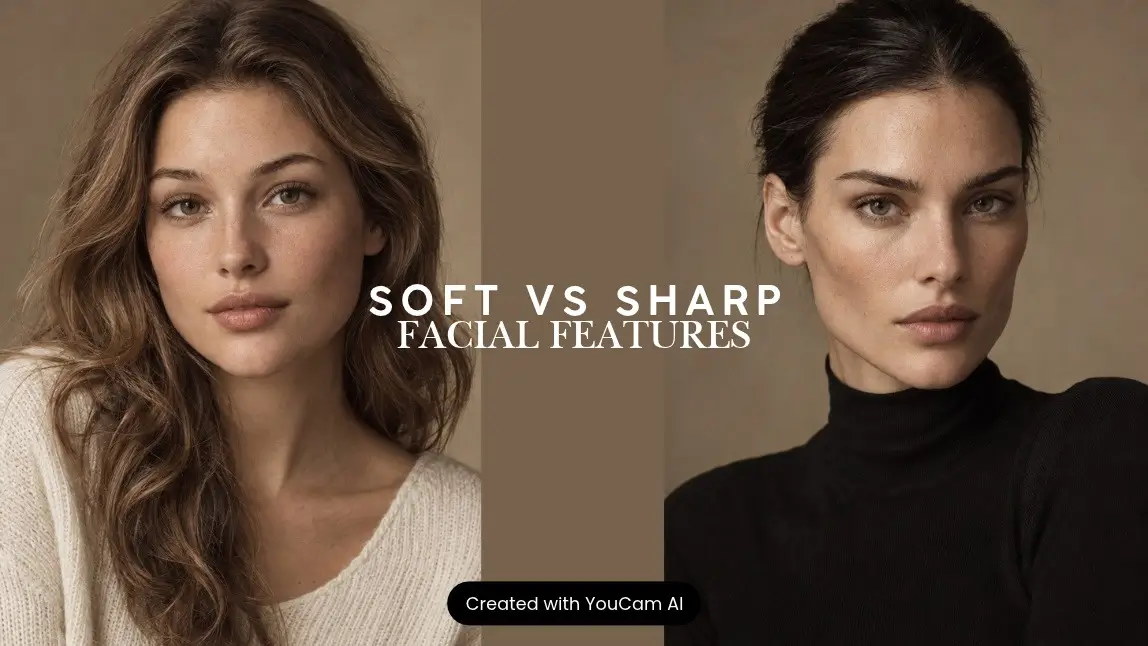
Soft facial features are rounded and smooth, with gentle curves and few hard shadows. Sharp facial features are angular and defined, with high cheekbones, a strong brow and a visible jaw angle. Most faces sit somewhere between the two, and five zones decide which way a face leans: the jawline, cheekbones, brows, eyes and nose.
This guide explains what soft and sharp features mean, compares them side by side, and gives a 5-zone check to find your own feature type. It also covers mixed features, men and women, how lighting changes the look in photos, and which hairstyles and makeup suit each type. For beauty and fashion brands, the last section shows how AI facial analysis detects soft and sharp features from a single selfie.
Table of Contents
- What Are Soft Facial Features?
- What Are Sharp Facial Features?
- Soft vs Sharp Facial Features: Key Differences
- How to Know If You Have Soft or Sharp Features
- Can You Have Both Soft and Sharp Features?
- Soft Facial Features in Women
- Sharp Facial Features in Women
- Soft vs Sharp Features in Men
- Soft vs Sharp Features in Photos
- Best Hairstyles for Soft vs Sharp Features
- Best Makeup for Soft vs Sharp Features
- Can You Make Your Features Softer or Sharper?
- How AI Analyzes Soft and Sharp Facial Features
- FAQ
- Conclusion
What Are Soft Facial Features? (Soft Features Meaning)
Soft facial features are facial traits with rounded contours and smooth transitions between the forehead, cheeks and jaw. Light spreads evenly across a soft face, so it shows few deep shadows. Soft features are often described as gentle, youthful or approachable, and terms such as delicate features or fine features usually point to the same soft, small-scale look. Soft features describe bone structure, not weight: a slim face can have soft features.

AI-generated image for illustrative purposes.
Common traits of soft facial features
- Eyes: round or softly almond-shaped, with little shadow around the socket
- Brows: gently curved rather than sharply arched
- Cheekbones: set lower and blending smoothly into the cheek, without hollows
- Jawline: rounded or softly curved, with no hard angle at the corner
- Nose and chin: a rounded nose tip and a soft, rounded chin
- Overall: minimal angularity and smooth contours from every angle
A soft face is not the same as a round face shape. Face shape describes the outline of the face, while soft or sharp describes how its features are built. An oval or long face can still have soft features. The round face shape guide explains that difference in detail.
What Are Sharp Facial Features?
Sharp facial features are facial traits with clear angles, pronounced bone structure and defined shadows. They are also called strong, angular or bold facial features. A sharp face usually has high cheekbones, a defined nose bridge and a jawline with a visible corner, so light and shadow change abruptly across the face.

AI-generated image for illustrative purposes.
Typical indicators of sharp features
- Cheekbones: high and angular, often with a hollow below them
- Brows: a defined brow ridge and straight or sharply arched brows
- Eyes: often deep-set or narrower, with more shadow under the brow
- Nose: a long, straight or structured nose bridge
- Jawline and chin: a visible jaw angle and a defined or pointed chin
- Overall: clear light-to-shadow transitions between facial planes
Soft vs Sharp Facial Features: Key Differences
The difference between soft and sharp features comes down to bone structure and how light falls on the face. Neither type is better; each creates a different first impression and works with different styling choices.
| Feature | Soft features | Sharp features |
|---|---|---|
| Jawline | Rounded, curves gently into the neck | Visible angle at the corner of the jaw |
| Cheekbones | Set lower, blend smoothly into the cheek | High, prominent, often with a hollow below |
| Brows | Softly curved, flat brow ridge | Straight or sharply arched, defined brow ridge |
| Eyes | Round or open, little socket shadow | Deep-set or narrow, more shadow under the brow |
| Nose | Gentle slope, rounded tip | Straight, structured bridge |
| Chin | Rounded | Defined or pointed |
| Light and shadow | Even, diffused | Strong contrast between planes |
| Common impression | Gentle, youthful, approachable | Striking, mature, bold |
How to Know If You Have Soft or Sharp Features
To find out whether you have soft or sharp features, take a front-facing photo at eye level in even daylight, with your hair pulled back, a neutral expression and no filters. Then check the five zones below and note which column fits each one best.

AI-generated image for illustrative purposes.
| Zone | How to check | Soft if… | Sharp if… |
|---|---|---|---|
| 1. Brows | Trace the brow line and feel the bone above the eye | Round curve, flat brow bone | Arched or straight, brow bone stands out |
| 2. Eyes | Look for shadow between the brow and the eyelid | Little shadow, eyes sit forward | Clear shadow, eyes look deep-set |
| 3. Cheekbones | Look at the cheek in a relaxed face, in front-facing light | Smooth contour, no visible hollow | Cheekbones and a hollow below stay visible |
| 4. Jawline | Trace from the ear to the chin | One continuous curve | A clear corner below the ear |
| 5. Nose bridge | Check the profile view of the bridge | Gentle slope, rounded tip | Straight, defined line |
Four or five answers in one column point to clearly soft or clearly sharp features. A split such as three and two means mixed features, which is the most common result. Eye depth is also part of eye shape, which the eye shapes guide covers in more detail.
Self-checks depend on lighting, camera distance and personal judgment. AI facial feature detection gives a more consistent reading: Perfect Corp.'s AI Face Analyzer maps facial landmarks from a selfie and measures contours and proportions within seconds, so brands can turn the result into personalized beauty and hairstyle recommendations. It is also available as an API for websites and apps.

AI-generated image for illustrative purposes.
Soft or sharp? Check your features from a selfie
Detect face shape, facial features and proportions in one scan with the free online demo.
Can You Have Both Soft and Sharp Features?
Yes. Most people have a mix of soft and sharp features rather than a pure type. Common combinations include:
- Soft eyes with a sharp jawline: open, round eyes paired with an angular lower face
- Sharp cheekbones with soft lips and chin: a sculpted midface with rounded features below
- Soft overall with a strong nose: rounded contours with one defined feature that stands out

AI-generated image for illustrative purposes.
Style systems that classify people on a soft-to-sharp scale, such as Kibbe-style typing, treat these mixes as their own category. For styling, mixed features usually suit a balance of soft and structured elements, for example a sleek cut with soft face-framing layers.
Soft Facial Features in Women: Common Characteristics
Soft facial features in women usually combine a smooth cheek contour, open eyes, curved brows and a rounded chin, with proportions that read as harmonious rather than dramatic. Soft features are often linked with a youthful look because smooth, rounded contours are typical of younger faces.
Sharp Facial Features in Women: Common Characteristics
Sharp facial features in women usually include high cheekbones with a visible hollow, a defined brow, a straight nose bridge and a tapered or angular jaw. This look is common in editorial and runway photography because the structure holds up under strong lighting.
Soft vs Sharp Features in Men
The same five zones apply to men. Sharp features in men usually mean a square or angular jaw, a prominent brow ridge, deep-set eyes and defined cheekbones. Soft features in men mean a rounded jaw, smooth cheekbones without hollows, a flatter brow ridge and more open eyes, a look often described as boyish or approachable.

AI-generated image for illustrative purposes.
Facial hair changes how the lower face reads. A short, squared beard adds angles to a soft jaw, while longer, rounded beard shapes soften a sharp one. Body fat also affects jawline definition more visibly in men, because the jaw is the main area where definition shows.
Soft vs Sharp Features in Photos
Lighting can make the same face look softer or sharper. Soft, even light fills in shadows and smooths contours, while hard directional light deepens the shadows under the cheekbones and along the jaw. Neither type looks more striking by default: soft features tend to look best in diffused light, and sharp features create the most dimension in side light.

AI-generated image for illustrative purposes.
For a reliable self-check, always use front-facing, even light. Side light or overhead light can make soft features look sharper than they are.
Best Hairstyles for Soft vs Sharp Features
Hairstyles can either enhance a feature type or balance it. Matching the lines of the cut to the face amplifies the natural look, while contrasting them adds balance.

AI-generated image for illustrative purposes.
| Feature type | To enhance it | To balance it |
|---|---|---|
| Soft features | Loose curls, long waves, soft layers, curtain bangs | Sleek blunt bob, sharp side part, slicked-back styles |
| Sharp features | Sleek ponytail, blunt bob, sharp middle part | Face-framing layers, soft waves, wispy bangs |
| Mixed features | Structured cuts with soft texture, such as a blunt lob with loose waves | |
Face shape matters as much as feature type when choosing a cut. The women's face shape styling guide pairs both, and salons can preview each option with a virtual hairstyle try-on before cutting.
Best Makeup for Soft vs Sharp Features
Makeup works the same way as hair: rounded, blended shapes support soft features, and crisp lines and contour support sharp ones.

AI-generated image for illustrative purposes.
Makeup for soft features
- Rounded or smudged eyeliner instead of a sharp wing
- Soft eyeshadow gradients in warm, blended tones
- Blush on the apples of the cheeks and a dewy finish
- Light contour, if any, blended well below the cheekbone
Makeup for sharp features
- Defined or winged eyeliner that follows the eye angle
- Contour under the cheekbones and along the jaw
- Blush swept upward toward the temples
- Matte or satin finishes that keep the structure clear
To make softer features look sharper, add contour and a defined brow. To soften sharp features, use cream blush, a curved brow and diffused highlighter on the high points of the face.
For beauty brands, showing a look on the shopper's own face is more convincing than describing it. Perfect Corp.'s AR makeup virtual try-on lets shoppers test eyeliner, contour, blush and lipstick in real time, and it is also available as an API for brand websites and apps.

Can You Make Your Features Softer or Sharper?
Bone structure sets the base, but several factors change how soft or sharp features look:
- Makeup and grooming: contour, brow shape and, for men, beard shape change perceived angles the fastest.
- Hairstyle: structured cuts add sharpness, and soft layers reduce it.
- Body fat: lower facial fat makes cheekbones and the jaw more visible; higher facial fat softens them.
- Age: faces often look sharper after the teenage years as facial fat decreases, and softer later in life as skin loses firmness along the jaw.
- Cosmetic treatments: fillers, contouring procedures and surgery can change facial contours. These are medical decisions to discuss with a qualified professional.
Facial proportions also shape the overall impression. Guides on hunter eyes and the face shape test cover related traits that often come up alongside soft and sharp features.
How AI Analyzes Soft and Sharp Facial Features
AI facial analysis classifies soft and sharp features by measuring geometry instead of relying on visual impression. It detects facial landmarks from a photo, then measures values such as eye depth, cheekbone angle and jawline curvature, so the result stays consistent across different viewers.

AI-generated image for illustrative purposes.
For beauty, hair and eyewear brands, this turns a vague style question into a personalization signal:
- Makeup: recommend contour, liner and blush styles that match the shopper's feature type.
- Hair: suggest cuts that enhance or balance soft or sharp features.
- Eyewear and accessories: suggest rounded or angular frames based on facial contours.
Perfect Corp.'s AI Face Analyzer detects face structure, facial features and facial ratios in one scan, and brands can add it to websites and apps through the face analysis API. The guide to facial analysis for beauty brands covers more personalization use cases.
Because facial analysis processes selfies, data protection matters. Perfect Corp.'s platform and cloud infrastructure are ISO/IEC 27001:2022 certified, and data processing follows GDPR principles across all Perfect Corp. solutions. Details are on the compliance page.
Personalize beauty by facial features
Add face shape, feature and proportion analysis to your website or app via web module or API.
FAQ
What are soft facial features?
Soft facial features are rounded, smooth facial traits with little angularity: smooth cheekbones without hollows, gently curved brows, open eyes, a rounded chin and a jawline without a hard corner.
What are sharp facial features?
Sharp facial features are angular, defined traits: high cheekbones, a defined brow ridge, a straight nose bridge and a visible jaw angle, with clear shadows between facial planes.
How do I know if my features are soft or sharp?
Check five zones in a front-facing photo taken in even light: brows, eye depth, cheekbones, jawline and nose bridge. Four or five sharp traits mean sharp features, four or five soft traits mean soft features, and a split means mixed features. An AI face analyzer gives a more consistent result.
Are soft or sharp features more attractive?
Neither is objectively more attractive. Preferences vary by person, culture and trend. Soft features are often read as gentle and youthful, and sharp features as striking and bold.
Are soft features more feminine?
Soft features are often associated with traditionally feminine looks and sharp features with masculine ones, but both appear in all genders.
What does it mean to have strong facial features?
Strong facial features means the same as sharp or bold features: prominent cheekbones, a defined jaw, a strong brow or a structured nose that stand out at first glance.
What are delicate facial features?
Delicate or fine features are small, refined and soft facial traits, such as a narrow nose, a small chin and gentle brows. They usually fall on the soft side of the scale.
Can soft features become sharp?
Bone structure doesn't change much in adulthood, but lower facial fat, makeup, grooming and hairstyles can make features look sharper. Age can make features look sharper after the teenage years and softer later in life.
Conclusion
Soft facial features are rounded and smooth; sharp facial features are angular and defined. The quickest way to find your type is to check five zones in an evenly lit photo: brows, eyes, cheekbones, jawline and nose bridge. Most faces show a mix, and hairstyle, makeup, lighting and grooming can push the look either way. For brands, AI facial analysis turns feature type into personalized makeup, hair and eyewear recommendations.
Find out with AI face analysis
Upload a selfie to detect your face shape and facial features in seconds.
This article was edited and reviewed by the Perfect Corp. editorial team. Welcome to contact us or give us more suggestions.