


 Author:
Disclaimer: Some images in this article may have been created or modified by AI
In luxury retail, the digital storefront is key — but for watch brands, the inability to try on a watch online creates friction, leading to cart abandonment and costly returns. Fortunately, online watch sizing tools that help shoppers find their accurate watch sizes are transforming the buying experience and boosting confidence before purchase.
This guide covers the full picture: the case diameter each wrist circumference actually suits, the four dimensions that decide whether a watch sits right, and — new in this update — a hands-on walkthrough of every practical way to measure wrist size for a watch, from a cloth tape to a printed strap chart to an on-screen wrist sizer, with a side-by-side comparison of which one to reach for and when.
Table of Contents
- What are the Sizes of Watches?
- The Four Critical Dimensions for Watch Fit
- How to Measure Wrist Size for Watch?
- Which Wrist Measuring Method Should You Use?
- Why use Online Wrist Sizer?
- Why Offer Online Watch Size Measurement
What are the Sizes of Watches?
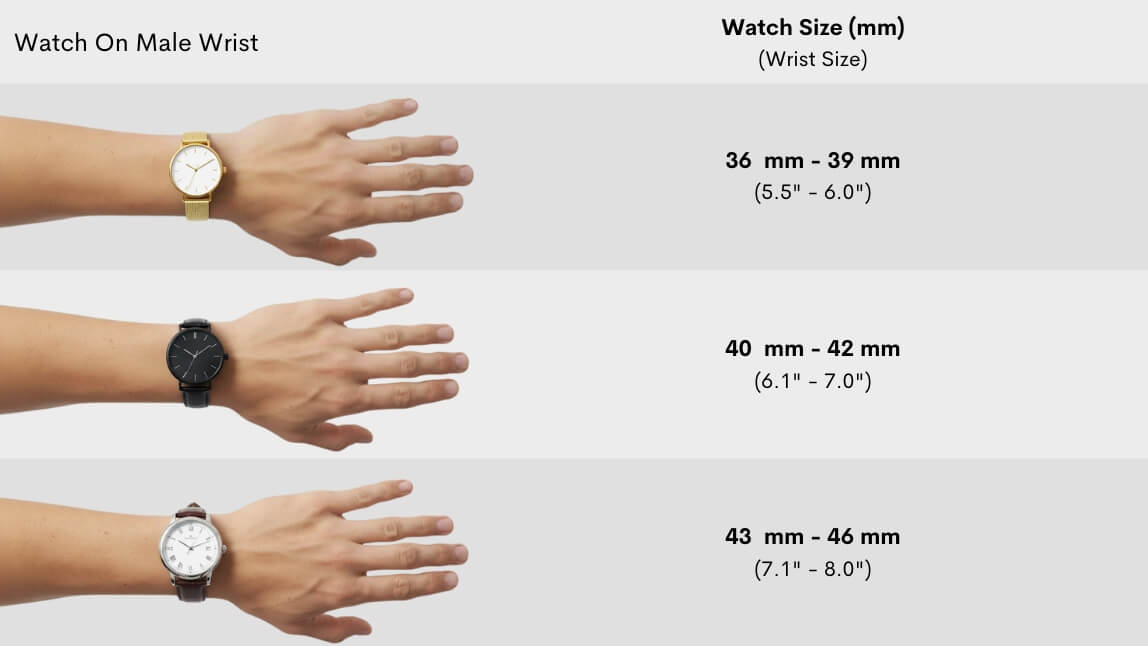
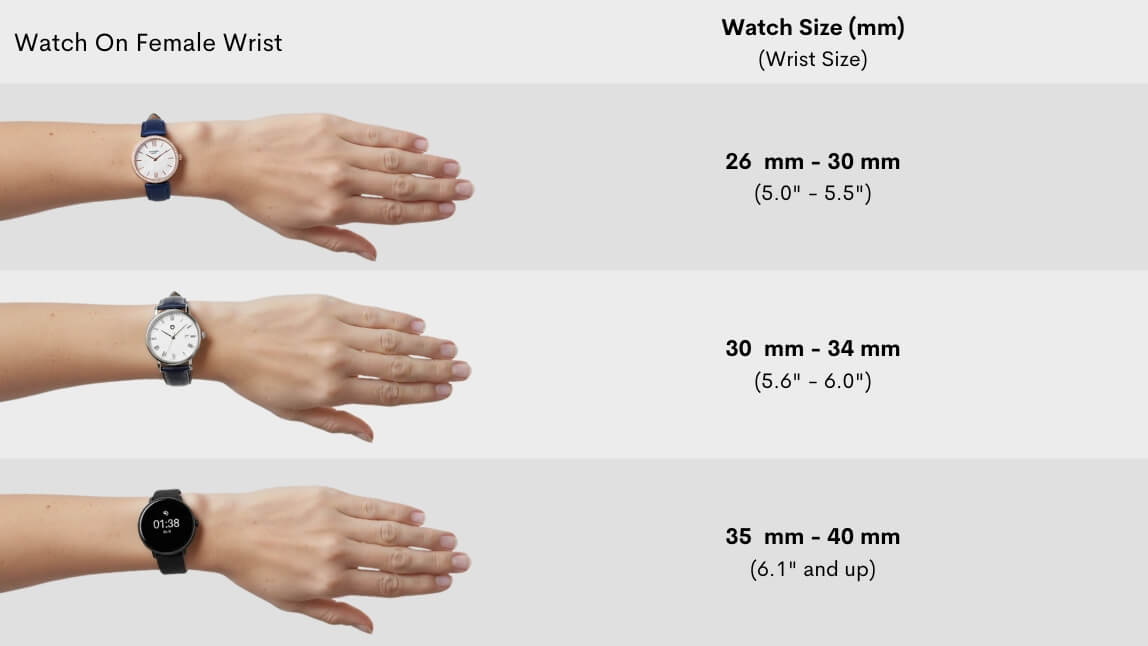
Before diving into the specifics of watch components, use these tables for an immediate reference point. Your wrist circumference is the single most important factor in determining the appropriate case diameter.
Men's Recommended Sizes
| Wrist Circumference (Inches) | Wrist Circumference (CM) | Case Diameter Range (MM) | Fit Profile |
|---|---|---|---|
| 5.5" – 6.0" | 14 cm – 15.2 cm | 36mm – 39mm | Small/Classic |
| 6.1" – 7.0" | 15.5 cm – 17.8 cm | 40mm – 42mm | Standard/Versatile |
| 7.1" – 8.0" | 18 cm – 20.3 cm | 43mm – 46mm+ | Large/Oversized |
Women's Recommended Sizes
| Wrist Circumference (Inches) | Wrist Circumference (CM) | Case Diameter Range (MM) | Fit Profile |
|---|---|---|---|
| 5" – 5.5" | 12.7 cm – 14 cm | 26mm – 30mm | Petite/Dress |
| 5.6" – 6.0" | 14.2 cm – 15.2 cm | 30mm – 34mm | Standard/Classic |
| 6.1" and up | 15.5 cm and up | 35mm – 40mm | Midsize/Boyfriend |
A note from working through these charts: treat the ranges as a starting bracket, not a verdict. When I measured my own wrist and looked up the row, the recommended band spanned several millimetres — and the difference between the bottom and the top of that band is visible on the wrist, not academic. The other thing the tables cannot capture is wrist shape. A flat, wide wrist and a rounder wrist of identical circumference carry the same case very differently: the flatter one gives the lugs more surface to sit on and tolerates the upper end of the range, while the rounder one tends to look better one or two millimetres down. That is the main reason I stopped treating the chart as the answer and started using it as the shortlist.
The Four Critical Dimensions for Watch Fit
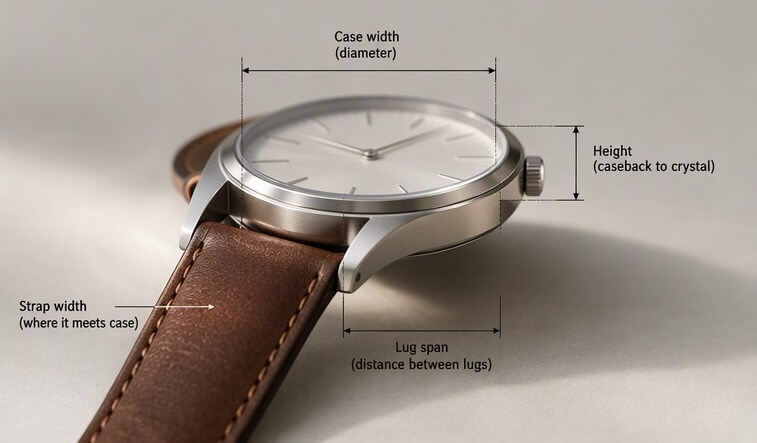
Traditional watch sizing is a nuanced process. Beyond personal style, watch sizes are determined by several critical measurements that are difficult to convey in a static product image.
See how a case size actually sits on your wrist — try the AR watch try-on.
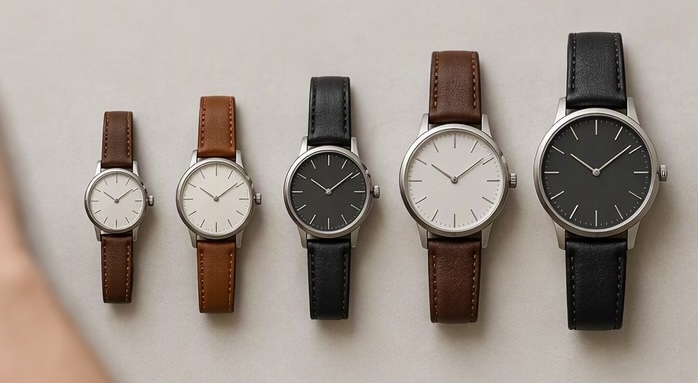
- Watch Case Diameter: The size of the watch face itself is the most important element. While general guidelines exist (e.g., men’s watches typically range from 38mm to 46mm, while women’s watches are often 20mm to 30mm), finding the right fit is about proportion.
- Lug-to-Lug Distance: The distance between the strap connection points (lugs) is crucial. If this measurement exceeds the width of the wrist, the watch will overhang, appearing awkward and unprofessional.
- Case Thickness: Case thickness refers to the height of the watch from the caseback to the top of the crystal. This measurement must be balanced with the diameter.
Diameter is also the dimension that fooled me most often on a product page. Two watches listed at the same case size can look a size apart on the wrist depending on how much of that diameter the bezel eats: a wide, chunky bezel shrinks the dial and reads smaller, while a thin bezel on the same case reads noticeably larger. It is the clearest example of why a spec number alone is not a fit prediction.
If you only check one number besides diameter, make it lug-to-lug. Overhang is not a subtle styling issue — you can feel the lug tips press into the sides of the wrist, and it is the thing I noticed within minutes of wearing a case that was technically in range for my circumference. The frustrating part is how often lug-to-lug is simply missing from an online listing, which is exactly the gap the estimate further down is meant to cover.
| Case Diameter | Ideal Thickness Range | Fit Profile |
|---|---|---|
| Under 40mm | 7mm – 10mm | Slim, easily slips under a cuff |
| 40mm – 44mm | 11mm – 13mm | Standard, balanced sport/dress |
| 45mm and up | 14mm and up | Chunky, highly noticeable on the wrist |
Thickness is the dimension I had underrated before actually wearing a few side by side. A thicker case does not just sit higher — it raises the watch centre of gravity, so it rocks slightly and slides around the wrist more than a slim case on the same strap. The cuff test in the table is genuinely useful shorthand: if you wear long sleeves for work, a case at the top of its thickness band will catch on the cuff every time you push your sleeve back, and that is the kind of thing you only discover after a day of wearing it.
- Strap Width and Material: The strap width is usually proportional to the case, following an industry-standard 1:2 ratio (e.g., a 40mm case requires a 20mm wide strap).
Strap Taper: A strap that tapers (gets slightly narrower) toward the buckle can make a large watch appear slightly more streamlined.
Material Impact: Metal bracelets tend to look bulkier and heavier than leather or nylon straps, which can visually increase the perceived size of the watch.
One practical consequence of the material point is easy to miss: it changes what your measurement needs to allow for. A metal bracelet sits with almost no give, so the circumference you measured is roughly the circumference you need. A soft leather or nylon strap pulls in as you tighten it and settles over the first few wears, so I would take the measurement at a comfortable snugness rather than pulled tight, and expect a leather strap to end up one hole tighter than it felt on day one.
How to Measure Wrist Size for Watch?
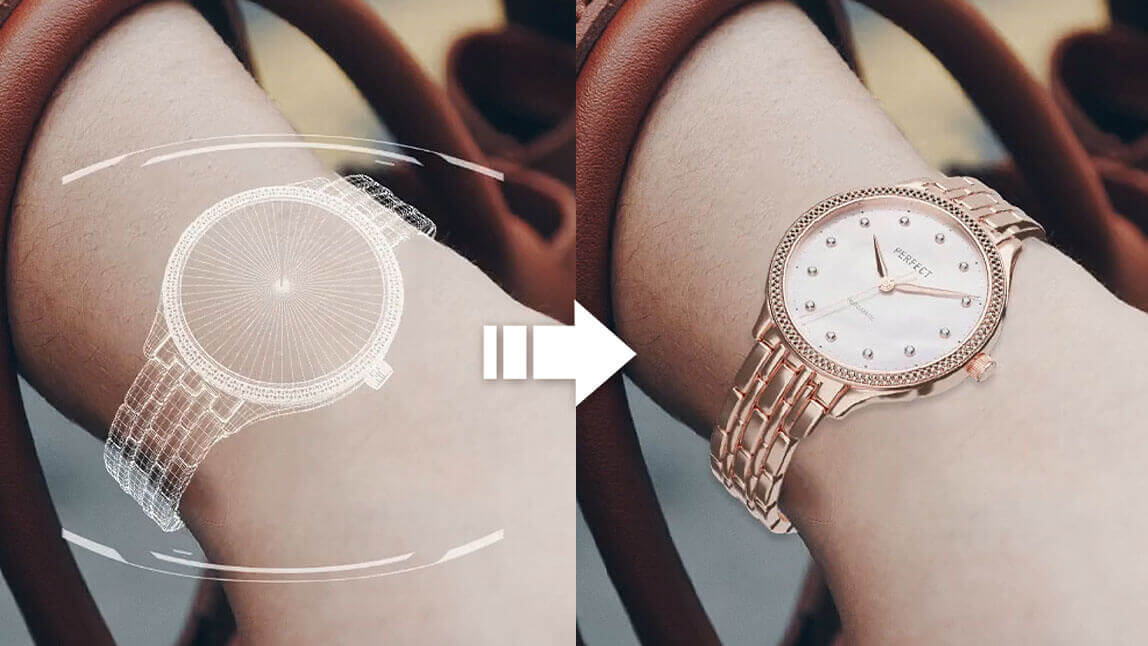
Asking customers to measure all these dimensions and imagine how each watch will look on their wrist is a headache for them. Perfect Corp.’s watch try-on tool solves this by combining virtual try-on with built-in watch sizing, delivering precise, personalized watch size recommendations to boost confidence and reduce returns, here's how it works:
Before the steps — what happened when I measured my own wrist four different ways. I ran the same wrist through a cloth tape, a paper strip against a ruler, a printed strap-sizing chart and the on-screen Wrist Sizer, back to back, to see where they agreed and where they drifted. The headline: the method matters less than the tension. Pulling the tape tight versus resting it snug moved my reading by more than the gap between any two of the tools, which is why every set of instructions below says snug, not tight — it is not boilerplate. The paper-strip method was the fiddliest; keeping the strip flat while marking the overlap with one hand took me a few tries, and a twisted strip reads short every time. The printed chart was the one I trusted least, because it only works if the page prints at exactly 100% scale, and a default fit-to-page setting silently shrinks it. The on-screen sizer was the fastest by a wide margin, and the part I had not expected to matter was that it hands you a case-size recommendation instead of a number you then have to look up in a table yourself — which removes the step where most people lose the thread. Once all four landed close to each other, I stopped worrying about which was right and started paying attention to lug-to-lug, which turned out to be the measurement that actually decided fit.
Method 1: Manually Measure Your Wrist and Check Fit
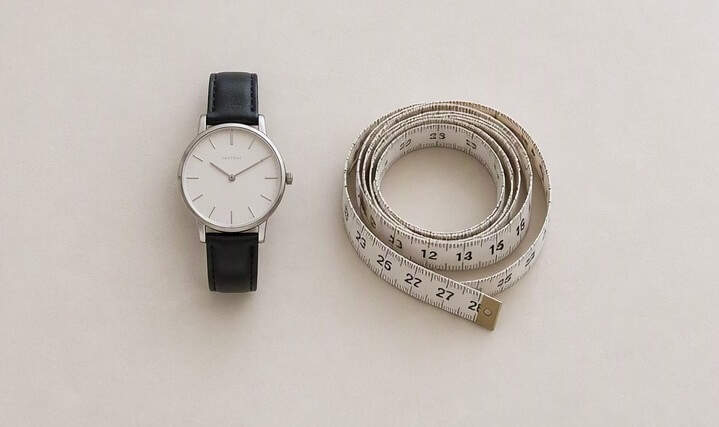
If you don't have a cloth measuring tape, you can use a strip of paper or string and a standard ruler.
- Measure Circumference: Wrap the measuring tool snugly around your wrist just below the wrist bone (where you will wear the watch). Mark the point where the end overlaps.
- Record Measurement: Lay the tape/string against a ruler and note the length in both inches and centimeters.
- Determine Wrist Width: Lay your hand flat and use a ruler to measure the distance across the top of your wrist from edge to edge. This is the maximum allowed lug-to-lug distance.
- Reference the Chart: Use your circumference measurement to find the recommended case diameter range in the tables above.
- Confirm the Lugs: When shopping online, always check the lug-to-lug specification against your wrist width. If the watch doesn't list it, you can estimate it by adding 6mm-10mm to the case diameter (depending on the watch style).
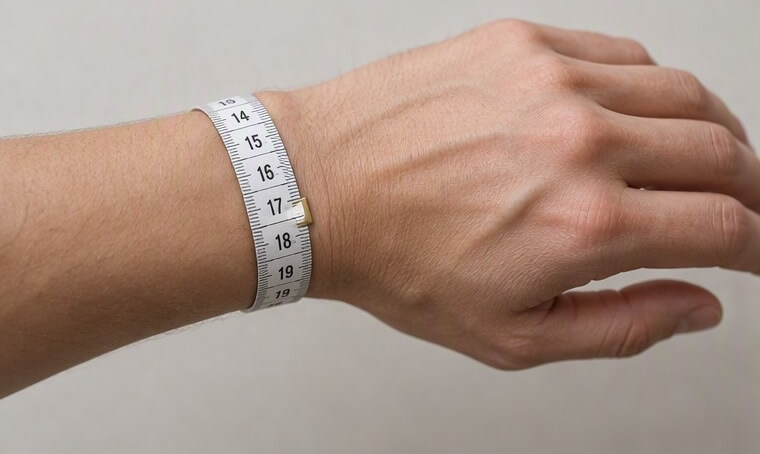
On step 1 — the most common way to get this wrong is to measure over the wrist bone rather than just below it. I did it on my first attempt without thinking and got a reading that put me in the next bracket up. Sit the tape where the watch will actually live and the number changes. If you are using string, the other trap is elasticity: a stretchy cord will give you whatever answer you pull for, so use something that does not stretch — a shoelace, a strip of printer paper, a ribbon.
On step 3 — wrist width is the step people skip, and it is the one that saved me from a watch I would otherwise have ordered. It is also easier to get wrong than circumference, because your wrist flattens when your hand is pressed flat on the table and widens when you make a fist. Rest your hand open and relaxed rather than pressing down, and measure across the flattest part of the wrist top — that is the surface the lugs have to span.
On step 5 — the case-diameter-plus-6mm-to-10mm estimate is a reasonable guess, but I found it works best on conventional round cases with short, downturned lugs. Dive-style watches with long, straight lugs and cushion or tonneau cases both ran past what the estimate suggested when I checked them against published specs. When a listing gives you the real lug-to-lug figure, always use that number; treat the estimate as the fallback it is.
Method 2: Online Wrist Sizer
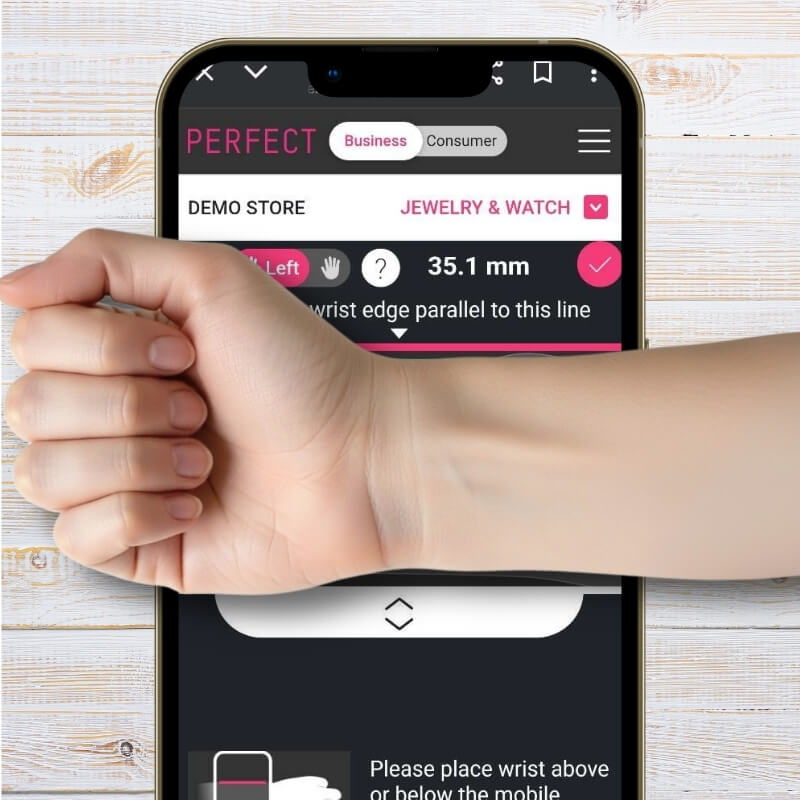
- Visit Online Wrist Sizer
- Place wrist above or below the screen, adjust the online ruler until it matches your wrist size.
- Get the Watch Size Result!
What using the sizer is actually like: the whole thing took me well under a minute, and the only part that needs any care is the alignment. Hold your wrist flat against the screen rather than at an angle — tilting it makes the edges of your wrist read wider than they are, the same way a twisted tape reads short. It is worth nudging the on-screen ruler once past the point where it looks right and then back, because the setting that looks correct covers a small range and the middle of that range is the honest reading. The advantage over the tape for me was less about precision and more about what comes out the other end: a case size recommendation and a try-on, rather than a centimetre figure I would still have to translate into a shopping decision.

Measure your wrist against the screen and get your case size in under a minute.
Which Wrist Measuring Method Should You Use?
All four of these methods will get you to a usable wrist measurement. They differ in how much they ask of the customer, how easy they are to get wrong, and — the part that matters commercially — whether they end in a number or in a decision.
| Method | What it needs | Where it goes wrong | Best for |
|---|---|---|---|
| Cloth measuring tape | A soft tailor tape | Tape tension; measuring over the wrist bone instead of below it | The most reliable at-home option — if the customer happens to own a cloth tape |
| String or paper strip with a ruler | Shoelace, ribbon or paper strip, plus a rigid ruler | Stretchy material, a twisted strip, losing the overlap mark while transferring it | The everyday fallback when there is no tape in the house |
| Printable sizing chart | A printer, and correct print settings | Any scaling other than 100% silently invalidates the whole chart | Customers who want a physical strap guide to hold against the wrist — and who will check their print scale |
| Online Wrist Sizer | Any screen — phone, tablet or desktop | Holding the wrist at an angle to the screen rather than flat against it | Shoppers mid-purchase: no household tools, and it returns a case-size recommendation plus try-on rather than a raw number |
The verdict: if a customer already has a cloth tape in a drawer and does not mind a two-minute detour, the tape is the most dependable manual measurement. But that is a real if, and it is the wrong question for a brand to be optimising. Every manual method ends at a centimetre figure the shopper still has to interpret — look up a chart, cross-check lug-to-lug, then imagine the result on their own wrist. An online wrist sizer collapses those three steps into one and delivers the thing the shopper actually wanted: a case size that fits, shown on their wrist. For at-home curiosity, use the tape. For a purchase decision on a product page, the on-screen sizer is the only method that ends where the sale does.

Why use Online Wrist Sizer?
Perfect Corp.’s Wrist Sizer removes sizing friction by combining precise wrist measurement with real-time watch virtual try-on. This all-in-one solution simplifies the buying process, improves accuracy, and translates directly into tangible business benefits:
- Seamless Online Watch Size Measurement: Customers can measure their wrist size directly online — no need for a ruler or third-party tools.
- Instant Watch Size & Try-On: The tool recommends the ideal watch case size based on wrist measurements and lets shoppers virtually try on different timepieces instantly.
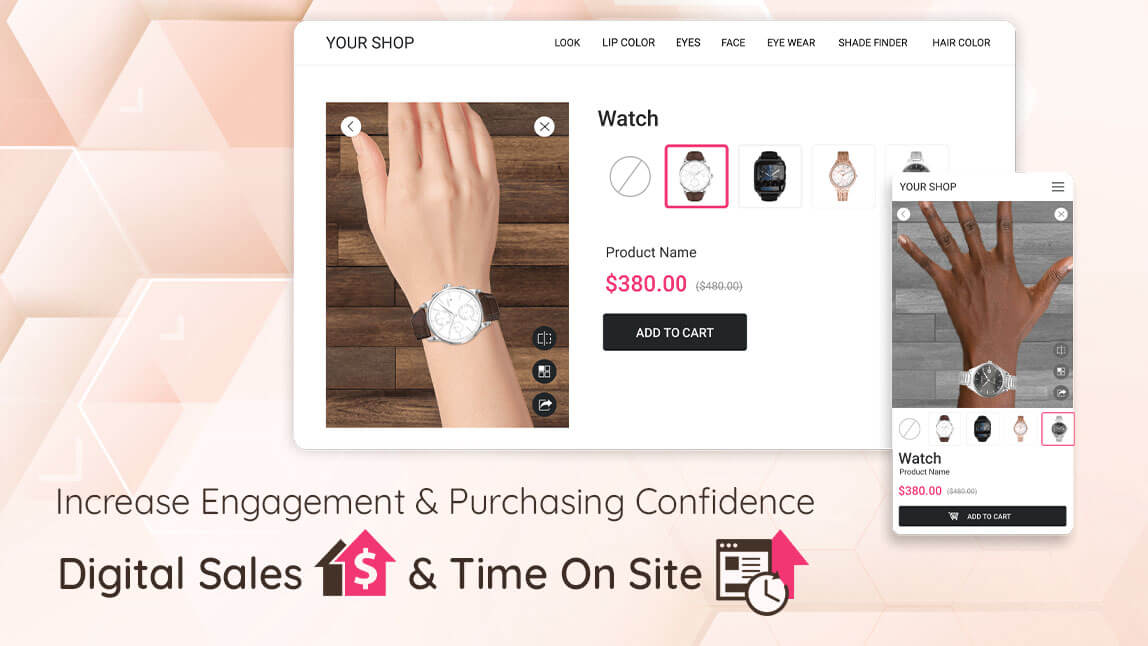
- Enhanced Customer Confidence: Customers can see exactly how a watch will look on their wrist, eliminating sizing guesswork and building the confidence needed to complete a purchase.

Try the Wrist Sizer on your own wrist — no tape, no tools, no signup.

Why Offer Online Watch Size Measurement
In today’s competitive watch market, watch try-on alone isn’t enough. Brands need a watch try-on solution with built-in watch size measurement to help shoppers find their exact fit and deliver true precision online, — a strategic move that drives measurable ROI.
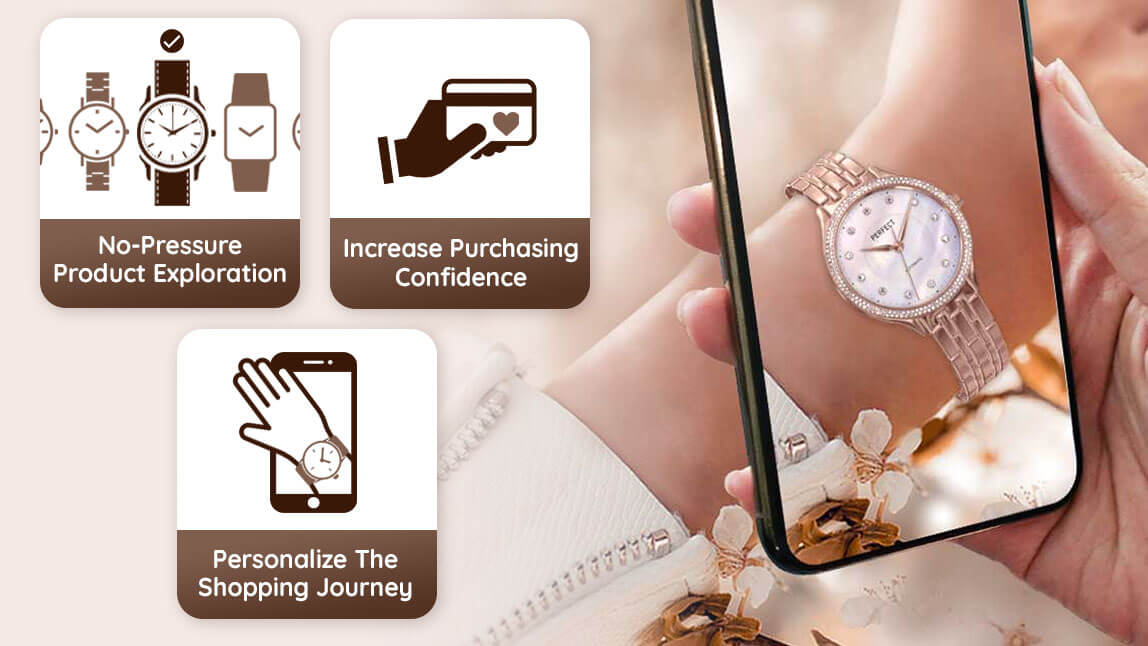
Here's how our watch size tool helps:
- Increase Customer Satisfaction: Simplify watch sizing to create a frictionless, confidence-boosting shopping experience that builds loyalty.
- Gain a Competitive Edge: Differentiate your brand in a crowded market by offering a high-touch, personalized service that competitors may not have.
- Gather Valuable Data: Leverage AI-driven insights into customer preferences and sizing data to inform future product development and marketing strategies.
- Reduce Returns: Minimize costly returns by ensuring shoppers choose the correct watch size from the start, protecting margins and operations.
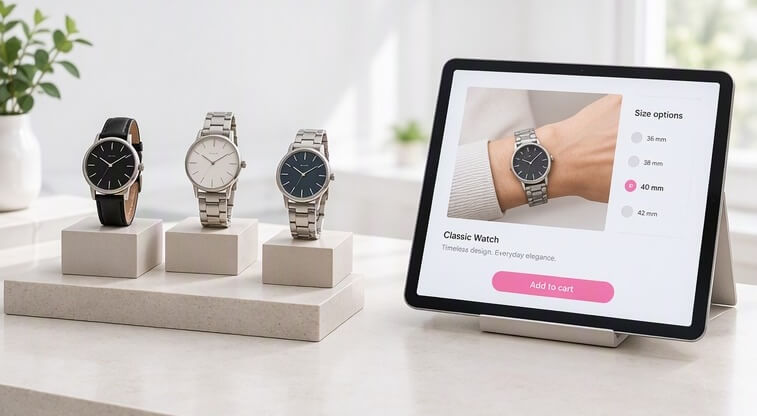
In an industry where every detail matters, providing an accurate and immersive online watch shopping experience is paramount. By integrating a virtual watch size solution, brands can overcome a major e-commerce hurdle, ensure customers find the right watch sizes, and unlock new opportunities for growth and loyalty.
Ready to transform your watch e-commerce experience?

Watch Size FAQ
What is the average wrist size for a watch?

Most adult men measure somewhere around 7 to 7.5 inches (roughly 17.8 cm to 19 cm) in wrist circumference, and most adult women around 6 to 6.5 inches (roughly 15.2 cm to 16.5 cm) — which is why 40mm–42mm and 32mm–36mm are the case sizes brands stock most deeply. Averages are a poor substitute for your own measurement, though: the ranges above are wide enough that "average" spans two different fit profiles in the charts at the top of this guide. Measure once and you never have to guess again.
How do I measure my wrist size for a watch without a measuring tape?
Use a strip of printer paper, a shoelace or a ribbon — anything that doesn't stretch. Wrap it snugly around your wrist just below the wrist bone, mark where the end overlaps, then lay it flat against a ruler and read the length. When I tested this against a proper cloth tape, the two agreed closely as long as the strip stayed flat; a twisted strip was the one thing that reliably threw the reading off. If you'd rather skip the household-object stage entirely, the online wrist sizer measures against your screen and returns a recommended case size directly.
Is a 38mm watch too small for a man?
- 23mm-31mm. Small Watches.
- 32mm-41mm. Medium Watches.
- 42mm-47mm. Large Watches.
- 48mm-52mm. Oversized Watches.
Is a 40mm watch too big?
It’s simple: a small wrist typically pairs best with watches between 34mm and 40mm, while a large wrist suits watches 38mm and above. Generally, wrists measuring 16–18 cm are considered average, anything below 16 cm is small, and anything over 18 cm is large.
What does 42mm mean on a watch?
A '42mm watch' refers to the case diameter, measured straight across from the 3 o’clock to the 9 o’clock position. This measurement indicates how large the watch will look and feel on the wrist — larger diameters like 42mm generally appear and wear bigger. While 42mm is considered a mid-to-large size, the overall impression also depends on design details such as the case shape, lug length, and bezel thickness.
How to check for watch size?
A watch’s size is primarily defined by the case diameter — measured across the dial in millimeters (mm). With watches available in a wide range of sizes, our online watch sizer tool helps shoppers measure accurately and find the perfect fit before they buy.



 English


