


 Author: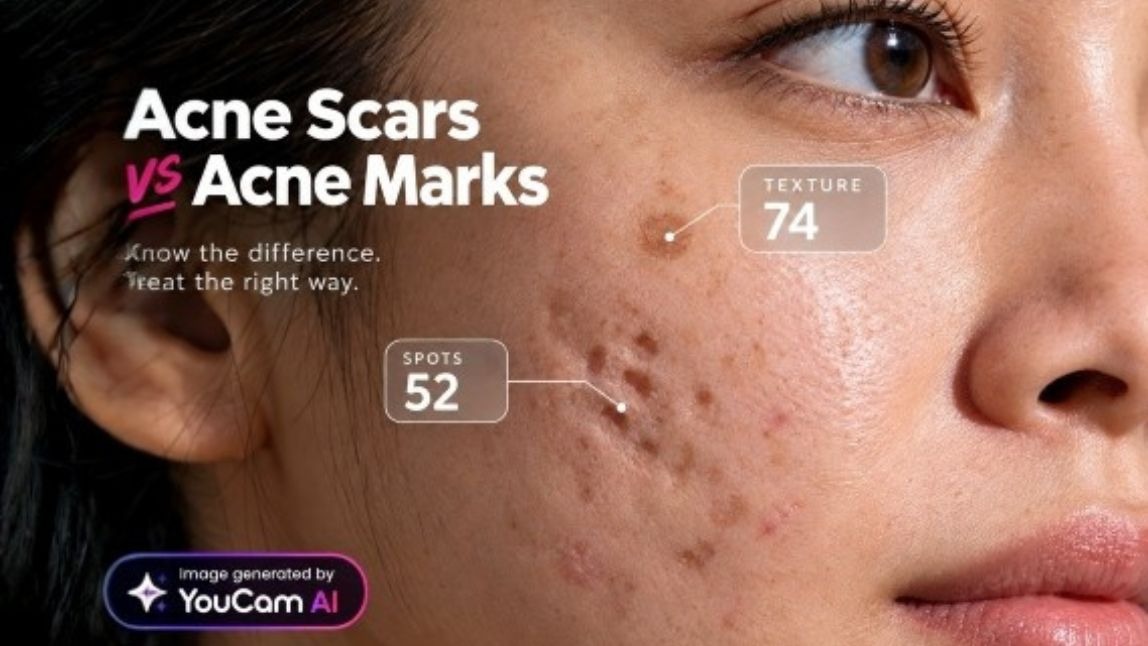
Images generated by YouCam AI
The most expensive mistake in post-acne skincare is treating a mark like a scar, or worse, booking a laser series for discolouration that would have faded on its own. The two look similar in a bathroom mirror and behave nothing alike: one is a colour problem that resolves with time and sunscreen, the other is a structural change that topicals cannot reach. This guide covers how to tell them apart in ten seconds, what actually works on each, realistic timelines, and how a AI skin analysis separates surface texture from pigment so a recommendation flow stops promising results it cannot deliver.
What this guide covers
What Is the Difference Between Acne Scars and Acne Marks?
Texture. Acne marks are flat discolouration, either red or brown, left behind after a spot heals, and they fade over months. Acne scars are changes in the skin's structure, indented or raised, caused by the follicle wall rupturing during inflammation, and they do not fade on their own.
Run a fingertip over the area with your eyes closed. Smooth means marks. Anything you can feel means scarring. That is the whole distinction, and it decides whether your next purchase should be a serum or a consultation.
What Are Acne Marks?
Marks are the colour a healed spot leaves behind, and they come in two kinds that behave differently.
| Type | Colour | What it is | Press test |
| Post-inflammatory erythema (PIE) | Pink or red | Damaged or dilated capillaries | Blanches |
| Post-inflammatory hyperpigmentation (PIH) | Tan, brown or grey | Excess melanin deposited during healing | No change |
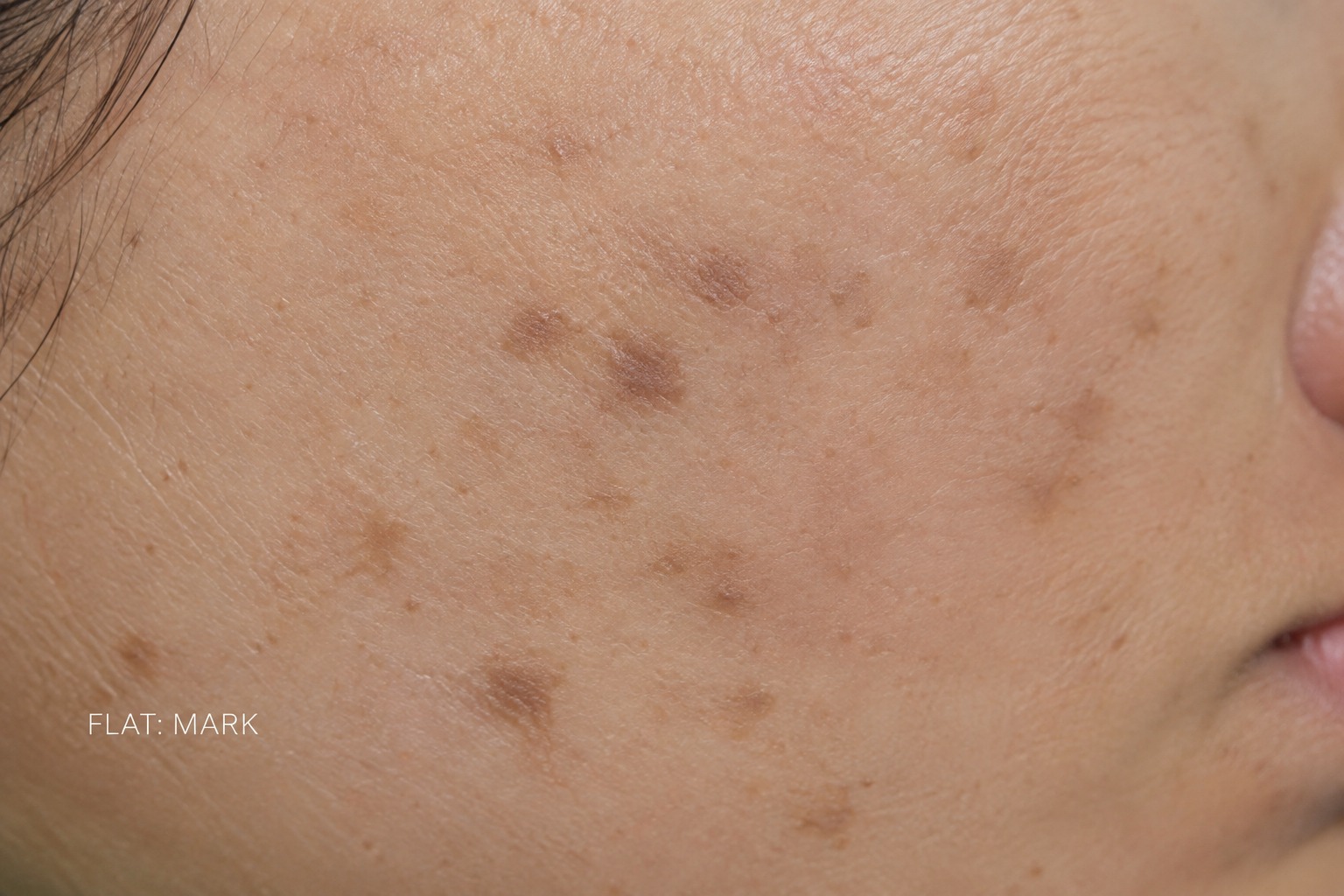
Both are flat, both fade, and they need different ingredients. Our guide to telling pigment types apart covers the pigment side in more depth. The important point here is that neither of them is a scar, however permanent they feel at month two.
What Are Acne Scars, and What Types Are There?
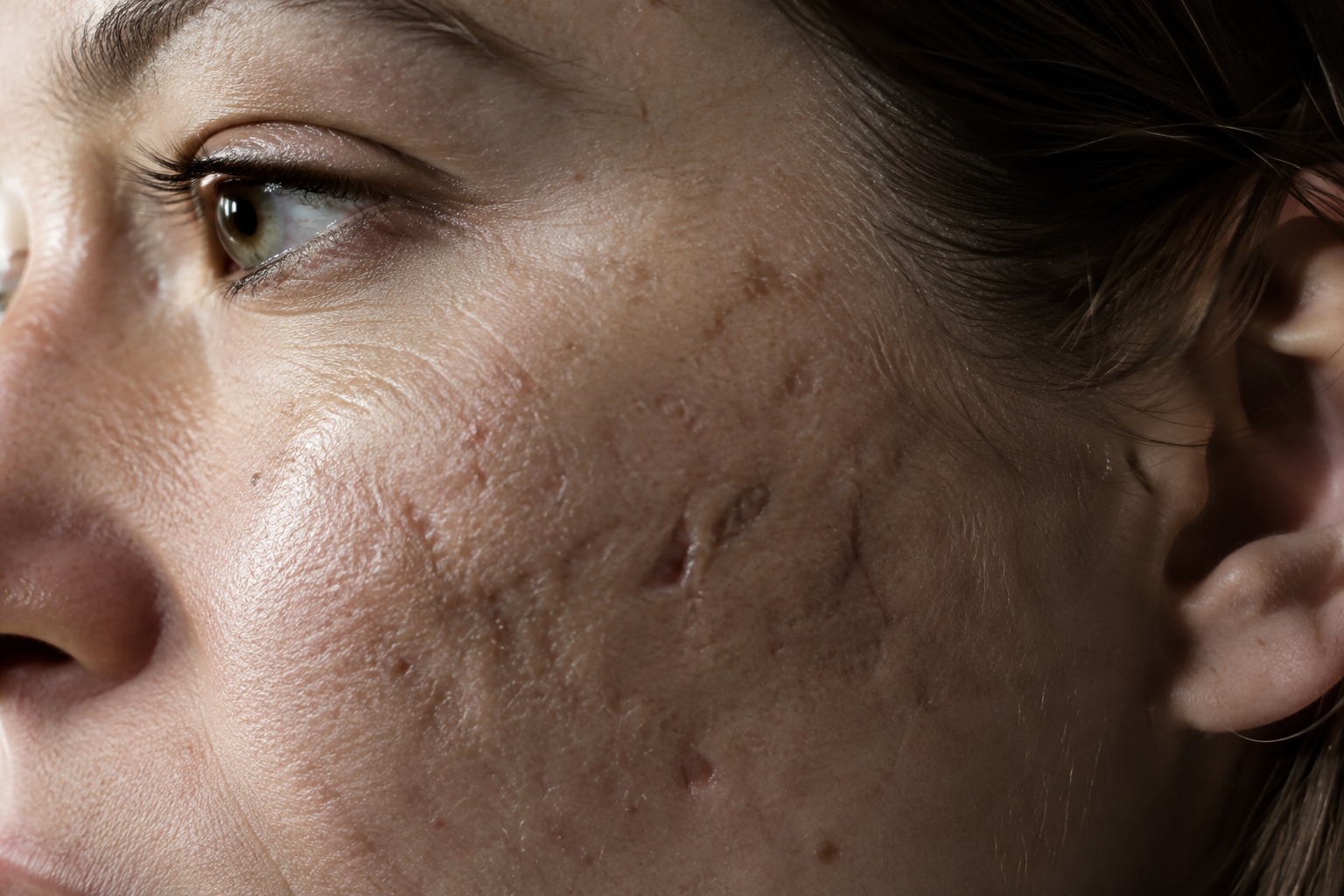
Scars form when inflammation ruptures the follicle wall and the repair process either loses tissue or overproduces it. Which type you have determines which procedure works, and they respond very differently.
| Scar type | What it looks like | Responds best to |
| Ice pick | Narrow, deep, steep-sided pits, like a pinprick | TCA cross, punch excision. The hardest type to treat |
| Boxcar | Wider depressions with sharp defined edges | Fractional laser, subcision, fillers |
| Rolling | Broad, shallow, wave-like undulation | Subcision, microneedling, radiofrequency |
| Hypertrophic | Raised, firm, stays within the original spot's border | Steroid injections, silicone, laser |
| Keloid | Raised, extends beyond the original border | Dermatology referral. Do not self-treat |
The first three are atrophic, meaning tissue was lost, and they are what most people mean by acne scars. No cream refills a pit, and any product promising to is selling you a hydration effect that disappears by evening.
How Do You Tell Them Apart?
Three tests, none of which need equipment.
The side-light test
Stand beside a window so light rakes across your face rather than hitting it head on, and photograph yourself at eye level. Scars cast shadows. Marks do not. Flat frontal lighting hides texture almost completely, which is why your skin can look fine in a selfie and reveal pits in someone else's candid photo.
The touch test
Close your eyes and run a clean fingertip slowly across the area. You are checking for topography, not colour, and closing your eyes removes the visual bias.
The stretch test
Gently stretch the skin on either side of the area. Shallow rolling scars become more obvious under tension. Flat marks stay flat.
| Check | Acne marks | Acne scars |
| Can you feel it? | No | Yes |
| Shadow under side light | None | Yes |
| Changes with stretching | No | Often |
| Fades over months | Yes | No |
| Responds to topicals | Yes | Marginally at best |
| Needs a procedure | No | Usually |
Which Ones Fade on Their Own?
Marks fade. Scars do not. Within marks there is still a spread worth knowing about.
| What you have | Fades without treatment? | Realistic outcome |
| PIE, pink marks | Yes | Usually gone in 2 to 6 months |
| PIH, brown marks, lighter tones | Yes | 3 to 12 months, faster with SPF |
| PIH, deeper tones | Yes, slowly | 6 months to 2 years |
| Rolling scars | No | Improve with a procedure series |
| Boxcar scars | No | Improve, rarely erased |
| Ice pick scars | No | Hardest to improve, needs specific techniques |
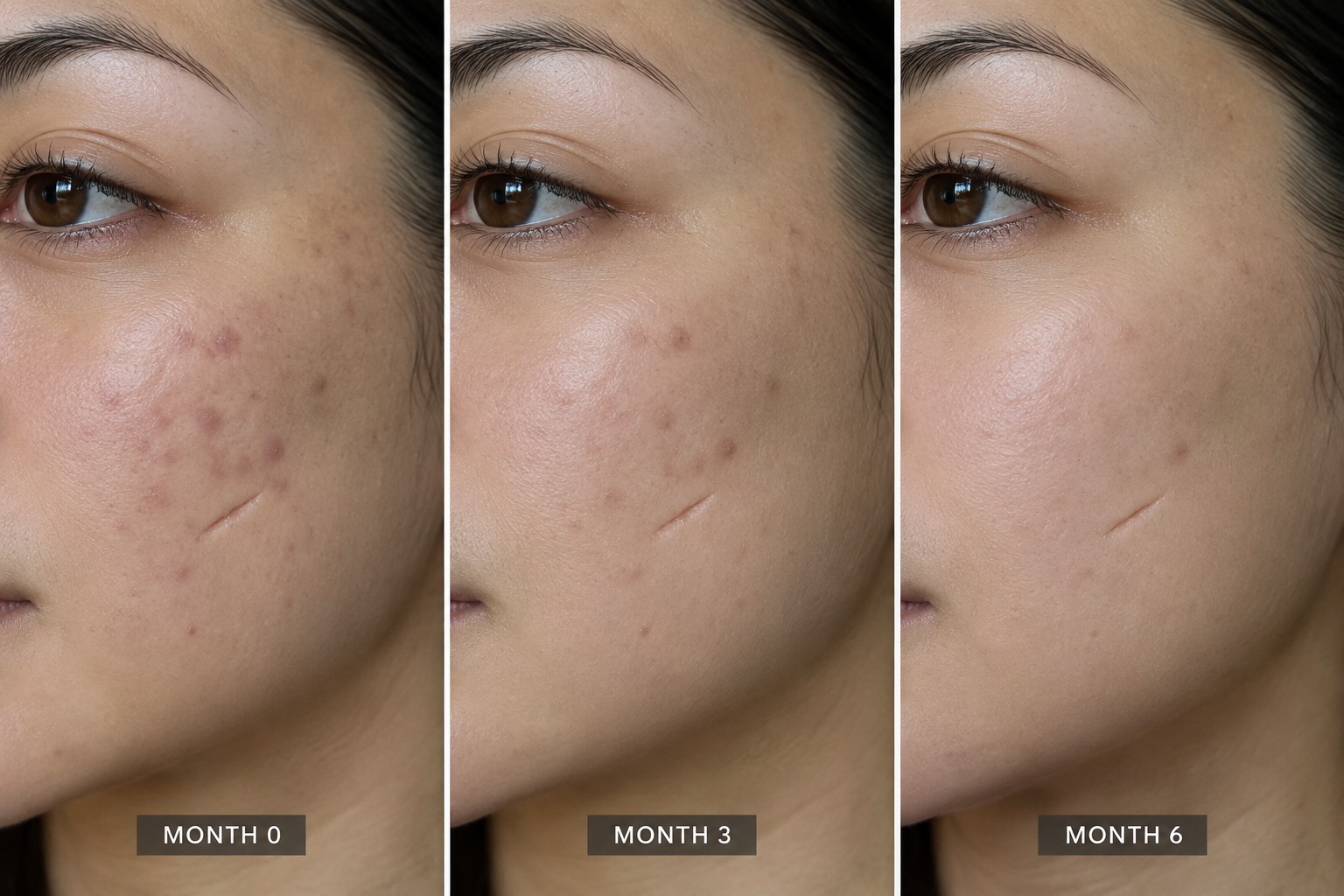
The practical implication is uncomfortable but useful: money spent on laser for marks buys you something time was going to give you anyway, while money spent on serums for pits buys nothing at all.
How Does a Skin Analysis API Score Texture Against Pigment?
By treating them as separate measurements, which is precisely what the naked eye struggles to do under uncontrolled lighting.
The AI Skin Analysis returns 15 dermatologist verified concerns from a single selfie as individual scored values. Three of them decide the mark versus scar question:
| Scored concern | What it captures | What it means here |
| Texture | Surface irregularity and depth | Elevated means structural change. This is the scar signal |
| Spots | Flat pigmented areas | Elevated with normal texture means PIH marks |
| Redness | Erythema intensity and distribution | Elevated with normal texture means PIE marks |
The combination is what makes it actionable. A customer with high spots and normal texture should be shown a pigment routine and told, honestly, that it will take months. A customer with high texture should be told that topicals will not close what they are seeing, and offered a consultation instead of a serum. Getting that second case right costs a sale today and prevents a refund and a bad review in eight weeks.
One capture rule matters more here than in any other concern: texture reads only under directional light. A flat-lit selfie under-reports scarring dramatically, so an app that wants a usable texture score has to guide the capture, not accept whatever arrives from the camera roll.
How Do You Treat Acne Marks?
| Mark type | What works | What does not |
| PIE, pink | Azelaic acid, niacinamide, centella, daily SPF, vascular laser if stubborn | Brightening serums aimed at melanin |
| PIH, brown | Vitamin C, azelaic acid, tranexamic acid, alpha arbutin, retinoid, daily SPF | Skipping sunscreen. It undoes everything else |
| Both | Azelaic acid, which addresses both, plus sunscreen | Aggressive exfoliation on inflamed skin |
Sunscreen is the highest leverage item for marks of either kind, and it is the one people skip because it feels like prevention rather than treatment. It is treatment. Without it the marks you have get reinforced daily.
How Do You Treat Acne Scars?
Procedures, matched to scar type, usually in a series.
| Procedure | Best for | Realistic expectation |
| Microneedling | Rolling and shallow boxcar | Gradual improvement over 3 to 6 sessions |
| Radiofrequency microneedling | Rolling, boxcar, some textural laxity | Stronger than microneedling alone, more downtime |
| Fractional laser resurfacing | Boxcar, widespread textural damage | The most effective general option, real downtime |
| Subcision | Rolling and tethered scars | Releases the tethering, often combined with filler |
| TCA cross | Ice pick | Targeted, multiple sessions, operator skill dependent |
| Dermal filler | Individual deep depressions | Immediate but temporary, needs maintenance |
| Topical retinoid | Everything, as background support | Improves surrounding texture, will not close a scar |

A competent practitioner assesses scar type before recommending anything, because the same laser that helps boxcar scars does relatively little for ice pick. Arriving with a texture reading and a side-lit photo makes that conversation faster.
How Long Does Each One Take?
| What you are treating | First visible change | Full course |
| PIE | 4 to 8 weeks | 2 to 6 months |
| PIH | 6 to 12 weeks | 3 months to 2 years, tone dependent |
| Texture on a retinoid | 8 to 12 weeks | 6 to 12 months of gradual smoothing |
| Microneedling series | After session 2 or 3 | 4 to 6 months including healing between sessions |
| Fractional laser | 4 to 8 weeks after a session | Months, with downtime per session |
What Should You Do First If You Have Both?
Most people do. The sequence matters, because treating them in the wrong order wastes months and sometimes makes the result worse.
| Stage | What you do | Why this order |
| Step 1, months 0 to 3 | Get active acne under control, with a clinician if it is inflammatory or cystic | Every new lesion is a new mark and a possible new scar. Treating downstream while the source runs is a treadmill |
| Step 2, from day 0, ongoing | Daily broad spectrum sunscreen | It is the single highest leverage item for marks, and it protects healing skin between procedures |
| Step 3, months 1 to 6 | Work the marks: azelaic acid, vitamin C or tranexamic acid for brown, calming actives for red | Marks fade on their own timeline. Starting them early means they are resolving while you plan the rest |
| Step 4, month 3 onward | Introduce a retinoid and hold it | Improves surrounding texture and speeds mark clearance. It is also the background for any procedure later |
| Step 5, month 6 onward | Assess remaining texture and book a consultation if it is still there | By this point the discolouration has faded, so what remains is genuinely scarring rather than colour making it look worse |
Step 5 is the one people skip, and it is the reason a lot of scar treatment gets bought unnecessarily. Marks exaggerate how bad scarring looks. Clear the colour first and a meaningful share of people discover the texture underneath is milder than they thought, and the procedure they were budgeting for gets smaller or disappears.
The exception
If the acne is severe, scarring and ongoing, do not wait six months to see a clinician. Scar prevention beats scar treatment by a wide margin, and the window for prevention is while the acne is still active.
What Prevents Scarring in the First Place?
- Treat inflammatory acne early. Scarring risk rises with how deep and how long the inflammation runs. Nodules and cysts deserve a clinician rather than another over the counter product.
- Do not squeeze. Squeezing pushes inflammation deeper and is the most common route from a spot that would have healed cleanly to one that leaves a pit.
- Do not let it run for years. Duration matters. Persistent moderate acne produces more scarring than a short severe episode that got treated.
- Protect from sun during healing. This prevents marks rather than scars, but it removes the discolouration that makes scars look worse than they are.
- Keep the barrier intact. Over-treated, inflamed skin heals worse than calm skin.
How Do Teams Build Scar and Mark Routing with an API?
This is one of the clearest cases in skincare where honest routing beats aggressive selling, because the wrong recommendation here is discoverable by the customer within a couple of months.
| Texture | Spots | Redness | Route the customer to |
| Normal | High | Low | Pigment routine plus SPF. State the timeline in months, not weeks |
| Normal | Low | High | Calming routine, azelaic acid, SPF. Suppress brightening products |
| Elevated | Any | Any | Explain that topicals will not close texture. Offer a professional referral, sell supporting care honestly |
| Elevated | High | High | Both problems. Marks first, since they resolve and will make the texture look better meanwhile |
| Any | Any | Any, with acne elevated | Treat active acne first. New lesions outpace any fading routine |
Three implementation notes. Guide the capture toward directional light or the texture score is meaningless. Re-scan monthly rather than weekly, since both marks and texture move slowly. And write the copy to report patterns, never a scar-type diagnosis, which is a clinical judgement that needs a professional and a physical examination.
You can test the scoring against real images in the YouCam AI API Playground before writing any integration code, and our walkthrough of how to use an API for digital skin analysis covers the request and response shape. Perfect Corp works with 800+ brand partners on flows like this.
Acne Scars vs Acne Marks FAQ
What is the difference between acne scars and acne marks?
Marks are flat discolouration, red or brown, that fade over months. Scars are structural changes in the skin, indented or raised, that do not fade on their own. If you can feel it, it is a scar.
Do acne marks turn into scars?
No. A mark is a colour change and a scar is a structural change, and one does not become the other. What is true is that the same inflammation can produce both, and squeezing a spot raises the chance of getting a scar alongside the mark.
How do I know if it is a scar?
Photograph the area in side lighting rather than flat frontal light, and run a fingertip over it with your eyes closed. Shadow or anything you can feel means texture, which means scarring.
Do acne marks go away without treatment?
Yes, though slowly. Pink marks typically clear in two to six months and brown marks in three months to two years depending on skin tone. Daily sunscreen is what shortens both, and picking is what lengthens them.
Can retinol fix acne scars?
Retinoids improve surrounding texture and help marks fade faster, and they do not close an indented scar. They are worth using as background support alongside procedures, not instead of them.
What is the best treatment for acne scars?
It depends on the scar type. Rolling scars respond to subcision and microneedling, boxcar scars to fractional laser, ice pick scars to targeted techniques such as TCA cross. This is why an assessment comes before a treatment plan.
Can a skin analysis API tell scars from marks?
It scores texture separately from spots and redness, which is the exact distinction involved. Present it as a pattern that routes advice, not as a diagnosis, and guide the photo capture toward directional light or the texture score will under-report.
Why do my scars look worse in some photos?
Lighting direction. Light raking across the face casts a shadow in every depression, while flat frontal light fills those shadows in. Neither is lying, but only the side-lit version shows texture.
Does sunscreen help acne scars?
It does not change the texture, and it substantially helps the discolouration sitting on and around scars, which is often what makes them conspicuous. It also prevents new marks while you treat the scars.
How soon should I treat acne scarring?
Once active acne is controlled. Treating scars while new inflammatory lesions keep forming means creating new damage as fast as you repair the old, and most practitioners will ask you to stabilise the acne first.
Feel Before You Buy
Ten seconds with your eyes closed and a fingertip answers the only question that matters. Smooth means time and sunscreen will win, and the right purchase is a modest one. Textured means no cream is going to reach it, and the right purchase is a consultation. Teams building this into a product face the same fork in code: score texture separately from pigment, branch on the pair, and say the honest thing when the answer is a referral rather than a sale.
Test the skin analysis API in the YouCam AI Playground, or contact Perfect Corp for a demo to see how per-concern scoring fits your flow.



 English


