 Author:



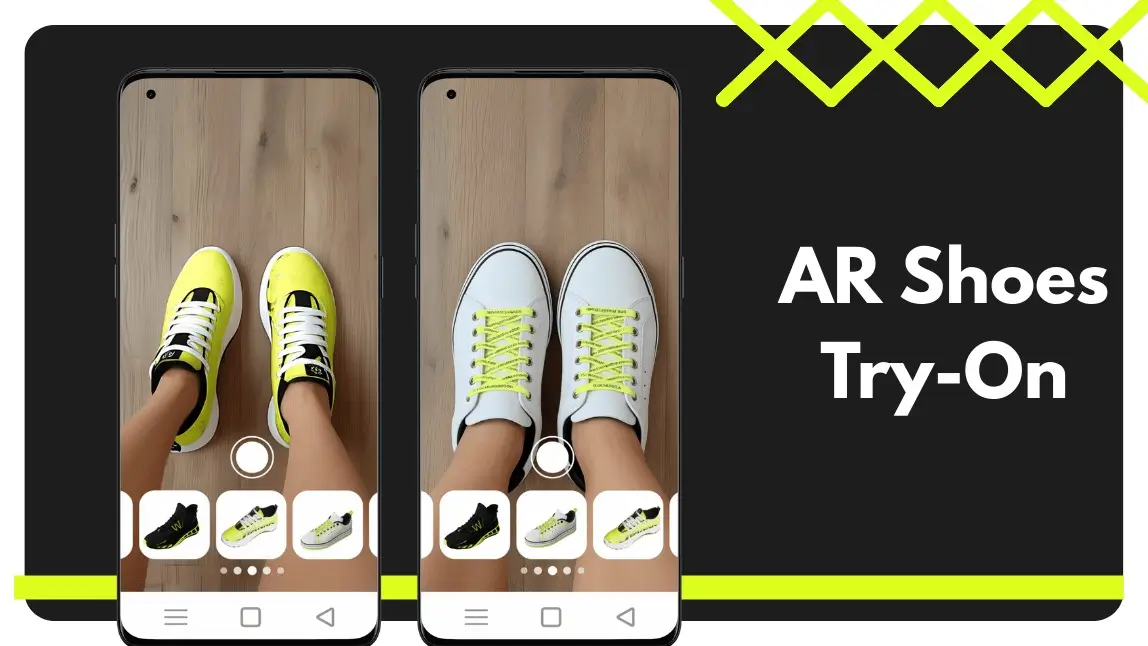
AR shoe try-on lets shoppers point a phone camera at their feet and see a 3D model of a shoe on them in real time, straight from a product page. For footwear brands, it improves the customer journey where buying decisions happen: shoppers get the on-foot view that product photos can't give, which helps turn browsing into buying.
This guide covers seven ways augmented reality shoe try-on is changing online shoe shopping heading into 2027. It also covers the results brands have published, how AR compares with photo-based AI try-on, and what to look for when you add it to your store. Perfect Corp.'s AR Shoes Virtual Try-On is the enterprise solution referenced throughout.
Table of Contents
- 1. AR Shoe Try-On Takes the Guesswork Out of Buying Shoes Online
- 2. 3D Viewers and AR Show Shoes from Every Angle
- 3. Shoppers Can Try On Shoes in the Browser, No App Needed
- 4. Footwear Brands Already Report Results
- 5. Interactive Try-On Keeps Shoppers on the Product Page
- 6. Fewer "Not What I Expected" Returns Support Sustainable Retail
- 7. AR Try-On Sets Your Brand Apart at Launch Time
- AR Shoe Try-On vs. AI Photo Try-On
- What to Look for in an AR Shoe Try-On Solution
- Frequently Asked Questions
- Conclusion
1. AR Shoe Try-On Takes the Guesswork Out of Buying Shoes Online
The biggest gap in online shoe retail is that shoppers can't put the product on before they buy. Flat product photos show the shoe, not the shoe on them, so many shoppers hesitate, abandon the cart, or order and send the pair back.
AR shoe try-on closes part of that gap. Using only a smartphone camera, shoppers see how a pair looks on their own feet in real time: the color against their outfit, the silhouette from above and the side, and how the design reads as they move their foot. If you want the technical side, our deep dive into how AR shoe technology works explains the tracking and rendering behind it.
2. 3D Viewers and AR Show Shoes from Every Angle

Shoes are among the most returned online purchases: in a Statista Consumer Insights survey, 17% of US online shoppers had returned shoes bought online in the past 12 months, second only to clothing. A big part of the problem is that a few product photos can't show a shoe the way an in-store visit does.
AR try-on usually works together with a 3D viewer built from the same 3D model of the shoe:
- 3D viewer: shoppers rotate and zoom the model to inspect materials, stitching, soles and colorways from every angle.
- AR try-on: the same model appears on the shopper's feet through the camera, so they judge the style on themselves, not on a model.
Together, they give shoppers a much clearer picture of what will arrive at their door, which is the root of many "not what I expected" returns. For more on which return reasons visualization can and can't address, see our guide on how to reduce returns in fashion ecommerce.
3. Shoppers Can Try On Shoes in the Browser, No App Needed

Shoppers won't download an app to try on one pair of shoes. Web-based AR removes that step: the try-on opens directly in the mobile browser from a product page, so the experience is one tap away from the "Add to cart" button.
- Product pages: a "Try On" button next to the product images.
- Campaigns and social: the same try-on link can be shared in newsletters, social posts and QR codes for launches.
- Brand apps: the same experience can also run inside a brand's own mobile app.
The lower the effort, the more shoppers actually try the product, and every try-on is a moment of engagement with a specific SKU.
Perfect Corp. footwear demo store
Point your phone camera at your feet and see shoes in real time. No app needed.
4. Footwear Brands Already Report Results from AR Shoe Try-On
The strongest argument for AR shoe try-on is what brands have already measured. These campaigns ran on WANNA, the AR fashion platform that is now part of Perfect Corp.:
| Brand | Campaign | Published results |
|---|---|---|
| LOEWE x On | Cloudtilt 2.0 sneaker launch | 458,000 try-ons in the first ten days; 10% of try-on users took a photo |
| Reebok | Nano X launch in Australia | 120,000 try-ons, over 2 million social reach and 26,500 "buy in store" clicks |
| Allbirds | Try-on in the newly launched Allbirds app | 80% of users who rated the app 5 stars mentioned the try-on feature |
| Grailify | Try-on in app store previews, ads and push campaigns | Cost per install down up to 25%, average monthly active users up 31%, new users up 87% |
The pattern is consistent: try-on works best around launches and campaigns, when shoppers want to see a new style on themselves before it sells out. It also covers more than sneakers. Heels, for example, were long hard to show in AR; see our guide to trying on high heels online with AR.
5. Interactive Try-On Keeps Shoppers on the Product Page
A try-on is an active step: the shopper compares colorways, switches between styles and sees each one worn instead of flat on a white background. That turns a passive product page visit into hands-on exploration of your catalog.
To see whether it pays off for your store, track these metrics for sessions with and without try-on:
- Try-on rate: the share of product page visitors who open the try-on
- Time on page and number of styles viewed per session
- Add-to-cart and conversion rate after a try-on
- Photos taken and shared from the try-on, as LOEWE x On tracked
Try-on is one element of a strong product page, alongside images, copy and reviews. Our product page optimization checklist for fashion ecommerce shows where it fits.
6. Fewer "Not What I Expected" Returns Support Sustainable Retail

Returns cost more than margin. Every returned pair means extra shipping, handling and repackaging, and some returned stock can't be resold as new.
AR try-on addresses one specific return reason: shoes that look different on the shopper than they expected from the photos. Seeing the color, shape and style on their own feet before ordering helps shoppers pick the pair they actually want. It is a visual preview, not a sizing tool, so it works best alongside your size charts and fit guidance.
For eco-conscious retailers, fewer avoidable returns also mean less transport and waste. Read more on how virtual try-on supports sustainable fashion choices.
7. AR Try-On Sets Your Brand Apart at Launch Time

When many stores sell similar shoes, the shopping experience becomes the difference. Allbirds' product team described try-on as the feature that set its new app apart, and Grailify's co-founder explained that AR lets users try sneakers that haven't even been released yet, so they can decide before a drop sells out.
That makes AR shoe try-on especially useful for:
- Launches and drops: build excitement and let shoppers try a style on before release day.
- Seasonal campaigns: give a new collection an interactive moment across product pages and social channels.
- Brand apps: give shoppers a reason to download and return to the app.
For a wider view of where footwear retail is heading, read our article on virtual shoe try-on and the future of online shopping.
AR Shoe Try-On vs. AI Photo Try-On: Which Does Your Business Need?
"Virtual try-on for shoes" now covers two different technologies. AR shows a 3D shoe on the shopper's feet live through the camera. Photo-based AI places a shoe into a photo of the shopper. Perfect Corp. offers both: AR Shoes Virtual Try-On for brands and the AI Shoes Virtual Try-On API for developers and platforms.
| Feature | AR Shoes Virtual Try-On | AI Shoes Virtual Try-On API |
|---|---|---|
| How it works | Real-time AR: a 3D shoe model appears on the shopper's feet through the device camera | Photo-based AI: a shopper photo plus a shoe image returns the shopper's photo with the new shoes |
| Product assets | 3D models of your shoes, reusable in a 3D viewer | Existing product photos or worn-on-model photos; no 3D models needed |
| Shopper experience | Live, interactive try-on in the browser or app | A finished try-on image of the shopper's own photo |
| Best for | Brands and retailers that want live try-on on product pages, in apps and in launch campaigns | Ecommerce platforms, marketplaces, mobile shopping apps and marketing campaigns that need try-on at catalog scale |
| How to start | Footwear demo store and Contact Sales | API Playground, then a free API key |
The AI Shoes Virtual Try-On API supports sneakers, running shoes, loafers, heels, sandals and boots. It keeps the color, pattern and finish from the product image and renders materials such as leather, suede and canvas. It is a RESTful, task-based API: you create a task, check its status and retrieve the result image. The same tool is also available on the YouCam for Fashion & Retail MCP server, and one API key covers REST, MCP and YouCam Agent Skills. See the AI Shoes Virtual Try-On V3.0 release for what changed in the current version.
Many businesses use both: AR for flagship styles and launches, and the API to add try-on across a large catalog or inside a marketplace or app.
Photo-based try-on, no 3D models
Upload a shopper photo and a shoe image to see the result in the API Playground.
What to Look for in an AR Shoe Try-On Solution
Before you add AR shoe try-on to your store, check these points:
- Realism: the shoe should hold its position on the foot as the shopper moves and adapt to different lighting and viewing angles.
- Web access: shoppers should be able to launch it from the mobile browser, without installing an app.
- Style coverage: make sure your categories are supported, such as sneakers, boots, heels, sandals and loafers.
- 3D asset reuse: one 3D model per shoe should power both the 3D viewer and the AR try-on, plus campaign and social links.
- Measurement: you need try-on data per SKU to connect engagement with sales.
- Security and privacy: check the vendor's certifications and data practices. Perfect Corp.'s platform is ISO/IEC 27001:2022 certified, and GDPR is applied company-wide.
- A path to photo-based AI: if you also need try-on at catalog scale or inside a marketplace, an API that works from existing product photos saves you from building 3D models for every SKU.
Frequently Asked Questions
What is AR shoe try-on and how does it work?
AR shoe try-on uses augmented reality to place a 3D model of a shoe on the shopper's feet through their smartphone camera. The shoe follows the foot in real time, so shoppers can check the color, shape and style from different angles before buying.
Can I try on shoes virtually without downloading an app?
Yes, when the brand uses web-based AR. The try-on opens in the mobile browser from the product page. You can see how this works in Perfect Corp.'s footwear demo store.
Does AR shoe try-on tell shoppers what size to buy?
No. AR try-on is a visual preview of how a shoe looks on the shopper. Sizing still comes from the brand's size charts and fit guidance.
Which types of shoes work with AR try-on?
Sneakers are the most common, but AR shoe try-on also covers styles such as high boots, heels, sandals, loafers and ballerinas.
What is a 3D shoe viewer?
A 3D shoe viewer lets shoppers rotate and zoom a 3D model of the shoe on the product page to inspect its design and materials. Brands usually reuse the same 3D model for the viewer and for AR try-on.
Can AR shoe try-on reduce returns?
It can help with returns caused by a shoe looking different than expected, because shoppers see the style on themselves before ordering. It doesn't address returns caused by size or comfort, so track your return reasons to measure its effect.
What is the difference between AR shoe try-on and an AI shoe try-on API?
AR shows a 3D shoe on the shopper's feet live through the camera and needs 3D models. An AI shoe try-on API, such as Perfect Corp.'s AI Shoes Virtual Try-On API, works from a shopper photo and an existing product image and returns a photo of the shopper wearing the new shoes.
Conclusion
AR shoe try-on gives online shoppers what product photos can't: a look at the shoes on their own feet before they buy. Brands such as LOEWE x On, Reebok, Allbirds and Grailify have used it to drive launch engagement, app growth and in-store traffic, and in 2027 it is becoming a standard part of the footwear product page.
Start with your flagship styles and launches in AR, measure try-on rate and conversion, and add the photo-based AI Shoes Virtual Try-On API where you need try-on across a larger catalog. Perfect Corp. technology has been used by more than 800 global brands.
Talk to the Perfect Corp. team
Plan a try-on experience for your product pages, launches and campaigns.
This article was edited and reviewed by the Perfect Corp. editorial team. Welcome to contact us or give us more suggestions.